Jun 16, 2016 | Advocacy, Non-legal submissions
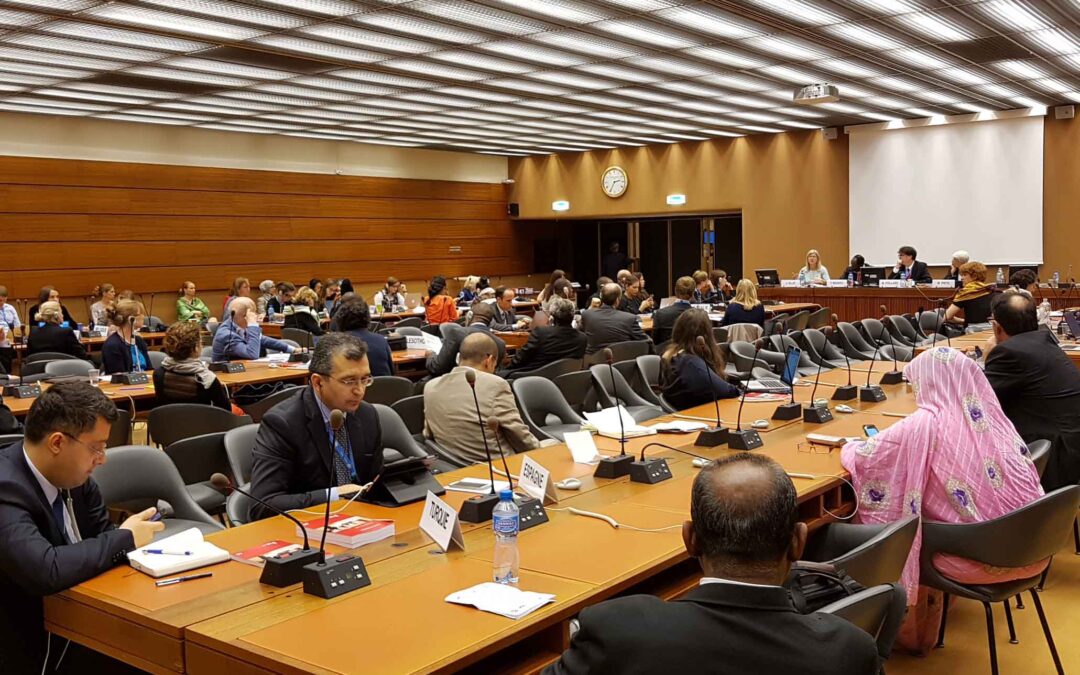
The ICJ today delivered a statement at the UN Human Rights Council, on judicial accountability, and attacks on lawyers. The ICJ made the statement on behalf of a group of eight NGOs, including professional organisations of judges and lawyers.
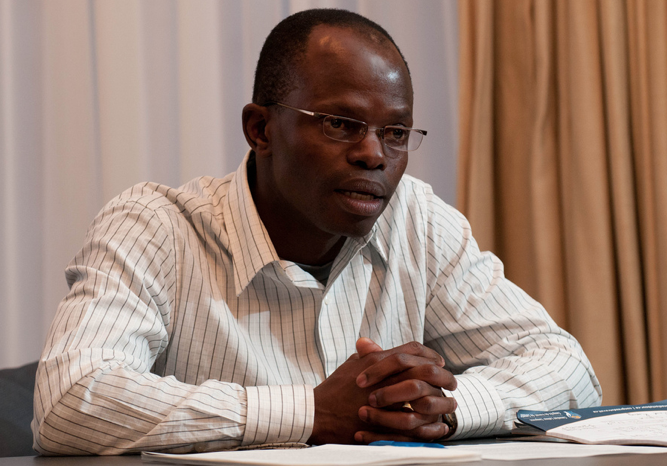
The statement, read out by Swaziland lawyer Thulani Maseko during the Interactive Dialogue with the UN Special Rapporteur on the Independence of Judges and Lawyers, read as follows:
Madame Special Rapporteur on the Independence of Judges and Lawyers,
Our organizations strongly support your mandate. An independent judiciary and legal profession are essential to the rule of law and to the effective protection of human rights.
Independence and impartiality of the judiciary require integrity of individual judges and judicial institutions. Accordingly, there must be accountability for judicial corruption and judicial involvement in human rights violations.
Accountability mechanisms must themselves be independent, fair and transparent, in order to ensure they do not undermine the independence of the judiciary and that victims and the broader population see them as credible and accessible.
We note in this regard the International Commission of Jurists’ newly published Practitioners’ Guide on Judicial Accountability, and the International Bar Association’s recent report on Judicial systems and Corruption.
We also must highlight the growing problem of repression of lawyers who act in cases perceived to have human rights or political aspects, including through: harassment, suspension or disbarment; arrest, detention, unfair trial, and arbitrary imprisonment; torture or other cruel, inhuman or degrading treatment, enforced disappearance, or even unlawful killings.
This is inconsistent with the UN Basic Principles on the Role of Lawyers and incompatible with the rule of law. It violates the rights of individual lawyers and undermines the independence of the legal profession. It denies the rights of the people the lawyers are trying to protect.
Among current examples, the scale and depth of repressive measures against lawyers and HRDs in China is particularly stark, but similar concerns arise in, for instance, Egypt, Turkey, Thailand, Azerbaijan, Malaysia, Tajikistan, and Vietnam. (I myself was arbitrarily imprisoned in my own country Swaziland, for publicly expressing my opinions about judicial misconduct.)
We accordingly will urge lawyers, legal professional associations and others around the world to respond to the questionnaire you have prepared for your upcoming General Assembly report on the legal profession.
I thank you.
The following organizations joined or otherwise supported the statement:
The statement may be downloaded in PDF format here: HRC32-OralStatement-JudicialAccountabilityLawyers-2016
Jun 13, 2016 | Events
Who judges the judges?
Accountability for judicial corruption and judicial complicity
Side Event Tuesday 14 June 2016, 14:00 – 16:00
Room XXIII, Palais des Nations, Geneva.
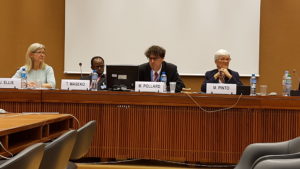
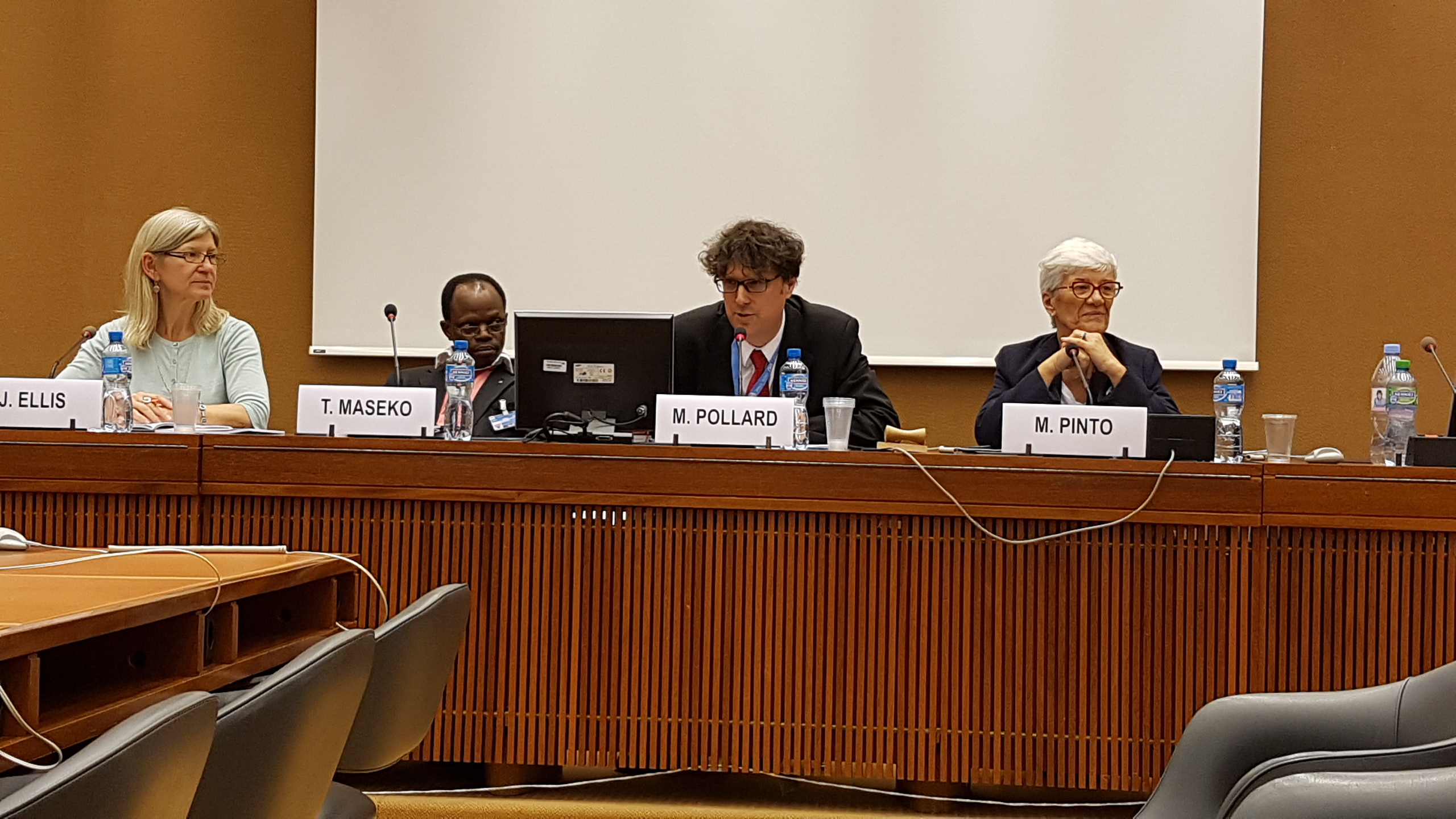
The International Commission of Jurists (ICJ) and the International Bar Association (IBA) organised a side event to the 32nd session of the Human Rights Council, on the topic of accountability for judicial corruption and judicial involvement in human rights violations.
The well-attended event considered the need for judicial accountability, and different options for effective mechanisms and procedures of accountability. Recommendations for ordinary situations were complemented with reflections on circumstances of transitions where the judiciary have been deeply implicated in the violations of the previous regime, as well as particular challenges in developing countries.
At the event the ICJ launched its new Practitioners’ Guide on Judicial Accountability, and the IBA presented the recent report of its Judicial Integrity Initiative on Judicial systems and Corruption. Print copies of both publications were distributed.
A panel discussion also featured the UN Special Rapporteur on the independence of judges and lawyers, as well as Thulani Maseko, a lawyer from Swaziland who was subjected to prolonged arbitrary detention and imprisonment by judges in Swaziland, for speaking publicly about judicial misconduct in the country.
Speakers:
- Mónica Pinto Special Rapporteur on the independence of judges and lawyers
- Thulani Maseko Lawyer, Swaziland
- Jane Ellis, Director, Legal & Policy Research Unit, International Bar Association
- Matt Pollard, Centre for the Independence of Judges & Lawyers, International Commission of Jurists
In addition to the ICJ and IBA, side event co-sponsors included:
- The Permanent Mission of Hungary to the UN
- Commonwealth Magistrates’ and Judges’ Association
- Commonwealth Lawyers Association
- Rechters voor Rechters (Judges for Judges), Netherlands
- International Legal Assistance Consortium
The ICJ Practitioners’ Guide on Judicial Accountability, and the research and consultations on which it is based, was made possible with the financial support of the Republic and Canton of Geneva and the Ministry of Foreign Affairs of Finland.
For more information, please contact Matt Pollard.
ICJ Practitioners’ Guide No. 13 on Judicial Accountability
The ICJ’s Practitioners’ Guide No. 13 on Judicial Accountability aims to help practitioners ensure accountability for serious judicial misconduct, such as corruption or complicity in human rights violations, while preserving the independence of the judiciary.
It focuses on international standards on accountability mechanisms and procedures, illustrated by practical examples. It addresses not only the accountability of individual judges, and the accountability of judiciary as an institution, but also State responsibility under international law, particularly in relation to harm caused to victims of violations by judges.
The Guide was greatly informed by discussions among eminent judges and lawyers from around the world, convened by the ICJ Centre for the Independence of Judges & Lawyers, in Tunisia in October 2015 , and in Geneva in December 2015.
Among the topics covered by the new ICJ Guide are:
- The obligation to ensure an independent, impartial and accountable judiciary.
- The forms of judicial accountability, including:
- Remedy and reparation for victims,
- The responsibility of the State,
- Removal from office, disciplinary sanctions, and other administrative measures,
- Criminal responsibility, and
- The right to the truth.
- The structure and elements of accountability bodies, such as:
- Review of decisions through appeal or judicial review,
- Judicial councils,
- The ordinary courts,
- Parliamentary procedures,
- Ad hoc tribunals,
- Anti-corruption bodies,
- Civil society monitoring and reporting,
- National human rights institutions,
- Professional associations,
- International accountability mechanisms.
- Procedural issues, including:
- Necessary powers for accountability mechanisms,
- Procedural rights of the judge,
- Procedural rights of complainants and victims,
- Publicity and transparency,
- Procedures for lifting judicial immunity,
- Temporary suspension during proceedings, and
- Selective enforcement for improper purposes.
- Mechanisms in exceptional circumstances, such as transitions from undemocratic or authoritarian regimes, including:
- Truth commissions,
- Vetting, and
- Mass removal and re-application.
- Particular challenges in relation to developing countries.
Jun 6, 2016
ICJ Practitioners Guide No. 13 on Judicial Accountability addresses mechanisms and procedures to ensure accountability for serious judicial misconduct, such as corruption or complicity in human rights violations, while preserving the independence of the judiciary. (Available in English, Burmese and Nepali)
It focuses on international standards on accountability mechanisms and procedures, illustrated by practical examples. The Guide addresses the need for all countries to ensure effective judicial accountability, while also including special chapters on situations of transition and developing countries.
The Guide updates and expands on previous guidance contained in the ICJ publication, Practitioners Guide No. 1: International Principles on the Independence and Accountability of Judges, Lawyers and Prosecutors, as well as Practitioners Guide No. 7: International Law and the Fight Against Impunity. It also builds on earlier work of the ICJ on the theme of judicial corruption, including Strengthening Judicial Independence, Eliminating Judicial Corruption.
This Guide addresses not only the accountability of individual judges, and the accountability of judiciary as an institution, but also State responsibility under international law, particularly in relation to harm caused to victims of violations by judges.
The Guide has been greatly informed by the contributions of outside experts, including the participants to a consultation on judicial accountability in developing countries, convened by the ICJ Centre for the Independence of Judges & Lawyers in Tunisia 8-9 October 2015, as well as the 2015 CIJL Geneva Forum of Judges & Lawyers, 14-15 December 2015.
Among the topics covered by the Guide are:
- The international legal frameworks for the obligation to ensure an independent, impartial and accountable judiciary.
- The forms of judicial accountability, including:
- Remedy and reparation for victims,
- The responsibility of the State,
- Removal from office, disciplinary sanctions, and other administrative measures,
- Criminal responsibility, and
- The right to the truth.
- The structure and elements of accountability bodies, such as:
- Review of decisions through appeal or judicial review,
- Judicial councils,
- The ordinary courts,
- Parliamentary procedures,
- Ad hoc tribunals,
- Anti-corruption bodies,
- Civil society monitoring and reporting,
- National human rights institutions,
- Professional associations,
- International accountability mechanisms.
- Procedural issues, including:
- Necessary powers for accountability mechanisms,
- Procedural rights of the judge,
- Procedural rights of complainants and victims,
- Publicity and transparency,
- Procedures for lifting judicial immunity,
- Temporary suspension during proceedings, and
- Selective enforcement for improper purposes.
- Mechanisms in exceptional circumstances, such as transitions from undemocratic or authoritarian regimes, including:
- Truth commissions,
- Vetting, and
- Mass removal and re-application.
- Particular challenges in relation to developing countries.
(An online compilation of international standards on independence and accountability of judges, as well as independence of lawyers and prosecutors, is available here.)
The ICJ Practitioners Guide on Judicial Accountability, and the research and consultations on which it is based, would not have been possible without the financial support of the Republic and Canton of Geneva and the Ministry of Foreign Affairs of Finland.
Universal-PG 13 Judicial Accountability-Publications-Reports-Practitioners Guide-2016-ENG (full guide in English, in PDF format)
Universal-PG13 Judicial-Accountability-Publications-Reports-Practitioners Guide-2016-Burmese (full guide in Burmese, in PDF format)
Universal-PG13 Judicial-Accountability-Publications-Reports-Practitioners Guide-2016-Nepali (full guide in Nepali, in PDF format)
To provide feedback on the Guide please respond to this online survey: https://www.surveymonkey.com/r/Q5VKMRM
To order printed copies, or for other queries, please contact Matt Pollard (matt.pollard(a)icj.org).
Apr 22, 2016
The ICJ and Child Rights (CRIN) launched today a practical guide on how to use the United Nations Committee on the Rights of the Child’s 16th General Comment to make its recommendations and guidance a reality.
The 16th General Comment focuses on State obligations regarding the impact of the business sector on children’s rights.
The guide also provides examples of how NGOs have intervened on behalf of children, as well as advice on litigation, monitoring, advocacy and activism on behalf of children.
The impact of business on children is often overlooked by many human rights advocates and while attention given to the impacts of business on human rights has increased recently, the ways in which children are affected by business operations have not yet attracted sufficient attention.
CRIN and the ICJ hope that this guide goes some way to filling this gap and will be a useful starting point for further research and discussion.
Businesses can have a huge impact on children, with the potential for violations of their rights present in virtually every industry.
There are also vast power imbalances between children and business and, often, prohibitive costs involved in litigation against companies which have violated children’s rights.
Such cases are frequently settled out of court, while in many countries children do not even have standing to bring cases on their own behalf.
Violations of children’s rights continue to take place despite States’ obligations to cooperate to achieve the realization of children’s rights beyond their territorial boundaries.
Ultimately this means that non-governmental organizations (NGOs) must work together to push for change alongside governments if children’s rights are to be respected.
Universal-Guide UN Committee on Rights of the Child-Publications-Reports-2016-ENG (full report, in PDF)
Mar 24, 2016 | News
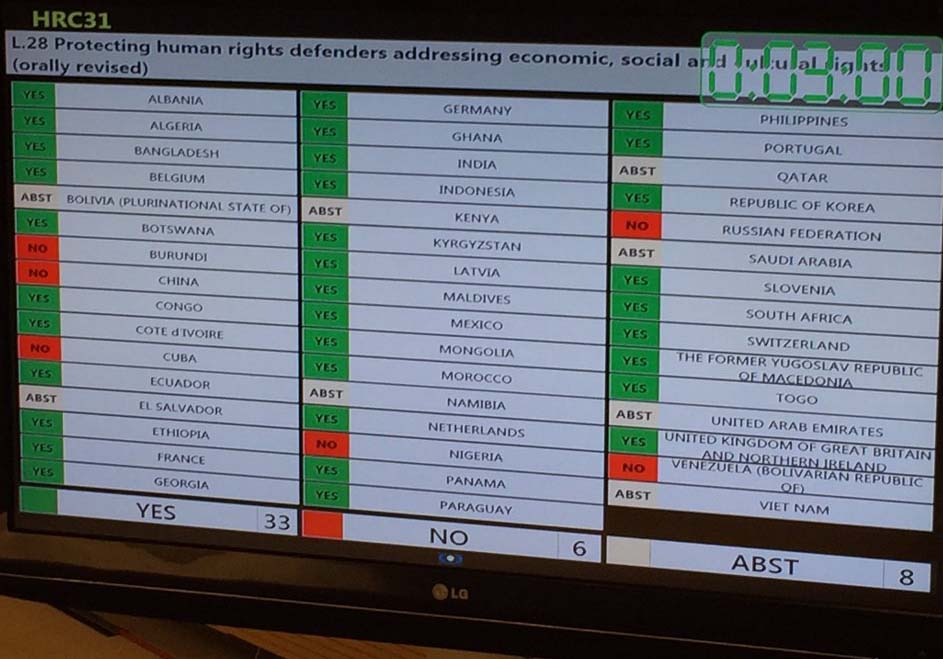
The ICJ welcomes today’s adoption by the UN Human Rights Council of a resolution on human rights defenders addressing economic, social and cultural rights.Negotiation of the resolution was led by Norway, who presented the draft to the Council with co-sponsorship with a large number of states from around the world.
A series of hostile amendments tabled by the Russian Federation, China, Cuba, Egypt and Pakistan, which would have weakened the resolution, were defeated, and the resolution was ultimately adopted by a large majority.
The ICJ had earlier joined advocacy efforts to support the resolution text as presented, and welcomes the strong message the resolution as adopted sends affirming the importance of defenders’ work on economic, social and cultural rights, as well as the need for states to respect, protect and fulfil the human rights of such defenders, including through a range of legislative, policy, and practical measures.
The draft resolution is available in an unofficial version here: 2016 draft resolution HRDs as orally revised.
The voting on the resolution is available here: Result of the vote HRDs