Feb 26, 2013 | Advocacy, Non-legal submissions
The ICJ joined 14 other NGOs in expressing deep concern over the exclusion of civil society from the consultation process on the UN human rights treaty bodies strengthening process.
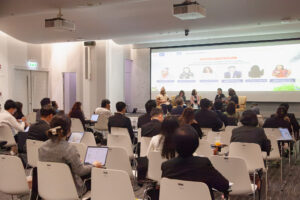
In a statement delivered by the International Service for Human Rights during an informal hearing for civil society on 26 February 2013, the continued exclusion of the Geneva-based NGO Alkarama, and the lack of transparency by which this decision was made, was criticised.
Signatories to the statement urged the facilitators of the process and UN member States to enable independent civil society to contribute to the treaty body strengthening process.
TBSP-Alkarama-NonLegalSubmission-2013 (download statement in full)

Feb 19, 2013
In two recent submissions to the Committee on the Elimination of Discrimination against Women (CEDAW), the ICJ called on CEDAW to address key barriers to justice faced by women.
The submissions came as the Committee embarks on drafting a General Recommendation on women’s access to justice.
In a joint submission, the ICJ and Friedrich-Ebert-Stiftung (FES) have called on the Committee on the Elimination of Discrimination against Women (CEDAW) to reaffirm obligations on States to effectively regulate the activities of business actors in order to ensure women’s access to justice.
The submission focuses on the issue of women’s access to justice for infringements of rights committed by non-State actors, and more specifically in the context of business activities and operations.
It makes recommendations on how States might more effectively regulate business activities so as to ensure women’s protection against discrimination and inequality and access to effective and accessible remedies when they face abuses.
In a standalone submission, the ICJ presented an overview of key barriers women face across jurisdictions when seeking justice. This submission draws on findings from ICJ in-country initiatives exploring barriers to justice faced by women.
The first general discussion on the General Recommendation took place during the CEDAW’s 54th session in Geneva on 18 February 2013.
CEDAW-Submission-A2J-BHR-LegalSubmission-2013 (download joint submission by ICJ and FES)
CEDAW-Submission-Women’sA2JNormativeObstacles-LegalSubmission-2013 (download ICJ submission)

Feb 11, 2013
The ICJ has called on the Human Rights Council and its members and observers, individually and collectively, to ensure that universal and regional standards and mechanisms reinforce rather than undermine universal human rights standards.
Reflecting on the ICJ Declaration on Access to Justice and Rights to a Remedy in International Human Rights Systems, adopted during the 17th Congress of the ICJ in December 2012, the statement was submitted today to the UN ahead of the Human Rights Council’s 22nd regular session (25 February to 22 March 2013).
Recalling the emphasis placed on the right to a remedy in the Vienna Declaration and Programme of Action, adopted by consensus twenty years ago, the ICJ called on all States to:
- Ensure that regional standards and mechanisms reinforce rather than undermine universal human rights standards;
- Ensure that the outcome of the treaty body strengthening process indeed strengthens the treaty bodies;
- Actively promote universal acceptance of individual communications procedures of the treaty bodies, and fully implement interim decisions and final views of the treaty bodies; and
- Initiate an intergovernmental process for the elaboration and adoption of a statute for a World Court of Human Rights.
HRC22-Item8-WrittenStatementVDPA-A2J-LegalSubmission-2013 (download full statement in PDF)

Feb 6, 2013
 The ICJ is concerned by laws and legislative proposals in a variety of countries that severely threaten the work of lesbian, gay, bisexual and transgender (LGBT) persons and human rights defenders.
Ahead of the 22nd session of the Human Rights Council (25 February to 22 March 2013), the ICJ today submitted a written statement to the UN encouraging the Human Rights Council’s Special Rapporteur on the situation of human rights defenders to follow up on these laws and legislative proposals.
Pointing to unlawful restrictions on the freedoms of association and assembly, and the freedom of expression, in several countries, the ICJ encouraged the Special Rapporteur to:
- Call on governments to protect these rights for everyone and to ensure that any restrictions comply with the requirements of legality, of necessity and proportionality and of non-discrimination on all grounds; and
- In the case of laws or legislative proposals that fail to comply with these requirements, take appropriate action.
HRC22-Item3-HRDs-WrittenStatement-legal submission-2013 (download statement)
Feb 5, 2013 | News
The 10th ratification of the Optional Protocol to the International Covenant to Economic, Social and Cultural Rights (OP-ICESCR) is an historical boost for the international protection of these rights, the ICJ said today.
“With the deposit today at the UN of the 10th instrument of ratification by Uruguay, we are very close to the long awaited entry into force of this new treaty”, said Sandra Ratjen, ICJ Senior Legal Adviser on Economic, Social and Cultural Rights (ESCR).
The OP-ICESCR will enter into force in three months from today and will provide for remedies at the international level to victims of violations of economic, social and cultural rights.
The Protocol establishes mechanisms that enable the UN Committee on Economic, Social and Cultural Rights to examine complaints and initiate inquiries in cases of violations of these rights in the State parties whenever the victims could not obtain justice at the national level.
“We warmly welcome the 10th ratification of the Optional Protocol and we congratulate Uruguay on this decisive step for the protection of economic, social and cultural rights nationally and internationally”, said Wilder Tayler, ICJ’s Secretary General. “This is an important moment for the ICJ. We have a long-standing commitment and work in favour of the recognition of ESCR as legal and justiciable rights, on the same footing as other human rights.”
The ICJ urges States parties to the ICESCR to join the first ten States who became party to the Optional Protocol – Ecuador, Mongolia, Spain, El Salvador, Argentina, Bolivia, Bosnia and Herzegovina, Slovakia, Portugal and Uruguay.
The ICJ stresses that only when a significant number of States will have become party to the Protocol, the mechanisms it offers will be effectively accessible to a great number of victims of violations of ESCR.
Contact:
Sandra Ratjen, ICJ Senior Legal Adviser on Economic, Social and Cultural Rights, t: +41 22 979 38 35 ; e-mail: sandra.ratjen(at)icj.org
NOTE:
The ICJ is a member of the International NGO Coalition for the OP to the ICESCR. Together with the other members of the Coalition, the ICJ is involved in the Campaign in favour of the ratification of the OP-ICESCR.