Mar 13, 2013
The ICJ today called on the Human Rights Council and its subsidiary bodies to reject efforts to introduce the language of traditional values into the framework of human rights.
Noting the conclusion of the Council’s Advisory Committee that traditional values can be negative and have been used to justify the subordination of women and other vulnerable or minority groups, the ICJ recalled that emphasis should always be on the implementation of human rights law regardless of tradition and culture.
The ICJ’s statement was delivered today during the General Debate under Item 5 of the Council’s agenda (human rights bodies and mechanisms) as part of the 22nd regular session of the Human Rights Council (25 February to 22 March 2013).
HRC22-Item5GD-TVReport-LegalSubmission-2013 (download statement in PDF)
Mar 8, 2013 | Events
 As a member of the International NGO Coalition for the OP to the ICESCR, the ICJ is co-convening a high-level event on the protection of economic, social and cultural rights March 13 at the Palais des Nations in Geneva.
This event is organized together with the Group of Friends of the Optional Protocol to the ICESCR, including Argentina, Belgium, Bolivia, Bosnia & Herzegovina, Ecuador, El Salvador, Finland, France, Senegal, Spain, Slovakia, Portugal and Uruguay; and the Office of the United Nations High Commissioner for Human Rights.
It will highlight the importance of OP-ICESCR to the full realization of human rights and the need to achieve widespread ratification of the OP-ICESCR to ensure access to justice for all.
Speakers will include the Deputy High Commissioner for Human Rights, the UN Special Rapporteur on the Right to Water and Sanitation, as well as the Permanent Representatives of Argentina, France, Portugal, Slovakia and Uruguay.
Parallel Event – OP-ICESCR-event-2013 (download the flyer, pdf)

Mar 6, 2013
El Centro de Derechos Reproductivos y la CIJ desean proveer información complementaria al Comité de Derechos Humanos (CDH) en su revisión del quinto informe periódico de Perú durante el 107 periodo de sesiones que tendrá lugar entre el 11 y 28 de marzo de 2013.
Peru-HRCttee107-JointAR-CRR-ICJ-LegalSubmission-2013 (texto completo en español, PDF)

Mar 6, 2013
The ICJ and the Centre for Reproductive Rights (CRR) have addressed the Human Rights Committee on the issue of women’s access to therapeutic abortions in Peru.
In an alternative report for the Committee’s examination of the fifth periodic report of Peru under the International Covenant on Civil and Political Rights, the ICJ and CRR submission addresses the failure of Peru to take steps toward implementation of views of the Human Rights Committee and the Committee on the Elimination of Discrimination against Women (KL v Peru and LC v Peru). Both communications concerned the failure of Peru to enable young women access to therapeutic abortions, found to have amounted to violations of the rights of the applicants.
Peru’s fifth periodic report will be under consideration during the 107th session of the Human Rights Committee (11-28 March 2013), following which the Committee will issue Concluding Observations and recommendations.
Peru-HRCttee107-JointAR-CRR-ICJ-LegalSubmission-2013 (download full submission in Spanish)
Mar 4, 2013 | News
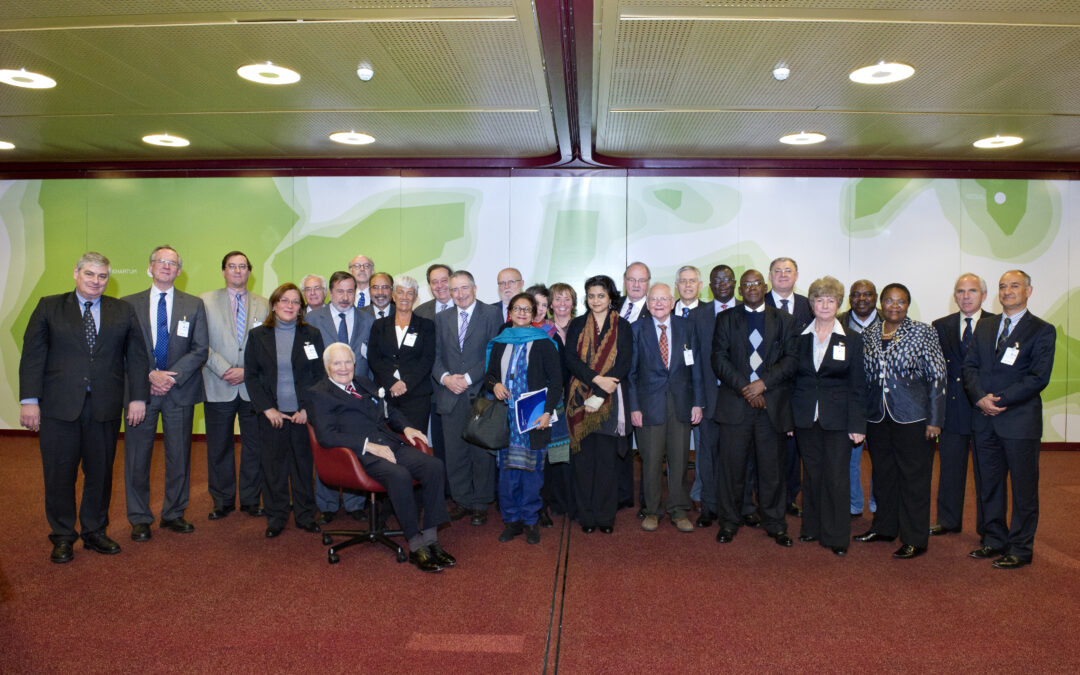
The ICJ is pleased to announce the election of ten eminent jurists to the ICJ Commission.
Throughout its sixty-year history, the ICJ’s credibility has stemmed from its unique group of eminent jurists and legal experts: the ICJ Commission. ICJ Commissioners provide expert support and strategic direction to the ICJ Secretariat’s regional and thematic programmes.
The following Commissioners have been elected for five-year terms:
Commissioners Elected for First Terms
Prof. Andrew Clapham (UK)
Justice Radmila Dicic (Serbia)
Mr. Shawan Jabarin (Palestine)
Justice Qinisile Mabuza (Swaziland)
Justice Tamara Morschakova (Russian Federation) – from 1st May 2013
Justice Egbert Myjer (Netherlands)
Prof. Victor Rodriguez Rescia (Costa Rica)
Prof. Marco Sassoli (Italy/Switzerland)
Justice Stefan Trechsel (Switzerland)
Prof. Rodrigo Uprimny Yepes (Colombia)
Commissioners Elected for Second Terms
Mr. Roberto Garreton (Chile)
Prof. Robert Goldman (USA)
Commissioners Elected for Third Terms
Justice Ian Binnie (Canada)
Justice Elizabeth Evatt (Australia)
Ms. Karinna Moskalenko (Russian Federation)
Prof. Sir Nigel Rodley (UK)
Mr. Raji Sourani (Palestine)
For further details, including biographies for each of the ICJ’s Commissioners and Honorary Members, please click here .