May 3, 2013 | Multimedia items, News, Video clips
The ICJ warmly welcomes the entry into force of the Optional Protocol to the ICESCR that will be effective on Sunday, 5 May, 2013.
As noted in previous statements, the ICJ considers that the entry into force of the new instrument allowing the review of alleged violations of economic, social and cultural rights by a UN Committee will mark an historic boost to the international protection of these rights.
The ICJ and its allies in the International NGO Coalition for the OP-ICESCR look forward to pursuing the dialogue and interaction with the UN Committee on Economic, Social and Cultural Rights and States parties, and aim to contribute at making the new procedures offered an effective tool for victims who could not achieve justice in their domestic justice systems.
Coalition press release in English
Coalition press release in Spanish

Apr 24, 2013 | CIJL Newsletter, News
This newsletter informs you on recent activities and ongoing situations related to the ICJ’s work on the independence of the legal profession.
Mar 21, 2013 | News
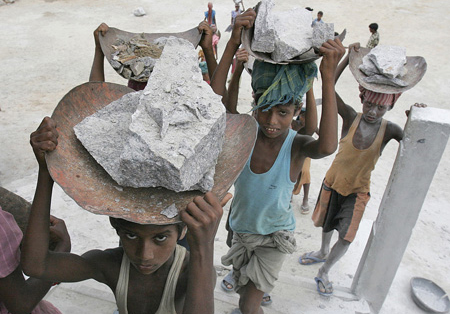
The ICJ welcomes the adoption by the UN Committee on the Rights of the Child of a General comment on State obligations regarding the impact of the business sector on children’s rights.
The ICJ stresses the Committee is the first UN human rights treaty body to address this issue directly in a General comment.
“The Committee on the Rights of the Child has taken a decisive step in clarifying standards under the Convention on the Rights of the Child and providing much needed guidance for States to better protect the rights of the child against business abuse,” said Carlos Lopez, ICJ’s Senior Legal Adviser on Business and Human Rights.
The UN Committee recognizes that while there is no international legally binding instrument on the business sector’s responsibilities vis-à-vis human rights, “duties and responsibilities to respect the rights of children extend in practice beyond the State and State-controlled services and institutions and apply to private actors and business enterprises. Therefore all businesses must meet their responsibilities regarding children’s rights and States must ensure they do so.”
The UN Committee also acknowledges that voluntary actions of corporate responsibility by business enterprises are not a substitute for State action and regulation of businesses or for businesses to comply with their responsibilities to respect children’s rights.
The General Comment was elaborated through a consultative process over nearly two years with the support of the ICJ, UNICEF and Save the Children International.
It gives interpretation and guidance for States in key areas:
- how they should ensure that the activities and operations of business enterprises do not adversely impact on children’s rights;
- how to create an enabling and supportive environment for business enterprises to respect children’s rights across their local or global operations; and
- how to ensure access to effective remedy for children whose rights have been infringed by a business enterprises.
“The recommendations and guidance provided by the Committee are a key contribution to national and international strategies by States and other actors,” Lopez added. “States now need implement these recommendations.”
BHR-FINAL CRC GC 16-comment-2013 (full text in pdf)

Mar 19, 2013 | Advocacy, Non-legal submissions
The ICJ today welcomed the recent deposit of the tenth instrument of ratification to the Optional Protocol to the International Covenant on Economic, Social and Cultural Rights (ICESCR).
Noting that the entry into force of the Optional Protocol (OP) on 5 May 2013 will mark an historic boost to the international protection of economic, social and cultural rights, the ICJ called on the Human Rights Council and its members to become party to the OP and other individual communications procedures of the treaty bodies.
The ICJ’s statement was made during the General Debate under Item 8 of the Human Rights Council’s agenda (follow-up and implementation of the Vienna Declaration and Programme of Action) during the 22nd regular session of the Council (25 February to 22 March 2013).
HRC22-Item8GD-OPICESCR-NonLegalSubmission-2013 (download full statement in ODF)

Mar 18, 2013 | Advocacy, Events
The ICJ’s Director of the International Law & Protection Programmes today addressed an international conference on strengthening cooperation in preventing terrorism, held in Baku, Azerbaijan.
In a session focussed on measures to address the conditions conducive to the spread of terrorism, Alex Conte emphasised that it is only by avoiding the creation or maintenance of conditions conducive to the spread of terrorism – including human rights violations and lack of the rule of law – that a sustainable international effort can be achieved to combat terrorism.
Identifying numerous negative trends in the national implementation of counter-terrorism obligations, Dr Conte made concrete proposals towards international cooperation aimed at ensuring that national law and practice complies with human rights and the rule of law.
ICJ-BakuConference-Statement-2013 (download full statement in PDF)