May 8, 2012 | Agendas
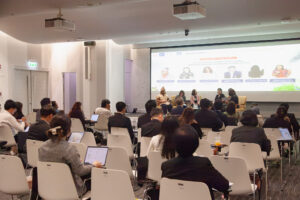
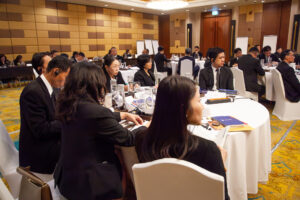
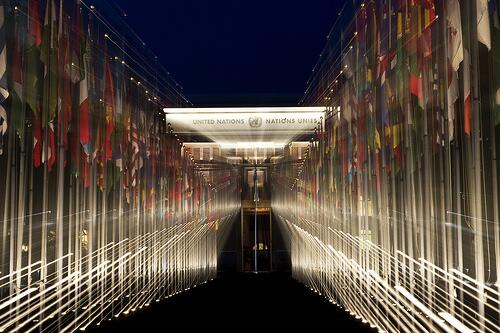
From 18 June to 6 July, the UN Human Rights Council will be holding its 20th regular session in Geneva. At a parallel event to the Council’s session, on Thursday 21 June 2012 from 13h-15h, the International Commission of Jurists will be holding a high-level discussion on advancing human rights and business in the work of the Human Rights Council. This event will provide delegations and civil society with a forum to explore ways for further enhancing international standards within the Human Rights Council on the issue of businesses’ human rights responsibilities. The aim is to generate vigorous discussion about the need and options for more international instruments clarifying/enhancing the human rights legal framework applicable to business corporations, in particular in the area of effective remedies.
The meeting will take the format of a moderated panel discussion, with one hour of interventions by expert panellists, and one hour of interactive debate with all participants. Expert panellists will include Professor Marco Sassoli from the University of Geneva, Professor Andrew Clapham from the Geneva Academy of International Humanitarian Law and Human Rights, Mr Michael Addo from the Working Group on the issue of human rights and transnational corporations and other business enterprises, Ms Harriet Berg from the Permanent Mission of Norway to UNOG, and Ms Rachel Groux-Nurnberg from Statkraft AS in Norway. Attendance is open to all delegations and members of civil society with access to the Palais des Nations in Geneva.
Discussion human rights business-agenda-2012 (full text in English, PDF)

Apr 27, 2012
The ICJ responded to a questionnaire prepared by the Special Rapporteur on the rights to freedom of peaceful assembly and of association.

Apr 24, 2012 | News
 Former Swiss President and newly-appointed Chair of the Martin Ennals Foundation, Micheline Calmy-Rey, today announced the nominees for the 2012 Martin Ennals Award for Human Rights Defenders (MEA). The MEA is the main award of the international human rights movement.
Apr 20, 2012
The submission undertakes a general exposition of standards and jurisprudence, followed by more specific attention to the question of administrative and preventive detention.
Pursuant to the call by the Working Group on Arbitrary Detention – one of the Special Procedures of the UN Human Rights Council – for written information to assist in its deliberations on “the definition and scope arbitrary deprivation of liberty under customary international law”, the ICJ made a submission pertaining to the definition, scope and content of arbitrary detention, under international standards and jurisprudence.
Following an overview of standards and jurisprudence, it focuses on administrative and preventive detention, including in respect of counter-terrorism measures, which has given rise to the most abusive practices by States in respect of the rights to liberty. It also briefly highlights the question of detention of migrants.
Submission working Group detention-analysis brief-2012 (full text in English, PDF)

Apr 19, 2012
In 2009, the UN High Commissioner for Human Rights initiated the “Dublin Process” to encourage all stakeholders in the treaty monitoring process to provide suggestions for strengthening of the treaty body system.
In November 2011, following a serious of national, regional and international consultations, a group of treaty body experts and other stakeholders convened to elaborate an outcome document, known as the Dublin II Statement (available below).
The International Commission of Jurists has endorsed a 15-point summary of Dublin II outcome document, prepared by Amnesty International (available below). The High Commissioner for Human Rights will in June 2012 publish a report compiling the various proposals made during the Dublin process.
Building on the Dublin Process, the General Assembly adopted resolution 66/254 in February 2012, through which an open-ended intergovernmental process has been initiated to conduct open, transparent and inclusive negotiations on how to strengthen and enhance the effective functioning of the treaty body system.
A group on non-governmental organizations that regularly contribute to the work of the treaty bodies, including the ICJ, have identified a list of seven issues and corresponding recommendations that in their view should be addressed in the inter-governmental process (available below)
Effective functioning system-position paper-2012 (full text in English, PDF)
Dublin II outcome document-publication-2012 (full text in English, PDF)
Dublin II document 15 points-publication-2012 (full text in English, PDF)