Dec 17, 2015 | News, Publications, Reports
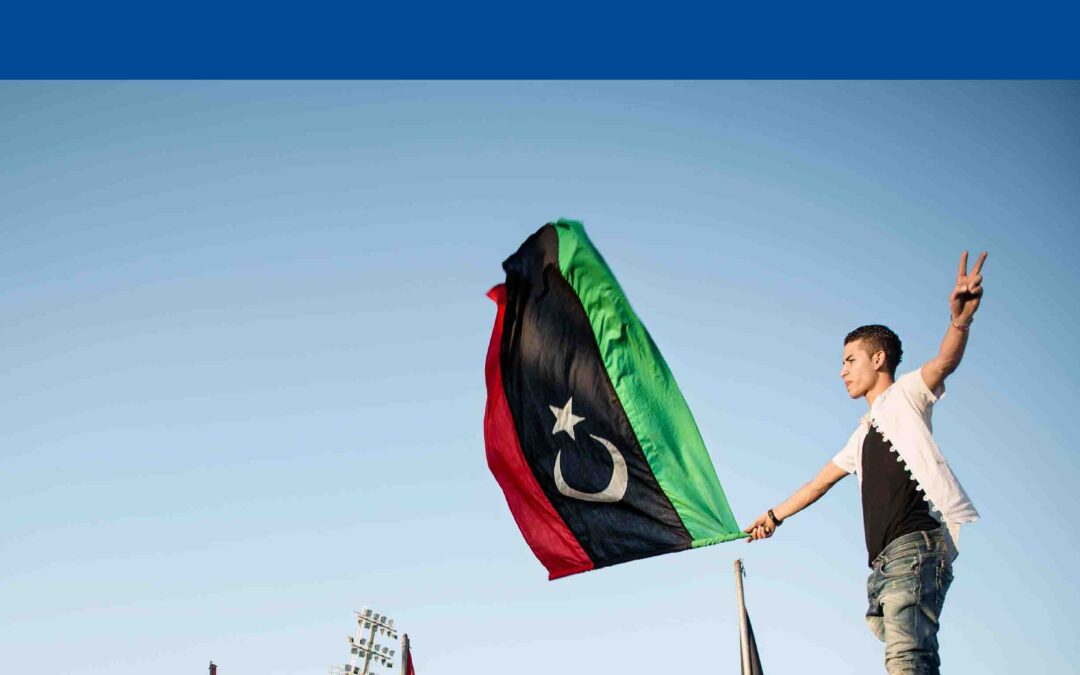
With the signing of the political agreement on a national unity government today, the next step in Libya’s transition will be to ensure that its new Constitution fully conforms to international rule of law and human rights standards, the ICJ said today.
The statement came as the ICJ released its new report The Draft Libyan Constitution: Procedural Deficiencies, Substantive Flaws.
In the report, the ICJ calls on the Libyan Constitution Drafting Assembly (CDA) to substantially revise the Draft Constitution published in October with a view to ensuring its full compliance with Libya’s obligations under international human rights law and international standards.
Libyan authorities, including the CDA, should also put in place effective mechanisms to ensure that the drafting process is inclusive, participatory, and fully reflects the views of a broad range of stakeholders, including civil society and minority groups.
The report concludes that the Draft Constitution, in many key respects, does not conform to Libya’s obligations under international human rights law or to international rule of law standards.
“The new Constitution provides a crucial opportunity to depart from decades of authoritarianism under Moammar Ghadafi’s regime. It must therefore provide for a strong foundation upon which the rule of law, including the separation of powers, the independence of the judiciary and civilian oversight over military and armed groups, can be established and upheld,” said Said Benarbia, Director of the ICJ MENA programme.
The Draft Constitution should also be amended to provide for a comprehensive set of human rights and protections that fully accord with international human rights law, including provisions relating to non-discrimination, the right to life, the right to liberty and security, the prohibition on torture and other cruel, inhuman or degrading treatment or punishment, protections for minorities, the right to freedom of thought, conscience and religion, fair trial rights, and a range of economic, social and cultural rights.
“The Libyan Constitution must at a minimum conform to the definition and scope of the rights contained within the human rights treaties to which Libya is a state party. Any scope for limitation of rights must conform to the criteria for such limitations under international law and, in particular, only as are provided for by law, are proportionate, and are demonstrably necessary in a free and democratic society,” Benarbia added.
Contact:
Doireann Ansbro, Associate Legal Advisor of the ICJ Middle East and North Africa Programme, tel: +216 71 841 701, email: doireann.ansbro(a)icj.org
Libya-Draft Constitution Flaws Deficiencies-Publications-Reports-2015-ENG (full report in PDF, English)
Libya-Constitution Flaws Report-News-Press releases-2015-ARA (full press release in Arabic, PDF)
Libya-Draft Constitution Flaws Deficiencies-Publications-Reports-2015-ARA (full report in PDF, Arabic)
Dec 7, 2015 | News
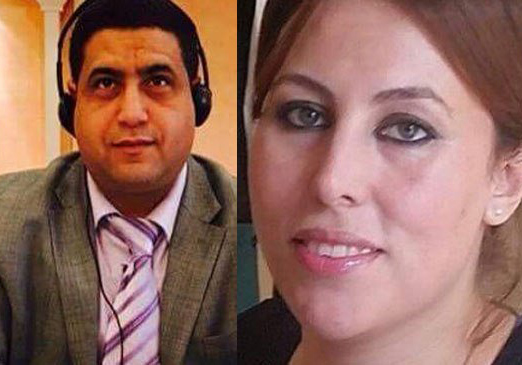
The ICJ today called on the Moroccan authorities to put an immediate end to the disciplinary proceedings initiated against judges Amal Homani and Mohamed Al-Haini.
The two were referred to the High Judicial Council by the Minister of Justice on unfounded allegations of “violating the duty of discretion” and “expressing opinions of a political nature”.
The charges stem from social media comments and media articles written by the judges in which they criticized the government’s Draft Law No. 100.13 on the Conseil Supérieur du Pouvoir Judiciaire and the Draft Law No 106.13 on the Statute for Judges, including provisions that appear designed to maintain executive branch control of the judiciary and the career of judges.
“Instead of subjecting judges who are promoting the rule of law and judicial independence to unjustified and arbitrary disciplinary proceedings, the Moroccan authorities must comply with their obligations under international standards to guarantee, protect and preserve judicial independence,” said Said Benarbia, Director of the ICJ Middle East and North Africa Programme.
“The disciplinary proceedings against judges Amal Homani and Mohamed Al-Haini are clearly without foundation and must be immediately and unconditionally terminated,” he added.
International standards are clear: members of the judiciary are, like other citizens, entitled to freedom of expression, belief, association and assembly.
The exercise of these basic human rights in a manner that preserves the dignity of their office and the impartiality and independence of the judiciary should not constitute a disciplinary offence, the ICJ says.
The social media comments and media articles by judges Amal Homani and Mohamed Al-Haini were clearly within the scope of their rights to freedom of expression, the Geneva-based organization adds.
Under the current legal framework, in particular Law No.1-74-467 of 1974 on the Statute for Judges, the Ministry of Justice has comprehensive and effective control over the entire judiciary, including the High Judicial Council, the career of judges and judicial administration.
Indeed, under the current framework, the Minister of Justice is the Vice-President of the High Judicial Council.
As such the impartiality and fairness of any disciplinary hearings initiated by the Minister of Justice based on statements perceived to criticize the executive branch, must be called into question, the ICJ says.
While provisions of the 2011 Constitution relating to the judiciary constitute an important step towards ending the executive’s control over the judiciary, Moroccan professional associations of judges and civil society organizations have expressed concern that the draft laws perpetuate such control as well as executive interference in judicial matters.
The ICJ has previously called on the Moroccan authorities to revise the two flawed draft laws to ensure their full compliance with international law and standards on judicial independence.
“The Moroccan authorities must end their attacks on judicial independence, including by revising flawed institutional and legal reforms and by ending politicized proceedings against judges,” Benarbia said.
Contact:
Theo Boutruche, Legal Adviser of the ICJ Middle East and North Africa Programme, tel: +961 70 888 961, e-mail: theo.boutruche(a)icj.org
Morocco-Judges Homani-El Haini-News-Press releases-2015-ARA (full press release in PDF, Arabic)
Nov 3, 2015
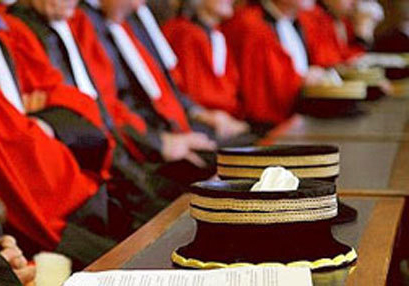
In a memorandum published today, the ICJ is calling on the Tunisian Parliament to revise the draft law on the Constitutional Court with a view to ensuring its full compliance with international standards, in particular those on judicial independence.
The establishment of a truly independent Constitutional Court in Tunisia holds out the promise of strengthening the rule of law by enhancing protection of the rights guaranteed under the new Constitution, the ICJ notes.
But to achieve these aims, key aspects of the draft law must be changed, the Geneva-based organization stresses.
“Tunisian law makers must amend the draft law to provide the Court with the necessary guarantees of independence, broader functions and to ensure individuals easier access to the Court, whose function is to protect their rights under Tunisia’s new Constitution,” said Said Benarbia, Director of the ICJ Middle East and North Africa Programme.
The draft law must also be revised to ensure that all members of the Court are appointed because of their legal expertise and integrity, and that its composition includes women and reflects the diversity of the population of Tunisia, the ICJ says.
Ensuring that a body composed of at least a majority of judges will select the individuals to be appointed to the Court will bolster the Court’s independence.
“The judges of the Court should be selected in a clear and open process, led by judges, that ensures that the individuals appointed to sit on the Court are chosen for their skills and not on the basis of their political affiliations or loyalties,” Benarbia added.
Additional safeguards against the possibility of removal for unjustified reasons and which ensure fair disciplinary procedures are needed to ensure the guardians of the Constitution may rule without fear or favour, the ICJ adds.
The draft law should be amended so as to more clearly provide the Court with a role as a check on measures taken by the executive branch of government.
It is also crucial that provisions of the draft law be added to broaden the Court’s mandate and increase individuals’ access to it, the ICJ underlines.
For example, unnecessary restrictions, such as any specific accreditation for lawyers should be removed, and provisions authorizing the Court to accept third parties as interveners and amicus curiae to increase the basis of information on which the Court decides a case should be added.
Contact:
Theo Boutruche, Legal Adviser of the ICJ Middle East and North Africa Programme, t: +96 170 888 961, e: theo.boutruche(a)icj.org
Tunisia-Draft Law Const Court-Advocacy-Analysis Brief-2015-ENG (full memo in PDF, English)
Tunisia-Draft Law Const Ct-News-Press releases-2015-ARA (full press release in PDF, Arabic)
Tunisia-Draft Law Const Court-Advocacy-Analysis Brief-2015-ARA (full memo in PDF, Arabic)
Sep 21, 2015 | Advocacy, Non-legal submissions
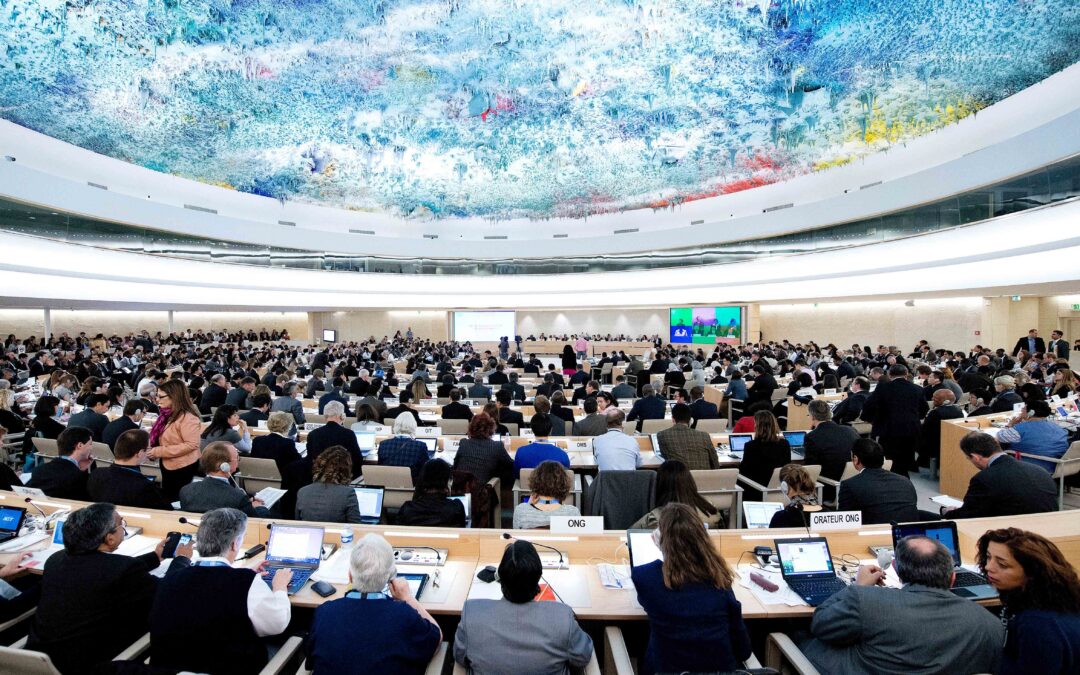
The ICJ today delivered an oral statement at the UN Human Rights Council during the Interactive Dialogue with the Commission of Inquiry on the Syrian Arab Republic concerning accountability and other measures to address the Syrian conflict.
In the statement the ICJ called upon the UN Human Rights Council and the Security Council to respond to the findings of the 10th report of the Syria Commission of Inquiry, including with a view to ensuring accountability for the serious violations of international law.
The ICJ also called upon all states to comply with their obligations under international law vis-à-vis the Syrian conflict, including by searching for all those responsible for international crimes committed in this conflict and bringing them before their own courts, and by protecting the rights of Syrian refugees and abiding by the principle of non-refoulement.
The full statement may be downloaded in PDF format, here: Syria-UN-HRC30-OralStatement-Advocay-non legal submission-2015-ENG
Sep 15, 2015 | News
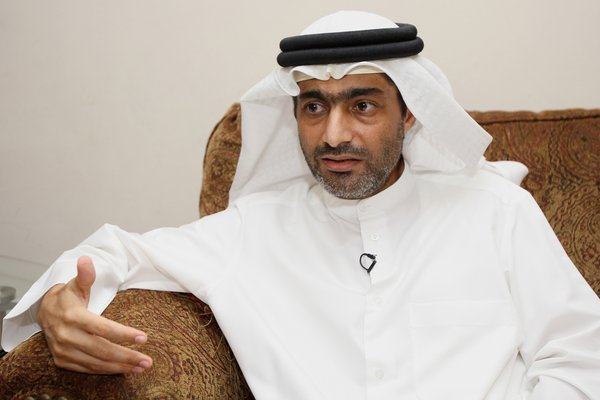
Ten human rights groups, including the ICJ, represented in the Jury, today called on the United Arab Emirates authorities to lift the travel ban imposed on Ahmed Mansoor, one of the three human rights defenders nominated for the 2015 Award, and to issue him a passport.
Widely respected as one of the few voices within the United Arab Emirates (UAE) to provide a credible independent assessment of human rights developments in the country, Ahmed Mansoor regularly raises concerns regarding arbitrary detention, torture or degrading treatment, and failure to meet international standards of fair trial.
He also draws attention to other human rights abuses, including against migrant workers.
As a result, Ahmed Mansoor has faced repeated intimidation, harassment, and death threats from the UAE authorities or their supporters, including arrest and imprisonment in 2011 following an unfair trial.
He and four other activists who called for democratic rights in the UAE were jailed in 2011 on the charge of “insulting officials”.
Although pardoned and released later that year, Ahmed Mansoor has been banned from travel and had his passport confiscated.
As a result of his courageous work, Ahmed Mansoor was selected as one of the three finalists of the Martin Ennals Award who will be recognized at a ceremony hosted by the city of Geneva on October 6th.
The Award is usually handed out by the United Nations High Commissioner for Human Rights.
As matters stand, however, Ahmed Mansoor will be prevented from attending the ceremony because the UAE authorities have arbitrarily imposed a travel ban on him and have refused to return his passport.
Both the travel ban and the confiscation of his passport violate Ahmed Mansoor’s right under international human rights law to freedom of movement, as these measures were taken to punish him for his peaceful human rights activism.
The Martin Ennals Award Jury today noted with concern : “Ahmed Mansoor’s absence at the ceremony would mark a very disappointing position for the UAE, which is a country that prides itself as one of the hubs of international business and tourism in the Middle East, as well a safe haven in the region. As a member of the UN Human Rights Council, which is running for a second term, we expect the UAE authorities to honour their obligations to uphold human rights and protect human rights defenders. The UAE government must match its rhetoric on the international stage with meaningful actions at home, starting with immediately lifting the travel ban on Ahmed Mansoor, to returning and renewing his passport, and allowing him to travel to Geneva for the ceremony.”
Ahmed Mansoor is a member of the Advisory Committee of Human Rights Watch’s Middle East and North Africa Division, as well as the Advisory Board of the Gulf Centre for Human Rights.
The following organizations are represented in the Martin Ennals Award Jury: International Commission of Jurists, Amnesty International, FIDH, Human Rights First, HURIDOCS, International Service for Human Rights, EWDE Germany, Front Line Defenders, Human Rights Watch, World Organisation Against Torture.
Contact:
Michael Khambatta, Director, Martin Ennals Foundation, t +41 79 474 8208 ; e: khambatta(a)martinennalsaward.org
UAE-MEA Jury Joint Statement Ahmed Mansoor-News-Press releases-2015-ARA (full text of press release in ARABIC, pdf)