In an interactive dialogue with representatives of its government, the ICJ called on Ecuador to take steps to ensure that its Constitution and other legislation conform with obligations pertaining to the rights of indigenous peoples. Watch the webcast.
The ICJ delivered its statement today during the adoption by the UN Human Rights Council of the Universal Periodic Review outcome document on Ecuador, during the course of the 21st regular session of the Council.
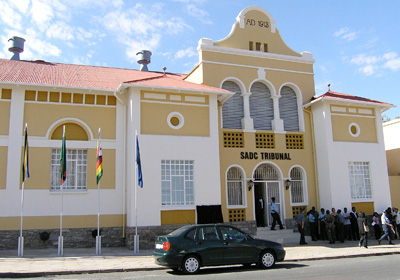
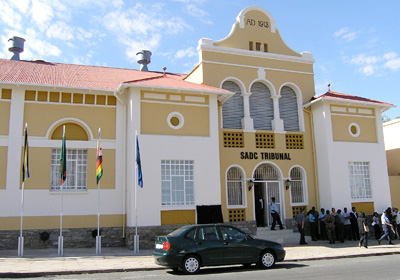
The ICJ and other human rights and legal groups say that the the SADC Summit of Heads of State’s decision on SADC Tribunal denies the SADC people the right to approach the court for justice.The ICJ, SADC LA and SALC express their deepest disappointment at the decision taken by the SADC Summit of Heads of State and Government on the SADC Tribunal.
The Summit’s Final Communiqué explains that the region’s leaders had “resolved that a new protocol on the Tribunal should be negotiated and that its mandate should be confined to interpretation of the SADC Treaty and Protocols relating to disputes between member states”.
That decision effectively destroys an integral SADC organ – the currently established Tribunal – and denies the SADC people the right to approach the court for justice.
It is, as Archbishop Emeritus Desmond Tutu observes, “a tragedy. It is a blow against accountable government and individual rights.”
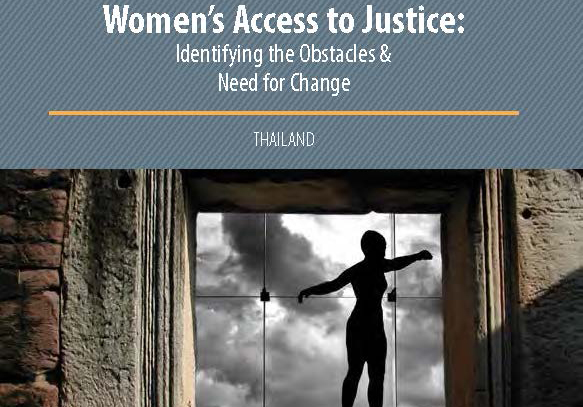
In a new report released today, the ICJ and Justice for Peace Foundation (JPF) call for a series of changes in law, practice, approach and behaviour to address the justice needs of women across Thailand.
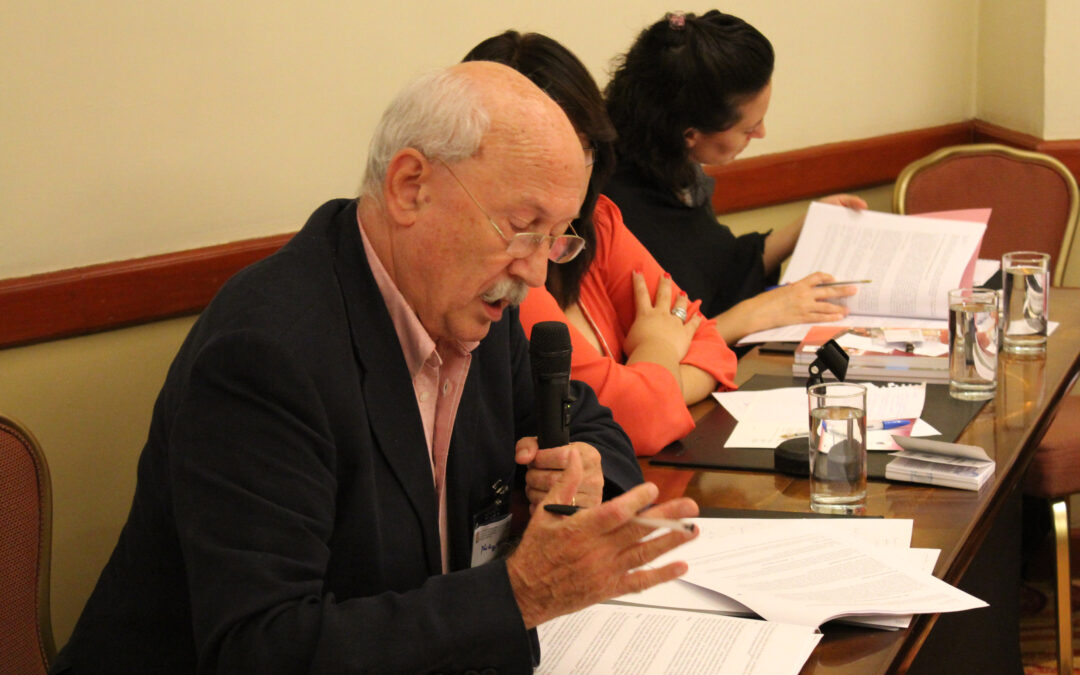
With the support of ICJ Commissioner Justice Philippe Texier, the ESCR Programme and the Central America Regional Office organized a two-day workshop in San Salvador on August 16 and 17, 2012.
A group of 25 representatives of human rights and development NGOs as well as trade unions, lawyers and academic experts participated in a first consultation on access to justice for victims of violations of economic, social and cultural rights.
The discussions tackled obstacles and advances in the field of access to justice with regard to the legal and institutional frameworks, as well as in the administration of justice and material issues.
Coming from very different backgrounds, the participants valued the opportunity to work together and share their experience related to economic, social and cultural rights (ESCR) of a variety of rights-holders and their attempts to seek justice.
This first consultation and workshop will be followed by other activities in the course of the national project.
Background of the workshop
With national projects such as the one in El Salvador, the ICJ programme on Economic, Social and Cultural Rights aims at contributing to improve accountability for human rights violations and access to justice for all, including for victims of threats against and violations of economic, social and cultural rights.
The ICJ has embarked on research processes at national level to identify obstacles and opportunities for access to justice, as well as on consultation and collaboration processes with national allies to define strategies to address gaps.
Depending on the needs identified, the ICJ will support the implementation of recommendations and steps that includes trainings and legal interventions.
As part of the 20th session of the UN Human Rights Council (18 June to 6 July 2012), the ICJ today delivered an oral statement calling on the Council to systematically consider the question of access to justice in all of its work.
In a general debate under item 8 of the Council’s agenda (follow-up and implementation of the Vienna Declaration and Programme of Action), the ICJ noted the need for every State, individually and collectively, to provide victims of human rights violations with access to justice, including through the provision of effective remedies and reparations.
In calling on the Council to systematically consider this issue, the ICJ called for further consideration of how to strengthen existing, and develop new, international mechanisms, such as a World Court of Human Rights.
🍪 We use cookies on our website to improve your experience. By clicking "Accept all", you consent to the use of all the cookies. If you'd like to control which cookies we use, please visit "Cookie settings". To find out more, read our privacy policy and cookie policy.
Functional
Always active
The technical storage or access is strictly necessary for the legitimate purpose of enabling the use of a specific service explicitly requested by the subscriber or user, or for the sole purpose of carrying out the transmission of a communication over an electronic communications network.
Preferences
The technical storage or access is necessary for the legitimate purpose of storing preferences that are not requested by the subscriber or user.
Statistics
The technical storage or access that is used exclusively for statistical purposes.The technical storage or access that is used exclusively for anonymous statistical purposes. Without a subpoena, voluntary compliance on the part of your Internet Service Provider, or additional records from a third party, information stored or retrieved for this purpose alone cannot usually be used to identify you.
Marketing
The technical storage or access is required to create user profiles to send advertising, or to track the user on a website or across several websites for similar marketing purposes.