Feb 28, 2020 | Advocacy, Non-legal submissions
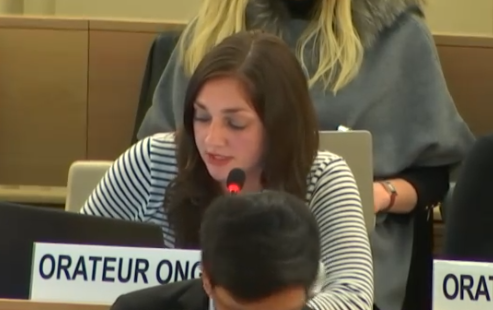
At the UN Human Rights Council, the ICJ today urged renewed international action to ensure justice and accountability for crimes under international law in Sri Lanka.
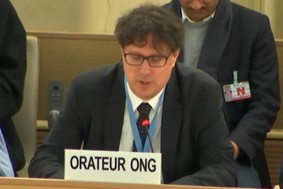
The statement, delivered during a discussion of updates and reports from the High Commissioner for Human Rights, read as follows:
“The ICJ deeply regrets the Sri Lankan Government’s withdrawal of support for the process under resolutions 30/1 and 40/1. ICJ supports the joint statement read by IMADR.
The Sri Lankan legal system and judicial institutions have for decades demonstrated a chronic inability to address systemic and entrenched impunity for crimes under international law perpetrated by the military and security forces.[1] The new President’s promises to protect the military from accountability, and senior command appointments of individuals credibly accused of crimes under international law, only deepen the concern.
As the High Commissioner notes,[2] the failure to deal comprehensively with impunity and to reform institutions may lead to more human rights violations.
The Tamil population have consistently and rightly rejected any reconciliation process that ignores justice and accountability, and it is obvious that no justice or accountability process that is left to domestic Sri Lankan institutions alone can be credible. The compromise national-international “hybrid” judicial accountability mechanism foreseen by resolution 30/1 already fell far short of what the situation actually warrants.
If the Government seeks now to abandon even that compromise, purely international processes, whether before the ICC or through creation of another international accountability mechanism by the Council, and the exercise of universal jurisdiction by other States, are the only remaining options for securing the justice required by international law and indispensable to any credible reconciliation process for Sri Lanka.”
[1] International Commission of Jurists, Authority without Accountability: The Crisis of Impunity in Sri Lanka, 2012, https://www.icj.org/sri-lanka-new-icj-report-documents-crisis-of-impunity/; Human Rights Council must respond to ongoing failure of Sri Lankan justice system to ensure accountability for human rights violations, 2014, https://www.icj.org/human-rights-council-must-respond-to-ongoing-failure-of-sri-lankan-justice-system-to-ensure-accountability-for-human-rights-violations/; Sri Lanka: the need for an international inquiry, 2014, https://www.icj.org/sri-lanka-the-need-for-an-international-inquiry/; Sri Lanka: Joint Open Letter to the Ambassadors of UN Human Rights Council Member States, 2015, https://www.icj.org/wp-content/uploads/2015/07/SriLanka-JointOpenLetter-Accountability-Advocacy-2015.pdf; Sri Lanka’s victims demand and deserve credible justice, 2016, https://www.icj.org/sri-lankas-victims-demand-and-deserve-credible-justice/.
[2] UN Doc A/HRC/43/19, para 36.
Feb 27, 2020 | Advocacy, Non-legal submissions
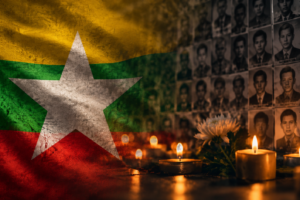
The ICJ today urged law reforms to address discrimination against minorities in Myanmar, during an interactive dialogue with the UN High Commissioner on Human Rights on her report on Rohingya and other minorities in Myanmar, at the Human Rights Council in Geneva.
The statement read as follows:
“The ICJ welcomes the report of the High Commissioner,[1] delivered against the background of continuing ethnic armed conflict in Myanmar.
With over 50 years’ experience monitoring and documenting Myanmar’s human rights situation, the ICJ concurs with the High Commissioner’s conclusions and recommendations.
While the root causes of violations and abuses against the Rohingya and other persecuted minorities in Myanmar may be complex, as the Fact-Finding Mission already reported to the Council in September 2018, the steps required to address them are by now “well known”.[2]
One essential step is comprehensive legal and justice sector reform within the country.
In a briefing paper last year, the ICJ recommended three immediately achievable, concrete areas of law reform available to the Government: 1) legislative reform, including most urgently of the 1982 Citizenship Law; 2) Constitutional reform, to protect the right of citizens to full political participation; and 3) interim measures to address discrimination on the basis of race or ethnicity.
At the same time, it is imperative the international community continues to support the various international accountability efforts underway, including the work of the International Criminal Court and Independent Investigative Mechanism for Myanmar.
The ICJ would like to ask: what role do you see for States and civil society in relation to monitoring and implementation of your recommendations, particularly with respect to law and justice sector reform?”
[1] UN Doc A/HRC/43/18
[2] UN Doc A/HRC/39/64 (12 September 2018), para 102.
Feb 19, 2020 | News
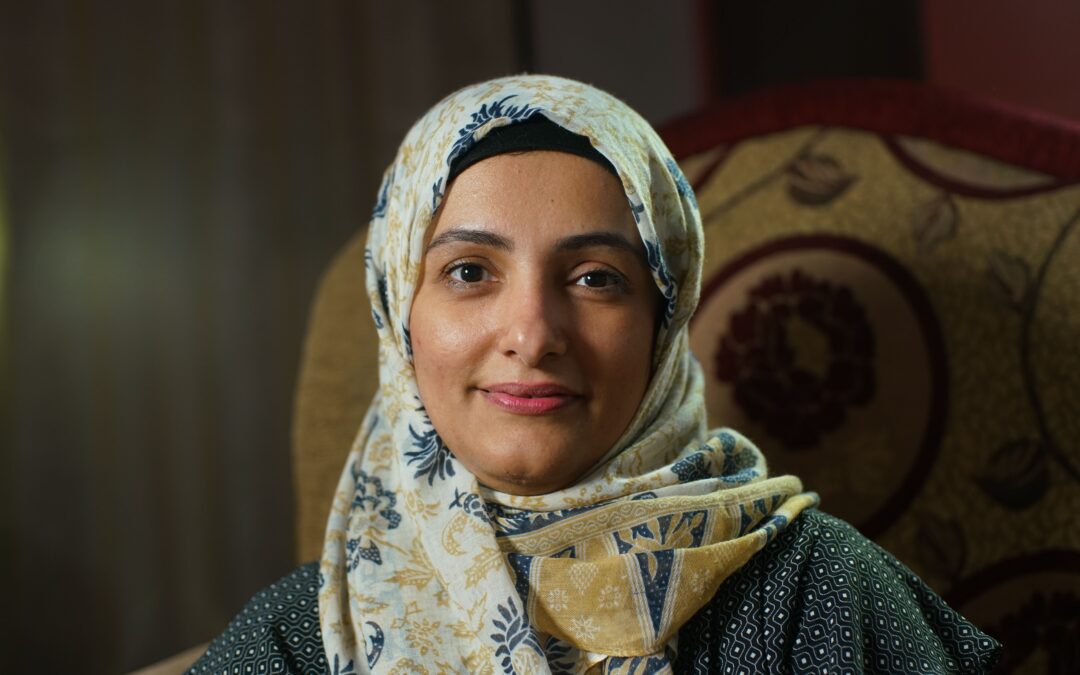
Huda Al- Sarari, Yemeni lawyer and human rights defender, is the 2020 Martin Ennals Award laureate. She was among three women selected as finalists by a jury of ten of the world’s leading human rights organizations, including the ICJ, along with Sizani Ngubane, South Africa, and Norma Librada Ledezma, Mexico.
The 2020 Martin Ennals Award ceremony, co-hosted by the Martin Ennals Foundation and the City of Geneva, was held today, and for the first time in the history of the Award, all three finalists are women.
“Women human rights defenders are subject to the same risks as every human rights defender, but as women, they also face certain forms of violence and violations due to their gender. They are often stigmatized and ostracized by community leaders, faith- based groups and even family members,” said the Mayor of the City of Geneva, Sandrine Salerno.
“The Martin Ennals Foundation is particularly proud to honour and support three resilient women human rights defenders this year, our laureate Huda Al-Sarari, as well as our two finalists Sizani Ngubane and Norma Librada Ledezma for their achievements. We hope that the award will shed a light on their achievements, and strengthen protection mechanisms around them,” said Philippe Currat, President of the Board of the Martin Ennals Foundation.
Huda Al-Sarari is a Yemeni lawyer and human rights defender who graduated in Sharia and Law from Aden University. She also holds a masters in Women’s Studies and Development from the Women’s Centre at Aden University. Over the last years, Huda investigated, exposed and challenged the enforced disappearances that occurred as a result of secret prisons run by foreign governments in Yemen where thousands of men and boys have suffered from arbitrary detention, torture and extrajudicial killings. She collected evidence on more than 250 cases of the abuse taking place within those prisons.
“Being a human rights defender in Yemen is extremely challenging, and being a woman makes this even more difficult. In a male-dominated society, I have to prove myself maybe ten times more than a man,” she said.
Despite the threats, defamation campaigns and sacrifices she and her family endured, Huda continues to stand alongside the families of those who have disappeared.
“Receiving the 2020 Martin Ennals Award for human rights defenders means the world to me. It gives me great strength and emboldens me to continue this fight for justice. I believe the Award will be incredibly important in drawing attention to the continual plight of victims of arbitrary detention, abuse and torture in Yemen,” she added.
“We commend Huda for the work that she conducted, not only against the backdrop of the ongoing Yemeni civil war, but also, in a country where women still struggle to express their political and civil rights. Huda’s legacy is crucial as her thorough investigations and search for accountability will serve to bring justice for human rights violations occurred during the conflict,” said Hans Thoolen, Chair of the Martin Ennals Award Jury.
The two finalists of the Martin Ennals Award this year are Sizani Ngubane (South Africa) and Norma Librada Ledezma (Mexico).
Sizani is a human rights defender who advocates for land rights for women in rural areas on South Africa. She also supports women to access education, and fights for the end of the traditional practice of Ukuthwala, which is the abduction and forced marriage of young girls and women.
Norma is the founder of Justicia para Nuestras Hijas. She has supported over 200 investigations into cases of feminicide, enforced disappearance and human trafficking in Chihuahua, Mexico.
Both were praised by the Martin Ennals Jury member organizations for their commitment and tremendous achievements in their respective countries.
Additional information
The City of Geneva has hosted the Award ceremony since 2008, together with the Martin Ennals Foundation, as part of its deep commitment to the defense of human rights. The support of the City, by means of its Service for International Solidarity, reflects its mission to promote human rights both internationally and
The Jury of the Martin Ennals Award is comprised of ten of the world’s leading human rights organizations: the ICJ, Amnesty International, FIDH, Human Rights First, HURIDOCS, International Service For Human Rights, Brot für die Welt (Bread for the World), Front Line Defenders, Human Rights Watch and the World Organization Against Torture.
Download
Universal-MEA2020bios-News-2019-ENG (full bios of finalists, in PDF)
Universal-MEA2020winner-News-Press releases-2019-ARA (full story in Arabic, PDF)
Universal-MEA2020bios-News-2019-ARA (full bios of finalists, in Arabic, PDF)
Contact
Olivier van Bogaert, Director Media & Communications, ICJ representative in the MEA Jury, t: +41 22 979 38 08 ; e: olivier.vanbogaert(a)icj.org
Watch the ceremony as it happened
https://www.facebook.com/MartinEnnals/videos/2552501445008021/
Feb 13, 2020 | News
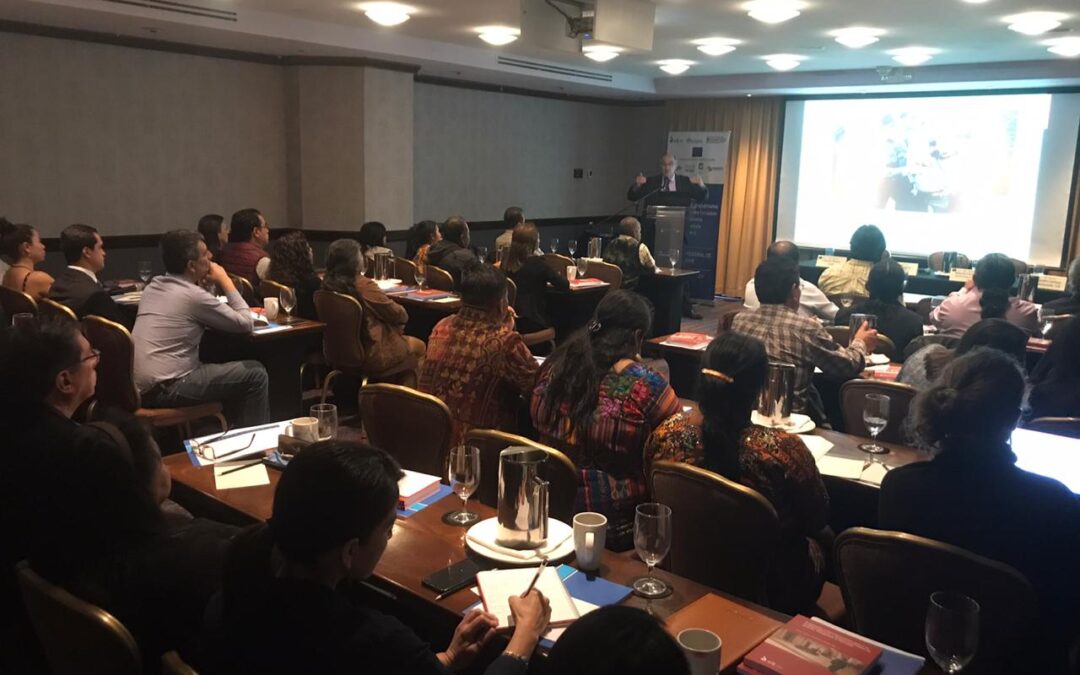
The ICJ convened two workshops in Guatemala City from 11 to 13 February for more than 30 lawyers and more than 30 representatives of victims’ organizations on the international law and standards that apply to the investigation of unlawful death and enforced disappearances.
The workshops were conducted as part of the project under the ICJ’s Global Accountability Initiative entitled, Promoting justice for extrajudicial killings and enforced disappearances in Colombia, Guatemala and Peru, and supported by the EU European Instrument for Democracy and Human Rights (EIDHR). The project promotes accountability of perpetrators and access to effective remedies and reparation for victims and their families in cases of extrajudicial killings and enforced disappearances.
The workshop for lawyers was inaugurated by the President of the Board of Lawyers of Guatemala, Ovidio Orellana. The workshop with representatives of victims organizations was inaugurated by the Chief of Cooperation of the European Union Alberto Cortezón.
Participants in the workshops emphasized that the Guatemalan public authorities must respect and effectively impolement the the revised Minnesota Protocol on the Investigation of Potentially Unlawful Death, and that there was a need to reinforce advocacy strategies for the respect of the Protocol by the Guatemalan Human Rights Institutions.
The Presidential Commission on Human Rights (COPREDEH) and the Ombudsman´s Office participated during the workshop with victims’ organizations. They committed themselves to take the necessary actions to incorporate into their work the principles and content of the Minnesota Protocol, as a complementary tool to other conventions and binding law.
Contacts:
Ramón Cadena, Regional Director of ICJ’s Central America Office, email: ramon.cadena@icj.org
Kingsley Abbott, Senior Legal Adviser & Coordinator of the ICJ’s Global Accountability Initiative, email: kingsley.abbott@icj.org
Carolina Villadiego Burbano, ICJ Legal and Policy Adviser, Latin America, and Regional Coordinator of the Project, email: carolina.villadiego@icj.org
Feb 6, 2020 | Advocacy, News, Non-legal submissions
The ICJ has made a submission to the UN Human Rights Committee in advance of its forthcoming examination of Tunisia’s sixth periodic report under the International Covenant on Civil and Political Rights (ICCPR).
In its submission, the ICJ highlights a number of ongoing concerns with respect to the country’s implementation of and compliance with the provisions of the ICCPR, including in relation to:
- Tunisian authorities’ implementation of the transitional justice law, particularly on issues pertaining to criminal accountability for gross human rights violations;
- Judicial independence and accountability, particularly on issues pertaining to the development of a Judicial Code of Ethics, and
- Tunisia’s failure to establish a Constitutional Court.
The submission is relevant for the Committee’s evaluation of Tunisia’s implementation of the State’s obligations and related Covenant rights under articles 2, 3, 6, 7, 9, 14, 15, 16, 18, 19, 21, 22 and 26 of the ICCPR.
The Human Rights Committee will examine Tunisia’s sixth periodic report during its 128th session, which will be held in Geneva from 2 March to 27 March 2020.
Tunisia submitted its sixth periodic report to the Committee in June 2019 according to the approved simplified reporting procedure and in response to the list of issues identified by the UN Human Rights Committee in April 2018. Among these issues, the Committee requested Tunisia to provide information in relation to: the Constitutional and legal framework within which the Covenant is implemented; transitional justice; and the independence and impartiality of the judiciary.
Download
Tunisia-ICJ-Submission-UNHRC-Advocacy-Non-Legal-Submissions-2020-ENG (full submission, in PDF)