Dec 10, 2019 | News
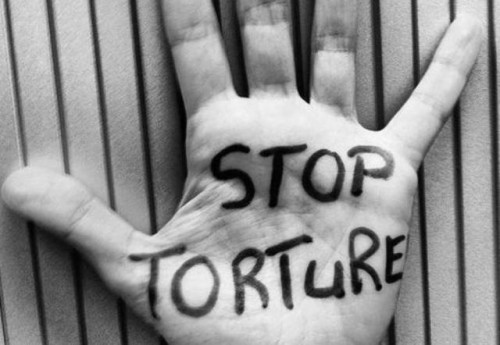
The pervasive practice of torture and other ill treatment can only be addressed if the States in the region ensure perpetrators are held accountable in line with international standards, said lawyers and activists from Bangladesh, India, Nepal, Pakistan and Sri Lanka.
The call came at a regional conference on the investigation and prosecution of torture and other ill treatment in South Asia, organized by the ICJ ahead of Human Rights Day.
“Governments in South Asia have done very little to support the victims and survivors of torture and other ill treatment, or to ensure their rights to truth, justice and reparation,” said Frederick Rawski, ICJ’s Asia Director.
“Despite the persistence of the practice, Governments have failed to follow their legal obligation to treat these crimes as the serious human rights violation they are,” he added.
Torture and other ill treatment are prevalent in South Asia, and in some countries widespread and systematic, with perpetrators enjoying impunity for the crime.
According to the ICJ, States in the region continue to deny the pervasiveness of torture, use torture as a deliberate tool to control and punish dissent, fail to enact specific legislation to criminalize torture, and where a special law exists, fail to implement it in good faith.
Consequently, there have been few concerted efforts to hold perpetrators of torture and ill treatment to account.
All too often, perpetrators get away with only disciplinary sanctions, and even when prosecutions happen, they do not result in convictions and commensurate penalties.
Suspects are often lower or middle-ranking public officials rather than their superiors, who are charged with lesser crimes than torture, such as assault, battery, coercion or abuse of office that carry relatively low punishments.
Prosecutions frequently fail because of the difficulties to prove torture, including securing witnesses for the prosecution, inadequate or conflicting medical evidence as well as threats of reprisals influencing victims and witnesses.
Even when such hurdles are overcome, immunities that protect public officials from prosecutions allow perpetrators to escape accountability.
Furthermore, military and intelligence agencies have extensive and unaccountable powers, including for arrest and detention, which facilitate the practice of torture and other ill treatment.
Under international law, States must ensure protection against torture and other cruel, inhuman or degrading treatment or punishment.
Whenever there are reasonable grounds to believe that torture has been committed, States are required to investigate allegations competently, impartially, independently, promptly and thoroughly.
While a comprehensive set of reforms, both in law and policy, is required to prevent and combat torture and other ill treatment – ensuring accountability for perpetrators would be a first step, said the ICJ.
Contact:
Frederick Rawski (Bangkok), ICJ Asia Pacific Regional Director, e: frederick.rawski(a)icj.org
Reema Omer, ICJ International Legal Adviser for South Asia (Lahore), t: +923214968434; e: reema.omer(a)icj.org
Dec 5, 2019 | Advocacy, Analysis briefs
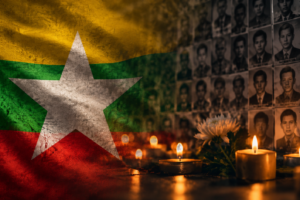
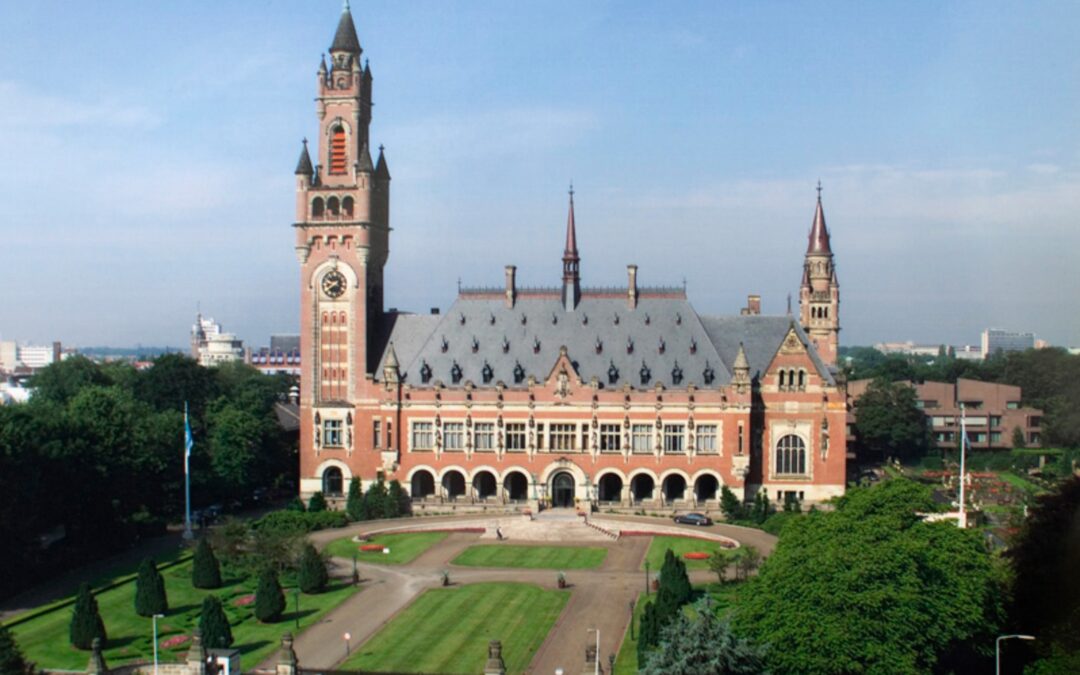
Today, the International Commission of Jurists published a legal briefing on the hearing on provisional measures to be held at the International Court of Justice between 10-12 December 2019 in the case of The Gambia v Myanmar.
Questions answered include:
- What allegations does The Gambia make against Myanmar?
- What provisional measures has The Gambia requested?
- What are provisional measures?
- What is the process for requesting provisional measures?
- What factors are taken into account on a request for provisional measures?
- If the Court indicates provisional measures, are they binding on the parties?
- What is Daw Aung San Suu Kyi’s role in the proceedings?
Download:
Myanmar-Provisional Measures Briefing-Advocacy-Analysis Brief-2019-ENG (English)
Myanmar-Provisional Measures Briefing-Advocacy-Analysis Brief-2019-BUR (Burmese)
Contact:
Kingsley Abbott, Senior Legal Adviser and Coordinator of the ICJ’s Global Accountability Initiative, kingsley.abbott(a)icj.org
Nov 26, 2019 | News, Publications, Reports, Thematic reports
At the launch of a report on companies’ practices to address complaints relating to their negative impacts on human rights, the ICJ said that many companies have failed to establish and implement effective operational-level grievance mechanisms (OGMs).
Nov 25, 2019 | News
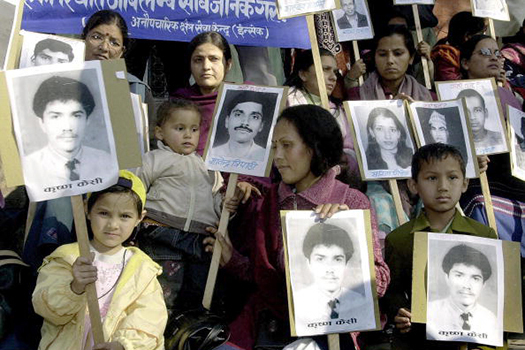
Nepal has made no real progress on questions of justice, truth and reparations for victims of gross human rights violations and abuses during its 10-year conflict, the ICJ, Amnesty International, Human Rights Watch (HRW) and TRIAL International said today.
The Comprehensive Peace Agreement to end the war was signed on November 21, 2006.
While two commissions have been set up to address conflict-era atrocities, they have not been effective and impunity and denial of access to justice to victims remain prevalent. The four human rights organizations are particularly concerned about the recent moves that suggest that the government will go forward with the appointing of commissioners without making necessary reforms to the legal framework.
“Last week marked the 13th anniversary of the Comprehensive Peace Agreement that ended the conflict in Nepal. It is astonishing that so little progress has been made in responding to the clearly articulated concerns and demands of conflict victims,” said Frederick Rawski, ICJ’s Asia-Pacific Director. “These demands have included a transparent and consultative process for the appointment of commissioners, and a genuine good-faith effort by political leaders and lawmakers to address serious weaknesses in the existing legal framework.”
On November 18, a five-member committee formed by the government to recommend names for commissioners to be appointed to the Truth and Reconciliation Commission and the Commission on the Investigation of Enforced Disappearances published a list of candidates. Concerns have been raised by victims and civil society that the government will simply re-appoint past commissioners or make political appointments that will not be adequately impartial and independent.
“It is deeply disappointing that the government has repeatedly attempted to appoint the commissioners without adequate consultation and transparency . The commissions will not gain the trust of the victims and the international community if the political parties continue to interfere in the appointment process,” said Biraj Patnaik, South Asia Director at Amnesty International.
Importantly, the move suggests that the commissions will be re-constituted without amending the legal framework governing the transitional justice process and ensuring its compliance with Nepal’s international human rights law obligations, as directed by Nepal’s Supreme Court and demanded by civil society and victims.
Victims and civil society organizations have issued public statement making it clear that they oppose any appointments prior to the amendment of the legal framework. Notably, the National Human Rights Commission, in its statement commemorating 13th Anniversary of CPA, stated that “…the commission will not support any decision, work or activities that might hurt the sensitivity of the conflict victims…”.
“The government’s move has not only undermined victims’ role in the transitional justice process, but has also once again brought into question its commitment to uphold its international law obligations and ensuring justice for conflict-era crimes,” said Tomás Ananía, TRIAL International’s Nepal Program Manager.
The ICJ, Amnesty International, Human Rights Watch and TRIAL International have repeatedly expressed concern that effective transitional justice mechanisms require strong legal foundations consistent with international law and good practices, and the political will to address the concerns of victims of the conflict. All four organisations reiterated their calls to amend the the 2014 Transitional Justice Act to make it consistent with the Supreme Court’s rulings and international human rights standards, as well as for the initiation of a genuine consultative and transparent process for the appointment of commissioners.
Concerns raised about the existing, and proposed, legal frameworks include: disparities between the definitions of specific crimes under international law and human rights obligations and violations under national, and international law; inadequate provisions to ensure that serious crimes under international law are subject to criminal accountability (including punishment proportionate to the seriousness of the crimes); and a reliance on compensation at the expense of other forms of reparation and remedy for conflict survivors and their families.
Under the principle of universal jurisdiction states may make it possible for their domestic criminal justice system to investigate and prosecute crimes such as torture, committed by any person, anywhere in the world.
This means that a citizen of any country, including Nepal, suspected of such crimes faces the risk of arrest and prosecution for these crimes in countries that apply universal jurisdiction. This is more likely if the Nepali authorities do not appear able and willing to prosecute those responsible for such crimes, the organizations said.
“After initial pledges to ensure truth, justice, and reparations for conflict victims, it appears that the government is once again determined to protect those responsible for the crimes,” said Meenakshi Ganguly, South Asia director at Human Rights Watch. “The international community should remind Nepal that whitewashing egregious crimes will not help to dodge universal jurisdiction.”
Contact:
Download the complete press-release in English and Nepali. (PDF)
Oct 31, 2019 | News
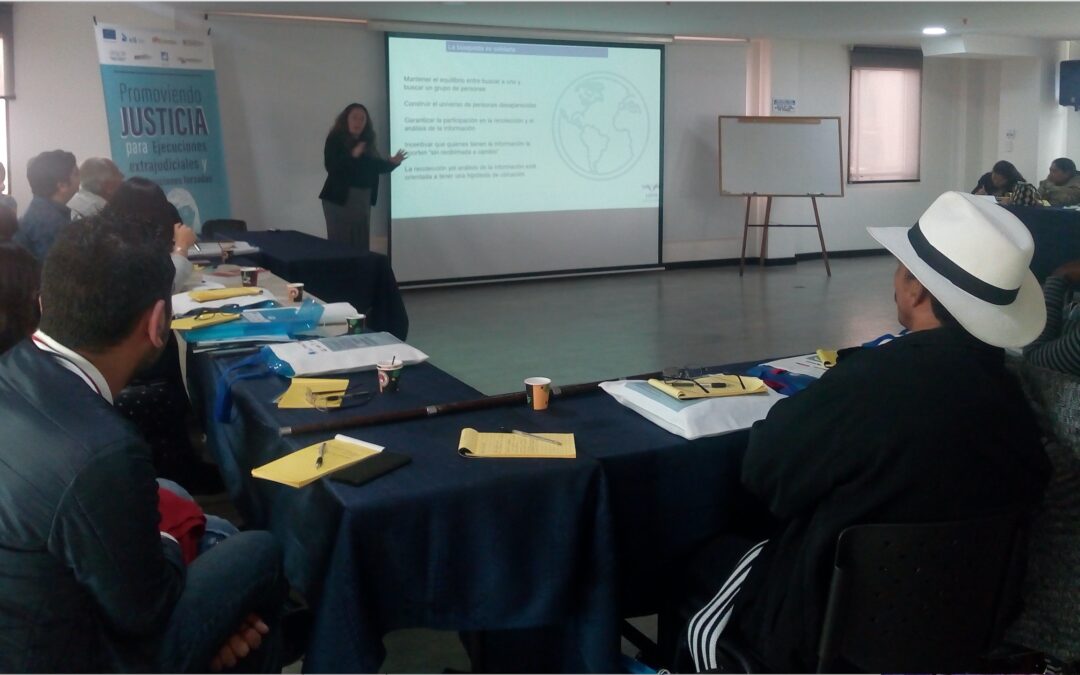
On 29-30 October the ICJ, in partnership with dhColombia and the Argentine Forensic Anthropology Team (EAAF), hosted a two-day training workshop in Bogotá on the legal framework around enforced disappearance and extrajudicial killings.
The training aimed to improve the understanding of victims and human rights lawyers of the domestic law on extrajudicial killings and enforced disappearances in Colombia. It included an analysis of both the ordinary justice system, as well as transitional justice mechanisms. It also explored the role of the forensic sciences in tackling impunity for those crimes.
The ICJ in furtherance of its objective to promote accountability, justice and the rule of law in Colombia, has been continuously monitoring the investigation and prosecution of serious human rights violations and abuses, particularly extrajudicial killings and enforced disappearances. Perpetrators of such violations, which constitute crimes under international law, have enjoyed a high level of impunity. While there are numerous unresolved cases dating back to the 1970s, violations have continued even after a comprehensive peace agreement was signed in 2016 following decades of armed conflict.
In Colombia, achieving accountability for those crimes has proven difficult for several reasons, including the ineffective functioning of the justice system. Victims and their lawyers have faced serious obstacles in gaining access to effective remedies. In addition, the creation of new institutions by the Peace Agreement has changed some basic rules and procedures for the investigation and prosecution of those crimes. Consequently, the Colombian justice system is more complicated to understand not only for victims but for lawyers.
The training workshop was part of a broader regional project addressing justice for extrajudicial killings and enforced disappearances in Colombia, Guatemala and Peru. Participants were victims and human rights lawyers from different regions of the country, especially those where that is less opportunity to access legal and forensic training. Considering that capacity building activities are essential to the effective achievement of accountability, it is expected that participants of the training will obtain valuable tools to demand justice and remedy and reparations for serious human rights violations.
Contacts:
Rocío Quintero M, Legal Adviser, Latin America. Email: rocio.quintero(a)icj.org
Carolina Villadiego, ICJ Legal and Policy Adviser, Latin America, and Regional Coordinator of the Project. Email: carolina.villadiego(a)icj.org