Oct 15, 2019 | News
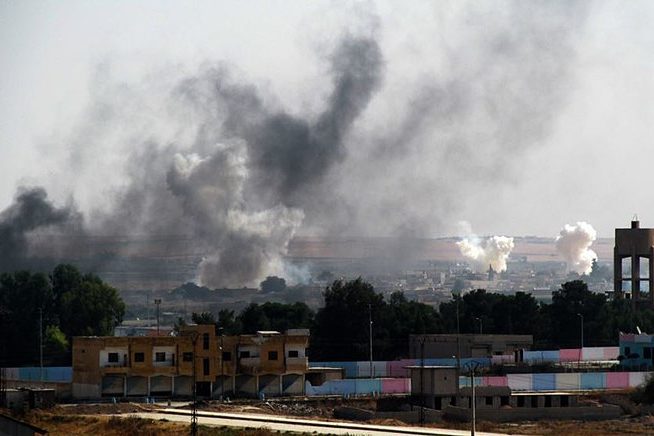
Today, ICJ called on Turkey to comply with its obligations under the UN Charter, international humanitarian law and international human rights law, immediately end its military operations in Syria, and protect and ensure the protection of the Syrian civilian population.
The ICJ also reiterated its call on all parties to the Syrian conflict to respect and comply with international humanitarian law and international human rights law.
On October 9, Turkey initiated operation “Peace Spring” in Rojava, the Kurdish-led Syrian Democratic Forces (SDF)-held territory in north-east Syria, with the stated aim of securing Turkey’s border, “fighting terrorism” and facilitating the return of refugees to Syria. Turkey claimed to be acting pursuant to its right to self-defence under article 51 of the UN Charter, as well as UN Security Council resolutions on the fight against terrorism.
The ICJ recalled that none of these UN Security Council resolutions authorizes the use of armed force in violation of international law, and that the UN Charter prohibits the use of armed force by States, save when authorized by the UN Security Council or in self-defence.
Use of force in self-defence is lawful only when necessary to repel an armed attack and when proportionate to such attack. Military operations failing to abide by such requirements are in breach of the UN Charter.
“Turkey’s military operations violate the UN Charter and exemplify how the banalization of the illegal use of armed force continues to erode and dismantle the very fabric of the international legal order,” said Said Benarbia, the ICJ MENA Programme Director.
He added, “Instead of standing by while international law is being violated, the UN Security Council must take swift, appropriate measures to address the situation and to restore and maintain international peace and security.”
While UN Security Council member States have failed to find an agreement on even a statement on Turkey’s military operations in Syria, Turkish military operations continue to have a devastating impact on the general population, including multiple civilian casualties, attacks against civilian objects, including medical facilities and water supplies and infrastructure, and the displacement of more than 150,000 people, mainly civilians.
Turkish forces and the Turkish-backed armed groups have allegedly been responsible for violations of international humanitarian law and international human rights law. Members of one of these groups, the Ahrar Al-Sharqiya, have been accused of the extrajudicial execution of at least nine civilians, among whom is Kurdish politician and women’s rights activist Harvin Khalaf; torture and other ill-treatment; kidnapping; and looting and seizure of private property.
Turkey’s Defence Ministry said 595 “terrorists” were “neutralized” since the start of “Peace Spring.”
Under international humanitarian law, parties to an armed conflict must respect and protect the civilian population, and refrain from any direct, indiscriminate or disproportionate attack against civilians and civilian objects. International human rights law also continues to apply during the conflict.
“Turkish authorities must investigate and prosecute unlawful killings committed in the context of operation “Peace Spring,” including extrajudicial executions amounting to war crimes,” Benarbia said.
He added, “If no action is taken by these authorities, States must act, collectively and individually, to hold to account all those responsible for such crimes.”
Contact
Said Benarbia, Director of the ICJ Middle East and North Africa Programme, t: +41-22-979-3817; e: said.benarbia(a)icj.org
Syria-Turkey operations-News-Press releases-2019-ARA (Arabic version, in PDF)
Syria-Turkey operations-News-Press releases-2019-TUR (Turkish version, in PDF)
Oct 12, 2019 | Agendas, Events
Today begins in Izmir (Turkey) a one-day workshop for lawyers and CSO practitioners on the use and strategies of UN mechanisms and of their decisions in domestic courts.
This event is organized by ICJ, in cooperation with its partners Kapasite Geliştirme Derneği and Human Rights Joint Platform, as part a/the EU co-financed project Rebuilding and Ensuring Access to justice with civil society in Turkey.
30 lawyers and civil society practitioners are taking part in the workshop on 12 October in Izmir.
The workshop aims at discussing the functioning of the UN human rights mechiansms (treaty bodies and charter-based bodies) as well as their follow up procedures and the implementation of their decisions in the domestic legal framework in Turkey.
The workshop will provide presentations on the functioning of UN mechanisms by international expert, including from OHCHR, on the value of UN decisions under Turkish law, as well as discussions and brainstorming on how to use UN decisions in Turkey.
The project is funded by the European Instrument for Democracy and Human Rights (EIDHR) of the European Union.
Turkey-Workshop-Agenda-UNmechanisms-Izmir-2019-eng (download the agenda in English)
Turkey-Workshop-Agenda-UNmechanisms-Izmir-2019-tur (download the agenda in Turkish)
Oct 2, 2019 | News
This support comes as the ICJ documents failure of criminal justice system on human rights accountability with its report Accountability for Serious Crimes under International Law in Libya: An Assessment of the Criminal Justice System.
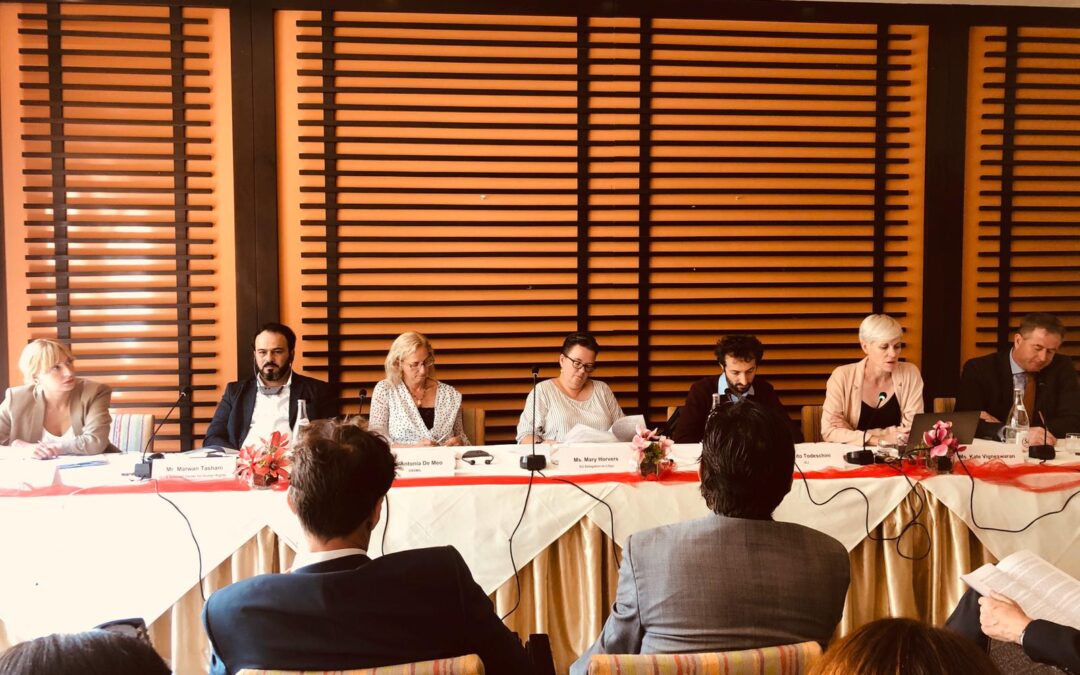
At today’s launch of the publication, the UN Support Mission in Libya (UNSMIL), the Delegation of the European Union to Libya (EUDEL) and the European Union Border Assistance Mission (EUBAM) supported calls for the establishment of a UN Commission of Inquiry for Libya.
The ICJ’s report examines the criminal justice framework in Libya and finds that investigations and prosecutions of crimes under international law have been limited to a handful of cases, and that future cases are unlikely meet international standards necessary to ensure fair and effective justice, in particular the rights to liberty and a fair trial and the prohibition on torture and ill-treatment.
The support by international actors echoes the ICJ’s call for the establishment of a Commission of Inquiry or similar mechanism to monitor, document and report on human rights violations in order to identify perpetrators, and gather and preserve evidence for future prosecutions, either national or international.
UNSMIL, the EU and a number of States expressed their support for the establishment of a Commission of Inquiry or similar mechanism at the 42nd session of the Human Rights Council.
The ICJ also advocated for such a mechanism in its statement to the Council on 25 September.
At the launch, ICJ Senior Legal Adviser Kate Vigneswaran said that “it’s time for States to stop working on the premise that the Libyan criminal justice system can effectively ensure accountability for crimes committed by State and non-State Actors and instead look at options for ensuring they don’t go unpunished.”
The ICJ’s report also calls on States and UN actors to ensure they adopt human rights-compliant terms in their engagement with Libya and to refrain from entering into or implementing agreements with Libyan authorities that could give rise to support for or complicity in violations of international law.
Kate Vigneswaran stated: “Human rights and accountability should underpin any agreements and engagement with Libyan actors entered into by States, rather than being sidelined in the interests of a political solution. Time has shown that the absence of human rights at the forefront of dialogue and engagement with stakeholders has failed to ensure the cessation of egregious human rights violations and abuses being perpetrated throughout the country.”
The launch, which was held in partnership with the Embassy of the Netherlands in Libya, was opened by the Netherlands’ Ambassador, H. E. Mr. Lars Tummers.
Kate Vigneswaran discussed the key findings and recommendations contained in the report. A panel comprised of ICJ Commissioner Marwan Tashani and representatives of EUDEL, EUBAM and UNSMIL responded to the report and provided insights into their work in Libya.
Sep 26, 2019 | Events, News
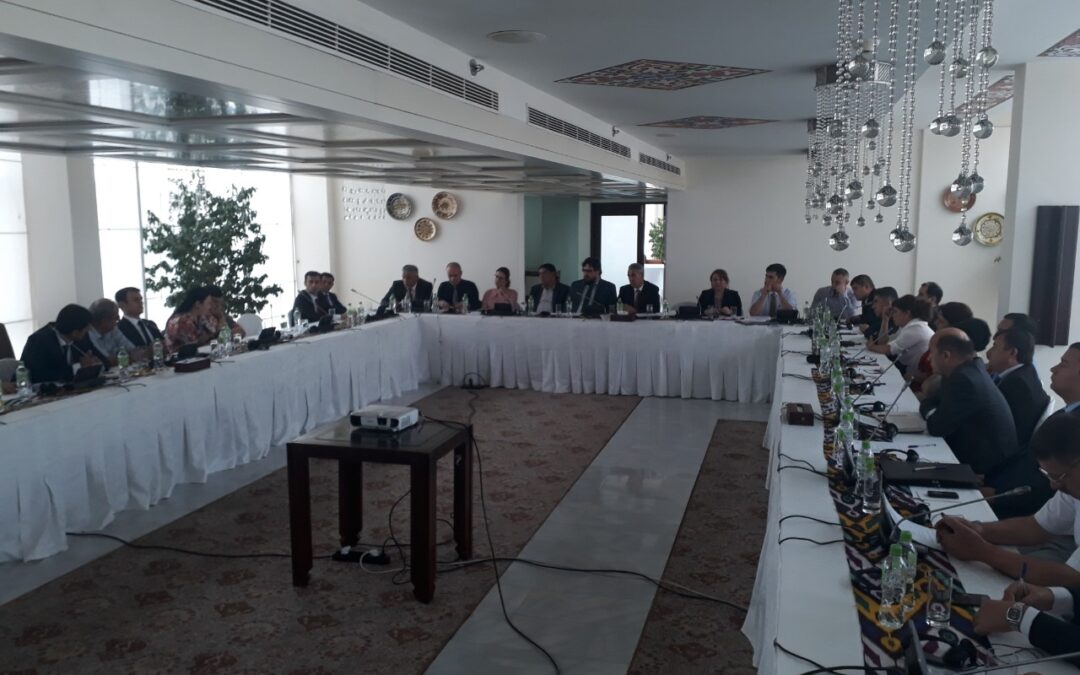
Today, the International Commission of Jurists (ICJ) in cooperation with the Civil Society Coalition Against Torture and Impunity in Tajikistan and the Union of Lawyers of the Republic of Tajikistan hold the final event within the framework of its Global redress and accountability initiative.
This event presents an opportunity to discuss measures to prevent impunity and ensure accountability for the use of torture and cruel, inhuman and degrading treatment (CIDT) in Tajikistan.
The findings of the research on the key challenges for effective investigation of torture and CIDT, carried out by the Coalition Against Torture under the initiative, will be presented at the event. The ICJ will launch its compilation of the cases decided by the UN Human Rights Committee concerning allegations of torture in Tajikistan.
Background information:
The ICJ’s Global redress and accountability initiative focused on seven countries (Cambodia, Mozambique, Myanmar, Nepal, Tajikistan, Tunisia and Venezuela) and it aimed to combat impunity and promote redress for gross human rights violations.
It concentrates on the transformative role of the law, justice mechanisms and justice actors, seeking to achieve greater adherence of national legal and institutional frameworks with international law and standards so as to allow for effective redress and accountability; more independent justice mechanisms capable of dealing with challenges of impunity and access to redress; and judges, lawyers, human rights defenders, victims and their representatives that are better equipped to demand and deliver truth, justice and reparation.
Agenda here.
Sep 26, 2019 | Advocacy, Non-legal submissions
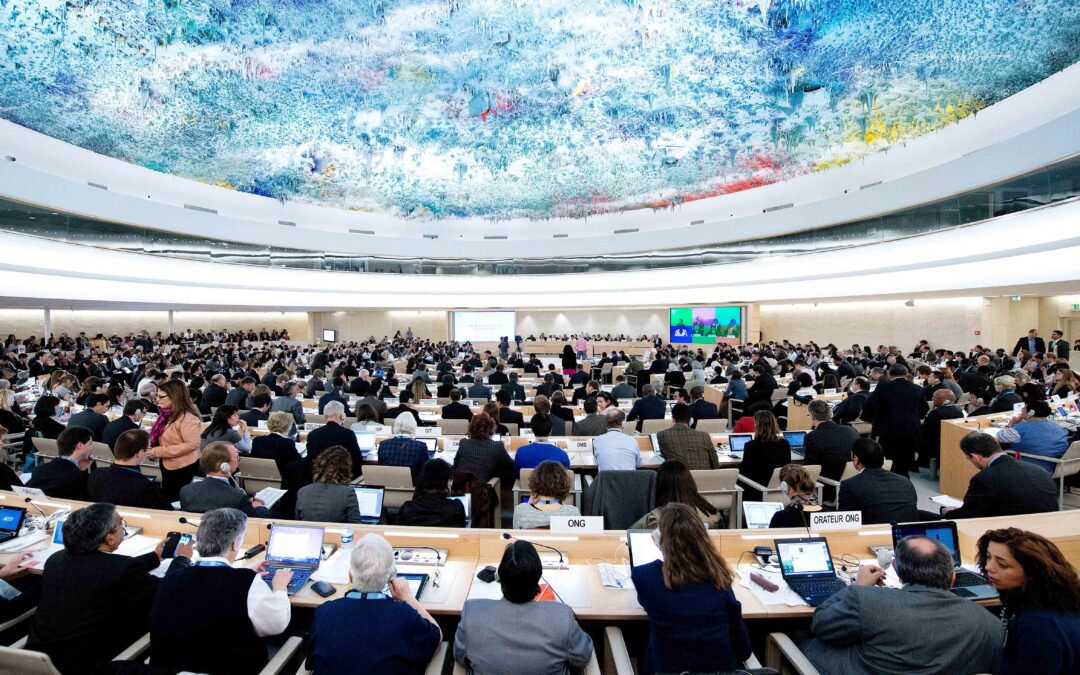
The ICJ today highlighted challenges and urged strengthening and support for the Special Jurisdiction for Peace in Colombia, at the UN Human Rights Council in Geneva.
The statement was delivered during a general debate on technical assistance and capacity-building. It read as follows:
“The International Commission of Jurists (ICJ) appreciates the contribution of UN technical assistance and capacity-building to implementation of the Peace Agreement in Colombia.
Full implementation of the Peace Agreement is important to the fulfilment of Colombia’s international human rights obligations, including rights of victims. In particular, the Special Jurisdiction for Peace (JEP by its Spanish acronym) is playing a key role in addressing accountability for gross human rights violations committed during the internal conflict in Colombia.
The JEP faces several challenges.[1] First, the JEP must do more to strengthen effective participation of victims in its procedures. Second, the Special Jurisdiction from the outset should ensure that the sanctions it imposes and reparation measures it orders are sufficient and appropriate to meet international standards. Third, national authorities, including the President and the Parliament, must respect the judicial independence of the Special Jurisdiction.
The ICJ also highlights the need for effective measures to address security threats faced by victims and witnesses appearing before the JEP.
We urge the UN, States and other stakeholders to provide technical assistance and capacity building towards strengthening guarantees for victim’s rights in the JEP’s procedures, and we urge the Human Rights Council to follow closely the work of the Special Jurisdiction for Peace to ensure it makes an effective contribution to fulfilling Colombia’s obligations under international law.”
[1] See also ICJ, Colombia: The Special Jurisdiction for Peace, Analysis One Year and a Half After its Entry into Operation (executive summary in English and full report in Spanish available at: https://www.icj.org/colombia-the-special-jurisdiction-for-peace-one-year-after-icj-analysis/).