Mar 19, 2019 | Events, Multimedia items, News, Video clips
Watch on video this side event held on 18 March 2019 at the Human Rights Council.
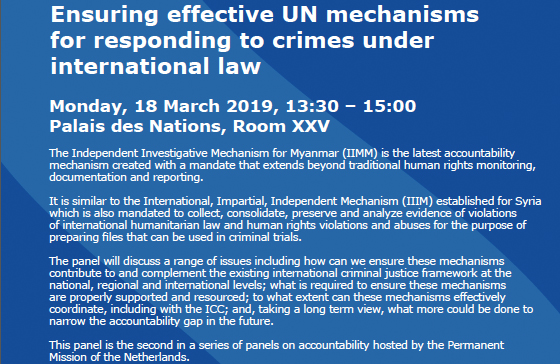
The Independent Investigative Mechanism for Myanmar (IIMM) is the latest accountability mechanism created with a mandate that extends beyond traditional human rights monitoring, documentation and reporting.
It is similar to the International, Impartial, Independent Mechanism (IIIM) established for Syria which is also mandated to collect, consolidate, preserve and analyze evidence of violations of international humanitarian law and human rights violations and abuses for the purpose of preparing files that can be used in criminal trials.
The panel discussed a range of issues including how can we ensure these mechanisms contribute to and complement the existing international criminal justice framework at the national, regional and international levels; what is required to ensure these mechanisms are properly supported and resourced; to what extent can these mechanisms effectively coordinate, including with the ICC; and, taking a long term view, what more could be done to narrow the accountability gap in the future.
This panel was the second in a series of panels on accountability hosted by the Permanent Mission of the Netherlands.
Opening Remarks:
- Ambassador Monique van Daalen, Permanent Representative to the UN of the Kingdom of the Netherlands
Moderator:
- Saman Zia-Zarifi, Secretary General, International Commission of Jurists
Panelists:
- Andrew Clapham, Member of the Commission on Human Rights in South Sudan
- Sanji Monageng, former Judge/Vice-President of the ICC, and Commissioner of the ICJ
- Stephen Rapp, Chair, Commission for International Justice & Accountability (CIJA), Distinguished Fellow, US Holocaust Memorial Museum, and former United States Ambassador-at-Large for Global Criminal Justice
- Amady Ba, Head, International Cooperation Section, JCCD, OTP, International Criminal Court (ICC)
- Kingsley Abbott, ICJ Senior Legal Adviser for Global Redress and Accountability
Side event ICJ NL Accountability No2 (side event flyer, in PDF)
Watch on video:
https://www.facebook.com/ridhglobal/videos/347634279184620/UzpfSTQ3MTQ2NzA4NjIyMTM3MzoyNDc4ODQxODc4ODE3MjA3/
Mar 19, 2019 | News
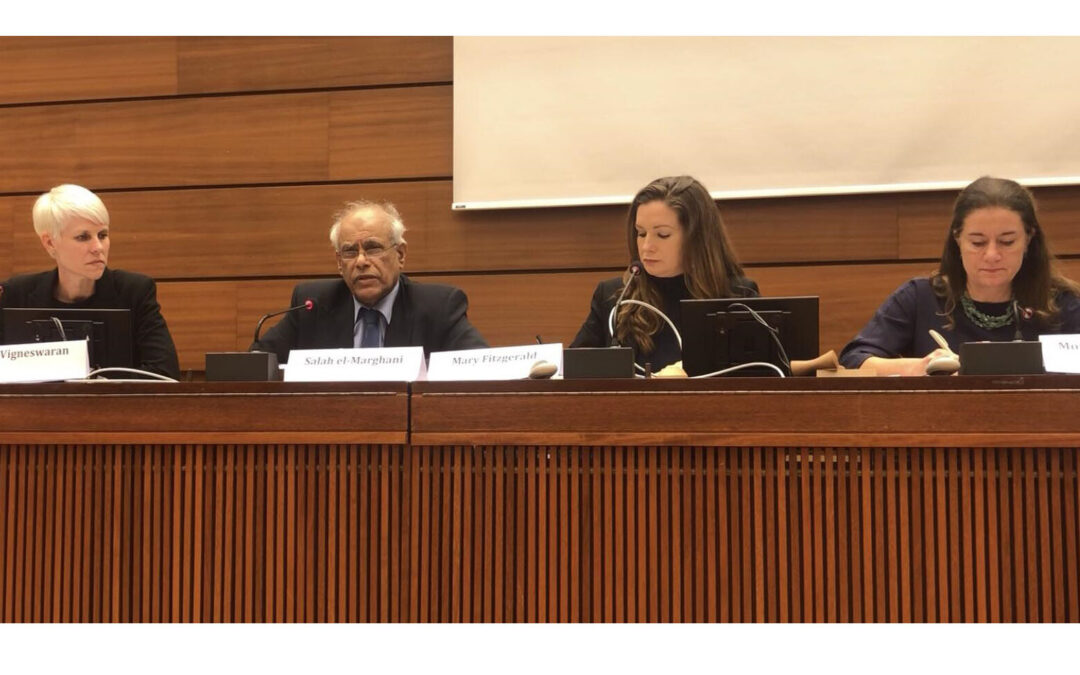
Today, the ICJ held a side event titled “Accountability for crimes under international law in Libya: Challenges and Prospects” during the 40th Session of the UN Human Rights Council in Geneva.
The event was co-hosted by the Permanent Mission of the Kingdom of Netherlands and the Permanent Mission of the Federal Republic of Germany.
A panel of renowned experts discussed a number of issues relating to accountability for crimes under international law in Libya, including shortcomings in Libyan law and practice, political and security challenges impacting prospects for reform, the role of the International Criminal Court, and the consequences for tackling human trafficking and abuse of migrants.
The panel included Monique van Daalen, Ambassador of the Permanent Mission of the Netherlands; Salah el-Marghani, former Justice Minister of Libya; Marwa Mohammed, Lawyers for Justice in Libya; Mark Kersten, Munk School of Global Affairs and Public Policy, University of Toronto, and Wayamo Foundation; Kate Vigneswaran, Senior Legal Adviser for the ICJ’s Middle East and North Africa Programme; and Mary Fitzgerald, Libya researcher and expert.
During the side event, the ICJ presented and distributed a briefing paper highlighting the key issues that hamper accountability for crimes under international law in Libya, including the definition of crimes under domestic law, amnesties and imunities, rights during arrest and detention, and rights at trial.
The paper included detailed recommendations to the Libyan authorities as well as the international community with a view to tackling the main obstacles to the achievement of accountability in Libya.
The briefing paper anticipates the publication of the forthcoming ICJ report on Libya’s criminal justice system.
Download:
Lybia-Accoutability challenges-Advocacy-Analysis brief-2019-ENG (Briefing paper, in PDF)
Libya HRC side event flyer – March 2019 (Event flyer, in PDF)

Mar 13, 2019 | Advocacy
This important blog by ICJ Senior Legal Adviser Kingsley Abbott was first posted to Opinio Juris. It has been translated into Burmese language as a resource for individuals, institutions and organizations in the country.
Documenting criminal human rights violations in the Myanmar is critical, so we must be careful not to create problems for future efforts at establishing criminal responsibility.
In his article, Kingsley Abbott, discusses the important role of the documentation of serious human rights violations in Myanmar by civil society, UN bodies and journalists.
This effort has played a critical role in raising awareness of the situation inside and outside the country and in getting responses from the international community.
Read the article in English
Read the article in Burmese
Contact
Kingsley Abbott, ICJ Senior Legal Adviser for Global Redress & Accountability e: kingsley.abbott(a)icj.org
Mar 12, 2019 | News
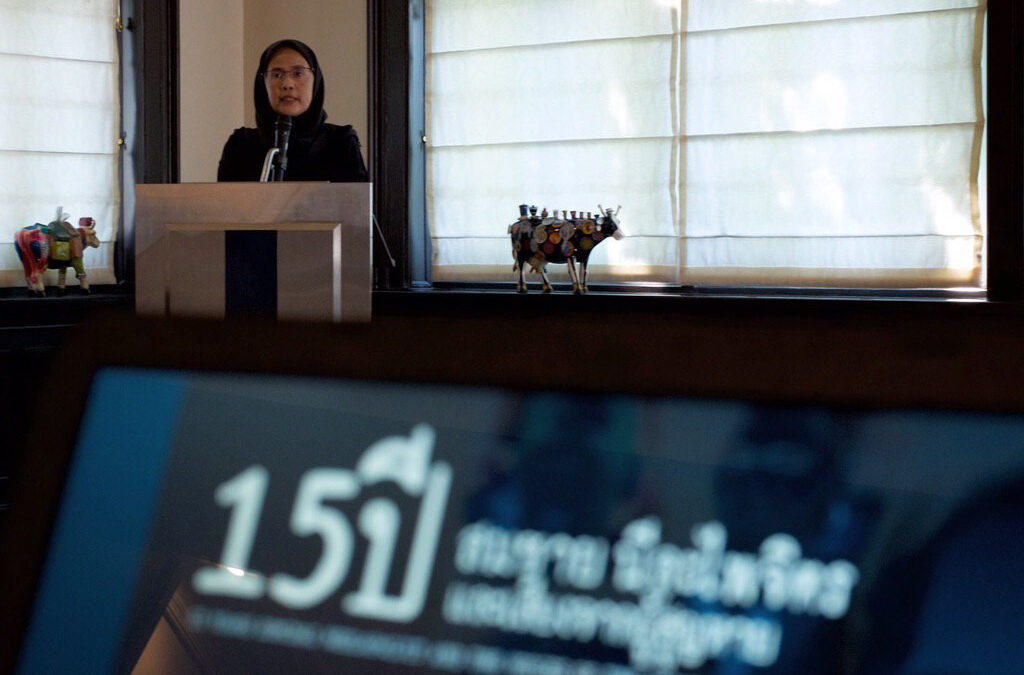
Today, the ICJ co-hosted an art exhibition and public forum titled 15th Year of Somchai’s Disappearance and the Voices of the Disappeared at the Embassy of the Netherlands in Bangkok.
The event was held to commemorate 15 years since the enforced disappearance of Somchai Neelapaijit, a prominent human rights lawyer, whose case has never been adequately by the Thai authorities.
Somchai was abducted after being stopped on a road in Bangkok on 12 March 2004 and taken from his car by a group of police officers. He has not been seen since. Fifteen years after his disappearance, Somchai’s fate and whereabouts remain unknown and no one has been held accountable for the crime against him.
More than 100 participants attended the event, including family victims of alleged disappearance cases, students, lawyers, members of civil society, diplomats, and members of the Thai authorities and media.
Opening remarks were delivered by Angkhana Neelapaijit, wife of Somchai Neelapaijit, and Kenza Tarqaât, First Secretary of the Embassy of the Netherlands in Bangkok.
The opening session included remarks by the victims who spoke about their challenges and about the progress and development regarding investigations into the alleged disappearance cases of their relatives. The session included the following speakers:
Sanhawan Srisod, the ICJ’s National Legal Adviser, spoke during the second session on recent amendments to the Draft Prevention and Suppression of Torture and Enforced Disappearance Act.
She highlighted concerns that the recent amendments would, if adopted, fail to bring the law into full compliance with Thailand’s international human rights obligations.
Sanhawan further expressed concern that the fate of the Draft Act was uncertain as Thailand’s National Legislative Assembly (NLA) that is considering the bill, while it may also continue their work in case of the necessity, will stop considering laws on 15 March, prior to the scheduled elections of 24 March 2019.
She stressed that it is crucial the Thai Government continues to consider and amend the bill, and pass it without delay in line with Thailand’s international human rights obligations.
The panel was moderated by Chanatip Tatiyakaroonwong from Cross-Cultural Foundation and also included the following panelists:
- Nongporn Roongpetchwong, Human Rights Expert, Rights and Liberties Protection Department, Ministry of Justice
- Badar Farrukh, Thailand Team Leader, United Nations’ Office of the High Commissioner for Human Rights (OHCHR) Regional Office for South East Asia
Closing remarks was delivered by Pratubjit Neelapaijit, daughter of Somchai Neelapaijit.
The forum was co-organized with the Neelapaijit family, Amnesty International – Thailand, Cross Cultural Foundation (CrCF), the Embassy of the Netherlands in Bangkok, Human Rights Lawyers’ Association and the United Nations’ Office of the High Commissioner for Human Rights (OHCHR) Regional Office for South East Asia.
Read Also:
Thailand-Summary ICJ analysis Draft Act-Advocacy-2019-ENG (Summary of the ICJ analysis of the Draft Act, in PDF)
Ten Years Without Truth: Somchai Neelapaijit and Enforced Disappearances in Thailand
Missed Opportunities: Recommendations for Investigating the Disappearance of Sombath Somphone
Thailand: ICJ submits recommendations on draft law on torture and enforced disappearance amendments
Thailand: ICJ, Amnesty advise changes to proposed legislation on torture and enforced disappearances
Mar 12, 2019 | Events, News
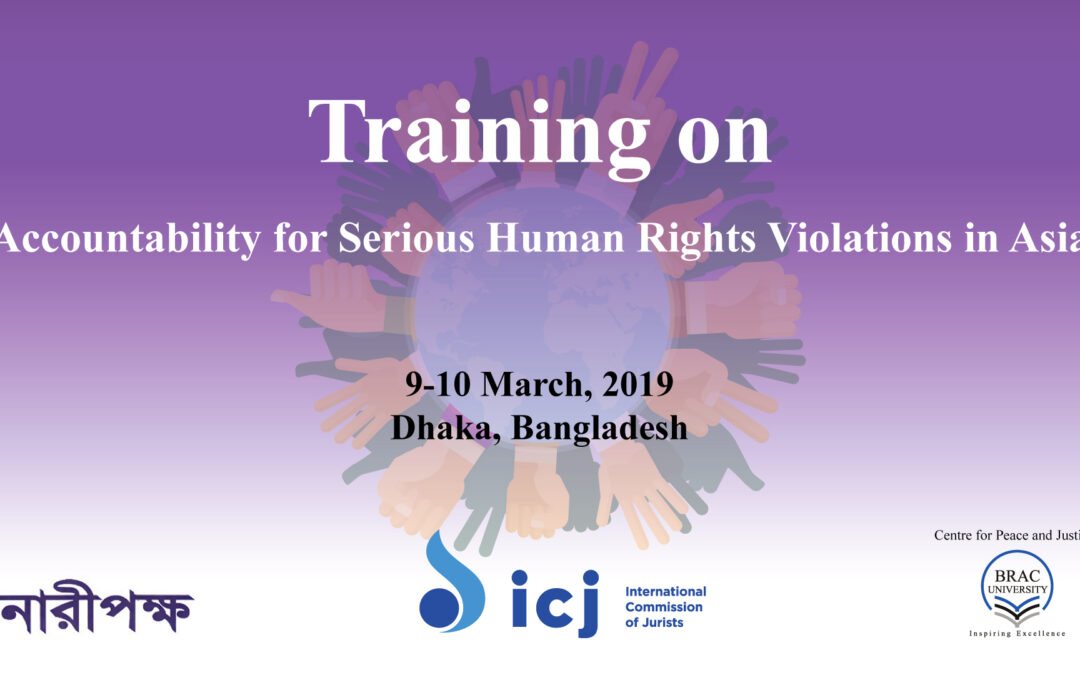
The ICJ convened a two-day workshop from 9th to 10th March 2019 in Dhaka, Bangladesh to discuss applicable international legal mechanisms designed to achieve accountability for serious human rights violations in Asia.
Bangladesh-based non-government organizations the Centre for Peace and Justice and Naripokkho co-hosted the event with the ICJ, with a representative of AJAR (Asia Justice and Rights) also joining. Twenty Bangladeshi lawyers, activists and academics attended the event.
Legal advisers from the ICJ provided an overview of the Independent Investigative Mechanism for Myanmar (IIMM), currently being established following a UN Human Rights Council resolution in September 2018.
They also discussed the structure and procedures of the International Criminal Court (ICC), whose prosecutors are currently conducting a preliminary examination into the deportation of Rohingyas from Myanmar into Bangladesh. Unlike Myanmar, Bangladesh is a State Party to the Rome Statute of the ICC, and its pre-trial chamber has indicated the Court has jurisdiction over crimes listed in the Rome Stature were one element, or part of a crime, was committed inside the territory of Bangladesh.
AJAR’s co-founder provided an overview of transitional justice processes, drawing upon international and regional experiences of truth-seeking, prosecutions, reparations and reforms to guarantee non-repetition of human rights violations.
Two of the ICJ’s legal advisers also travelled to Cox’s Bazar, Bangladesh, where they met relevant stakeholders to discuss the situation of Rohingya refugees from Myanmar, and to share information about accountability mechanisms, including about expected timelines, outcomes and limitations.
The activity is part of the ICJ’s global work on promoting accountability and redress for gross human rights violations to facilitate justice and deter repetition.
Contact: Kingsley Abbott, ICJ Senior Legal Advisor for Global Redress and Accountability e: kingsley.abbott@icj.org