Jan 16, 2018 | News, Publications, Reports, Thematic reports
Myanmar’s government must take concrete action to counteract decades of military impunity for human rights violations, the ICJ concluded in a report published today.
The report Achieving Justice for Gross Human Rights Violations in Myanmar finds that gross human rights violations in Myanmar rarely go punished, particularly in conflict areas.
Justice remains elusive for victims and their families as a result of laws, institutions and investigative practices that protect members of security forces from prosecution, the ICJ says.
“Decades of denial of justice for victims of gross human rights violations in Myanmar, and impunity for the perpetrators, particularly when involving the military, have severely eroded the rule of law,” said Sam Zarifi, the ICJ’s Secretary General.
“The Myanmar government must now take concrete steps to combat impunity, especially for the military,” he added.
The release of the ICJ’s report follows last week’s statement from the Office of the Commander in Chief of the Tatmadaw, Myanmar’s military, acknowledging that security forces had participated in the killing of ten Rohingya Muslims in Rakhine State’s Inn Dinn Village.
It is the Tatmadaw’s first admission of serious crimes perpetrated by security forces during its ‘clearance operations’, which have resulted in mass displacement and human rights violations, following attacks on police posts by the Arakan Rohingya Salvation Army on 25 August 2017.
Military and security personnel in Myanmar seldom face justice for human rights violations, because they are protected by legal provisions of the 2008 Constitution, the 1959 Defence Services Act and the 1995 Police Force Maintenance of Discipline Law, which include immunities and special courts that shield soldiers, police and officials from public criminal prosecutions for serious crimes, the ICJ notes.
The ICJ’s report finds that investigations into allegations of rights violations rarely result in effective prosecutions or redress.
Eight case studies – from Kachin, Karen, Mon and Rakhine states – illustrate how victims and their families, as well as journalists and human rights defenders, lack access to justice and are even harassed for seeking it.
“Admission of culpability for this one incident is an important first step and must be followed by a full and proper investigation, and justice for the victims and their families,” said Zarifi.
“The dire human rights situation in northern Rakhine State, and in conflict areas such as in Shan and Kachin states, necessitates credible, independent and impartial investigations with a view to publicly prosecute those responsible for unlawful acts and their commissioning.”
“Options available to the parliament and to the executive include addressing barriers to accountability, by reforming laws that protect security forces involved in serious crimes, and by aligning investigative procedures with international standards,” he added.
Contact
Alex Conte, ICJ Global Accountability Coordinator (Geneva), t: +41 79 957 2733; e: alex.conte(a)icj.org
Frederick Rawski, ICJ Asia Pacific Regional Director (Bangkok), t: +66 6 4478 1121 ; e: frederick.rawski(a)icj.org
Background
Special inquiries commissioned by the Government of Myanmar into allegations of human rights violations generally fail the test of independence and impartiality, or are severely undermined by inadequate resources and or restricted mandates.
These inquiries rarely result in effective prosecutions or access to remedies and reparation.
Members of security forces, when prosecuted, usually appear in military or special police courts, which generally impose low or meaningless sanctions that are wholly inconsistent with penalties applicable in Myanmar’s Penal Code.
Laws governing military and police acts are inadequate for the victims of human rights violations because they do not contemplate the provision of remedies and reparation.
There is very limited precedent or established practice for the provision of effective remedies or reparation for victims of criminal acts in Myanmar, particularly when such crimes involve human rights violations by State actors.
Wittingly or unwittingly, relevant authorities routinely violate national laws that prescribe procedures for the conduct of criminal investigations and prosecutions, particularly in politically sensitive cases involving human rights violations.
Violations of basic fair trial rights, included in national laws, are commonplace.
State authorities continue to exert improper influence on politically-sensitive court cases including those involving allegations of gross human rights violations.
Courts tend to not intervene where human rights violations are occurring nor do they guarantee non-repetition where they have occurred.
Prosecutors rarely, if ever, accept petitions from victims of gross human rights violations to initiate criminal proceedings.
The judicial harassment of victims of human rights violations is commonplace in Myanmar when victims, their families or lawyers seek remedies or reparation through the courts or other mechanisms.
Defamation and unlawful association are among the criminal charges commonly instituted by authorities, including against journalists investigating human rights violations or working in conflict areas.
Overall, Myanmar’s prosecutors lack the independence to effectively prosecute acts involving human rights violations.
Interference with and intimidation of lawyers, particularly in politically sensitive cases involving human rights violations, undermines their to effectively represent clients and to pursue effective remedies and reparations.
Download
Myanmar-GRA Baseline Study-Publications-Reports-Thematic reports-2018-ENG (full report in English)
Myanmar-GRA-Baseline Study-Publications-Reports-Thematic-reports-2018-BUR (full report in Burmese)
Myanmar-Accountability Baseline report-News-Press releases-2018-BUR (Burmese translation)
Read also
Questions & Answers on Human Rights Law in Rakhine State
Reuters journalists detained in Myanmar: respect their rights, end their incommunicado detention
Dec 12, 2017 | News
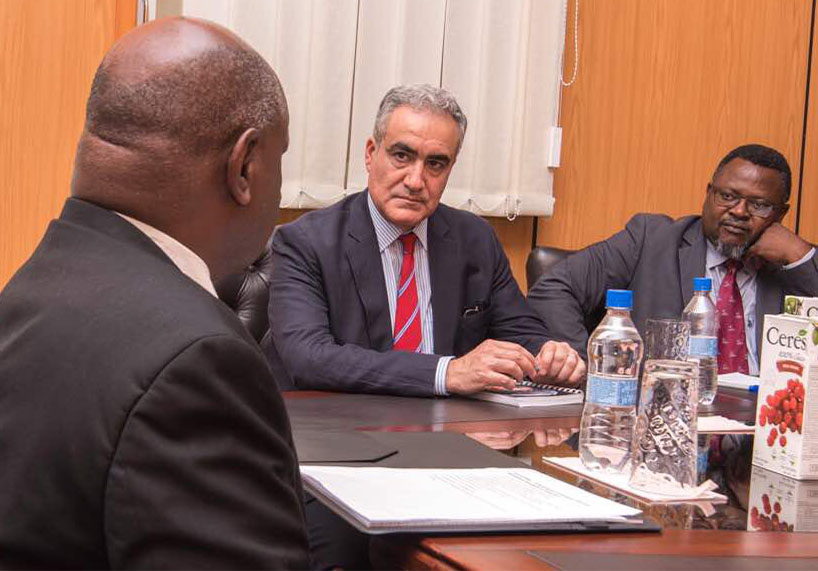
Zimbabwe’s new government must urgently restore the rule of law and ensure free and fair elections, said the ICJ at the conclusion of a visit by its Secretary General Sam Zarifi to the country.
After the recent military intervention in Zimbabwe that led to the ouster of former President Robert Mugabe, the government headed by Emmerson Mnangagwa is expected to remain in office until new elections, currently scheduled to be held before August 2018.
“The change in leaders in Zimbabwe presents an opportunity to reverse decades of damage to the rule of law and respect for human rights in the country,” said Zarifi, ICJ’s Secretary General.
“As an immediate matter, the new government must take concrete steps that demonstrate it is committed to observing the country’s obligations under international law, as well as the human rights protections of Zimbabwe’s own constitution,” he added.
The ICJ calls on the government of Zimbabwe to:
- ensure free and fair elections are held as scheduled, and the country’s electoral laws comply with the Constitution and international standards;
- accelerate measures to ensure compliance of all relevant laws with the country’s constitution and its international legal obligations;
- ensure the independence of the judiciary and the legal system;
- ensure all those arrested and detained during the military intervention are identified and brought immediately before an independent and impartial tribunal, and, where charged with recognized crimes, are given fair trials;
- investigate all allegations of unlawful deaths, torture or ill-treatment, and arbitrary arrest and detention;
- ensure the military acts within strict legal bounds, operates under civilian control, and does not engage in arrest and detention of civilians;
- ensure all security forces, including the police and the military, are subject to accountability and receive proper and adequate training in performing their duties in conformity with international human rights standards; and
- provide credible mechanisms to combat corruption in all branches of government, and ensure that anti-corruption efforts are not politicized.
“Zimbabwe’s military has played a central role in the country’s affairs for decades, while civilian institutions have suffered under intense political pressure, at great cost to the people of the country,” Zarifi said.
“Zimbabwe should grasp this opportunity to demonstrate that it can and will strengthen the rule of law and respect for human rights in order to improve the lives of all people in the country.”
Contact
Arnold Tsunga, ICJ-Director: Africa Regional Programme, t: +27716405926, e: arnold.tsunga(a)icj.org
Dec 8, 2017 | News
The South African government should reconsider its move to withdraw from the ICC, said the ICJ, the Southern Africa Litigation Centre and Lawyers for Human Rights, local, regional and international human rights advocacy organizations.
This will be the second attempt by South Africa to withdraw from the Rome Statute, after the first attempt in 2016 was declared unconstitutional by the High Court after being successfully challenged by several parties including the Southern Africa Litigation Centre.
This week Minister Michael Masutha announced the government’s intention to pursue withdrawal from the ICC in a speech at the Assembly of State Parties of the ICC in New York.
The Minister was critical of Pre-Trial Chamber ruling of the ICC, which found that South Africa was obliged to arrest and detain Sudanese President Omar Al-Bashir.
He claimed that South Africa’s continued membership on the ICC would undermine “its ability to carry out its peace-making mission efforts in Africa” and “fulfill its role as mediator for peace”.
“The pursuit of justice and the pursuit of peace are complementary and mutually reinforcing objectives that South Africa will best achieve by remaining party to the Rome Statute of the ICC,” said Kaajal Ramjathan-Keogh, Executive Director of the Southern Africa Litigation Centre.
“Protecting heads of state from justice compromises efforts at trying to establish peace. South Africa’s refusal to arrest Bashir is an affront to Darfur victims,” she added.
Arnold Tsunga, the ICJ’s Africa Director said: “The notion that South Africa needs to embrace impunity in order to help peace is irrational and at odds with experience around the world. Greater accountability, for instance through international mechanisms, assists the rule of law, development efforts and respect for human rights. It is vital that South Africa projects itself as a leader in anti-impunity efforts in the region.”
“Withdrawing from the ICC would destroy a pillar of African efforts to tackle impunity which would be an unfortunate move for South Africa and the international community,” he added.
Masutha did not outline how the withdrawal will take place in compliance with South African law, indicating only that he would “shortly serve on Parliament” notice of withdrawal.
The African National Congress (ANC), South Africa’s ruling party, has indicated that it will discuss the issue of withdrawal at its policy conference scheduled for later this month.
According to a High Court judgment handed down earlier this year, however, the executive has no legal authority to withdraw South Africa from the ICC.
The High Court held “South Africa can withdraw from the Rome Statute only on approval of parliament and after the repeal of the Implementation Act”.
If notice were given to Parliament, it would have to independently consider the merits of withdrawal.
Under South African law the public should then be given an opportunity to participate in this process, which would involve the repeal of the Implementation Act.
“There is the added danger of an impunity gap should South Africa pull out of the ICC without putting in place any other mechanisms to ensure accountability for international crimes. There are currently no other regional or international fora to prosecute serious crimes under international law,” said Jacob van Garderen, Director of Lawyers for Human Rights.
Contact
Arnold Tsunga, ICJ’s Africa Director, t:+27 716405926, e: arnold.tsunga@icj.org
Tim Fish Hodgson, ICJ Legal Adviser, t:+27 828719905, e: timothy.hodgson@icj.org
Contact at Southern Africa Litigation Centre: Kaajal Ramjathan-Keogh kaajalr@salc.org.za / +27 84514 8039
Contact at Lawyers for Human Rights: Jacob van Garderen, jacob@lhr.org.za / +27 828203960
Background
Burundi left the ICC on 27 October 2017. South Africa has declared its intention to be the second African country to leave.
Gambia, which a year ago, had also indicated its intention to withdraw, spoke at the Assembly of State Parties of its pride to remain with the ICC and of its re-commitment to the ICC.
The South African government appeared before the Pre-Trial Chamber of the International Criminal Court in April 2017 to defend its failure to cooperate with an ICC request to arrest and surrender President Omar al Bashir of Sudan when he attended an African Union Summit in June 2015.
The Pre-Trial Chamber issued its ruling on 6th July 2017 which confirmed that South Africa did in fact fail to cooperate with a request from the ICC in violation of its international law obligations. The Chamber did not, however, issue any sanction for this non-compliance.
Read also
ICJ Briefing submitted to the Portfolio Committee on Justice and Correctional Services.
High Court judgment on withdrawal from the ICC.
ICC ruling on South Africa’s failure to arrest President Omar Al-Bashir.
Opening Statement of Minister of Justice Michael Masutha at Assembly of States Parties of the ICC.
Nov 27, 2017 | News
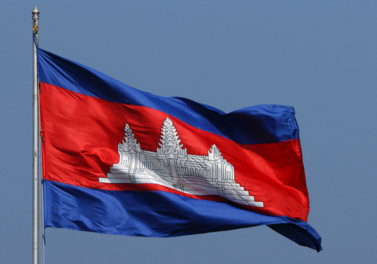
Today, the ICJ called on the Royal Government of Cambodia (RGC) to end the escalating repression of civil society in Cambodia and reverse the rapidly deteriorating rule of law and human rights crisis in the country.
Yesterday, it was reported that Prime Minister Hun Sen called for the shut down of one of Cambodia’s leading, independent NGOs, Cambodian Centre for Human Rights (CCHR), and directed the Ministry of Interior to investigate CCHR for its alleged engagement with “foreigners”.
The Prime Minister’s statement appeared to allude to alleged involvement of CCHR in a supposed foreign-backed “colour revolution” to overthrow the government.
“The Cambodian Center for Human Rights plays an essential, independent role in promoting and protecting human rights in Cambodia and must be able to continue its important work without fear of retaliation, reprisal or other unjustified interference,” said Kingsley Abbott, the ICJ’s Senior International Legal Adviser for Southeast Asia.
“Everyone has the right to form and participate in organizations established to work on human rights, and States have a corresponding duty to protect the ability of such organizations and their participants to carry out their work to promote and defend human rights,” he added.
This latest development comes amidst a severe clampdown by the RGC on perceived dissenting voices including civil society, activists, the independent media and political opposition including through the recent dissolution of the major opposition party, the Cambodia National Rescue Party (CNRP), in what appeared to be a highly politicized Supreme Court proceeding, and the arrest and detention of its leader, Kem Sokha.
“This new, targeted focus on the Cambodian Center for Human Rights by the Government should make it clear that the human rights and rule of law crisis gripping Cambodia is not showing any signs of abating and requires the urgent attention of the international community,” said Abbott.
“All legal, political and economic options should be on the table,” he added.
Contact
Kingsley Abbott, Senior International Legal Adviser, ICJ Asia Pacific Regional Office, t: +66 94 470 1345, e: kingsley.abbott(a)icj.org
Background
CCHR was founded by Kem Sokha in 2002 before he left the organization in 2007 to pursue a career in politics.
Yesterday, CCHR released a statement “reaffirming its absolute non-partisanship and independence from all political parties” and emphasizing “strict independence” as a core value of its organization. CCHR also asserted in its statement that an “independent and impartial investigation would find no wrongdoing whatsoever on the part of the organization” and called for “meaningful dialogue” with the RGC.
Articles 19 and 22 of the International Covenant on Civil and Political Rights (ICCPR), to which Cambodia is a State Party, guarantees the rights of all persons to freedom of expression and opinion and to freedom of association with others.
The UN Declaration on Human Rights Defenders, adopted by a consensus of States at the UN General Assembly, including Cambodia, affirms the right of everyone to form and participate in NGOs to promote and protect human rights. The Declaration further dictates that states should take all necessary measures to protect human rights defenders from retaliation and other forms of arbitrary action as a consequence of their legitimate work.
On 18 October 2017, the ICJ released a report which found that the RGC was increasingly “weaponizing” the law to restrict dissent and attack democracy. The report recorded that the “single largest problem facing the Cambodian justice system is the lack of independent and impartial judges and prosecutors,” which includes “an endemic system of political interference in high-profile cases and an equally entrenched system of corruption in all others”.
On 23 October 2017, the 26th anniversary of the 1991 Paris Peace Conference on Cambodia, the ICJ, together with 54 other organizations, issued an open letter to the United Nations Secretary-General and the Conference’s co-chairs calling for the reconvening of the members of the Conference and other concerned stakeholders for an emergency summit to address the human rights crisis in the country.
Nov 24, 2017 | News
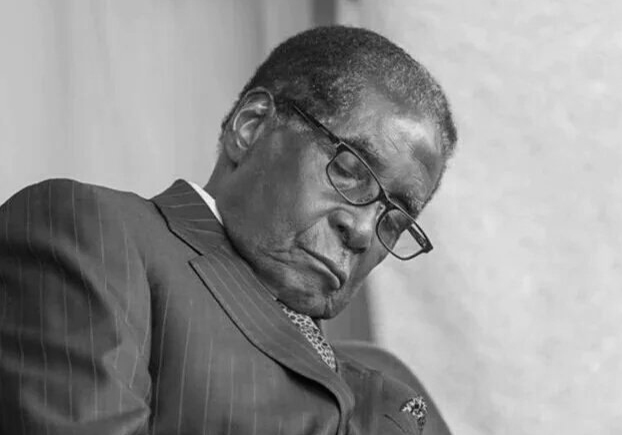
As Zimbabwe prepares to swear in Emmerson Mnangagwa following the resignation of long time Zimbabwe President Robert Mugabe, the ICJ today called on the incoming authorities to immediately act to restore the rule of law and ensure the full observance of human rights in the country.
“As the events of the past few days propel Zimbabwe away from decades of authoritarian rule replete with human rights violations, the incoming administration must side with the people of Zimbabwe and seize this unique opportunity to ground its governance in the rule of law,” said Arnold Tsunga, Director of ICJ’s African Regional Programme.
The ICJ indicated that it is particularly concerned at the intrusion of armed forces in the political process and governance, which is prohibited by the Zimbabwean Constitution and contravenes core rule of law principles concerning the respective functions of the military and civilian authorities.
Emphasizing that the rule of law and respect for the national Constitution remain paramount even as Zimbabweans decide on their future, the ICJ called on the Zimbabwean National Army (ZNA) to refrain from any further activity that intrudes into functions of governances that are within the proper purview of civilian authorities.
“It amounts to setting a dangerous precedent for Zimbabwe and the region to allow or excuse such incursions at the whim of armed forces,” Tsunga added.
Under the African Charter on Democracy, Elections, and Governance adopted by African Union Member States, Zimbabwe is required to “institutionalize constitutional civilian control over the armed and security forces to ensure the consolidation of democracy and constitutional order”.
The ICJ further expressed concern at emerging reports of usurpation of police duties by the ZNA, which has allegedly carried out a series of arbitrary arrests and detention of civilians.
“Due process guarantees and fair trial rights are particularly vulnerable when armed forces decide to assume police functions,” Tsunga said.
Recalling that international law does not allow or encourage impunity for serious human rights violations that constitute crimes, such as torture and extra-judicial killings, the ICJ stressed the importance of ensuring accountability for human rights violations as Zimbabwe transits to into a new era of governance.
Contact:
Arnold Tsunga, ICJ-Director Africa Regional Programme, t: +27716405926, or +254 746 608 859 ; e: arnold.tsunga(a)icj.org
Solomon Ebobrah, Senior Legal Advisor, ICJ Africa Regional Programme, t: +234 8034927549 ; e: Solomon.ebobrah(a)icj.org