Dec 16, 2015 | Events, News, Video clips
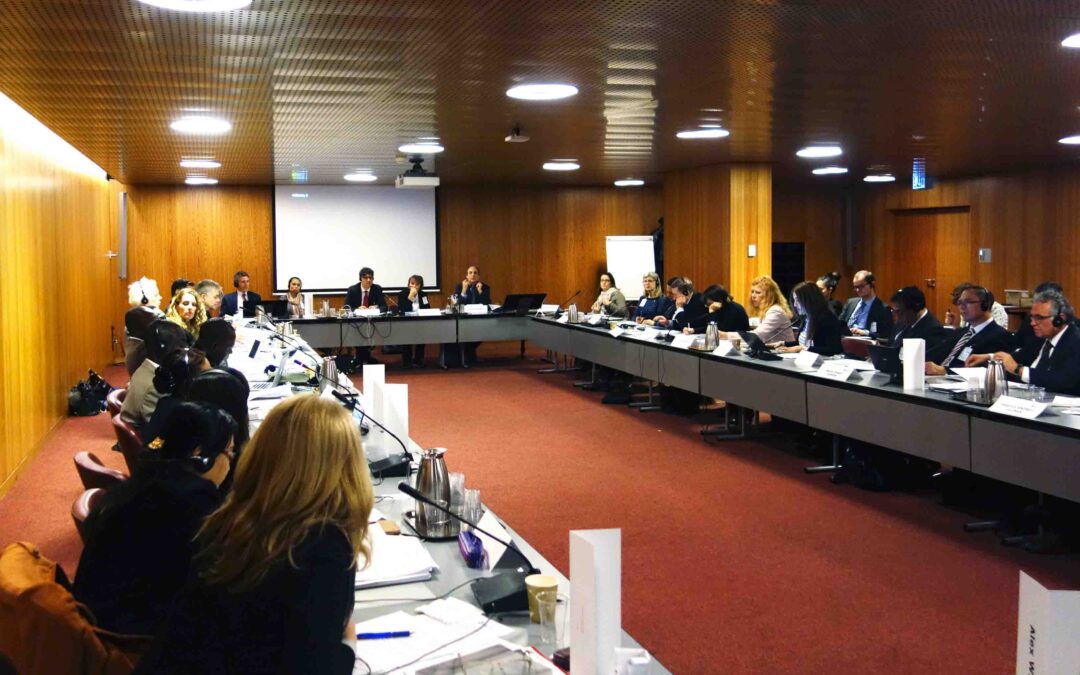
More than 40 senior judges and lawyers from all parts of the world have made an important contribution to efforts to hold judges accountable for involvement in human rights violations and judicial corruption, by participating in the sixth annual ICJ Geneva Forum of Judges & Lawyers.
The Geneva Forum is organized annually by the ICJ’s Centre for Independence of Judges & Lawyers (CIJL) and brings together judges, lawyers and prosecutors from around the world, together with UN officials and representatives from international professional associations of legal professionals, as well as academics and other experts.
This year’s Geneva Forum (14-15 December) formed part of a larger CIJL project to promote judicial accountability, through sharing of knowledge about relevant international standards and international and national good practices, between the judiciary, other legal actors, and governments and civil society around the world.
The focus of the project is on judicial involvement in human rights violations such as unjust executions, prolonged arbitrary detention including imprisonment after deliberately unfair trials, judges providing impunity to perpetrators or enforced disappearance and torture, as well as judicial corruption that leads to human rights violations.
Victims of such violations have the right to remedy and reparation, including in relation to the role of judges, and society as a whole should be able to be confident that those responsible for such judicial misconduct will be held to account.
The two days of intense and detailed discussion and debate, at times practical and at times passionate, identified wide areas of agreement amongst participants, as well as areas of divergence and questions requiring further study and deliberation. Topics covered included:
- the composition and character of accountability bodies (and particularly, the importance of judge-led processes that at the same time may benefit from involvement of representation of the legal profession, legal academia, and general public – while excluding undue influence from the Executive or Legislative branches of government);
- the practicalities of bringing criminal proceedings against judges;
- the role of national, regional and international professional associations;
- possible options in situations of transition to democracy where the judiciary on the whole may have been an instrument of repression of the prior regime, or situations of pervasive corruption, or conflict or post-conflict situations;
- particular considerations in relation to judicial accountability in developing countries;
- the powers and methods for gathering of evidence of judicial misconduct;
- the rights of individual judges and of alleged victims of judicial misconduct;
- the role of publicity and transparency in judicial accountability processes;
- the inclusion of safeguards against the abuse of judicial accountability mechanisms for ulterior motives, including political interference that undermines the independence of the judiciary;
- and practical means for ensuring that mechanisms and procedures, once established, operate effectively and fairly in practice.
The Forum follows a smaller expert consultation meeting convened in Tunisia in October focussing on judicial accountability in developing countries where, it is widely recognized, the negative impacts of corruption on human rights are deepest and most widespread. A report of the Tunis consultation is available here.
The Geneva Forum and Tunisia consultation are an opportunity for direct sharing of experience and expertise between practitioners, strengthening their capacity to carry out effective judicial accountability work in their own regional and national contexts, and to further disseminate this knowledge to others.
It is also an opportunity to discuss possible global strategies for promoting more effective and fair judicial accountability mechanisms and procedures.
The exchanges between leading judges and lawyers at the Geneva Forum and Tunis consultation will also directly feed into an ICJ Practitioners Guide on Judicial Accountability, with global legal, policy and practical guidance, to be published in June 2016. (Update 7 June 2016 – the Guide has now been published and is available here.)
The Practitioners Guide will be printed, published electronically, and distributed as a foundation for subsequent work by the ICJ and others at the national and regional level, from 2016 onwards, including in development-assistance recipient countries. It will join a series of Practitioners Guides published by the ICJ (nine to date, no. 10 and 11 to be published very soon), which have proved to be leading reference guides and training materials in the field of legal protection of human rights and the rule of law.
The developing countries consultation in Tunisia, and participation of practitioners from developing countries in the global Geneva Forum, will help to ensure that the Practitioners Guide is relevant to and has impact in ODA recipient countries.
The ultimate aim of the work of the CIJL, including the 2015 Geneva Forum on judicial accountability and the eventual Practitioners Guide, is to improve access to independent and impartial justice for victims of human rights violations, corruption and similar abuses, including when the judiciary itself has been involved in the wrongdoing.
The 2015 Geneva Forum, and the earlier Tunisia consultation, have been made possible with the support of the Republic and Canton of Geneva, as well as the Ministry of Foreign Affairs of Finland. The ICJ is also grateful for the assistance of the Geneva Welcome Centre (CAGI).
The list of participants to this year’s Geneva Forum is available here: Participants list (public)
The report of the Tunis consultation is available here: Universal-Tunis Consultation-Publications-Seminar and Conference Report-2016-ENG
Information about previous years’ events and publications is available here: Geneva Forum Homepage
A 2000 CIJL Yearbook focussing on Judicial Corruption is available here: 2000 CIJL Yearbook Judicial Corruption
Voices from the Geneva Forum:
Oct 4, 2015 | News
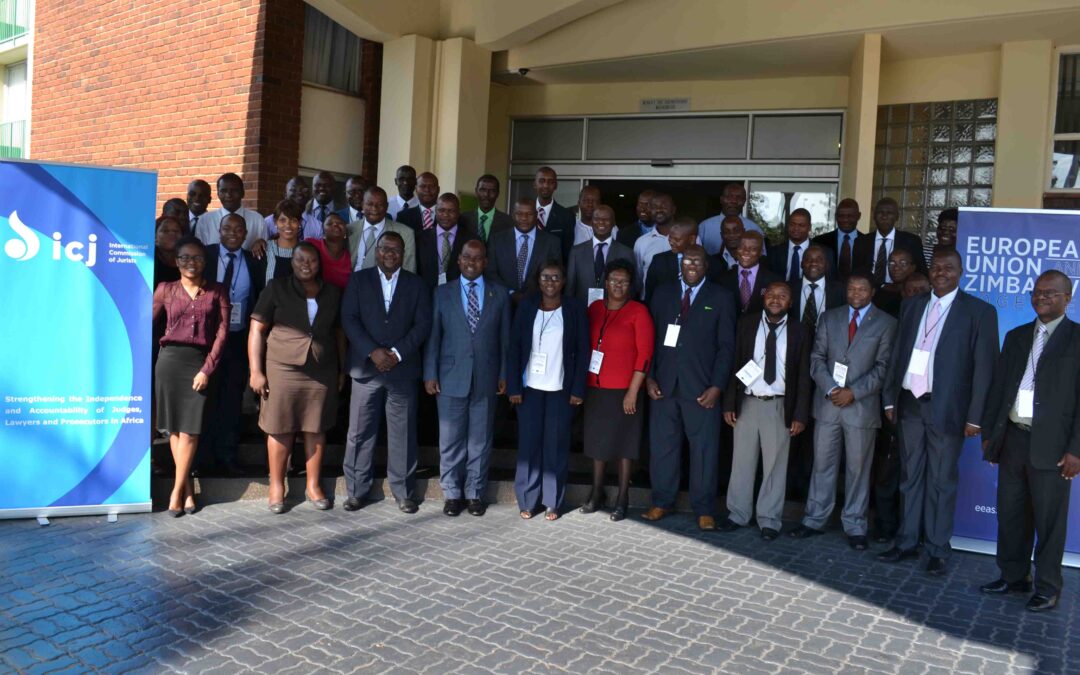
With support from the European Union (EU) and ICJ, the National Prosecuting Authority (NPA) held the first of two training of trainers in Bulawayo from 2-4 October 2015.
The training focused on regulations, code of ethics and prosecutorial guidelines and was attended by 50 senior prosecutors, senior law officers and office directors in attendance.
The participants are expected to then roll out the training at their various stations to cover the entire 500 women and men strong team of prosecutors.
Prior to adoption of the 2013 Constitution, prosecutors were supervised by the Attorney General under the Ministry of Justice.
Issues in respect of conduct, discipline, appointment, performance appraisal and other related conditions of service were dealt with through the line ministry and civil service commission.
The passage of the Constitution and the enactment of the NPA Act introduced the office of the Prosecutor General equally tasked with regulating the conduct of its staff through the NPA Board or any other delegated authority within the NPA.
The regulations and code of ethics were gazetted on 7 August 2015.
The code of ethics provides for the independence, integrity, propriety, impartiality, political engagement, competence and diligence of prosecutors in Zimbabwe.
The Prosecutor General also developed prosecutorial guidelines as mandated by the Constitution and the NPA Act on the institution of and conducting of criminal proceedings.
The objectives of the training were to equip senior officials with skills to conduct trainings for middle and lower officers to ensure greater compliance with the requirements of the new constitution of Zimbabwe; to familiarize senior officials on the regulations and code of conduct to ensure greater compliance with the requirements of the new constitution of Zimbabwe and to familiarize and train senior officials on the application of prosecutorial guidelines consistent with the requirements of the new constitution of Zimbabwe.
Following the completion of the trainings, the ICJ and NPA will conduct routine and random visits to different stations for purposes of observing the implementation, roll out of trainings and spot checks.
Remote support will also be provided in terms of statutes, such as the NPA Act, the regulations and code of ethics.
Further work is being explored to produce an updated prosecutor’s handbook that covers issues of prosecutorial conduct, ethics and guidelines.
Contact
Arnold Tsunga, ICJ Regional Director for Africa, t: +27 73 131 8411, e: arnold.tsunga(a)icj.org
Oct 1, 2015 | News
The ICJ today welcomed the adoption by the UN Human Rights Council of a further resolution on promoting reconciliation, accountability and human rights in Sri Lanka.
The resolution, co-sponsored for the first time by the Government of Sri Lanka (GOSL), is a historic step towards post-war justice, accountability and reconciliation.
The ICJ at the same time called on the GOSL to take genuine and prompt steps to deliver on the commitments and obligations reflected in the resolution, which was adopted by the UN Human Rights Council by consensus.
“Today’s resolution is a significant step towards achieving justice, accountability and reconciliation for the victims of Sri Lanka’s long and bloody civil war,” said Nikhil Narayan, ICJ’s senior legal adviser for South Asia.
“The shift in posture of the Sri Lankan Government in co-sponsoring the resolution marks a further welcome break from the Rajapakse regime. The Government must now demonstrate its political will by immediately launching concrete steps towards a genuine process of truth-seeking, justice and reconciliation,” he added.
The consensus resolution reflects certain key recommendations contained in the Report of the office of the UN High Commissioner for Human Rights (OHCHR) summarizing findings of the OHCHR Investigation on Sri Lanka (OISL), the ICJ notes.
The investigation and report was mandated by an earlier UN resolution on Sri Lanka, adopted in March 2014 over the strong objections of the Rajapakse government.
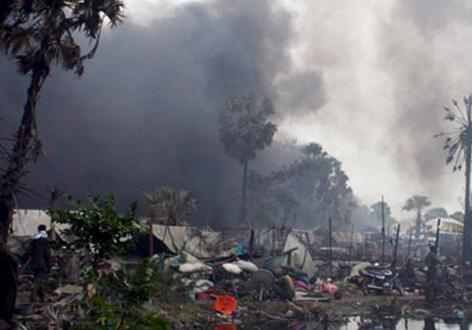
The report documents in vivid detail alleged serious violations and abuses of human rights and humanitarian law amounting to war crimes and crimes against humanity committed by both sides during the armed conflict in Sri Lanka, including extrajudicial killings, torture, enforced disappearances, forced recruitment, including of children, and sexual violence.
One of the most important recommendations of the High Commissioner for Human Rights called for an accountability process through a special judicial mechanism and prosecutor’s office that involves the full participation of international judges, prosecutors, lawyers and investigators.
Responding in part to this call, the resolution affirms the importance of participation of foreign judges, defence lawyers, prosecutors and investigators in an independent and impartial judicial mechanism to hold individuals accountable for human rights and humanitarian law violations, including those documented in the report.
The resolution also mandates further monitoring and reporting back to the Council on implementation of the accountability and other measures.
“The international community, through the UN Human Rights Council, the Office of the High Commissioner for Human Rights and Special Procedures, and other UN member states, must as the High Commissioner himself recommended, remain engaged through continued and sustained monitoring, assistance, support and fully integrated involvement of the international community to ensure full implementation of the resolution,” said Narayan.
Background:
The ICJ has worked with judiciaries, governments, civil society and victims around the world for decades to address impunity and victims’ right to remedy for violations of international human rights and humanitarian law, including in situations of transition.
In Sri Lanka, the ICJ has been documenting and reporting on a gradual erosion of judicial independence, impartiality and integrity under successive governments, and the resulting culture of impunity, for over thirty years.
The ICJ considers the International Criminal Court (ICC) to be the preferred mechanism for individual accountability where national authorities and courts lack the capacity or the willingness to genuinely investigate and prosecute all war crimes and crimes against humanity. In the absence of an ICC process, the ICJ’s extensive experience in Sri Lanka and elsewhere demonstrates that any credible and effective accountability process in Sri Lanka must involve, at a minimum, a majority of international judges, prosecutors and investigators.
The ICJ therefore advocated for and welcomed the resolution’s recognition of the need for international participation.
Since January 2015, when a new president was elected, the GOSL has undertaken a number of important steps to reverse the slide towards authoritarianism and the erosion of the rule of law and the culture of impunity experienced under the Rajapakse government, and restore democratic governance and build confidence towards reconciliation among Sri Lanka’s ethnic minorities, including by restoring the Constitutional Council through the passage of the 19th amendment to the Sri Lankan Constitution, and returning some tracts of military-occupied lands in the North and East.
However, after decades of war and distrust, and a history of promises undelivered, much work remains to be done to deliver justice to victims and their families, and to rebuild trust and confidence among Sri Lanka’s fractured ethnic minorities. Continued and sustained monitoring and engagement by the international community in ensuring the progress of the implementation of this resolution will be essential.
Equally importantly, today’s consensus resolution also reaffirmed the OHCHR’s recommendations on: the mandate and resources of the accountability mechanisms; legislating retroactive recognition of international crimes under national law; justice and security sector reform; repealing the Prevention of Terrorism Act (PTA); strengthening the Witness and Victim Protection Act; accession to the International Convention on the Protection of All Persons from Enforced Disappearances (CED), the Additional Protocols to the Geneva Convention, and the Rome Statute of the International Criminal Court; and continued monitoring of and technical support for implementation through the OHCHR and by the Council.
Contact
Nikhil Narayan, ICJ’s senior legal adviser for South Asia; t: +41 79 730 09 27; e: nikhil.narayan(a)icj.org

Sep 30, 2015 | Advocacy, Non-legal submissions
The ICJ today delivered an oral statement to the UN Human Rights Council, commenting on the landmark UN investigation and report on violations of human rights and humanitarian law in Sri Lanka.
The statement also welcomes recommendations for integration of international judges, prosecutors, lawyers and investigators into any accountability mechanism:
“The International Commission of Jurists (ICJ) welcomes the OHCHR Report on Promoting Reconciliation, Accountability and Human Rights in Sri Lanka (UN Doc A/HRC/30/61), which sets out the principal findings of the Report of the OHCHR Investigation on Sri Lanka (OISL Report, UN Doc A/HRC/30/CRP.2) documenting alleged serious violations and abuses of human rights and related crimes during the armed conflict in Sri Lanka. The ICJ commends the investigation team for its historic contribution towards reconciliation and the realization of victims’ rights in Sri Lanka.
The ICJ works with judiciaries, governments, civil society and victims around the world to address impunity and victims’ right to remedy for violations of international human rights and humanitarian law, including in situations of transition.
For over thirty years, the ICJ has documented and reported on a gradual erosion of judicial independence, impartiality and integrity under successive governments in Sri Lanka, and the resulting culture of impunity, including in the judiciary.[1]
The ICJ considers the International Criminal Court (ICC) to be the preferred mechanism for individual accountability where national authorities and courts lack the capacity or the willingness to genuinely investigate and prosecute all war crimes and crimes against humanity. In the absence of an ICC process, the ICJ’s extensive experience demonstrates that any credible and effective accountability process in Sri Lanka must involve, at a minimum, a majority of international judges, prosecutors and investigators.
The ICJ therefore welcomes the High Commissioner’s recommendation for a hybrid court and prosecutor’s office that fully integrates international judges, prosecutors, lawyers and investigators.
Also essential are the OHCHR recommendations on: mandate and resources of these mechanisms; legislating retroactive recognition of international crimes under national law; justice and security sector reform; repealing the Prevention of Terrorism Act (PTA); strengthening the Witness and Victim Protection Act; accession to the International Convention on the Protection of All Persons from Enforced Disappearances (CED), the Additional Protocols to the Geneva Convention, and the Rome Statute of the International Criminal Court; and continued monitoring of implementation through an OHCHR country office and the Council.
The ICJ welcomes that the tabled draft resolution explicitly recognises the need for international judges, prosecutors, lawyers and investigators. We call on the Council to adopt the resolution with, and call on the Government of Sri Lanka to urgently implement, these and other key elements of the recommendations of the High Commissioner’s Report in full.
[1] See, e.g., ICJ, Authority Without Accountability: The Crisis of Impunity in Sri Lanka (2012)
The statement can be downloaded in PDF format here: Sri Lanka-ICJ Oral Statement HRC-Advocacy-Non Legal submission-2015-ENG
Sep 21, 2015 | Advocacy, Non-legal submissions
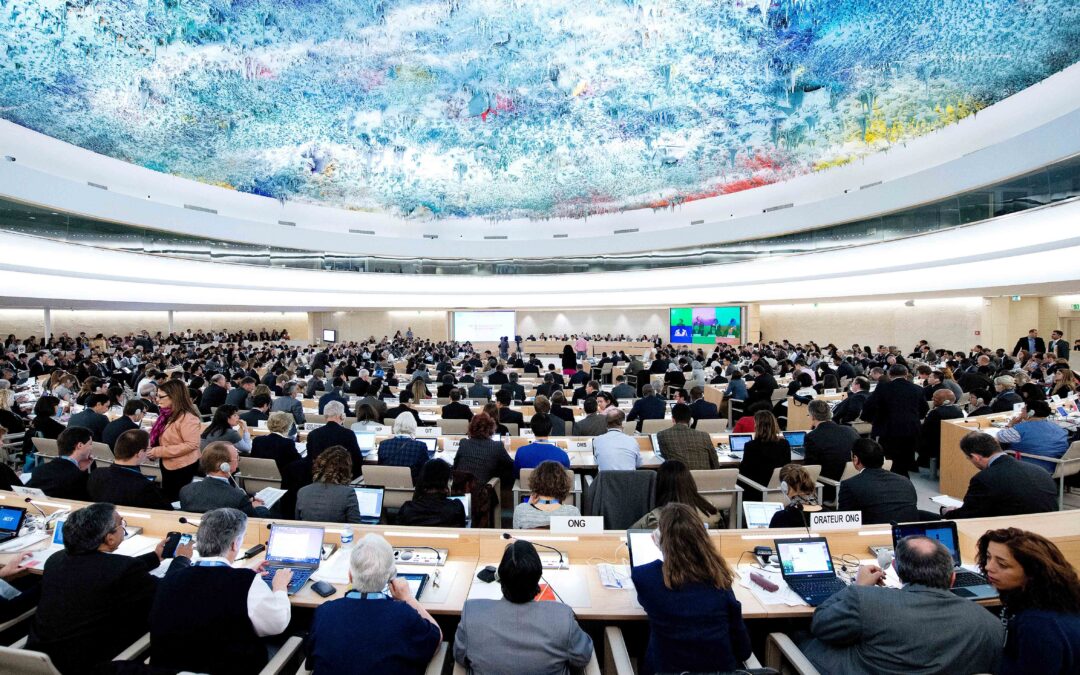
The ICJ today delivered an oral statement at the UN Human Rights Council during the Interactive Dialogue with the Commission of Inquiry on the Syrian Arab Republic concerning accountability and other measures to address the Syrian conflict.
In the statement the ICJ called upon the UN Human Rights Council and the Security Council to respond to the findings of the 10th report of the Syria Commission of Inquiry, including with a view to ensuring accountability for the serious violations of international law.
The ICJ also called upon all states to comply with their obligations under international law vis-à-vis the Syrian conflict, including by searching for all those responsible for international crimes committed in this conflict and bringing them before their own courts, and by protecting the rights of Syrian refugees and abiding by the principle of non-refoulement.
The full statement may be downloaded in PDF format, here: Syria-UN-HRC30-OralStatement-Advocay-non legal submission-2015-ENG