Feb 27, 2015 | News
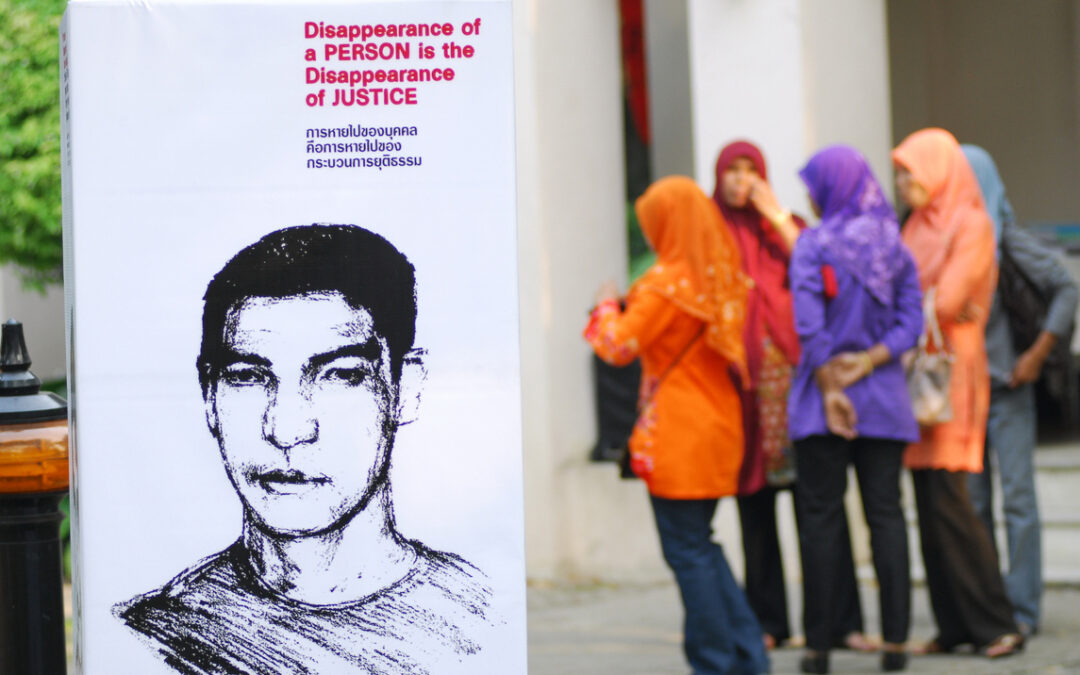
The Nepali government must fully implement yesterday’s decision of the Supreme Court rejecting the possibility of amnesties for perpetrators of serious human rights abuses during the country’s civil war, said today the ICJ.
The decision, by a three-person special constitutional bench, composed of Justice Kalyan Shrestha, Justice Baidhya Nath Upadhyay and Justice Cholendra Shumsher JB Rana, struck down the amnesty provision of the Commission on Investigation of Disappeared Persons, Truth and Reconciliation Act 2014 (TRC Act) promulgated last May 2014.
The Court also ruled that only the judiciary, and not the Commissions established by the TRC Act, can determine the criminality of any violations committed in the context of the country’s decade-long conflict.
“Nepal’s Supreme Court has once again firmly reasserted the right of the victims of human rights violations to seek justice,” said Sam Zarifi, ICJ’s Asia Director. “This bold and principled decision should finally end the cynical attempts by politicians from all Nepal’s major parties, as well as the military, to legislate impunity and shield themselves from accountability.”
The decision distinguished between the jurisdiction of the courts and the criminal justice system, and the non-judicial reconciliation and truth-seeking mechanisms established by the TRC Act.
In the months before the decision, the government had essentially frozen the prosecution of claims already before various courts, and had blocked the filing of First Information Reports (FIRs) by victims trying to lodge new complaints.
“Now, the government must not only remove obstacles to these cases, it must commit itself to prosecuting such claims,” Zarifi added. “The Government must immediately take all necessary steps to implement the court ruling including to ensure criminal investigation of FIRs, and address the concerns raised by the victims on the formation of the Truth and Reconciliation Commission and Commission of Inquiry on Enforced Disappearance.”
This is the second time that the Nepali Supreme Court has rejected the amnesty scheme introduced by the Nepali government.
On 2 January 2014, the Supreme Court had declared unconstitutional the Ordinance on the Truth and Reconciliation Commission (TRC Ordinance).
However, the Government effectively ignored the Court order and introduced a slightly modified version of the 2013 Ordinance replicating almost all of the provisions of the TRC Ordinance, including many of its problematic aspects, such as the ‘amnesty’ provision.
“The Government, with the help of the international community, must now dedicate itself to meeting the promise of the political parties to provide justice, truth and reparations to the victims and survivors of the conflict,” said Zarifi. “Only doing so will help end the country’s cycle of impunity.”
Contact:
Sam Zarifi, ICJ Asia Pacific Regional Director (Bangkok), t: +66 807819002; email: sam.zarifi(a)icj.org
Feb 5, 2015 | News
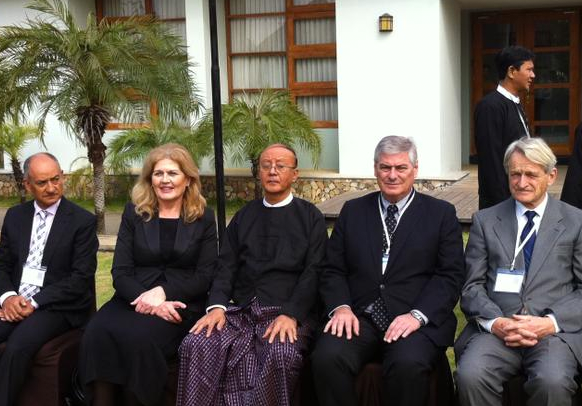
Myanmar must follow through on promising efforts to improve the independence and accountability of its legal system, and particularly its judiciary, said the ICJ today at the launch of one of its landmark book in Yangon.
The ICJ launched today the Myanmar language version of its Practitioners’ Guide to the Independence and Accountability of Judges, Lawyers and Prosecutors.
“The judiciary in Myanmar has taken important steps towards asserting its independence from the other branches of government, but we heard repeatedly from the judiciary that they still face significant obstacles in this regard,” said Wilder Tayler, ICJ’s Secretary-General.
The book launch wrapped a series of discussions regarding judicial ethics and the rule of law with the Supreme Court of the Union of Myanmar, as well as with the parliamentary Committee on Rule of Law and Tranquility.
The ICJ’s Practitioners’ Guide n°1 is the first of its kind to be published in the Myanmar language providing detailed references to international and comparative standards on the independence and accountability of judges and lawyers.
“The Supreme Court emphasized its belief that an independent judiciary plays a key role in ensuring access to justice and the protection of human rights, but with independence must come accountability,” Tayler added. “The Myanmar judiciary must be accountable not just in deciding cases according to the law and facts, but also as a separate and equal branch of the government, and ultimately, to the people of Myanmar.”
In the course of its discussions at an earlier workshop in Naypyidaw, the ICJ was repeatedly told that the judiciary is trying to address challenges to its institutional independence, as well as the independence of individual judges.
Corruption, which remains a serious problem throughout all social sectors, including the judiciary, interferes with the judiciary’s ability to provide a remedy for human rights violations and bringing perpetrators to justice.
Undue influence by powerful political and economic actors continues to hamper the push for greater trust and credibility for the judiciary among the general public.
“As we heard at the workshop, at all levels of the system, from the Supreme Court to the Townships, a lack of resources, poor working conditions and low remunerations contribute to an environment where the temptations of corruption, or outside pressure, undermine judicial independence and impartiality,” said Tayler.
“We also heard strong support from all levels of the judiciary for establishing a judicial code of conduct that incorporates international standards and best practices in response to the demands of the people of Myanmar for more rule of law. Producing such a code, and implementing it, would go a long way toward increasing the judiciary’s independence and accountability,” he added.
Wilder Tayler was joined by a senior panel of international legal experts on judicial integrity, including three ICJ Commissioners: Justice Azhar Cachalia of the Supreme Court of Appeals of South Africa, Justice Radmila Dicic of the Supreme Court of Serbia, and retired Justice Ketil Lund of the Supreme Court of Norway.

Dec 19, 2014 | News
The Nepal government should ensure more victim participation and improve transparency when selecting candidates for two independent commissions on the country’s decade-long conflict, the ICJ and other groups said today.
The ICJ, Amnesty International, Human Rights Watch and five local human rights and conflict-era victims groups sent an open letter to Prime Minister Sushil Koirala.
The groups, reiterating concerns about the act, said Koirala should narrow the scope of the amnesty powers vested in the commissions and bring them in line with international standards.
The Truth and Reconciliation Commission and the Commission on Enforced Disappearances are being established under a 2014 law, the Commission on Investigation of Disappeared Persons, Truth and Reconciliation Act, 2071 (TRC Act).
“A consultative and transparent process for selecting commissioners is critical if the commissions are going to win the trust of conflict-era survivors as well as local and international observers,” the rights groups said in their letter. “The TRC Act is fundamentally flawed, and the government should take these steps to ensure that this important exercise in transitional justice remedies the flaws.”
Contact:
Sam Zarifi, ICJ Asia Pacific Regional Director (Bangkok), t: +66 807819002; email: sam.zarifi(a)icj.org
Nepal-TRCCommission-Advocay-Open Letter-2014-ENG (full text in PDF)
Dec 10, 2014 | News
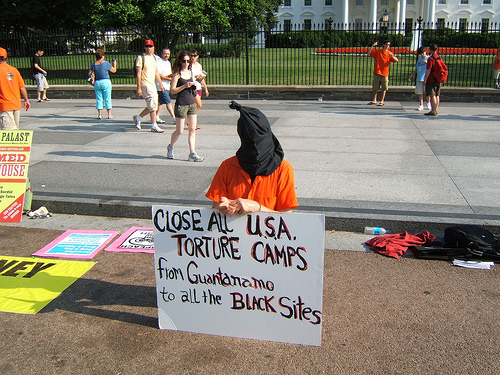
The ICJ repeated its call for the United States to take immediate measures to hold accountable officials for acts of torture, enforced disappearance and other gross human rights violations committed in the course the CIA’s rendition and secret detention programs between 2001 and 2006.
The call follows the release yesterday of a redacted summary of the United States Senate Intelligence Committee’s report on the programs, which highlights appalling abuses committed against at least 119 persons.
The ICJ has also called for the United States to provide access to effective remedies and reparation for the victims of the violations, some of whose identities or whereabouts remain unknown.
The report exposed numerous acts of torture and cruel, inhuman or degrading treatment, including, among others: forced rectal feeding; extreme sleep deprivation for up to a week; sensory disorientation; near drowning through “waterboarding”; confinement in boxes; dousing with cold water; prolonged subjection to painful stress positions; and threats of extreme violence against family members. Some detainees were held in secret detention for years, without any contact with the outside world.
“With the partial release of the Intelligence Committee’s report, the US has finally begun to take the first steps towards acknowledging the truth of the lawless and criminal conduct in which it engaged systematically over the course of years”, said Ian Seiderman, the ICJ’s Legal and Policy Director. “It is now time for the United States to fulfill its international legal obligations and hold the responsible officials criminally accountable and ensure full reparation for the victims.”
To date, no officials have been subject to prosecution for participation in the abuses and all attempts by victims to access justice through judicial and administrative channels have been thwarted by claims of state secrecy.
The report draws attention to the complicity of a number of other States in the rendition and secret detention programs, possibly up to 54 countries according to a study by the Open Society Foundation.
The European Court of Human Rights has already found the former Yugoslav Republic of Macedonia and Poland responsible for violations in this connection, with further cases pending against Lithuania and Romania.
The ICJ also called for the United States to release the entire Senate Committee report, said to number 6700 pages, with only those very minimal redactions of personal data strictly necessary to protect serious threats, such as to children and the privacy interests of victims and their families if they so request.
“Responsibility for these criminal abuses extends not only to the CIA agents who directly carried them out, but also to officials at the highest levels of the executive, who approved and facilitated the practices, and Justice Department lawyers who provided spurious legal cover for them,” said Ian Seiderman.
Torture and enforced disappearance are crimes under international law.
United States treaty obligations, including under the UN Convention against Torture and the International Covenant on Civil and Political Rights require the prosecution of officials responsible for such acts and provision of effective remedies and reparation the victims.
Nov 15, 2014 | News
La Comisión Internacional de Juristas, a través de su representante para Suramérica, Federico Andreu-Guzmán, intervino como perito en el procedimiento interamericano, a solicitud de los representantes de las víctimas.