Sep 4, 2019 | News
The announcement that the remains of Pholachi “Billy” Rakchongcharoen, a Karen rights activist, have been located, brings a sad end to years of uncertainty for his family, said the ICJ and Amnesty International today.
This development should lead to a renewed focus on identifying the perpetrator(s) of his apparent enforced disappearance and bringing them to justice.
On 3 September 2019, the Thai Ministry of Justice’s Department of Special Investigations (DSI) announced it had located bone fragments, which they had identified as likely belonging to Billy inside an oil tank submerged in water near a suspension bridge inside Kaeng Krachan National Park in Phetchaburi province.
“The DSI should redouble its efforts to identify the perpetrator(s) of Billy’s killing and bring them to justice,” said Frederick Rawski, Asia Regional Director of the ICJ. “If, based on an assessment of the evidence, it is found that Billy was the victim of enforced disappearance, then the perpetrators, including those with command responsibility, should be charged with the appropriate, serious offences in accordance with Thailand’s obligations under international law – not only with lesser crimes that do not reflect the gravity of the offense.”
Billy was last seen on 17 April 2014 in the custody of Kaeng Krachan National Park officials.
“This case highlights the serious risks activists and human rights defenders face in Thailand, including assaults, enforced disappearance and killings,” said Nicholas Bequelin, Amnesty International’s interim Regional Director of Southeast Asia and the Pacific. “It underscores the long-overdue need for the Thai government to make enforced disappearance a crime under national law. A failure to do so results in the lack of an independent, impartial and effective mechanism to investigate the cases, exacerbating the current climate of impunity.”
The DSI stated that the recovered bones contain DNA inherited from Billy’s mother, which suggests they belong to a person who was related to her. However, the DSI declined to disclose the name of any suspect(s) and requested more time to investigate the case and examine the remains.
Background
Thailand is a state party to the International Covenant on Civil and Political Rights (ICCPR) and the Convention against Torture and other Cruel, Inhuman or Degrading Treatment or Punishment (CAT). Freedom from enforced disappearance is protected under both these treaties, as enforced disappearance will always constitute violations of some or more of the following rights: the right to life; freedom from torture and other cruel, inhuman, or degrading treatment or punishment; the right to liberty; and the right to recognition as a person under the law. These are in addition to violations of the rights of members of the disappeared person’s family through suffering deliberately inflicted on them through the imposition on them of uncertainty about their love one’s fate and whereabouts.
Thailand has also signed, but not yet ratified, the International Convention for the Protection of All Persons from Enforced Disappearance (ICPPED). The ICPPED affirms the absolute right not to be subject to enforced disappearance and places an obligation on states to investigate acts of enforced disappearance, to make it a criminal offence punishable by appropriate penalties that take into account its “extreme seriousness” and to take necessary measures to bring those responsible to justice.
The Government has stated it will not ratify the Convention until its provisions are incorporated in domestic law. However, efforts to pass the Draft Prevention and Suppression of Torture and Enforced Disappearance Act (draft Act) stalled after it was dropped by the National Legislative Assembly (NLA) prior to the 2019 national election. The draft Act is currently pending the consideration of the President of the National Assembly. Under international law of treaties, as signatory to the ICPPED, still is bound to desist from any acts which would defeat its object and purpose.
Thailand has a binding obligation under international law to conduct prompt, effective and thorough, independent and impartial, and transparent investigations into all suspected cases of unlawful death and enforced disappearance.
According to the ICPPED and the revised Minnesota Protocol (2016), which contains the international standards on the conduct of investigations into unlawful death and enforced disappearance – and which Thailand launched in May 2017 – records that investigations “must seek to identify not only direct perpetrators but also all others who were responsible for the death, including, for example, officials in the chain of command who were complicit in the death.” (para 26)
Download
Thailand-Discovery of Billy remains-news-webstory-2019-THA (full story in PDF)
Further reading
Thailand: special investigation into apparent enforced disappearance of “Billy” welcome, but much more is needed
Thailand: ICJ submits recommendations on draft law on torture and enforced disappearance amendments
Justice for Billy: Time for Thailand to Account for Activist’s Disappearance
Contact
For ICJ: Frederick Rawski, ICJ Asia-Pacific Director, t: +66 64 478 1121; e: frederick.rawski(a)icj.org

May 15, 2019 | News
The ICJ today condemned a series of the acts of violence directed against the Muslim community in the aftermath of the Easter attacks on 21 April in Sri Lanka directed at churches and other places.
In the most recent attacks on 13 May, at least one person was killed in anti-Muslim mob violence in Nattandiya. In addition, various attacks have resulted in the looting and destruction of mosques, Muslim-owned businesses and houses in several parts of the island including Negombo, Chilaw, Kurunegala and Gampaha.
The ICJ called upon the State authorities to conduct independent, impartial and effective investigations into the attacks and bring all perpetrators to justice in line with international standards. Furthermore, the ICJ urges the Government of Sri Lanka to send a clear public message that acts of violence against any religious minorities are not tolerated.
“Attacks perpetrated against religious minorities are more likely to occur in a climate of impunity” said Fredrick Rawski, ICJ’s Regional Director for Asia and the Pacific. “The fact that Sri Lanka has a history of serious violations of human rights of religious minorities makes it even more urgent that the Government act to safeguard the human rights of all persons and take immediate measures to protect members of religious minorities from further violence.”
Delayed action or inaction on the part of law enforcement authorities during and in the immediate aftermath of the attacks has further exacerbated the situation. Given the recurring patterns of mob violence against religious minorities in Sri Lanka, a handful of arrests will not suffice. It must be followed up by independent and impartial investigations and, where warranted, prosecutions as part of an effective preventive strategy to counter such collectively organized violence.
Under international human rights law, including the International Covenant on Civil and Political Rights, to which Sri Lanka is a party, States have a duty to protect freedom of religion, which includes persons from religious minorities against abuses committed against them by any person or group.
The Government of Sri Lanka must take appropriate security measures in response to the worst terror attack in recent years. However, it must ensure that the volatile situation is not made worse by inaction to prevent anti-Muslim violence and vigilantism. Moreover, the State must ensure that any counter-terrorism measure is adopted and implemented in line with its international human rights law obligations and does not explicitly or implicitly target a particular community.
Apr 22, 2019 | Advocacy, News, Non-legal submissions
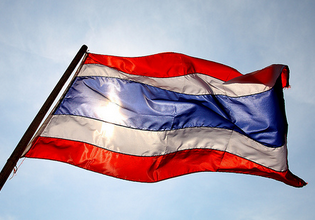
Today, the ICJ submitted recommendations to the Council of the State calling for the repeal or amendment of National Council for Peace and Order (NCPO) and Head of the NCPO (HNCPO) orders and announcements in line with Thailand’s international human rights law obligations.
The ICJ was informed by the Ministry of Foreign Affairs that the Council of the State had been tasked to review the necessity and relevance of announcements, orders, and acts of the NCPO and of the HNCPO in February 2019.
The review process is in line with Thailand’s declaration to the UN Human Rights Committee in its Follow-Up to the Concluding Observations of the Committee, submitted on 18 July and published on 10 August 2018.
In its submission to the Council of the State, the ICJ has called for the review process of HNCPO and NCPO announcements and orders to be carried out with increased public participation, openness, and transparency.
The ICJ has also made recommendations on the repeal and amendment of the following HNCPO and NCPO orders and announcements since they are clearly inconsistent with Thailand’s international human rights law obligations and the 2017 Constitution, and are neither necessary, nor proportionate, nor relevant to the current situation:
- Orders that provide the military with superior powers beyond civilian authorities;
- Orders that allow military courts to prosecute civilians;
- Orders that infringe on the rights to freedom of expression and assembly, restrict media freedom and the right to information; and
- Orders that infringe on community and environmental rights.
As main priorities, the ICJ has recommended that:
a) the exercising of law enforcement powers by military personnel to arrest and detain suspects in places not formally recognized as places of detention without judicial review should end;
b) all cases of civilians facing proceedings before military courts be transferred to civilian courts, and all civilians convicted of an offence in military courts be guaranteed a re-trial in civilian courts; and
c) all other HNCPO and NCPO orders and announcements should be repealed or amended to bring Thailand in compliance with its international human rights law obligations, and to ensure that the rights to freedom of expression, opinion and assembly, and environmental rights, among others, be respected.
Thailand-civilian prosecutions military courts-Advocacy-Non-legal submissions-2019-ENG (PDF in English)
Thailand-civilian prosecutions military courts-Advocacy-Non-legal submissions-2019-THAI (PDF in Thailand)
Further readings:
Post coup’s legal frameworks
Thailand: ICJ alarmed at increasing use of arbitrary powers under Article 44
Joint submission to the UN Human Rights Committee by the ICJ and Thai Lawyers for Human Rights
The ICJ and other groups made a joint follow-up submission to the UN Human Rights Committee
Thailand: statement to UN on situation for human rights
ICJ and Thai Lawyers for Human RIghts’ submission to the Universal Periodic Review (UPR) of Thailand
Military officers in law enforcement missions
Thailand: immediately end the practice of arbitrarily detaining persons in unofficial places of detention
Thailand: The ICJ and Human Rights Watch express concerns over detentions
The Use of Military Court
Thailand: transfer all civilians to civilian courts
Thailand: End prosecution of civilians in military tribunals
Thailand: ICJ welcomes Order phasing out prosecution of civilians in military courts but government must do much more
Freedom of expression and assembly
Thailand: lifting of the ban on political activities is welcome but more is needed
Thailand: Lift ban on political gatherings and fully reinstate all fundamental freedoms in Thailand
Thailand: misuse of laws restricts fundamental freedoms (UN statement)
Community and environmental rights
“Development” and its discontents in Thailand
Thailand: ICJ submission to the UN Committee on Economic, Social and Cultural Rights
Apr 10, 2019 | News
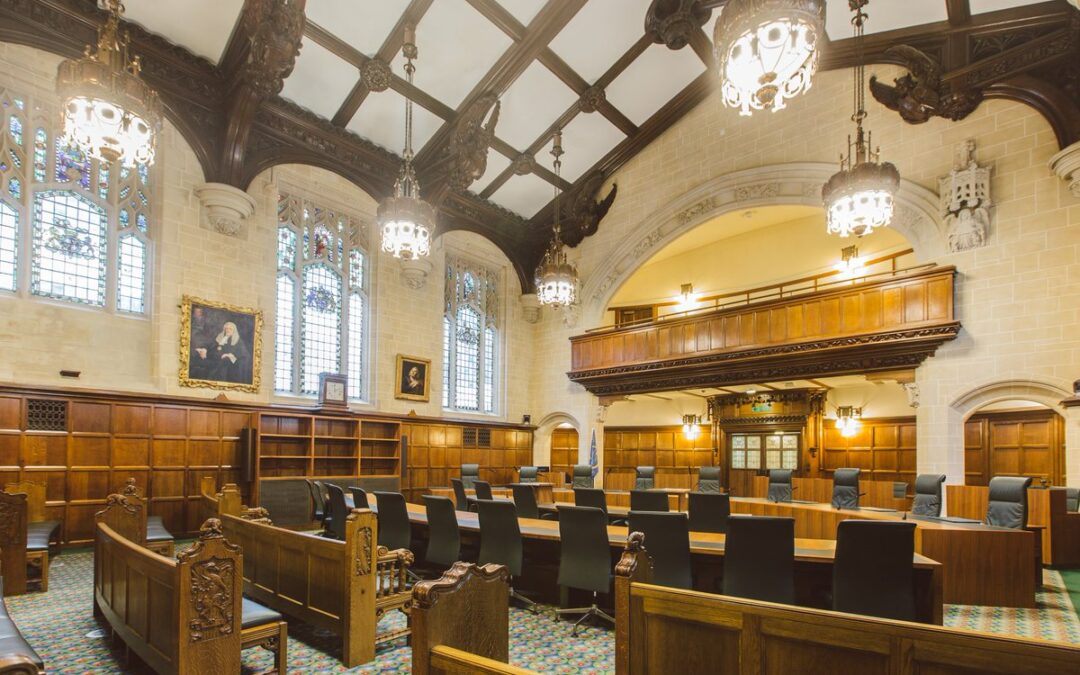
Today, the ICJ and the CORE Coalition welcomed the decision of the United Kingdom Supreme Court to allow a complaint to proceed against Vedanta Resources Plc and its Zambian subsidiary Konkola Copper Mines (KCM), alleging serious harm from extraction activities in Zambia.
The damage to health and livelihood was allegedly caused to local communities living in the Chingola District by the discharge of toxic waste from the Nchanga Mine operated by KCM.
The companies challenged the jurisdiction of the UK courts to hear the complaint for negligence and breach of statutory duty, saying there was no case against them arguable in a UK court and, in relation to KCM, that Zambia was the proper forum where any case would have to be heard.
The judgment, confirming the decision of lower courts, dismissed the appeal by the companies, allowing the case to now proceed to trial on the merits. The ICJ and CORE Coalition acted as interveners in the case.
“Today’s Supreme Court decision will make it possible for the Zambian claimants to find justice, even so long after events took place,” said ICJ Senior Legal Adviser Carlos Lopez.
“The ruling makes clear that, from available evidence at this stage, it is arguable in trial that a parent company like Vendanta owes a duty of care in relation to people living in the vicinity of their subsidiaries and this decision will have important implications to similar cases concerning parent company duties around the world,” said Lopez.
Although access to justice for alleged victims harm from subsidiaries of parent companies has been elusive, the UK Supreme Court clarified that the principles applicable to these cases were “not novel at all.”
“Many other victims face insurmountable hurdles in their efforts to hold companies to account. The case is a reminder of the urgent need for legislation to require companies to take action to prevent human rights abuses, and to make it easier to hold them to account when they fail to do so,” said Marilyn Croser, Director of CORE.
The judgment regarded published material in which Vedanta fairly asserted assumption of responsibility for the maintenance of proper standards of environmental control over activities of its subsidiaries. The Court said that this was “sufficient on their own to show that it is well arguable that a sufficient level of intervention by Vedanta in the conduct of operations at the Mine may be demonstrable at trial.”
Today’s Supreme Court judgment also made clear that Zambian courts could not be necessarily relied on to address claims against KCM and that there was a real risk that the claimants would not obtain “substantial justice” in Zambia.
Contact:
Marilyn Croser, Director CORE Coalition, t: + 44 203 752 5712
Carlos Lopez, Senior Legal Adviser, ICJ, t: + 41 22 9793816

Apr 1, 2019 | News
As military courts in Pakistan once again cease to have jurisdiction over civilians for terrorism-related offences, the Government must bring reforms to strengthen the country’s criminal justice system, the ICJ said today.
Perpetrators of terrorist attacks and other serious crime must be brought to justice fair trials before competent, independent and impartial courts as required under international law, the ICJ added.
“The lapse of the jurisdiction of military courts over civilians is a step in the right direction, but unsurprisingly – even four years after military courts were empowered to try civilians – there is no sign of the promised reforms to strengthen the ordinary criminal justice system to effectively and fairly handle terrorism-related cases,” said Frederick Rawski, ICJ’s Asia Director.
The 23rd Amendment and corresponding amendments to the Army Act, 1952, lapsed on 30 March 2019, as their respective two-year sunset clauses expired. So far, the Government has failed to get support from opposition parties for a constitutional amendment to once again extend the jurisdiction of military courts to conduct trials of civilians.
“The Government must not re-enact legislation to continue secret military trials of civilians, nor resort to more short-term, short-sighted security measures that are contrary to Pakistan’s obligations to protect human rights,” Rawski said.
“Instead, the Government should urgently invest in enhancing the capacity and security of judges, investigators and prosecutors to make the regular criminal justice system more effective in conducting fair, credible terrorism trials, and bringing perpetrators to account without imposing the death penalty.”
According to military sources and ICJ’s monitoring of military trials in Pakistan since January 2015, military courts have convicted 617 people for terrorism-related offences, out of which 346 people have been sentenced to death and 271 people have been given prison sentences. At least 56 people have been hanged. Only four people have been acquitted.
The ICJ has documented serious fair trials violations in the operation of military courts, including: denial of the right to counsel of choice; failure to disclose the charges against the accused; denial of a public hearing; failure to give convicts copies of a judgment with evidence and reasons for the verdict; and a very high number of convictions based on “confessions” without adequate safeguards against torture and ill treatment.
Contact
Frederick Rawski, ICJ Asia Pacific Regional Director (Bangkok), e: frederick.rawski(a)icj.org
Reema Omer, ICJ International Legal Adviser for Pakistan (London), t: +447889565691; e: reema.omer(a)icj.org
Additional information
Military courts were first empowered to try civilians for certain terrorism-related offences in January 2015 through the 21st Amendment to the Constitution and amendments to the Pakistan Army Act, 1952, which were in operation for a period of two years.
The expansion of the jurisdiction of military tribunals was a key part of the Government’s 20-point National Action Plan, adopted following the attack on the Army Public School in Peshawar in December 2014. NAP envisioned military courts to be a short-term “solution” to try “terrorists”, to be operational only for a two-year period during which the government would bring about necessary “reforms in criminal courts system to strengthen the anti-terrorism institutions”.
Despite promises that military courts were only temporary, after the expiration of the 21st Amendment, on 31 March 2017, Parliament enacted the 23rd Amendment and amendments to the Army Act to renew military courts’ jurisdiction over civilians. The amendments were given retrospective effect from 7 January 2017, and were due to lapse two years after their date of “commencement”. The expanded jurisdiction of military courts lapsed on 30 March 2019 (even though earlier reports suggested the amendments would expire on 6 January 2019) — two years after the date of “operation” of the 23rd Amendment).
The ICJ opposes the death penalty in all circumstances as a form cruel, inhuman and degrading punishment and an arbitrary denial of the right to life. The ICJ recalls that the UN General Assembly has by overwhelming majorities repeatedly called on all states the retain the death penalty to place a moratorium on the practice with a view to abolition. Pakistan previously had such a moratorium from 2008 to 2014.