Feb 7, 2014 | News
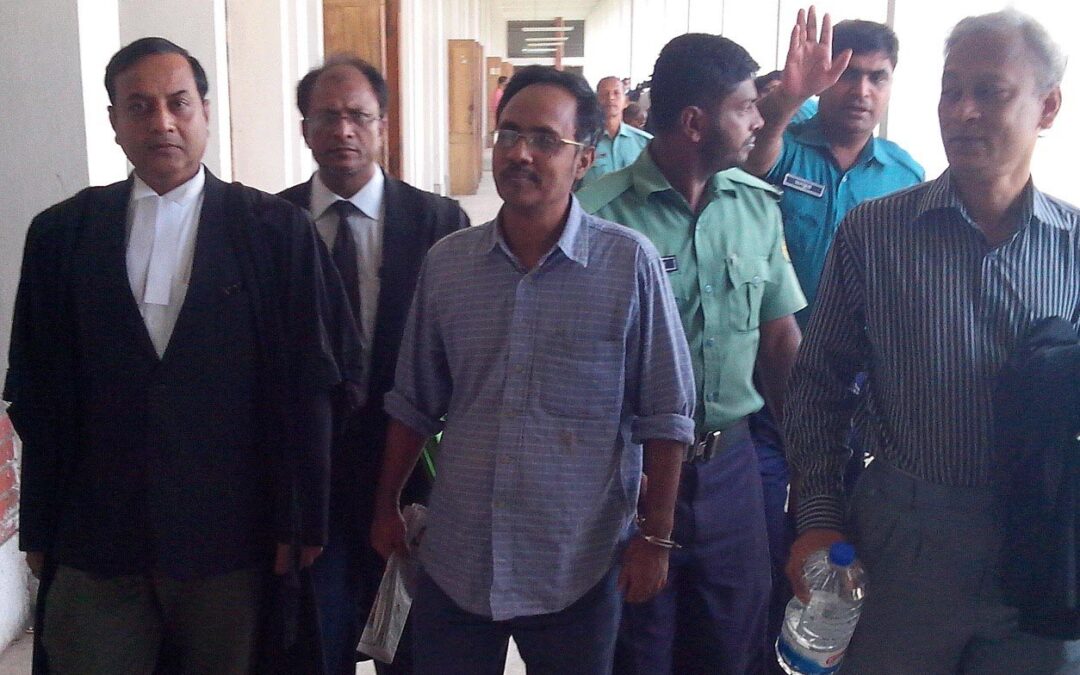
Bangladesh authorities must immediately cease their harassment of Adilur Rahman Khan, Secretary of Odhikar, a prominent human rights organization and ICJ affiliate, and members of his family, the ICJ said today.
On 5 February 2014, Odhikar reported that two officers of the Special Branch of Police followed a member of Adilur Rahman Khan’s family from his home. When he realized he was being followed he decided to return home. The security officers continued to follow him, and parked their motorcycle next to his house.
Odhikar previously reported that security forces monitor its Dhaka offices as well as Adilur Rahman Khan, his family and other staff. In August 2013, security forces raided Odhikar’s office, confiscating computers containing potentially sensitive material such as the identities of witnesses.
“These actions are deliberate acts of intimidation against Odhikar, its staff and their families, designed to silence the legitimate actions of human rights defenders,” said Ben Schonveld, the ICJ’s Asia Director.
Article 12 of the United Nations Declaration on the Right and Responsibility of Individuals, Groups, and Organs of Society to Promote and Protect Universally Recognized Human Rights and Fundamental Freedoms (Declaration on Human Rights Defenders), clarifies that States must take all necessary measures to ensure the protection of human rights defenders from any violence, threat, retaliation, pressure, or any other arbitrary action as a consequence of the legitimate exercise of rights, including the freedom of expression.
Background:
Adilur Rahman Khan and Nasiruddin Elan, Secretary and Director of Odhikar, have been charged under section 57 of the Information and Communication Technology (ICT) Act, 2006, for publishing a report on the Government crackdown on a Hefazat-e-Islam rally in May 2013. The report alleged that 61 people were killed in the protest; the Government disputes the number of casualties. Rahman and Khan were indicted on 8 January 2014 and are both currently on bail.
Contact:
Ben Schonveld, ICJ South Asia Director (Kathmandu), t: +977 14432651; email: ben.schonveld(a)icj.org
Reema Omer, ICJ International Legal Advisor (London), t: +447889565691; email: reema.omer(a)icj.org

Feb 4, 2014 | E-bulletin on counter-terrorism & human rights, News
Read the 79th issue of ICJ’s monthly newsletter on proposed and actual changes in counter-terrorism laws, policies and practices and their impact on human rights at the national, regional and international levels. The E-Bulletin on Counter-Terrorism and Human...
Jan 31, 2014 | News
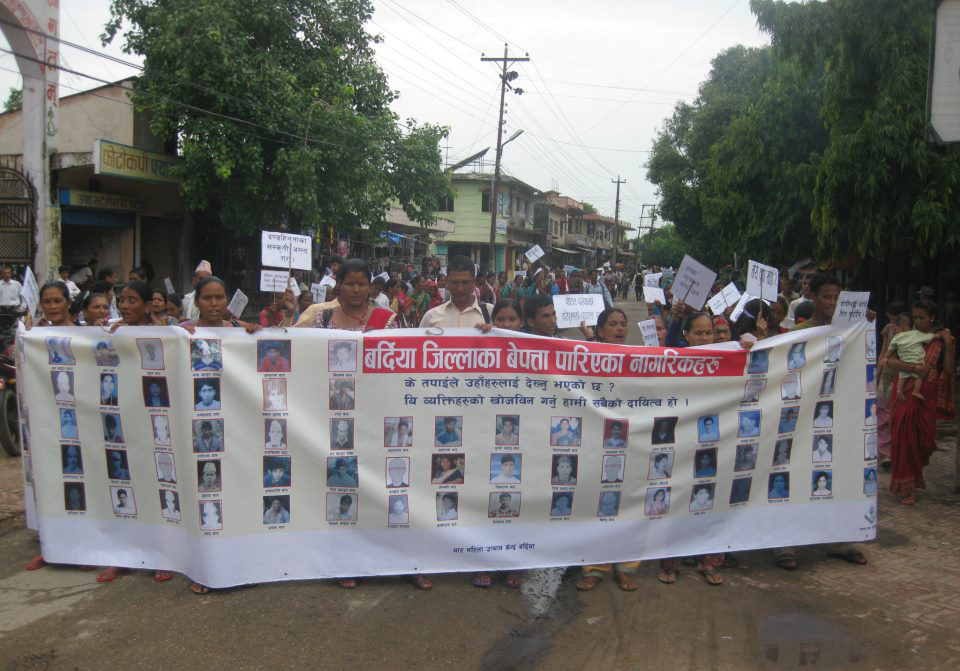
The Parliament of Nepal should reject the Ordinance on Truth, Reconciliation and Disappearances tabled this week and enact a new transitional justice mechanism that complies with international human rights law, the ICJ and HRW said today.
The Ordinance on Disappearances, Truth and Reconciliation Commission, signed by the President on 14 March, 2013, was declared unconstitutional and in violation of international human rights law by the Nepali Supreme Court on 2 January, 2014.
In a directive, the Supreme Court ordered the Ordinance be repealed or amended significantly to bring it in line with Nepal’s obligations under national and international law.
However, on 27 January, the Government reintroduced the Ordinance with no amendments in the meeting of the Legislative-Parliament – in direct contravention of the Supreme Court’s orders.
“Tabling a rejected version of the Ordinance after the Supreme Court’s landmark judgment on transitional justice is contemptuous, and raises serious concerns over the government’s respect for the rule of law in Nepal,” said Ben Schonveld, ICJ’s South Asia Director.
The Interim Constitution says clearly that the Supreme Court’s rulings are binding on the Government of Nepal. Article 116 of the Interim Constitution states that any order issued by the Supreme Court in the course of the hearing of a case shall be binding on the Government of Nepal and all its offices and courts.
The Supreme Court has previously held that any mechanism for transitional justice must conform with international standards, lead to accountability for serious human rights violations, and ensure victims their right to remedy and reparations, which includes the right to truth, justice, and guarantees of non-recurrence.
In its 2013 briefing paper, “Authority without Accountability,” the ICJ expressed concern over multiple provisions in the Ordinance, including amnesty provisions, which would entrench impunity for gross human rights violations in Nepal.
Any amnesty for gross human rights violations would add another layer to the complex web of immunities, documented in the report, that continue to shield those responsible for human rights abuse from accountability in Nepal.
“The Parliament of Nepal should strongly reject the tabled Ordinance and the government must expeditiously implement the Supreme Court’s directive,” said Meenakshi Ganguly, South Asia Director at Human Rights Watch. “The ordinance in its current form violates undertakings made as part of the peace agreement, and essentially strips victims of serious rights abuses of a proper chance at justice.”
The rights groups called on the government to implement the Supreme Court’s ruling, creating a new transitional justice law that, at a minimum:
- Establishes two separate transitional justice commissions: a “Truth and Reconciliation Commission” and a “Commission of Inquiry on Enforced Disappeared Persons;”
- Criminalizes the act of enforced disappearance in accordance with the definition set out in the International Convention on the Protection of All Persons from Enforced Disappearance and ensures that it is punishable with penalties commensurate with the gravity of the crime;
- Criminalizes other serious crimes, including crimes against humanity, and other crimes under international law, in a manner that is consistent with international law;
- Prohibits amnesties for gross human rights violations or crimes under international law;
- Does not contain a limitation period on the reporting of violations and ensures there are no time limits on the prosecutions of of serious crimes including enforced disappearance, other crimes under international law including, war crimes, and crimes against humanity;
- Ensures that the composition and structure of the Commissions complies with international standards. In particular, there should be a fair vetting system which aims to ensure the impartiality of the commission members and to ensure that no individuals against whom there are credible allegations they have committed human rights abuses are selected as Commissioners;
- Requires the necessary legal and institutional measures to be taken to enable and ensure the establishment, adequate resourcing and maintenance of effective victim and witness protection mechanisms; and
- Establishes and requires other necessary legal, administrative, institutional, or other arrangements for an effective reparation program.
Contact:
In Bangkok, Sam Zarifi: +66-857200723; or sam.zarifi(a)icj.org
In Kathmandu, Ben Schonveld +977-9804596661; : ben.schonveld(a)icj.org
Read also: ICJ releases new report on the struggle for justice in Nepal
The report Authority without accountability: the struggle for justice in Nepal can also be downloaded below:
Nepal-SUMMARY-Authority without Accountability-Publication-report summary-2012 (full text in pdf)
Nepal-FULL-Authority without accountability-publications-report-2012 (full text in pdf)
Dec 19, 2013 | News
The ICJ deplores the death sentences handed down by the People’s Court of Hanoi on December 17 to two former shipping executives and urges the government of Viet Nam to desist from carrying out the planned executions.
Viet Nam National Shipping Lines (Vinalines) former chairman Duong Chi Dung and former general director Mai Van Phuc were found guilty of embezzling nearly USD $1 million from the state-owned company and sentenced to death.
“The announced death sentences fly in the face of encouraging human rights developments in Viet Nam, such as the State’s signing the Convention Against Torture and other Cruel Inhuman or Degrading Treatment or Punishment in November,” said Sam Zarifi, ICJ’s regional director for Asia and the Pacific. “This is a major setback at a time when it appeared Viet Nam was making progress towards ending capital punishment.”
The ICJ considers the death penalty to constitute a violation of the right to life and the right to be free from cruel, inhuman or degrading punishment.
Following the Human Rights Council’s Universal Periodic Review in 2009, Viet Nam agreed to revise its legislation on the death penalty in line with the country’s international obligations.
Since then it has reduced the number of crimes punishable by death, and changed its method of administering the sentence from firing squad to injection by lethal substance.
It is estimated that more than 600 people remain on death row in the country. Most were convicted on drug-related offences.
“At present, approximately two thirds of the world’s countries have already either abolished capital punishment or have moratoriums on executions,” said Zarifi. “It is regrettable that Viet Nam has chosen to exclude itself from this global trend.”
The ICJ calls on the Government of Viet Nam to immediately put in place a moratorium on its practice, with a view to abolishing the death penalty, as demanded by the United Nations General Assembly in repeated resolutions on the question.
CONTACT:
Sam Zarifi, ICJ Asia-Pacific Regional Director, (Bangkok), t:+66 807819002, e-mail: sam.zarifi(a)icj.org
Craig Knowles, ICJ Media & Communications, (Bangkok), t:+66 819077653, e-mail: craig.knowles(a)icj.org

Dec 6, 2013 | News
The ICJ mourns with the rest of the world the passing on of former President Nelson Mandela.
He was a beacon of hope, justice and peace in the world and will be sorely missed. His life will remain a source of inspiration for our work in pursuit of justice, peace, tolerance and respect for human rights in the world.