Apr 25, 2019 | Nouvelles
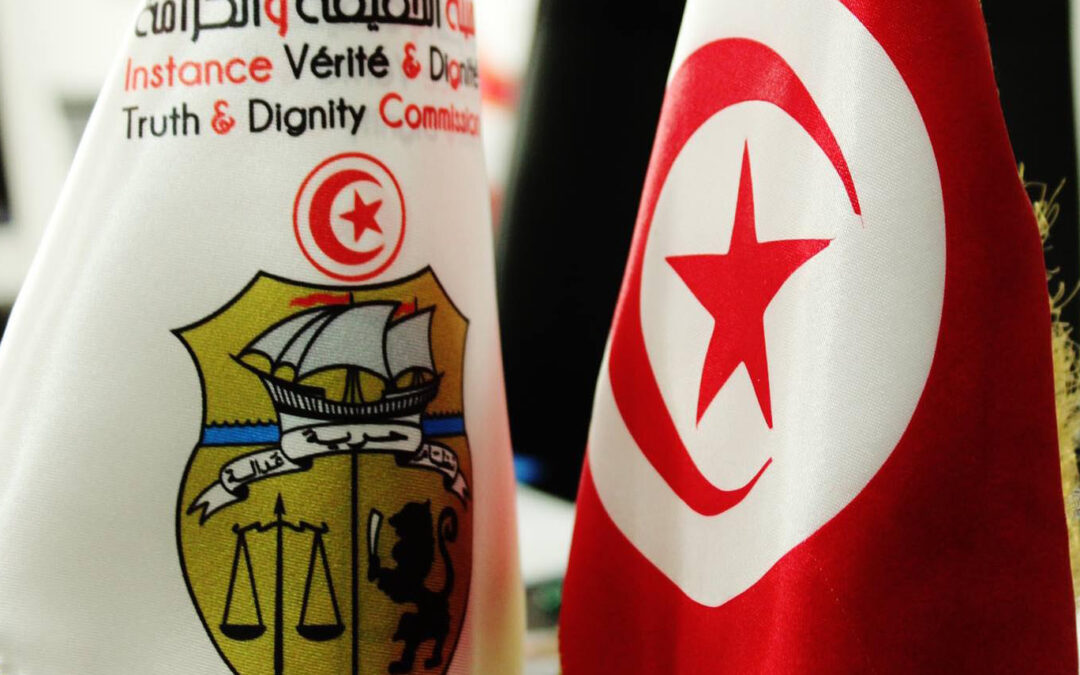
Le communiqué alerte l’opinion publique sur le danger d’une proposition de loi visant à démanteler les chambres criminelles spécialisées en Tunisie et à les remplacer par une institution qui garantirait l’impunité pour les personnes ayant commis des violations flagrantes des droits humains en Tunisie entre 1955 et 2013.
Le communiqué a été signé par la Commission Internationale de Juristes avec d’autres organisations membres de la Coalition pour la justice transitionnelle.
Le manifeste peut être téléchargé ici:
Version française
Version arabe
Mar 20, 2019 | Advocacy, Non-legal submissions
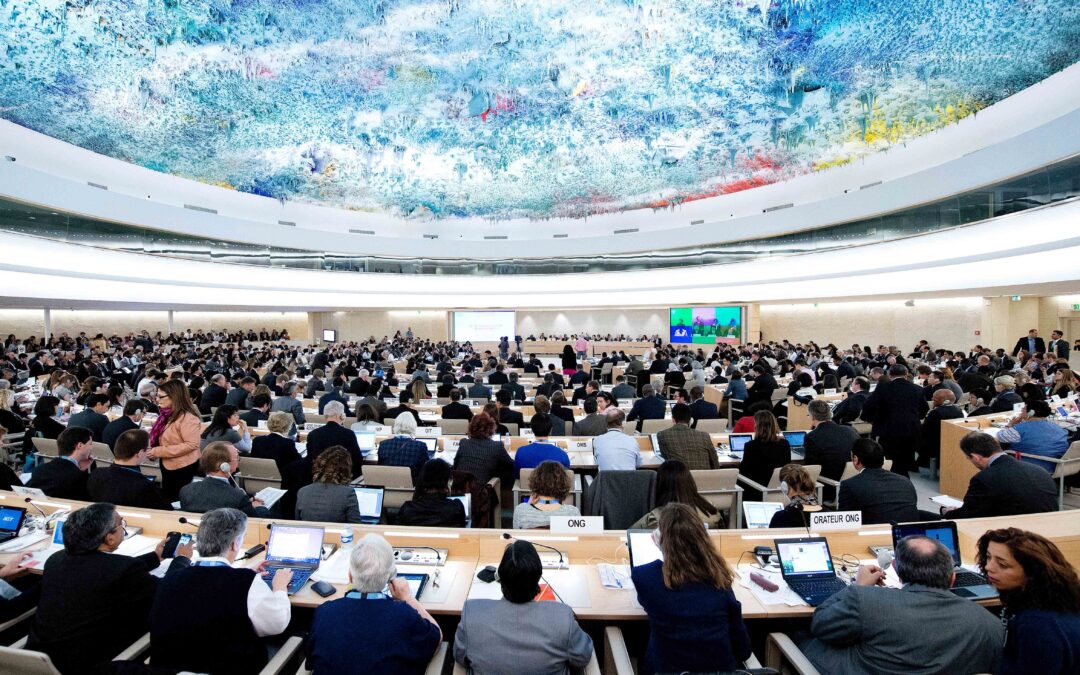
The ICJ today joined other NGOs in addressing the UN Human Rights Council session in Geneva, on the situation for human rights in Guatemala.
The statement, delivered by Franciscans International on behalf also of ICJ and other NGOs, read as follows (translation of Spanish original):
“We welcome the High Commissioner’s Report concerning the activities of her Office in Guatemala. We share the concerns and recommendations in the report, especially those related to the indigenous peoples, migrants and legislative initiatives that would impact in the full enjoyment of human rights.
As it was highlighted in the report, we are also concerned by the current discussions on the initiative to reform the National Reconciliation Law. This reform would give amnesty to those who committed serious crimes during the armed conflict, including those who have already been convicted. This puts at risk not only the fulfillment of the state’s obligations to end impunity, but also the security and access to justice of hundreds of victims and witnesses. Guatemala should dismiss immediately the initiative and refrain from promoting any other initiative that would promote impunity.
Additionally, the political and social tensions are intensifying towards the upcoming elections, and the inclusion of various groups, especially indigenous peoples, is at risk. Currently there is a low participation and representation of indigenous peoples in the political scene of the country. Out of 178 seats in the Congress, only 18 are occupied by Mayans (from which only two are women). The State must guarantee free participation, without intimidation or threats, of indigenous peoples running for different positions.
Lastly, the regional human rights situation of migrants is aggravating and the response by Guatemala, as evidenced in the last months, shows the lack of an effective policy to deal not only with migrants in transit, but also to create conditions to prevent forced migration of Guatemalans.
We thank the work that the Office of the High Commissioner for Human Rights has done, and we stress the importance of its activities in the country.”
The full statement may be downloaded in English and the original Spanish, in PDF format, here: HRC40-OralStatement-GDitem2-Guatemala-2019-EN-ESP
Feb 7, 2019 | Advocacy, Non-legal submissions
The ICJ has submitted a written statement on Sri Lanka to the Human Rights Council ahead of its 40th Session in Geneva.
Almost ten years after Sri Lanka emerged from a period of conflict and massive human rights violations, the Government of Sri Lanka still has largely failed to implement its human rights obligations and commitments as reflected in Resolution 30/1.
The ICJ statement focuses on two of four transitional justice mechanisms which the Government committed to establish under the Resolution: (a) the judicial mechanism with special counsel to investigate violations of human rights and international humanitarian law; and (b) the office of missing persons. It highlights how female victims of war are uniquely impacted by the Government’s failure to implement the commitments made before the UNHRC and underscores the importance of holistically including women when such measures are implemented.
Recommendations:
The ICJ considers that the gravity and character of the crimes under international law committed in Sri Lanka, and the failure of the Government of Sri Lanka to meet its obligations and commitments to ensure justice for such crimes including as provided for in resolution 30/1, means that referral to the International Criminal Court or the creation of another international mechanism to facilitate criminal accountability would be fully warranted. If however the Council does not choose to pursue these options at this stage, the ICJ urges the Council at minimum to:
- Continue the monitoring of Sri Lanka through the adoption of a new resolution to ensure that the Government complies with all its obligations and commitments as reflected in resolution 30/1.
- Provide for OHCHR to develop, with the Sri Lankan Government, an implementation strategy with definitive timelines to ensure that the time afforded under the new resolution is utilised to expedite the implementation of measures assured under Resolution 30/1.
- Encourage Member States to exercise universal jurisdiction in order to bring perpetrators to justice.
The ICJ urges the Government of Sri Lanka to:
- Take immediate measures to establish the judicial mechanism with international involvement as contemplated under operative paragraph 6 of Resolution 30/1. The mechanism should ensure gender parity, be accessible for women in civil society, and allow female victims to fully participate in the process.
- Spread awareness regarding the importance of certificates of absence and confirm to the community that issuance of a certificate will not result in the end of efforts to find the person.
- Ensure an overall gender strategy is integrated in all other transitional justice mechanisms that are yet to be established so that structural injustices against women, especially in terms of discrimination and lack of participation, are addressed.
(full text of submission, in PDF: UN-HRC40-SriLanka-WrittenStatement-2019-EN)
Dec 19, 2018 | News
According to information published in the Official Gazette, the government of Guatemala has ordered that eleven more officials and two family relatives from the CICIG leave the country within 72 hours from the time of issuing the notification. However, no official communication using the usual diplomatic channels has yet been sent to the CICIG.
In September 2018, the head of the CICIG, Commissioner Ivan Velasquez, was banned from re-entering the country and the government stated it would not renew the CICIG mandate after September 2019.
Ramon Cadena, the ICJ Director for Central America, stated: “The ICJ considers this new measure is designed to hinder criminal investigations against high-level government officials accused of corruption.”
The CICIG acts as a special prosecutor in serious corruption and other criminal cases and carries out investigations to identify responsible parties. The persons who have been asked to leave the country are the lawyers, police and prosecutors who are investigating important corruption cases, such as the ‘The Line’ case, in which the former President and Vice-President have been charged and other cases including those within the National Police.
Ramon Cadena continued: “It cannot escape anyone’s attention that one of the CICIG investigators who has been asked to leave the country was the person who is responsible for the corruption case involving the General Property Registry, that allegedly implicates both the son and brother of President Jimmy Morales”.
This new measure by the government seriously affects the rule of law and constitutes a flagrant violation of article 10 (4) of the agreement establishing the CICIG signed between Guatemala and the UN, which states:
“The Government agrees to provide to CICIG and its personnel the security necessary for the effective completion of CICIG’s activities throughout Guatemala, and to protect the personnel of CICIG, whether national or international, from abuse, threats, reprisals or acts of intimidations, in virtue of their status as personnel of, or their work for CICIG.”
Cadena added: “It is deeply regrettable that it is precisely the CICIG staff acting in high-impact cases who are being targeted by these measures because of their work to combat corruption and impunity. It is clear that the government is seeking to divert the CICIG from its path.”
Furthermore, according to the UN Basic Principles on the Role of Lawyers, No 16: “Governments shall ensure that lawyers: a) are able to perform all of their professional functions without intimidation, hindrance, harassment or improper interference… “ Cadena continued, “The ICJ is deeply concerned that several CICIG personnel affected by these measures are lawyers and members of the Guatemalan Bar Association. Their work is being hindered and the Guatemalan Bar Association should take action to defend its members.”
“Guatemala should comply with international human rights law and ensure that acts of corruption that impact human rights are fairly and impartially investigated and prosecuted. The presence of the CICIG contributes to ensuring that Guatemala complies with its international obligations” he added.
Cadena concluded by stating: “With these arbitrary measures, the Constitutional order of Guatemala and its democratic institutions are undermined. The Guatemalan State should ensure effective measures are taken against corruption, consistent with its international human rights and other obligations. The CICIG is one of the most successful examples of work to end corruption and impunity. The Guatemalan authorities should support the CICIG instead of hindering its work and obstructing justice.”
Sep 26, 2018 | Advocacy, Non-legal submissions
The ICJ today emphasised the continuing failure of domestic accountability mechanisms to ensure proper accountability for crimes under international law in Libya, speaking at the UN Human Rights Council in Geneva.
The statement, made during an Interactive Dialogue with the UN High Commissioner for Human Rights on her oral update on the situation in Libya, at the Human Rights Council in Geneva, read as follows:
“Mr President,
The International Commission of Jurists (ICJ) remains concerned by the scale and magnitude of the human rights violations that continue in Libya, and the failure of domestic accountability mechanisms to address them.
Impunity prevails for crimes under international law committed during and after the 2011 uprising, including extrajudicial killings, torture and other ill-treatment, and enforced disappearances. Broad amnesty laws allow those responsible to avoid prosecution.
Even in the rare cases where former officials of the Gadhafi regime have faced trial,[1] the integrity of the justice process has been compromised by failures to respect international fair trial standards, including the right to legal counsel and the right to call and examine witnesses.
On August 15, 2018, following an unfair mass trial, 99 defendants were convicted for the killing of 146 anti-Gaddafi protesters in Tripoli during the 2011 uprising.[2] 45 were sentenced to death, violating the right to life.
Such unfair trials and unlawful sentences not only violate the human rights of the accused: they deprive the victims of the crimes of the right to know the truth about the legacy of past violations and the legitimate and untainted justice to which they are entitled. New, fair trials are required.
Political and security instability in Libya undermines the ability of the judiciary to administer justice independently and impartially, including with a view to combating impunity. Judges and prosecutors are threatened, intimidated, abducted and in some instances killed, particularly when attempting to address crimes by members of armed groups.
The ICJ would like to ask the High Commissioner, how can other States and civil society help ensure that Libya, while fully cooperating with the International Criminal Court, implements an effective legal and practical framework to address crimes under international law and eradicate impunity?
Thank you.”
[1] Case 630/2012.
[2] https://www.hrw.org/news/2018/08/22/libya-45-sentenced-death-2011-killings.