Jul 17, 2019 | Advocacy, News, Non-legal submissions
Today, the ICJ filed a submission to the Human Rights Council’s Working Group on the Universal Periodic Review in advance of its review of Turkey’s human rights record in January 2020.
In its submission, the ICJ considered:
- the situation with the independence of the judiciary in Turkey, during and after the state of emergency of 2016-2018;
- the lack of effective remedies for the mass dismissals in the public sector occurred in that period;
- the shortcomings in fair trial rights in the criminal justice system:
- the obstacles to the action of civil society;
- the lack of accountability for torture and enforced disappeareances; and
- provided information on the status of international human rights treaties ratified by Turkey.
Contact:
Massimo Frigo, ICJ Senior Legal Adviser, e: massimo.frigo(a)icj.org
Full submission in English (PDF) : Turkey-UPR-Advocacy-non-legal submissions-2019-ENG
Jul 11, 2019 | Advocacy, Non-legal submissions
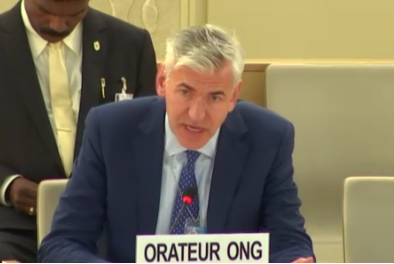
The ICJ today called on the Human Rights Council to seek to allow the International Commission Against Impunity in Guatemala (CICIG) to continue its essential work, and to promote similar initiatives elsewhere.
The statement, delivered during a general debate on technical cooperation, read as follows:
“The International Commission of Jurists (ICJ) welcomes the technical cooperation the United Nations has provided to the International Commission Against Impunity in Guatemala (CICIG).
For more than ten years, the CICIG has been essential to the fight against corruption and impunity in Guatemala. It has provided invaluable support to prosecutors and judges in the investigation and and trial of major crimes of corruption.
The combination of provision of technical assistance and actual participation in the proceedings as “querellante adhesivo” (“complementary prosecutor”) has been important to the CICIG’s effectiveness. For instance, the CICIG helped ensure that investigations took place into high-level officers from the Government and against people that had illegally financed their public campaigns. Several public officers have been brought to justice.
The ICJ therefore expresses its deepest concern that the Government of Guatemala has decided to allow the mandate of the CICIG to expire on the 3rd of September, despite its role remaining as essential as ever to the fight against corruption and impunity in the country.
We urge the Human Rights Council to seek to allow the work of the CICIG to continue, as well as to promote more generally the important potential of UN involvement in such mechanisms to strengthen the fight against impunity at the national level.”
Jul 3, 2019 | Advocacy, Non-legal submissions
The ICJ today joined other NGOs in urging the UN Human Rights Council to take action on the Philippines.
The joint oral statement was delivered by the World Organisation Against Torture (OMCT) on behalf of OMCT, Amnesty International, the International Commission of Jurists (ICJ), Franciscans International, Swiss Catholic Lenten Fund, the International Federation for Human Rights (FIDH), FORUM-Asia. It read as follows:
“In March 2019, the UN High Commissioner for Human Rights noted that several sources “estimate that up to 27,000 people may have been killed in the context of the campaign against illegal drugs since mid-2016.”
Unlawful killings, including of children, carry on, and President Rodrigo Duterte and his administration continue to explicitly encourage these acts. In June 2019, the scale and seriousness of the reported human rights violations prompted 11 UN human rights experts to call on the Council to establish an independent investigation into such violations.
Intimidations by government officials at the highest levels against politicians, human rights defenders, journalists, and several Special Procedures mandate holders have also been rising.
At the 35th, 36th, and 38th sessions of the Council, Iceland, on behalf of a group of States, explicitly called on the government “to take all necessary measures to bring killings associated with the campaign against illegal drugs to an end and cooperate with the international community to investigate all related deaths and hold perpetrators accountable.”
In light of the failure of the government to effectively investigate and bring to justice those responsible, we urge all States to support the adoption of a resolution on the Philippines at this session, mandating the OHCHR to monitor and provide regular updates on the human rights situation to the Council, as the first step toward establishing an independent international investigation into extrajudicial killings and other human rights violations committed in the government’s ‘war on drugs.’.
Such a response is all the more important given the Philippines obligations to uphold the highest standards in human rights as a member of the Council.”
May 15, 2019 | News
The ICJ today condemned a series of the acts of violence directed against the Muslim community in the aftermath of the Easter attacks on 21 April in Sri Lanka directed at churches and other places.
In the most recent attacks on 13 May, at least one person was killed in anti-Muslim mob violence in Nattandiya. In addition, various attacks have resulted in the looting and destruction of mosques, Muslim-owned businesses and houses in several parts of the island including Negombo, Chilaw, Kurunegala and Gampaha.
The ICJ called upon the State authorities to conduct independent, impartial and effective investigations into the attacks and bring all perpetrators to justice in line with international standards. Furthermore, the ICJ urges the Government of Sri Lanka to send a clear public message that acts of violence against any religious minorities are not tolerated.
“Attacks perpetrated against religious minorities are more likely to occur in a climate of impunity” said Fredrick Rawski, ICJ’s Regional Director for Asia and the Pacific. “The fact that Sri Lanka has a history of serious violations of human rights of religious minorities makes it even more urgent that the Government act to safeguard the human rights of all persons and take immediate measures to protect members of religious minorities from further violence.”
Delayed action or inaction on the part of law enforcement authorities during and in the immediate aftermath of the attacks has further exacerbated the situation. Given the recurring patterns of mob violence against religious minorities in Sri Lanka, a handful of arrests will not suffice. It must be followed up by independent and impartial investigations and, where warranted, prosecutions as part of an effective preventive strategy to counter such collectively organized violence.
Under international human rights law, including the International Covenant on Civil and Political Rights, to which Sri Lanka is a party, States have a duty to protect freedom of religion, which includes persons from religious minorities against abuses committed against them by any person or group.
The Government of Sri Lanka must take appropriate security measures in response to the worst terror attack in recent years. However, it must ensure that the volatile situation is not made worse by inaction to prevent anti-Muslim violence and vigilantism. Moreover, the State must ensure that any counter-terrorism measure is adopted and implemented in line with its international human rights law obligations and does not explicitly or implicitly target a particular community.
Apr 25, 2019 | News
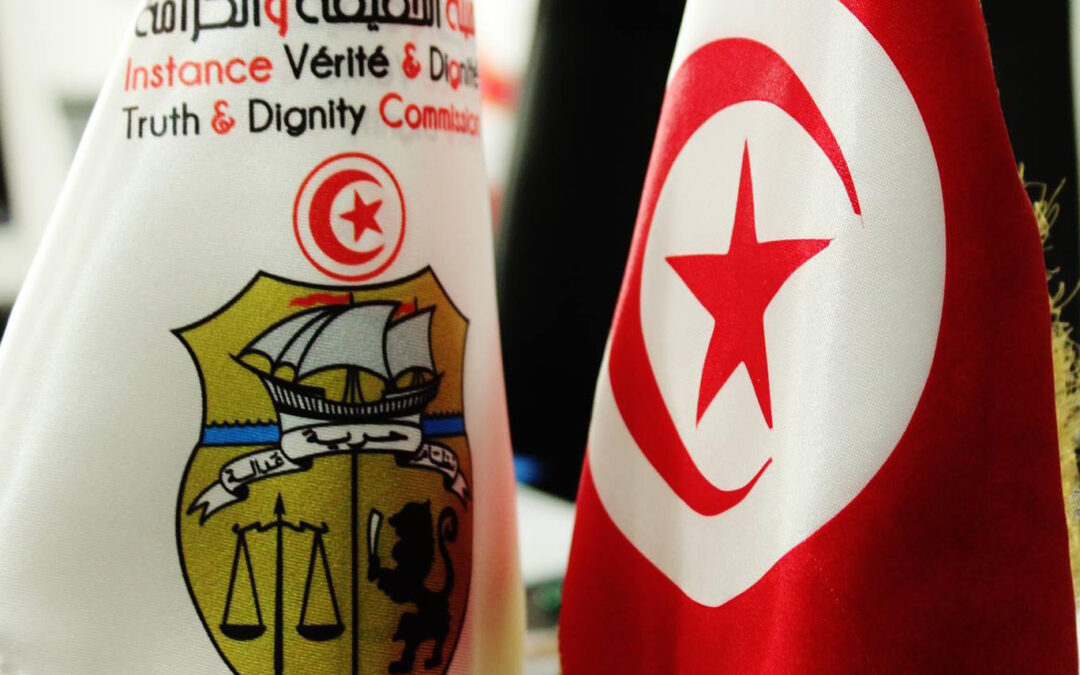
The statement alerts the public of the danger of a bill which dismantles the specialized criminal chambers in Tunisia and replaces them with an institution which would guarantee impunity for those who committed gross violations of human rights in Tunisia between 1955 and 2013.
The statement has been signed by the ICJ as well as other members of the Coalition for Transitional Justice
The statement can be downloaded here:
Link to French Version
Link to Arabic Version