Sep 24, 2018 | Feature articles, News
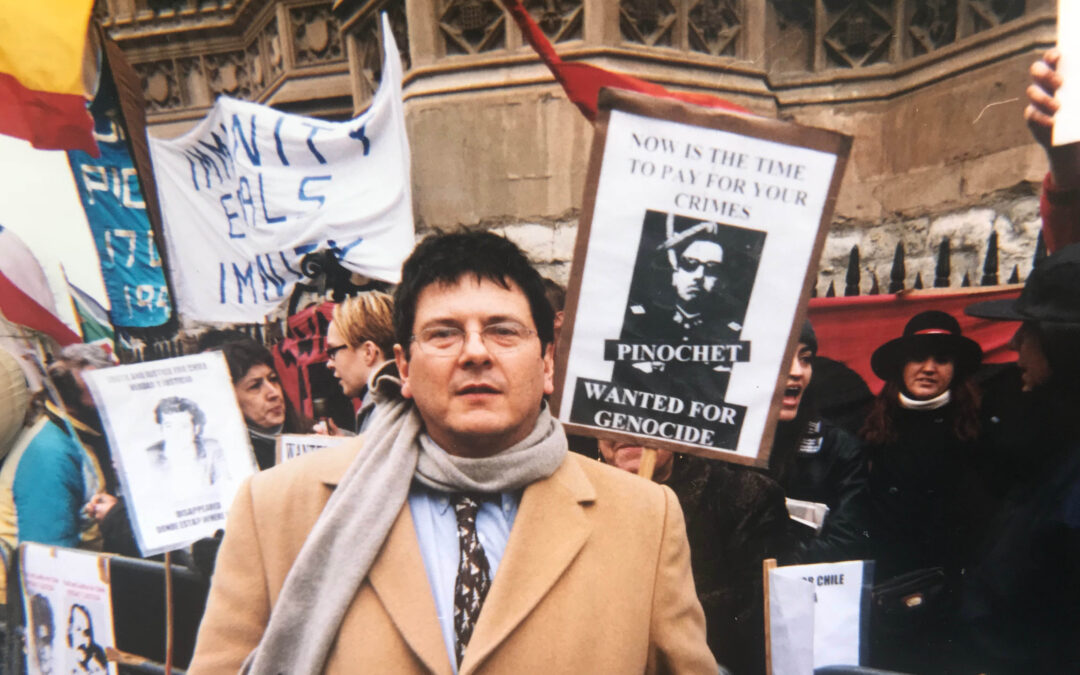
On October 16, 1998, the former dictator of Chile Augusto Pinochet was arrested in London on a warrant from a Spanish judge. Reed Brody participated in the subsequent legal case.
Reed Brody went on to apply the “Pinochet precedent” in the landmark prosecution of the former dictator of Chad, Hissène Habré, who was convicted of crimes against humanity in Senegal in 2016.
He now works with victims of the former dictator of Gambia, Yahya Jammeh. The ICJ interviewed Brody about the Pinochet case and its legacy.
What was your role in the Pinochet case?
My role started when Pinochet was arrested in London. The case began long before that, of course, in the early years of Pinochet’s dictatorship when brave human rights activists documented each case of murder, and “disappearance.”
The ICJ worked with those advocates to produce a seminal 1974 report on those crimes, just six months after Pinochet’s coup. Shut out of Chile’s courts, even after the democratic transition of 1990, victims and their lawyers pursued a case against Pinochet in Spain under its “universal jurisdiction” law and when Pinochet traveled to London, Spanish Judge Baltasar Garzón requested and obtained his detention.
When Pinochet challenged his arrest in court claiming immunity as a former head of state, I went to London for Human Rights Watch, and we and Amnesty International were granted the right to intervene with teams of lawyers in the proceedings at the judicial committee of the House of Lords, then Britain’s highest court.
The Lords cited our research in rejecting Pinochet’s immunity.
You famously described the Lords’ Pinochet decision as a “wake-up call” to tyrants everywhere. Looking back, do you think it was?
Actually no, I think one would be hard pressed to discern a change in the behavior of dictators. Mugabe didn’t quake in his boots, Saddam didn’t clean up his act.
The more important and more lasting effect of the case was to give hope to other victims and activists. When the Lords ruled that Pinochet could be arrested anywhere in the world despite his status as a former head of state, the movement was in effervescence.
As a human rights lawyer, I was used to being legally and morally right, but still losing. In the Pinochet case, not only did we win, but we upheld the detention of one of the world’s most iconic dictators.
The Pinochet case inspired victims of abuse in country after country, particularly in Latin America, to challenge the transitional arrangements of the 1980s and 1990s, which allowed the perpetrators of atrocities to go unpunished and, often, to remain in power.
These temporary accommodations with the ancien régime didn’t extinguish the victims’ thirst to bring their former tormentors to justice.
How did you go from Pinochet to Habré?
With Pinochet, we saw that universal jurisdiction could be used as an instrument to bring to book people who seemed out of the reach of justice.
Together with groups like Amnesty, the FIDH, and the ICJ (which wrote an important report on the Pinochet case and its lessons), we had meetings on who could be the “next Pinochet.”
That’s when Delphine Djiraibe of the Chadian Association for Human Rights asked us to help Habre’s victims bring him to justice in his Senegalese exile.
I was excited at the prospect of persuading a country in the Global South, Senegal, to exercise universal jurisdiction, because there was a developing paradigm of European courts prosecuting defendants from formerly colonized countries.
It took us 17 years, but Habré became the first prosecution ever of a former head of state using universal jurisdiction, and indeed the first universal jurisdiction trial in Africa.
1998 was a high water mark for international justice with the adoption of the ICC Rome Statute and Pinochet’s arrest. Neither the ICC nor universal jurisdiction have quite lived up to their expectations. Why?
International justice doesn’t operate in a vacuum, it’s conditioned by the global power structure. Each case, whether at the ICC level or the transnational level, is a product of the political forces which must be mobilized, or fended off, to allow a prosecution to proceed.
Those forces, particularly since September 11, 2001, have been hostile to human rights enforcement in general and to justice in particular. Universal jurisdiction has been subject to the same double standards as the ICC.
The Belgian and Spanish universal jurisdiction laws, which were the broadest in the world, were both repealed when they were used to investigate superpower actions.
But many of the most successful cases have been those in which the victims and their activist supporters have been the driving forces, have compiled the evidence themselves, built an advocacy coalition which placed the victims and their stories at the center of the justice struggle and helped create the political will in the forum state.
I’m thinking not just of Habré, but the genocide prosecution in Guatemala of the former dictator Efraín Ríos Montt, the case in Haiti of “President for Life,” Jean-Claude “Baby Doc” Duvalier, the Liberian cases brought around the world by Civitas Maxima and its partners, the Swiss cases initiated by TRIAL International, and the Syria litigation by ECCHR and others.
These cases were brought before domestic courts either of the country in which the atrocities took place (Guatemala, Haiti) or of foreign countries based on universal jurisdiction, rather than before international courts.
Most of these cases took advantage of legal regimes which allowed victims directly to participate in the prosecutions as “parties civiles,” or “acusación particular” rather than play passive or secondary roles in cases prosecuted solely by state or international officials.
How do victim-driven prosecutions look different than institutional cases?
When it’s the victims and their allies who get the cases before a court, who gather the evidence, and who have formal standing as parties, the trials are more likely to live up to their expectations.
In the Rios Montt case, for instance, the Asociación Para la Justicia y Reconciliacion (AJR) and the Centro Para la Acción Legal en Derechos Humanos (CALDH) mobilized the victims, developed the evidence, defined the narrative and, essentially, determined the outlines of the case and chose the witnesses who would testify for the prosecution.
In the Habré case, we spent 13 years building the dossier, interviewing hundreds of victims and former officials and uncovering regime police files. The victims’ coalition always insisted that any trial include crimes committed against each of Chad’s victimized ethnic groups, and that is exactly was happened.
In contrast, a distant prosecutor, disconnected from national narratives and inherently not accountable to the victims or civil society, can be tempted to narrowly tailor prosecutions in the hopes of securing a conviction or avoiding political resistance.
This was the case with the ICC in the Democratic Republic of the Congo, for instance, where, as Pascal Kambale has persuasively argued, it betrayed the victims’ hopes.
Millions of civilians died in the DRC and Luis Moreno Ocampo only went after two local warlords. I think the current prosecutor is paying more attention to local realities.
The inspiration from victim-driven cases is also greater, and they are to some degree replicable. As Naomi Roht-Arriaza has written, these cases “stirred imaginations and opened possibilities precisely because they seemed decentralized, less controllable by state interests, more, if you will, acts of imagination.”
When I showed Chadian victims video clips of the Ríos Montt trial, they saw in those images exactly what they were trying to do.
Just as the Chadians came to us in the Habré case seeking to do what Pinochet’s victims had done, our hope in getting the Habré case to trial was that other survivors would be inspired by what Habre’s victims had done and say, “you see these people, they fought for justice and never gave up. We can do that too.”
And indeed, Liberian victims and Gambian victims have patterned their campaigns for justice on what Habre’s victims did. So, the Pinochet case continues to be an inspiration.
Jul 4, 2018 | Advocacy, Non-legal submissions
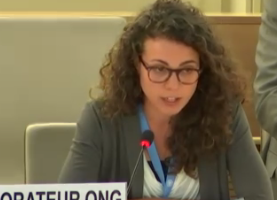
The ICJ today urged accountability for and the need to address the root causes of violations of human rights of Rohingya people in Myanmar, at the UN in Geneva.
The statement was made in an interactive dialogue with the UN High Commissioner for Human Rights, on his oral update on the situation, at the Human Rights Council.
The statement read as follows:
“The Government of Myanmar is duty-bound to investigate, prosecute and punish perpetrators of human rights violations. Yet impunity at domestic level necessitates international action: to secure criminal accountability, to provide redress and to deter repetition of crimes under international law.
In May, the government announced a new inquiry into rights violations in Rakhine State. Its mandate, composition and legal framework remain unclear – and there is no indication this will be more effective than previous national inquiries – which have not shed light on the facts, have rarely led to prosecutions and have failed to provide redress.
Justice cannot be further delayed. The International Commission of Jurists supports calls for establishing an international accountability mechanism.
It is also imperative to address the laws and practices discriminating against Rohingyas and other minorities, particularly the 1982 Citizenship Law, as recommended by the government’s Rakhine Advisory Commission.
As a UN Member State, Myanmar must fully cooperate with all UN organs. This includes allowing access to the Special Rapporteur, and permitting the UN Human Rights Office to establish in the country with a full mandate.
Quiet diplomacy and downplaying human rights concerns have failed to improve the situation for Rohingyas. UN organs and envoys present in Myanmar must engage in frank and direct dialogue with the Government about ongoing human rights violations – consistent with the UN Charter and the Human Rights Up Front initiative.
Human rights violations are the root cause of this humanitarian crisis. There can be no voluntary and sustainable return of Rohingya refugees without addressing the sources of human rights violations.
Thank you.”
Jun 28, 2018 | News
On 24-25 June, ICJ Commissioners from the Latin America region came together in Bogotá, Colombia, to consider and enhance ICJ strategies to combat past and resurging trends in extrajudicial executions and enforced disappearances in the region.
The meeting was the first of its kind to bring together ICJ Commissioners on a regional basis: Carlos Ayala (Venezuela); Miguel Carbonell (Mexico); Gustavo Gallón (Colombia); Roberto Garretón (Chile); Juan Mendez (Argentina); Victor Rodriguez Rescia (Costa Rica); Alejandro Salinas Rivera (Chile); Mónica Pinto (Argentina); Belisário dos Santos Júnior (Brazil); and Wilder Tayler (Uruguay).
The meeting was followed by a preparatory mission (involving two Commissioners and the ICJ’s legal representative in Colombia) on the transitional justice mechanisms envisaged under the Havana Agreement, with a particular emphasis on the jurisdiction and operation of the ‘Special Jurisdiction for Peace’. A full high-level mission will follow in September, at which time the ICJ intends to identify minimum benchmarks for the effective operation and sustainable impact of those mechanisms.
In all regions of the world, recourse to enforced disappearances and extrajudicial killings continues; victims and their families (the overwhelming majority of whom are women, children and indigenous peoples from rural areas dominated by poverty and social and political exclusion, as well as trade unionists and human rights defenders) struggle to obtain prompt and effective remedies and reparation; and perpetrators enjoy impunity through inadequate or improper laws, ineffective institutional frameworks, selective recourse to accountability mechanisms and/or political interference in the functioning of those mechanisms.
The meeting confirmed that these challenges are particularly evident in Latin America, where there has been a resurgence in recourse to enforced disappearances and extrajudicial killings in countries throughout the region and where violations of the past have in very many cases been inadequately addressed. By way of example:
- In Brazil, official statistics from 2016 attest to the occurrence of 62,000 violent deaths and potentially up to 22,000 enforced disappearances each year.
- 45 years after the coup d’état in Chile, about 800 people have been convicted and sentenced to imprisonment, but those figures belie the extensive occurrence and levels of responsibility for gross violations of human rights that occurred.
- In Colombia, more than 70,000 cases of enforced disappearance were documented by the Attorney General for the period 1970-2015 and there is general consensus that the number of missing persons likely exceeds 100,000. The wide and persistent extent of extrajudicial killings has been noted by UN and Inter-American experts and bodies as well as the Office of the Prosecutor of the International Criminal Court.
- In Guatemala, only 34 convictions for conduct involving conflict-era violations have been secured, despite the fact that the internal armed conflict of 1960-1996 involved massive and systematic human rights violations. Impunity has undermined redress and accountability and severely weakened the prevention of violations, with the National Civil Police having recorded more than 25,000 people ‘disappeared’ in 2003-2014, more than half of which were women.
- Peru’s internal armed conflict of 1980-2000 resulted in more than 69,000 people killed and ‘disappeared’, but less than 100 convictions have been secured under the judicial subsystem established in 2004 that specializes in accountability for gross human rights violations.
- In Venezuela, civil society reports at least 12,000 real or perceived political opponents having been arbitrarily detained between January 2014 and April 2018; and almost 6,000 alleged extrajudicial killings between 2012 and 2016.
In all the countries from which the Commissioners originate, several common factors were identified:
- The intrinsic risks to continuation of and lack of redress and accountability for gross human rights violations posed by executive action that undermines the rule of law;
- Also inherent to the rule of law, the critical need for independent and impartial judicial mechanisms and individual judges and lawyers to allow for transitional justice, in particular for victims and their families to access effective remedies and reparation and for the holding to account of perpetrators;
- A high level of correspondence between impunity for gross human rights violations and the corruption of public officials;
- The increased, and in some cases extensive, recourse to arbitrary and detention, which in many cases precede and allow for the occurrence of extrajudicial executions and enforced disappearances;
- A similar inter-relationship between enforced disappearances and the occurrence of torture and other forms of ill-treatment;
- The detrimental impact to ensuring accountability for violations of the past when omitting non-State and paramilitary actors from transitional justice processes; and
- The increase in highly conservative (political and popular) sentiments and movements within the region and the corresponding need to tailor responses depending on the democratic versus autocratic nature of government and its institutions.
Noting that the ICJ has long sought to combat extrajudicial executions and enforced disappearances, including through the development of UN and regional instruments and standards and through its action in Latin America and the globe, the ICJ’s Commissioners urged the ICJ to continue and expand its engagement. Noting also the increasing call by local civil society actors for support and intervention by the ICJ, the meeting considered the organization’s role in seeking redress and accountability for, and prevention of, gross violations of human rights.
Commissioners reinforced, and commented on the effective parameters of, the ICJ’s strategic and victim-centred approach to address and prevent gross human rights violations, including extrajudicial executions and enforced disappearances. Having regard to the ICJ’s mandate and worldwide network of judges and lawyers, Commissioners emphasized the unique role that the organization has by grounding its work on the transformative role of the law, justice institutions and justice actors.
The particular means by which this role can be achieved by the ICJ were discussed against the background of recent and planned activities in the region and beyond. Commissioners overwhelmingly supported these plans and the Secretariat is now poised to continue implementation of its strategies in its current programmes of work and in the development of future projects.

May 9, 2018 | News
The ICJ said today that Gina Haspel, nominated by Donald Trump to be Director of the CIA, should be subject to a full criminal investigation for her alleged involvement torture and other serious crimes, rather than elevated to serve as the country’s highest intelligence office.
The ICJ statement came as the United States Senate Intelligence was poised to beginning hearings on her confirmation to the position.
“If Gina Haspel becomes CIA Director, the United States will be sending a signal to the world that it has dropped the pretence of caring about even the most serious human rights violations,” said Sam Zarifi, ICJ Secretary General.
“It will show that torturing and disappearing people by US officials will not only be met with impunity, but will be no bar to career advancement.”
Following the terror attacks against the United States of 11 September 2001 until 2007, the CIA held at least 119 terror suspects or persons it suspected to have intelligence value in places of secret detention outside of US territory.
The black sites were situated in several countries, including Afghanistan, Lithuania, Poland Romania, and Thailand.
The detainees, who had no contact with the outside world, were placed beyond the protection of the law and subjected to torture and cruel, inhuman and degrading treatment.
The torture included near drowning (“waterboarding”), prolonged sleep deprivation, placement in painful stress positions for extended periods, forced rectal feedings, and slamming against walls.
Gina Hapel oversaw at least one “black site” detention centre in Thailand in 2002, while detainee Abd al-Rahim al Nashiri was being tortured there.
She is credibly alleged to have played a significant role in destroying video evidence of interrogations that were carried out under torture.
“The European Court of Human Rights has already condemned Poland for violating the rights of Abd al-Rahim al Nashiri, after he was transferred to secret CIA detention facility in Poland, yet nobody directly responsible CIA has ever been held accountable for these serious crimes,” said Sam Zarifi.
Contact
Ian Seiderman, ICJ Legal and Policy Director, t +41 22 979 3837 ; e: ian.seiderman(a)icj.org