Sep 24, 2019 | Events, News
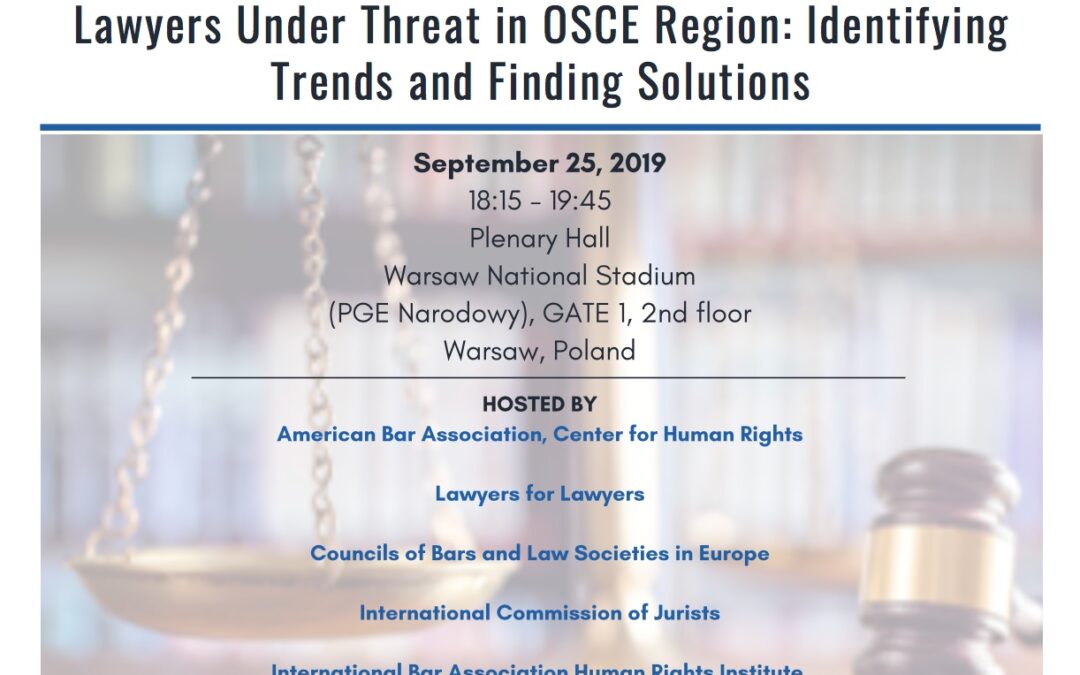
The side event aims to identify current threats against lawyers’ professional rights and guarantees in the OSCE region.
The speakers will identify and analyze the current trends through a discussion of recently gathered data and specific cases of violation of lawyers’ rights from Kyrgyzstan, Kazakhstan, Tajikistan, Moldova, Ukraine, Azerbaijan, Russia and Belarus. They will also make recommendations regarding the way forward to increase protection for lawyers and the independent legal profession in these countries and the OSCE region as a whole.
A flyer for the event is available here.
The agenda for the event available here.
Sep 17, 2019 | Advocacy
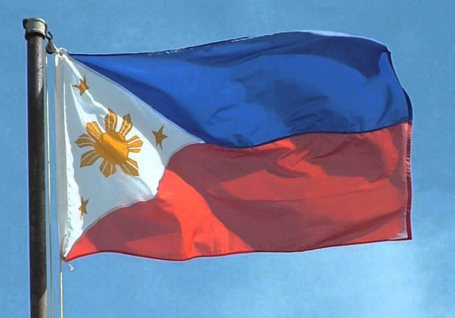
In a statement issued today, the ICJ and other human rights groups, as well as lawyers and members of the legal profession, expressed deep concern over the increasing attacks against lawyers under President Duterte’s administration.
Find the full statement available as PDF here: Philippines-attacks against lawyers escalating-advocacy-2019-ENG
Sep 17, 2019 | Events, News
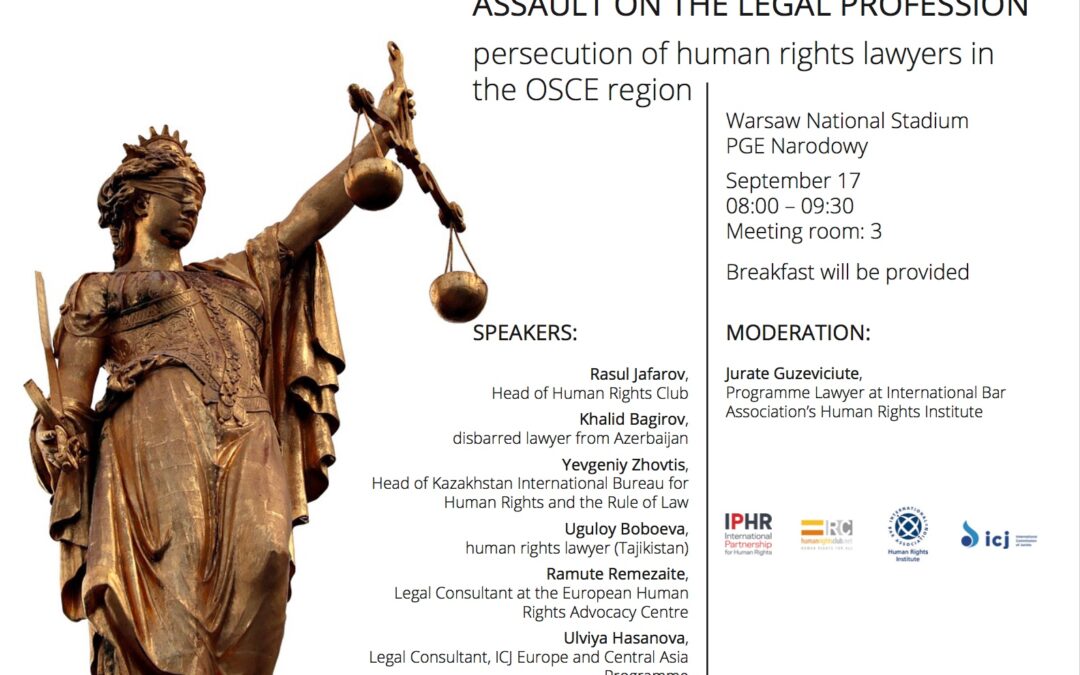
This event held in Warsaw, Poland, will provide an overview of the ongoing challenges human rights lawyers in the OSCE region are facing in their daily work.
A flyer for the event is available here.
Jul 3, 2019 | Advocacy, Non-legal submissions
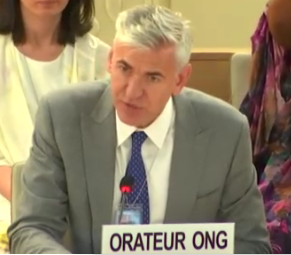
The ICJ today highlighted rising threats to the rule of law in Europe, specifically mentioning Poland, Hungary, Turkey, and Kazakhstan in a statement to the UN Human Rights Council in Geneva.
The statement read as follows:
“The International Commission of Jurists (ICJ) adopted a Declaration on Reinforcing the Rule of Law last March at its 19th World Congress in Tunis.
The Tunis Declaration (link) stresses that not only are human rights and the Rule of Law indispensable to the betterment of the human condition, but to address such contemporary challenges as catastrophic climate change and the effects of digital technology.
Against these standards, however, the ICJ is concerned at the increasing and serious threats to the Rule of Law and those who defend it around the world, including across Europe.
In Poland, the attacks on the judiciary continue under the guise of disciplinary proceedings against judges who took recourse to EU institutions to defend the Rule of Law.
Hungarian authorities, while pausing their reforms of administrative courts, have not abandoned unjustified restrictions on the judiciary’s independence and on civil society.
Finally, in Turkey, the judiciary continues to have no guarantees in law to guarantee its independent functioning.
Across Central Asia, lawyers may face disciplinary or criminal persecution for discharging their profession independently. For example, in Kazakhstan, Sergey Sizintsev was disbarred on arbitrary grounds for criticizing a problematic reform of the legal profession.
The ICJ urges the Council to give attention to these developments of extreme concern.
Mar 12, 2019 | Advocacy, Non-legal submissions
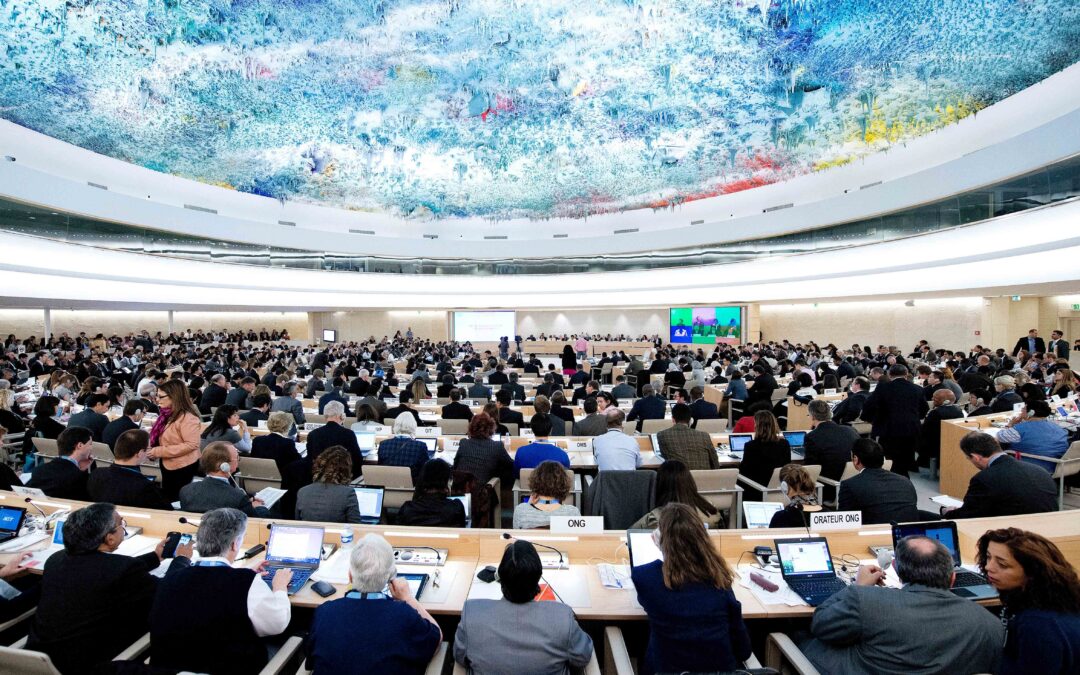
The ICJ today highlighted threats to the rule of law in Turkey, Poland, Hungary and Azerbaijan, and the need to address corporate complicity in South Sudan, at the UN Human Rights Council in Geneva.The statement, delivered during general debate, read as follows:
“The situation remains grave for the rule of law and legal protection of human rights in Turkey and Poland.
In Turkey, constitutional reforms in 2017 that undermined the independence of the judiciary should be abolished. Civil society members are prosecuted under overbroad and vague terrorism offences.
In Poland, the Legislature is trying arbitrarily to remove one third of the Supreme Court, a measure that is on hold only temporarily. Unjustified disciplinary proceedings are also being pursued against Polish judges for having sought a ruling of the Court of Justice of the EU.
Elsewhere, in Hungary civil society is ostracized and subject to legislation that risks criminalizing their legitimate activities. In Azerbaijan, as one example of a broader pattern of interference with lawyers and other human rights defenders, lawyer Elchin Sadigov was reprimanded for advising in a confidential manner to his client in detention to complain about torture to which he allegedly had been subjected.
The ICJ is also concerned at the findings by the Commission on Human Rights in South Sudan (A/HRC/40/69, A/HRC/40/CRP.1) that point to the oil industry as a “major driver” in the continuation of the armed conflict and resulting human rights violations. Potential corporate complicity with crimes under international law demand investigation and a strong monitoring mechanism for the use of oil revenues should be established.”