Jul 31, 2018 | News
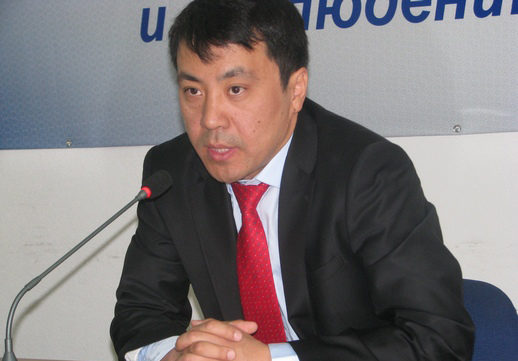
Today, the ICJ called on the government of Kazakhstan to drop all charges of “knowingly disseminating false information” against lawyer Bauyrzhan Azanov related to his representation of a child who is the alleged victim of sexual abuse by older children.
“The prosecution of Bauyrzhan Azanov in relation to statements he made as part of his representation of a child violates the lawyer’s freedom of expression, and prevent him from effectively representing his client,” said Temur Shakirov, Senior Legal Adviser for the ICJ’s Europe and Central Asia Programme.
“Instead of targeting a lawyer, the investigative authorities should use their resources to investigate the allegations of human rights violations in this case and ensure the protection of the rights of this child in accordance with Kazakhstan’s international obligations,” he added.
Bauyrzhan Azanov, a prominent lawyer in Kazakhstan, took up a high-profile case in which he represented a minor, an alleged victim of sexual and physical abuse over a prolonged period.
The case became public in March 2018 through media reports.
Once the case became public several district police officers were fired, and two heads of schools and some other state agents were suspended from office, reportedly in relation to their failure to report and investigate the case.
In his statements in the social media, Azanov alleged the investigation had been obstructed due to corrupt reasons.
In reaction to this, on 21 May 2018, the mother of the minor submitted a complaint against Azanov where she expressed concerns about “social tension”, “forming a negative image of the investigative body” and herself “as a mother”.
Following the mother’s complaint, on 24 July, the General Prosecutor’s Office initiated a criminal investigation against the lawyer for knowing dissemination of false information, which alleged that:
“The information disseminated by lawyer B. Azanov was deliberately distorted and untrue, which created a false idea among the public about the alleged corruption of justice system, investigative bodies, the mother of the child and other persons. This caused psycho-emotional and social tension among the public and created a threat of destabilization of the internal political situation, thereby creating a threat of violation of public order.”
Through the media, Azanov has denied the allegations against him and has stated that he acted in the best interests of his client and sought to ensure accountability for criminal acts.
On 1 June 2018, Nursultan Nazarbayev, President of the Republic of Kazakhstan commented on the case stating that unreasonable prolongation of the investigation is connected with the nepotism in the police and higher investigative authorities.
The Ombudsperson, members of the Kazakhstan Bar Association and human rights activists have made public statements in support of Bauyrzhan Azanov.
In these circumstances, the ICJ is concerned that criminal charges against lawyer Bauyrzhan Azanov for public comments in which he raised concerns about possible violations of human rights of his minor client, may violate the lawyer’s right to freedom of expression.
The right to freedom of expression is protected under international treaties to which Kazakhstan is a party, including by Article 19 of the International Covenant on Civil and Political Rights (ICCPR). As the UN Human Rights Committee stated in its General Comment 34 on the freedom of expression:
“When a State party invokes a legitimate ground for restriction of freedom of expression, it must demonstrate in specific and individualized fashion the precise nature of the threat, and the necessity and proportionality of the specific action taken, in particular by establishing a direct and immediate connection between the expression and the threat.”
According to the UN Basic Principles on the role of lawyers, lawyers have the right to take part in public discussion of matters concerning the law, the administration of justice and the promotion and protection of human rights without suffering professional restrictions by reason of their lawful action or their membership in a lawful organization (Principle 23).
It is of particular concern that the Prosecutor’s Office document uses vague concepts that may amount to arbitrary use of grounds for restriction of freedom of expression of the lawyer.
In particular, it is unclear how prosecutorial authorities measured “psycho-emotional and social tension of the public” or that on what basis the lawyer’s comments may have “created a threat of destabilization of the internal political situation” creating a threat to the public order.
These broadly and atypically worded justifications for prosecution are likely to lead to arbitrary interference with freedom of expression.
Prosecution of the lawyer for his attempts to raise human rights-related issues of his minor client, unsupported by any evidence or explanation what they may refer to, is also likely to have a chilling effect on those who defend human rights of victims of abuse.
The ICJ recalls that according to the UN Basic Principles on the Role of Lawyers, Governments must ensure that lawyers are able to perform all of their professional functions without intimidation, hindrance, harassment or improper interference (Principle 16).
Kazakhstan-Lawyer Azanov-News-web story-2018-ENG (full story, in PDF)
Kazakhstan-Lawyer-Azanov-News-Web-story-2018-RUS (full story in Russian, PDF)

Jul 18, 2018 | News, Publications, Reports
The ICJ welcomed today the lapse of Turkey’s nearly two-year state of emergency, which is expected to be effective as of midnight, but said that the authorities needed now to take a range of measures to repair the rupture to the rule of law in the country.
The ICJ’s comments came as it released its report Justice Suspended – Access to Justice and State of Emergency in Turkey, outlining how measures undertaken pursuant to a state of emergency, including the mass dismissal of judges and arbitrary arrests and prosecutions of lawyers and human rights defenders had eroded the justice institutions and mechanisms in the country.
The report recommends a number of measures including the repeal of measures enacted under the state of emergency, the restoral of the independence of the judiciary and the reform of the country’s anti-terrorism legislation.
“With the end of the state of emergency we call for the immediate withdrawal of the notifications of derogations to the European Convention on Human Rights and the International Covenant on Civil and Political Rights,” said Massimo Frigo, ICJ Senior Legal Adviser for the Europe and Central Asia Programme.
“We remain concerned that many of the emergency measures have been given permanent effect in Turkish law and will have pernicious and lasting consequences for the enjoyment of human rights and for the rule of law in Turkey,” he added.
These measures include the dismissals of hundred of thousands of people from their job, including judges and prosecutors.
Constitutional amendments, introduced during the state of emergency, permanently enshrine executive and legislative control of the governing institutions of the judiciary, contrary to international standards on judicial independence, the ICJ says.
Many of those charged with vaguely-defined offences under the state of emergency face trial before courts that are not independent and cannot guarantee the right to a fair trial, the Geneva-based organization adds.
Crucially, most of the people affected by emergency measures, including summary dismissals, have not yet had the opportunity to obtain a remedy before an effective and independent court or tribunal.
The ICJ report illustrates how the mechanisms which should address and remedy human rights violations in Turkey lack effectiveness and independence and that these deficiencies extend both to the courts and the state of emergency complaints commission.
It further finds that the ordinary functions of lawyers and activities civil society, key actors in ensuring access to justice, have been considerably curtailed.
“The Turkish Government says that they want their actions to respect the rule of law. Effective and independent remedies and reparations for human rights violations must be available to all if this principle is to have any reality in practice,” said Massimo Frigo.
Contact
Massimo Frigo, ICJ Senior Legal Adviser for the Europe and Central Asia Programme, t: +41 22 979 3805, e: massimo.frigo@icj.org
Download
Full ICJ report in PDF in English: Turkey-Access to justice-Publications-Reports-2018-ENG
Full ICJ report in PDF in Turkish: Turkey-Access to justice-Publications-Reports-2018-TUR
Jul 11, 2018 | Advocacy, News, Open letters
Twenty-two senior judges from across the globe wrote today to Polish President Andrzej Duda to condemn the recent attacks on the independence of the judiciary.
The judges, all Commissioners or Honorary Members of the International Commission of Jurists, criticized the forced resignation of 27 of 72 judges of Poland’s Supreme Court as a severe blow to the independence of the Polish judiciary in violation of international standards.
The letter was organized by the ICJ and its Centre for the Independence of Judges and Lawyers in consultation with jurists from 17 countries.
“The Polish government’s assault on the country’s judiciary is a major blow to the rule of law in Poland,” said Sam Zarifi, ICJ Secretary General.
He added:
“The situation in Poland is of concern to judges in the country, as well as in the European Union and around the world.”
“The ICJ and jurists everywhere will speak out against this surge of attacks on the judiciary that is increasingly a pattern in many countries, including several that until recently were at least rhetorically champions of the rule of law.”
“This letter shows that the commitment to the rule of law and judicial independence is not limited to just one part of the world or one legal system, but rather reflects the views of the global community of jurists.”
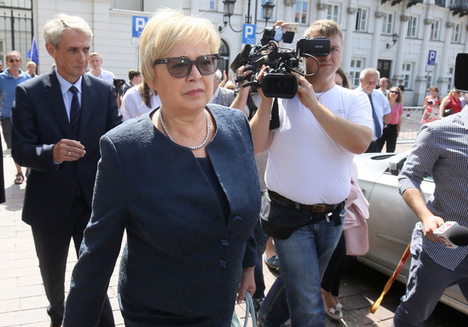
In their letter, the ICJ senior judges “condemn the recent forced retirement of 27 out of 72 Polish Supreme Court justices, including its President Małgorzata Gersdorf (photo), and urge President Duda to act immediately to restore the independence of the judiciary by reinstating them in office.”
They express grave concern “that the effective dismissal of one third of the Supreme Court, coupled with the broad discretion given to the President’s office to make exceptions, has taken place in contravention of international human rights law and standards, including the right to a fair hearing, and is contrary to basic principles of the rule of law.”
Finally, the “undersigned jurists urge the President of the Republic of Poland to act immediately to restore the independence of the judiciary by reinstating the Supreme Court justices forced into retirement, follow the recommendations of the European Commission on judicial reform, and take action to repeal the law on the Supreme Court that strikes at the very core of judicial independence.”
The signatories
- Justice Adolfo Azcuna, former Associate Justice of the Supreme Court of the Philippines
- Justice Solomy Balungi Bossa, Ugandan Judge on the International Criminal Court
- Justice Ian Binnie, retired Justice of the Supreme Court of Canada
- Justice Azhar Cachalia, Judge of the Supreme Court of Appeal of South Africa
- Dame Silvia Cartwright, former Judge of the High Court in New Zealand and of the Extraordinary Chambers in the Courts of Cambodia
- Justice Moses Chinhengo, Judge of the High Court of Botswana
- Justice Martine Comte, former President of the Orleans Court of Appeal, France
- Justice Radmila Dracigevic-Dicic, Acting President of the Supreme Court of Appeals, Judge of the Supreme Court of Serbia
- Justice Elizabeth Evatt, former Chief Justice of the Family Court of Australia
- Justice Claire L’Heureux-Dubé, former Justice of the Supreme Court of Canada
- Justice Paul J. G. Kapteyn, former Judge of the European Court of Justice
- Justice Michael Kirby, former Justice of the High Court of Australia and former President of the International Commission of Jurists
- Justice Kalthoum Kennou, Judge of the Tunisian Cassation Court
- Justice Ketil Lund, former Justice of the Norwegian Supreme Court
- Justice Qinisile Mabuza, Judge of the High Court of Swaziland
- Justice Egbert Myjer, former Judge of the European Court of Human Rights
- Justice Michèle Rivet, former President of the Quebec Human Rights Tribunal
- Justice Kalyan Shrestha, former Chief Justice of the Nepalese Supreme Court
- Justice Philippe Texier, Judge of the French Court of Cassation
- Justice Lillian Tibatemwa-Ekirikubinza, Justice of the Supreme Court of Uganda
- Justice Stefan Trechsel, former ad litem Judge at the International Criminal Tribunal for the former Yugoslavia
- Dr Rodrigo Uprimny Yepes, former Assistant Justice of the Constitutional Court of Colombia
Poland-Reinstate forcibly retired judges-Advocacy-Open letters-2018-ENG (full text of letter in PDF)
Jul 4, 2018 | News
The ICJ condemned today the forced retirement of 27 out of 72 judges of the Supreme Court of Poland in defiance of the most basic principles on the independence of the judiciary.
“The forced retirement of a third of the Supreme Court under the new law on the judiciary amounts to an arbitrary dismissal of judges” said Róisín Pillay, Director of the ICJ Europe and Central Asia Programme, “It is a flagrant breach of a basic tenet of the independence of the judiciary, the security of tenure of judges.”
The government claims the law and its implementing measure of forced retirements are aimed at improving the administration of justice. However, the ICJ considers them to be a deliberate attempt to destroy judicial independence and install executive control.
“We call on the Polish authorities to follow the EU’s recommendations, abolish this draconian legislation and immediately reinstate the Supreme Court justices. Not to do so strikes at the very core of judicial independence”, said Róisín Pillay.
“Universal principles of judicial independence guaranteeing security of tenure were developed long ago exactly to safeguard the kind of abuse of political authority driving this forced retirement measure, whereby judges would serve at the pleasure of the government of the day,” she added.
The ICJ considers that the implementation of the new law on the Supreme Court and the dismissal of the 27 Supreme Court Justices directly contravenes the security of tenure of judges and, hence, the principle of judicial independence, as expressed in the UN Basic Principles on the Independence of the Judiciary, Council of Europe standards, the European Court of Human Rights’ jurisprudence and the rule of law principle of the EU Treaties.
Poland-Attacks on judiciary-News-web stories-2018-ENG (full story – with additional background information – in PDF)
Jun 28, 2018 | News
The ICJ is deeply concerned with the allegations that the former Chief Justice and other officials infringed the freedom of expression and freedom of association of individual judges in South Korea.
The ICJ urges the Republic of Korea to ensure the individual independence of judges in the country.
The ICJ received information that in 2015, the National Court Administration (NCA), under the term of former Chief Justice Yang Sung-tae, submitted proposals to the government of South Korea to create a ‘second Supreme Court,’ arguing that it would assist in relieving the existing Supreme Court with its caseload.
This proposal was met with numerous criticisms from the general public and several individual judges.
Allegedly, judges who criticized this proposal were placed by the NCA under surveillance, both in their professional and personal dealings.
Moreover, they were prevented from joining international conferences and national professional organizations. Some were also either sidelined for promotions or were not given preference for educational opportunities abroad.
On March 2017, during the term of former Chief Justice Yang, the Supreme Court, through the NCA, created an internal committee to conduct an investigation to look into these allegations.
Two other subsequent separate committees were formed to investigate.
Finally, on Mary 2018, under the term of the current Chief Justice Kim Myeong-soo, the latest committee, without releasing a full report, said that it did not find basis to file criminal charges against the NCA and former Chief Justice Yang.
On 18 June 2018, the Seoul Central District Prosecutor’s Office initiated its own investigation into the allegations, including the possibility of filing criminal charges against former Chief Justice Yang and some NCA judges.
The rights of freedom of expression and association of judges is recognized in the UN Basic Principles on the Independence of the Judiciary and other relevant standards, which also provide for appropriate and fair procedures for holding judges to account for misconduct.
In principle, in matters touching on alleged misconduct by a judge related to the discharge of his or her duties, the ICJ considers that international standards and best practices concerning judicial independence and accountability would require at the minimum that a prosecutor seek permission of a judicial council or current Chief Justice, or other similar superior judicial authority, before commencing a formal criminal investigation or proceedings against a sitting judge.
The ICJ calls on the prosecutors’ office to seek such permission and to take steps to demonstrate that it will remain impartial and independent in the conduct of its own investigation.
The ICJ also calls on the Supreme Court to initiate a new investigation of its own, including to consider the issues from a judicial professional conduct perspective.
Finally, the ICJ urges the Supreme Court to ensure that interferences into the individual independence of judges in South Korea would never happen again.
Contact
Emerlynne Gil, ICJ Senior International Legal Adviser, t: +662 619 8477 (ext. 206) ; e: emerlynne.gil@icj.org
South Korea-Independence of Judges-News-Web Story-2018-ENG (full story in PDF)