Sep 26, 2016 | News
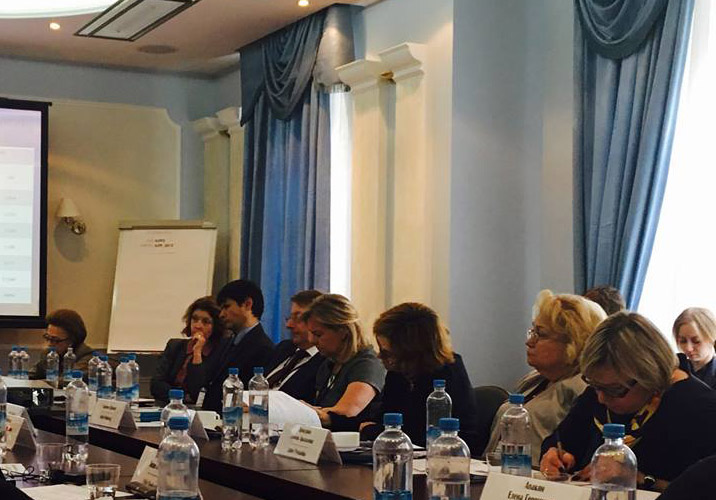
Today, the ICJ, in cooperation with the Institute of Law and Public Policy (ILPP) held a round table discussion “Independence, effectiveness and quality of justice: comparative perspectives” in Moscow.
Judges from Norway, the Netherlands, Italy and Russian and German legal scholars took part in the event.
ICJ Commissioner Justice Tamara Morschakova moderated the seminar.
Assessing the independence of judges, quality of judgements and enforcement of judgements were discussed among other topics.
The agenda of the event an be downloaded here.
Sep 22, 2016 | Advocacy, Non-legal submissions
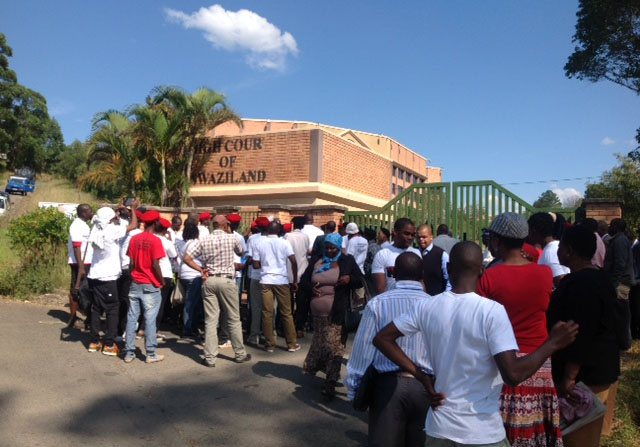
The ICJ today spoke to continuing concerns for human rights and the rule of law in Swaziland, during discussion at the UN Human Rights Council of the outcome of Swaziland’s Universal Periodic Review.
The statement read as follows:
The ICJ is concerned by the lack of implementation of recommendations accepted by the Government of Swaziland during the first UPR cycle.
The Swazi Government undertook to take concrete and immediate measures to guarantee the independence and impartiality of the judiciary. However judges continue to be appointed on the basis of corrupt patronage. The current Chief Justice and another Supreme Court judge are generally perceived to have been appointed on the basis of their traditional roles as former headman and chief, respectively, in the absence of any formal or transparent merit-based recruitment process.
Swaziland still has not ratified key international instruments, including the Rome Statute, the Optional Protocol to the Convention Against Torture, and the Convention for the Protection of All Persons from Enforced Disappearance, which they accepted during the last cycle.
The police have continued to ban and disrupt peaceful protests, relying on the Suppression of Terrorism Act, the Sedition and Subversive Activities Act and Public Order Act. Human rights defenders and political activists continue to be arrested and charged with criminal offences for exercising their rights to freedom of expression, association and assembly.
Swaziland has not enacted into law the Sexual Offences and Domestic Violence Bill, or any other law guaranteeing gender equality.
For these reasons, the ICJ calls upon the Government of Swaziland to accept and fully and promptly implement UPR recommendations from this cycle relevant to:
- Ensuring the independence and impartiality of the judiciary;
- Ratifying and domesticating the international instruments they accepted at the last cycle;
- Aligning national laws with international standards to guarantee freedom of expression, association and assembly;
- Enacting the Sexual Offences and Domestic Violence Bill into legislation.
The statement may be downloaded in PDF format here: hrc33-upr-swaziland-2016
Sep 20, 2016 | News
The ICJ expresses its deep concern at recent developments in Botswana in respect of impeachment proceedings initiated against four judges and their suspension from office pending a disciplinary hearing.
The four judges, constituting one-third of the 12 Member High Court of Botswana, Justices Key Dingake, Modiri Letsididi, Ranier Busang and Mercy Garekwe, were suspended under section 97 of the Botswana Constitution on allegations of misconduct and bringing the name of the judiciary into disrepute.
The ICJ calls on all involved judicial and executive authorities to scrupulously respect the principles governing the independence of the judiciary in their conduct in addressing this serious situation, including in their actions throughout the course of any impeachment and disciplinary proceedings.
On 28 August 2015, the President of Botswana, Ian Khama, suspended the four judges after they, along with the other eight members of the Court, signed a petition directed to the Chief Justice.
The petition had objected, among other things, to alleged poor conditions of service, as well as disparaging comments the Chief Justice was said have made about another judge’s ethnicity and defamatory statements related to corruption.
The petition also advocated for the Chief Justice’s impeachment and was copied to all judges of the High Court.
The Chief Justice and the President took issue with the contents and tone of the petition, alleging it to be disrespectful of the Chief Justice and causing disrepute of the judiciary in the eyes of members of the public.
On the 4th of September 2015, the Law Society of Botswana (LSB) issued a statement in which it condemned the actions taken by the Chief Justice and President against the four judges.
The LSB considered that the case ought to have been resolved administratively rather than through what it said was “selective” impeachment of only four out of the 12 judges, particularly as no prima facie evidence existed that a crime had been committed.
The LSB alleged that “the selective approach in suspending and subjecting to a Tribunal only four (4) of the twelve (12) Judges who had signed the Petition, supported the widely held view that the action was a witch-hunt intended to remove certain Judges and ensure a more Executive Minded Bench.”
On the 23rd of September 2015, the LSB issued another statement following reports that three of the 12 judges had withdrawn their signatures to the petition after the judges had been “offered an ‘amnesty’ against any possible action being taken against them if they retract their association and / or apologise”.
The LSB went on to criticize an amnesty “made only to a select few of the Judges and not all” the 12 judges who signed the petition.
On 24 September 2015, the LSB issued a further statement calling on the Chief Justice to resign or face impeachment after the JSC offered amnesty to three other judges, who had signed or associated themselves with the petition.
The amnesty extended to any possible action being taken against them if they retracted their association and / or apologized. The offer of amnesty was not made to all 12 judges that had signed the petition, and in particular, it was not made to the four suspended judges.
On 28 September 2015, the Impeachment tribunal was to have commenced hearing of the matter, but the four concerned judges instituted litigation against appointment of the Tribunal and their suspension, which litigation is still pending.
Since then, the courts have been irregularly issuing instructions, contrary to proper procedure, through the Registrar of the High Court in the pending litigation, and given that the Registrar is party to the litigation, this creates an inherent conflict of interest.
These developments surrounding this case have raised serious concerns over the independence of the judiciary generally but more specifically the prospects for an independent, impartial and fair hearing for the suspended judges.
Read mor
botswana-impeachment-judges-news-web-stories-2016-eng (full text in PDF)
Sep 19, 2016 | Advocacy, Non-legal submissions
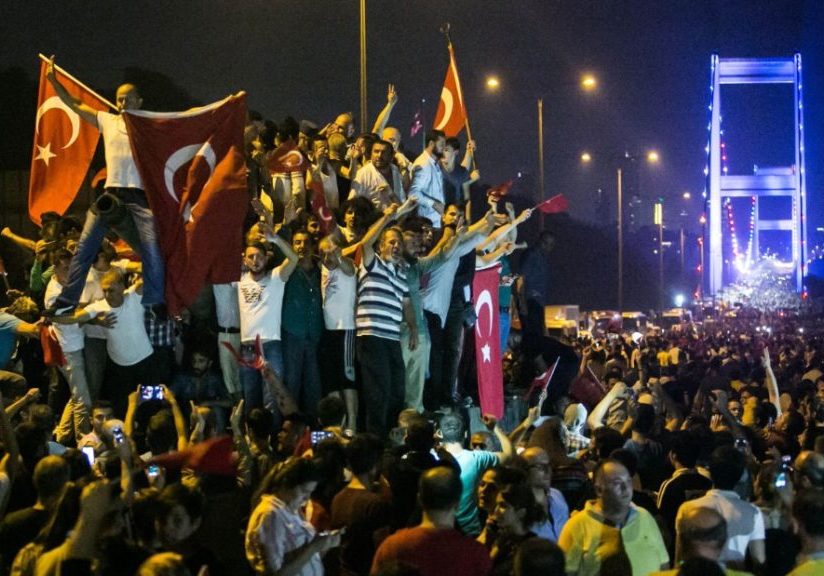
The ICJ today expressed concern at the UN for the independence of the judiciary, human rights, and the rule of law in Turkey, highlighting measures taken by the government, almost immediately after a failed coup in July, to suspend or dismiss thousands of judges and prosecutors.
The statement, which was delivered in General Debate on country situations, at the UN Human Rights Council in Geneva.
The statement read as follows:
The International Commission of Jurists (ICJ) wishes to draw the Council’s attention to the crisis of the rule of law in Turkey, and its serious consequences for the protection of human rights.
Within hours of the failed coup attempt in July, the Government initiated a purge of the judiciary on an unprecedented scale.
At least 3,300 judges and prosecutors have been dismissed or suspended, and hundreds have been arrested, including members of the High Council for Judges and Prosecutors.
Many of these measures appear to be arbitrary and fail to respect the right to a fair hearing before an independent authority.
These actions have done severe damage to the already fragile independence of the judiciary in Turkey, and threaten the right to a fair trial.
They represent a dramatic escalation of the attack on judicial independence that was already underway before the attempted coup, documented in an ICJ report published in June.
State-of-emergency decrees further undermine protection of human rights.
Periods for pre-trial detention have been extended and detainees’ confidential access to lawyers has been restricted. There are credible reports of ill-treatment of detainees, and of harassment of lawyers representing them.
The ICJ recalls that certain rights, including the prohibition on torture or other ill-treatment, and essential elements of the prohibition of arbitrary detention and right to a fair trial by an impartial tribunal, can never be derogated from, even in the most serious states of emergency.
The ICJ urges Turkey to take measures to restore the rule of law and ensure respect for human rights under the state of emergency.
The statement may be downloaded in PDF format here: hrc33-oralstatement-gditem4-turkey-2016
Sep 6, 2016 | News
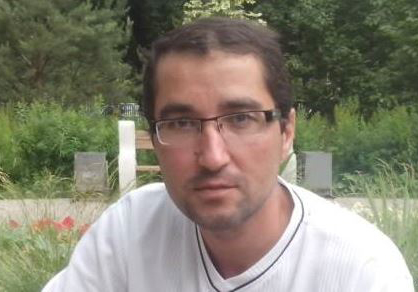
The ICJ has deplored the arrest and detention on questionable charges of Jamshed Yorov (photo), a lawyer practicing in Tajikistan.
Following his arrest on 22 August 2016, the lawyer was remanded in custody in a pre-trial facility in Dushanbe for two months.
He was charged with “disclosure of State secrets” under part 1 of article 311 of the Criminal Code of Tajikistan.
Jamshed Yorov was detained on Monday, 22 August 2016. On the next day, he called his family and informed them that he was in police custody and being questioned in connection with the alleged leaked publication of the text of a classified court judgment on the internet.
The judgment concerned the case of thirteen leaders and three members of the Islamic Renaissance Party of Tajikistan (IRPT), who had been sentenced on 2 June 2016 to various long-term custodial terms, including life-imprisonment.
Jamshed Yorov represented Mahmadali Hait, one of the leaders of the IRPT, who was sentenced to life imprisonment.
The ICJ is concerned that the decision to arrest Jamshed Yorov may have been in response to the legitimate exercise of his professional functions in representation of Mahmadali Hait.
Any such reprisal would be contrary to a fundamental tenet of the rule of law, reflected in the UN Basic Principles on the Role of Lawyers, that lawyers shall not be identified with their clients or their clients’ causes as a result of discharging their functions.
Additionally they must be able to perform all their profession functions without intimidation, hindrance, harassment or improper interference.
The principles affirm that lawyers must not suffer, or be threatened with, prosecution or administrative, economic or other sanctions for any action taken in accordance with recognised professional duties, standards or ethics.
The ICJ calls on the Tajikistan authorities to comply with all international human rights obligations of Tajikistan, including the right to a fair trial, in the case of Jamshed Yorov.
In accordance with the right to liberty as enshrined in Article 9 of the International Covenant on Civil and Political Rights (ICCPR), pre-trial detention should be ordered in exceptional cases only as a last resort, and in any event there needs to be the possibility to seek bail.
The proceedings should take full account of Jamshed Yorov’s professional duties as a defense lawyer, and should ensure that he does not suffer any criminal or administrative sanction as a result of the discharge of these duties.
The ICJ is further concerned that Jamshed Yorov’s arrest is allegedly linked to disclosure of a ‘secret’ judgment.
Article 14(1) of ICCPR, which guarantees the right to a fair trial, provides that all court judgments must be made public except where the interest of juvenile persons otherwise requires, or where the proceedings concern matrimonial disputes or the guardianship of children.
More generally, under international standards everyone has the right to seek, receive, use, and impart information held by or on behalf of public authorities, or to which public authorities are entitled by law to have access.
While there are narrow exceptions on national security grounds, these are subject to strict limits and safeguards which do not appear to have been met.
Background information
This arrest follows a pattern of arrests of lawyers in 2014-2016, which raises serious concerns about the protection of the right to a fair trial and compliance with international standards on the role of lawyers in Tajikistan.
These arrests, including the arrest of Jamshed Yorov, may have a significant “chilling” effect on the willingness of defense lawyers to take on cases of clients that may be considered sensitive, especially cases that involve accusations of breach of national security and are heard in closed sessions.
Jamshed Yorov is the brother of Buzurgmehr Yorov, who was arrested in November 2015 and who led, before his arrest, the defence for seven leaders of the IRPT Political Council.
Burzurgmehr Yorov remains in remand prison, together with another lawyer, Nuriddin Makhamov, who also represented the IRPR and has been in remand prison since November 2015. Their trial is ongoing.
The ICJ and other international NGOs earlier expressed their concern that this case may also be connected with the performance of laweyers’ professional functions.
The ICJ also expressed its concern at the conviction of lawyer Shukhrat Kurdratov on 13 January 2015 on charges of fraud and bribery for which he was sentenced to nine years in prison. Despite recent reports of a possible amnesty, his conviction will remain in force.
tajikistan-lawyer-yorov-case-news-web-stories-2016-rus (full text in Russian, PDF)