Jun 25, 2014 | Advocacy, Non-legal submissions
The ICJ made an oral statement at the UN Human Rights Council, highlighting a severe lack of domestic judicial capacity, and the large needs for justice in relation to gross violations and international humanitarian law, as well as ordinary civil and criminal matters, in South Sudan.
The ICJ reported in 2013 that, notwithstanding substantial legal reforms, the justice system in South Sudan was so under-resourced that statutory courts were effectively unavailable to a large majority of the population. Further, judicial appointment procedures were insufficiently independent or transparent to satisfy international standards. Customary courts have a greater presence, but rightly do not have criminal jurisdiction, and further do not meet international standards as regards, for instance, institutional guarantees for independence and impartiality.
In addition to the difficulties most residents already faced in accessing justice, the conflict has resulted in gross violations of human rights and international humanitarian law. South Sudan must ensure effective remedy and reparation for victims of such violations, and that anyone reasonably suspected of responsibility is investigated and, if there is sufficient evidence, prosecuted. At the same time, it must fulfill the fair and effective administration of ordinary civil and criminal justice.
Particularly given the scale and gravity of the violations, the South Sudanese justice system simply does not have the capacity to bear this burden, at least not alone. In addition to building the capacity of the domestic judiciary, it is clear that an international criminal tribunal, preferrably the International Criminal Court, will need to play a key role. Other states, too, will have to exercise all grounds of jurisdiction at their disposal, and deliver effective mutual legal cooperation.
The ICJ considers that the lack of an effective, independent and impartial court system in South Sudan may well have contributed to the rapid deterioration of the situation over the past months. Building an independent and impartial justice system in which all residents of South Sudan can have confidence is essential to preventing recurrence of the violations in the future.
HRC26-Oral statement on SouthSudan-Advocacy-non legal submission-2014 (full statement in PDF)
Jun 23, 2014 | Advocacy, Non-legal submissions
The ICJ has delivered an oral statement on the independence of judges, prosecutors and lawyers in Venezuela, at the UN Human Rights Council in Geneva.
Referencing its report, Strengthening the Rule of Law in Venezuela, the ICJ discussed the failure by Venezuelan authorities to respect institutional guarantees for the independence and impartiality of the judiciary and prosecutors, as well as undue interference with individual judges, prosecutors and the legal profession. The ICJ highlighted the lack of security of tenure for most judges and virtually all prosecutors in Venezuela, and how the insecurity is amplified by cases of reprisal such as against Judge María Lourdes Afiuni Mora.
The ICJ urged Venezuelan authorities to take concrete measures to restore the rule of law and ensure the protection of human rights in Venezuela, in meaningful dialogue with civil society, and for other states to encourage Venezuela to do so.
The oral statement can be downloaded in full in PDF format here: ICJ-HRC26-Item4-Venezuela-OralStatement2-Advocacy-non-legal submission-2014
Jun 18, 2014 | News
The ICJ’s Centre for the Independence of Judges and Lawyers (CIJL) has launched the first in a series of Country Profiles, a new online tool on the ICJ’s website.
Profiles on Myanmar, the Russian Federation, South Sudan and Swaziland are being published today.
Tunisia, Venezuela and Honduras will be added in the coming months.
By the end of 2014, all five regions in which the ICJ is active will be represented (Asia-Pacific, Africa, Europe, Latin America, MENA). The CIJL plans to add further countries on an on-going basis, and periodically to update existing profiles.
Each profile summarises information about the independence of judges, lawyers and prosecutors in the country, and assesses the situation against relevant international law and standards.
The profiles aim to provide users, including legal professionals, academics, government officials and human rights defenders, with material in an accessible format which can also be used for further analysis.
The profiles reflect the efforts of the CIJL and other ICJ programmes to monitor the independence and accountability of judges, lawyers and prosecutors in certain countries, particularly those where their independence is threatened or under attack.
Moreover, the profiles provide reference points on the laws and the standards applicable to the independence of judges and lawyers and the administration of justice in each country.
The profiles can be accessed from the ICJ webpage for the Centre for the Independence of Judges and Lawyers.
They are available as an interactive database on the ICJ’s website, and can also be downloaded in PDF format.
Jun 16, 2014 | Advocacy, Non-legal submissions
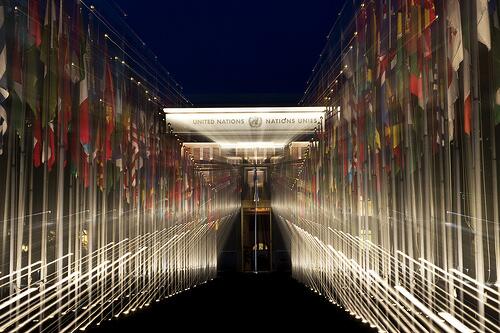
The ICJ today made an oral statement at the UN Human Rights Council, in the interactive dialogue with the Special Rapporteur on the independence of judges and lawyers, responding to her report on her visit to the Russian Federation.

Jun 13, 2014 | News
The ICJ remains concerned that the treatment of Bulgarian Judge Miroslava Todorova fails to accord with international standards on independence of the judiciary.