Sep 20, 2019 | News
The ICJ welcomes this week’s visit to Uzbekistan of the UN Special Rapporteur on the independence of judges and lawyers, Diego García-Sayan, during which he will assess reforms of the judicial system, the independence of the judiciary and the independence and role of lawyers.
“The visit of the Special Rapporteur to Uzbekistan, at the invitation of the government, is an indication that the Uzbekistan authorities are serious about the ongoing reforms of the justice system. This visit is only a starting point for the deep reforms needed to establish an independent and fair justice system in Uzbekistan. Realising these reforms will require sustained commitment of all institutions of government, lawyers and civil society,” said Temur Shakirov, Senior Legal Adviser of the ICJ Europe and Central Asia Programme.
The ICJ, along with other NGOs and IGOs, met with the Special Rapporteur in Tashkent yesterday on the first day of his visit, and drew his attention to issues concerning the independence of judges and lawyers in Uzbekistan.
“The visit will be followed by the report of the Special Rapporteur containing findings and recommendations. These recommendations should be effectively implemented and the ICJ is committed to provide expert and other support in the Uzbekistan’s effort to bring its justice system in line with the recommendations,” Shakirov added.
Background
The visit of the UN Special Rapporteur on independence of judges and lawyers takes place from September 19-25, 2019.
The Special Rapporteur will hold meetings with representatives of the government, judiciary, prosecutors, lawyers and civil society and is expected to issue a report analyzing the independence of judges and lawyers in Uzbekistan, following his visit.
The Special Rapporteur on the independence of judges and lawyers is one of the special procedures of the United Nations Human Rights Council, appointed as an independent expert to monitor the compliance of UN Member States with international standards on the independence of judges and lawyers.

Aug 22, 2019 | Advocacy, News
Today, the ICJ joined 10 other international and Venezuelan human rights organizations to call the United Nations Human Rights Council to establish a Commission of Inquiry (COI) on human rights in Venezuela in its upcoming session in September.
The ICJ considers that an independent COI is necessary given the Venezuelan authorities have been unable or unwilling to pursue effective domestic accountability and the judicial and prosecutorial mechanisms lack independence and impartiality.
In recent years, the ICJ has documented in several reports the lack of judicial independence, the lack of accountability for those allegedly responsible for gross human rights violations, the abuse and misuse of the military jurisdiction, and wide ranging breakdown in the functioning of the rule of law.
The United Nations High Commissioner for Human Rights in her 2019 report has similarly stressed that wide ranging human rights violations had occurred in Venezuela evidenced by the excessive use of force by security forces, attacks on freedom of expression, arbitrary detention and extrajudicial killings, dismantling of checks and balances, and deprivations constituting violations of the right to food and health. In addition, a panel of independent international experts mandated by the Secretary General of the Organization of American States (OAS), mentioned in 2018 “that reasonable grounds exist to believe that crimes against humanity have been committed in Venezuela”.
Commissions of Inquiry have been effectively established by the UN Human Rights Council to assess serious situations of human rights in several countries where there is a need to ensure proper human rights fact finding and ultimately accountability for widespread or systematic human rights violations. These include COIs for Syria, North Korea, Burundi, Yemen, Libya and Eritrea.
The ICJ and the other organizations have emphasized that the Commission of Inquiry that could be established for Venezuela “should be mandated to investigate reports of violations of international human rights law in Venezuela, including but not limited to violations associated with torture and inhuman treatment, arbitrary detention, discrimination, violations of freedom of expression, violations of the right to life and enforced disappearances, as well as violations of the rights to health and food. It should be tasked with establishing the facts and circumstances of violations committed since at least 2014, mapping out patterns of violations and identifying those responsible and, where possible, the chain of command, with a view to contributing to full accountability for all violations including those that constitute crimes under international law (…)”.
Download:
Venezuela-COI final-Advocacy-2019-ENG (full Q&A document prepared by all 11 organizations in PDF)
Jul 4, 2019 | News
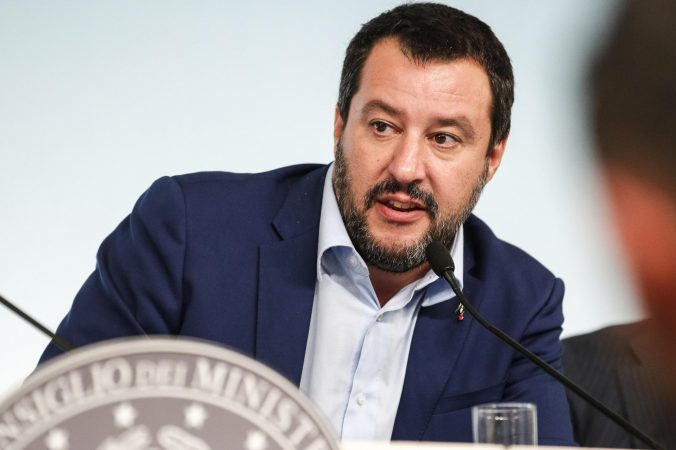
The ICJ called today on the Italian Government to reject the incendiary statements issued by Matteo Salvini, Vice-President of the Council of Ministers and Minister of Interior, calling for the “reform” of the judiciary after a court issued a judgement with which he did not agree.
On 2 and 3 July, Minister Salvini issued a series of press statements and tweets that accused a judge in Agrigento of having made a “political judgment” for having ordered the release of the captain of the rescue boat SeaWatch3, Carola Rackete.
She is alleged to have rammed a boat of the law enforcement officers of the Guardia di Finanza in an effort to rescue 53 migrants stranded at sea for more than two weeks.
Minister Salvini followed his complaints with a direct request “to reform the judiciary, select and promote those who administer it in Italy and change the criteria of appointment, because this is not the justice that is useful for a country that wants to grow.”
“The declarations by Minister Salvini are unbecoming of a representative of an Executive and constitute a direct threat to the independence of the Italian judiciary” said Massimo Frigo, Senior Legal Adviser of the ICJ Europe Programme.
“Calling for a reform of the system of appointments and dismissal of judges in the wake of pernicious accusations of “politicization” are a clear threat to the independence of the judiciary and to any judge that would rule against the wishes of Mr Salvini,” he added.
“The Italian Government should publicly reject the threats by Matteo Salvini and ensure that any justice reform is fully in compliance with international and national constitutional standards on the independence of the judiciary”, said Frigo.
The ICJ emphasizes that international standards on the independence of the judiciary forbid such inappropriate interference with judicial process by the exective.
In that connection, the Committee of Ministers of the Council of Europe, which includes Italy, has affirmed that “[i]f commenting on judges’ decisions, the executive and legislative powers should avoid criticism that would undermine the independence of or public confidence in the judiciary. They should also avoid actions which may call into question their willingness to abide by judges’ decisions, other than stating their intention to appeal.”
On Twitter, Mr Salvini has also issued declarations that undermine the right to presumption of innocence under articles 14.2 ICCPR and 6.2 ICCPR by calling Carola Rackete an “outlaw” and a “criminal” before and after the ruling of the judge on release.
The ICJ has informed the UN Special Rapporteur on the independence of judges and lawyers of the situation.
Background
On 2 July 2019, the judge for preliminary investigations (Giudice per le Indagini Preliminari – G.I.P.) of Agrigento, Sicily, Italy – i.e. the judge competent under Italian criminal procedure law to decide on the lawfulness of one’s pre-trial detention – ruled that the detention of Carola Rackete, captain of the boat SeaWatch3, was unlawful and ordered her immediate release.
The judge based her decision on the Italian Constitution that dictates the primacy of international law standards over national law. Following this principle, she found that the criminal offences of which Carola Rackete was charged could not stand.
She was accused of disregarding the orders of the Italian law enforcement officers (Guardia di Finanza) not to disembark at Lampedusa (Sicily) harbour and to have hit with her boat the boat of the Guardia di Finanza that was standing between the SeaWatch3 and the point of disembarkment. Carola Rackete held that she was acting upon her duty to rescue and disembark the people on her boat and that there was urgency to do so.
With regard to the criminal charge of “resistance or violence against a military vessel” (article 1100 of the Navigation Code), the judge found it inapplicable because the boat concerned could not be considered a “military vessel”. On the merits of the criminal offence of “resistance to a public officer under article 337 of the Criminal Code, the judge ruled that the clause of exclusion of criminal responsibility of “implementation of a duty” provided by law (article 51 Criminal Code) did apply and therefore that Carola Rackete could not hold any criminal responsibility. The duty to implement was identified as the duty of rescue at sea that international maritime law foresees for all captains of maritime vessels.
The judge ruled that such duty has primacy in Italian law and further found that the legal provision under which the Minister of Interior, Matteo Salvini, ordered the prohibition of disembarkment on Lampedusa (article 11-ter of d.lgs. 286/98, introduced by Law Decree 53/2019, the so-called “Salvini Decree-bis”) had to respect international law as envisaged by the provision itself.
Carola Rackete remains under investigation for facilitation of irregular migration under a separate criminal proceeding.
Jul 3, 2019 | Advocacy, Non-legal submissions
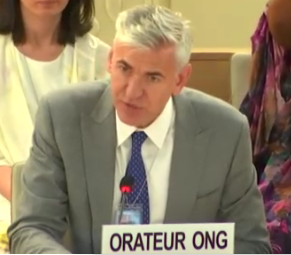
The ICJ today highlighted rising threats to the rule of law in Europe, specifically mentioning Poland, Hungary, Turkey, and Kazakhstan in a statement to the UN Human Rights Council in Geneva.
The statement read as follows:
“The International Commission of Jurists (ICJ) adopted a Declaration on Reinforcing the Rule of Law last March at its 19th World Congress in Tunis.
The Tunis Declaration (link) stresses that not only are human rights and the Rule of Law indispensable to the betterment of the human condition, but to address such contemporary challenges as catastrophic climate change and the effects of digital technology.
Against these standards, however, the ICJ is concerned at the increasing and serious threats to the Rule of Law and those who defend it around the world, including across Europe.
In Poland, the attacks on the judiciary continue under the guise of disciplinary proceedings against judges who took recourse to EU institutions to defend the Rule of Law.
Hungarian authorities, while pausing their reforms of administrative courts, have not abandoned unjustified restrictions on the judiciary’s independence and on civil society.
Finally, in Turkey, the judiciary continues to have no guarantees in law to guarantee its independent functioning.
Across Central Asia, lawyers may face disciplinary or criminal persecution for discharging their profession independently. For example, in Kazakhstan, Sergey Sizintsev was disbarred on arbitrary grounds for criticizing a problematic reform of the legal profession.
The ICJ urges the Council to give attention to these developments of extreme concern.
Jun 25, 2019 | News
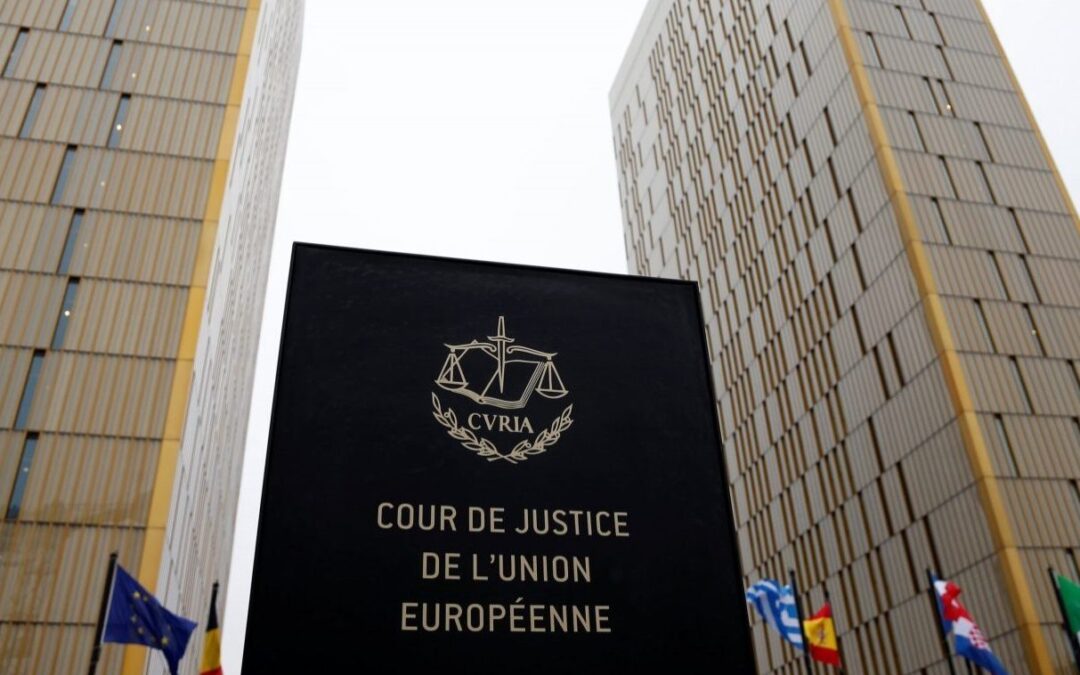
The ICJ welcomes yesterday’s judgment of the Court of Justice of the EU (CJEU) which ruled that forcing the retirement of Polish Supreme Court judges by lowering their mandatory retirement age, violated EU law.
Following the judgement, the security of tenure of these judges must now be permanently ensured, the ICJ said.
“The independence of the judiciary in Poland has been systematically undermined by the Polish executive and legislative authorities in recent years. This is a landmark decision that should herald a return to the rule of law in Poland, including legal, institutional and practical protection for judicial independence,” said Róisín Pillay, Europe and Central Asia Programme Director at the ICJ.
“This decision should be fully complied with. But it should also prompt the Polish authorities to reverse the wider damage that has been done to the rule of law, to restore the independence of the institutions of the judiciary, and end the harassment of judges through unjustified disciplinary proceedings,” she added.
In its decision issued on 24 June, the CJEU found that the lowering of the retirement age for judges, without transitional arrangements for those already in office, was not justified by any legitimate objective and therefore undermined the principle of irremovability of judges, which is central to judicial independence. It therefore violated the principle of effective judicial protection in Article 19(1) of the Treaty of European Union.
The Court also considered the discretionary power of the President to allow a judge to remain in office following the mandatory retirement date.
It found that, although this power was based on the opinion of the National Council of the Judiciary, such opinions were in practice given without any reasons, and therefore did not provide an effective safeguard.
The Court found that the President’s discretionary power gave rise to reasonable doubts that judges could be subject to external influence, in violation of the principle of effective judicial protection under Article 19(1) TEU.
Background
A law on the Supreme Court, which entered into effect in July 2018, attempted to force the “retirement” of 27 of the 72 Supreme Court judges, including the First President, by lowering the mandatory retirement age for its judges from 70 to 65 years.
The ICJ has repeatedly condemned the “forced retirement” of the 27 Supreme Court Justices as violating the security of tenure of judges in direct contravention of the principle of judicial independence, as expressed in international law and standards.
These include the UN Basic Principles on the Independence of the Judiciary, Council of Europe standards, the European Court of Human Rights’ jurisprudence and the rule of law principles enshrined in article 2 of the Treaty on European Union.
An ICJ letter of 11 July 2018, signed by 22 senior judges from all regions of the world, urged the Polish government to act immediately to reinstate the forcibly retired judges in office.
Proceedings against Poland under Article 258 TFEU were launched by the European Commission in October 2018, alleging infringement of Article 19(1) TEU (the principle of effective judicial protection) together with Article 47 of the EU Charter of Fundamental Rights (the right to a fair hearing and an effective remedy).
Following an interim decision of the CJEU in December 2018, the judges who were forcibly retired were reinstated in office, under a Law on the Supreme Court that came into force in January 2019.