
Jul 4, 2018 | News
The ICJ condemned today the forced retirement of 27 out of 72 judges of the Supreme Court of Poland in defiance of the most basic principles on the independence of the judiciary.
“The forced retirement of a third of the Supreme Court under the new law on the judiciary amounts to an arbitrary dismissal of judges” said Róisín Pillay, Director of the ICJ Europe and Central Asia Programme, “It is a flagrant breach of a basic tenet of the independence of the judiciary, the security of tenure of judges.”
The government claims the law and its implementing measure of forced retirements are aimed at improving the administration of justice. However, the ICJ considers them to be a deliberate attempt to destroy judicial independence and install executive control.
“We call on the Polish authorities to follow the EU’s recommendations, abolish this draconian legislation and immediately reinstate the Supreme Court justices. Not to do so strikes at the very core of judicial independence”, said Róisín Pillay.
“Universal principles of judicial independence guaranteeing security of tenure were developed long ago exactly to safeguard the kind of abuse of political authority driving this forced retirement measure, whereby judges would serve at the pleasure of the government of the day,” she added.
The ICJ considers that the implementation of the new law on the Supreme Court and the dismissal of the 27 Supreme Court Justices directly contravenes the security of tenure of judges and, hence, the principle of judicial independence, as expressed in the UN Basic Principles on the Independence of the Judiciary, Council of Europe standards, the European Court of Human Rights’ jurisprudence and the rule of law principle of the EU Treaties.
Poland-Attacks on judiciary-News-web stories-2018-ENG (full story – with additional background information – in PDF)

Jun 28, 2018 | News
The ICJ is deeply concerned with the allegations that the former Chief Justice and other officials infringed the freedom of expression and freedom of association of individual judges in South Korea.
The ICJ urges the Republic of Korea to ensure the individual independence of judges in the country.
The ICJ received information that in 2015, the National Court Administration (NCA), under the term of former Chief Justice Yang Sung-tae, submitted proposals to the government of South Korea to create a ‘second Supreme Court,’ arguing that it would assist in relieving the existing Supreme Court with its caseload.
This proposal was met with numerous criticisms from the general public and several individual judges.
Allegedly, judges who criticized this proposal were placed by the NCA under surveillance, both in their professional and personal dealings.
Moreover, they were prevented from joining international conferences and national professional organizations. Some were also either sidelined for promotions or were not given preference for educational opportunities abroad.
On March 2017, during the term of former Chief Justice Yang, the Supreme Court, through the NCA, created an internal committee to conduct an investigation to look into these allegations.
Two other subsequent separate committees were formed to investigate.
Finally, on Mary 2018, under the term of the current Chief Justice Kim Myeong-soo, the latest committee, without releasing a full report, said that it did not find basis to file criminal charges against the NCA and former Chief Justice Yang.
On 18 June 2018, the Seoul Central District Prosecutor’s Office initiated its own investigation into the allegations, including the possibility of filing criminal charges against former Chief Justice Yang and some NCA judges.
The rights of freedom of expression and association of judges is recognized in the UN Basic Principles on the Independence of the Judiciary and other relevant standards, which also provide for appropriate and fair procedures for holding judges to account for misconduct.
In principle, in matters touching on alleged misconduct by a judge related to the discharge of his or her duties, the ICJ considers that international standards and best practices concerning judicial independence and accountability would require at the minimum that a prosecutor seek permission of a judicial council or current Chief Justice, or other similar superior judicial authority, before commencing a formal criminal investigation or proceedings against a sitting judge.
The ICJ calls on the prosecutors’ office to seek such permission and to take steps to demonstrate that it will remain impartial and independent in the conduct of its own investigation.
The ICJ also calls on the Supreme Court to initiate a new investigation of its own, including to consider the issues from a judicial professional conduct perspective.
Finally, the ICJ urges the Supreme Court to ensure that interferences into the individual independence of judges in South Korea would never happen again.
Contact
Emerlynne Gil, ICJ Senior International Legal Adviser, t: +662 619 8477 (ext. 206) ; e: emerlynne.gil@icj.org
South Korea-Independence of Judges-News-Web Story-2018-ENG (full story in PDF)
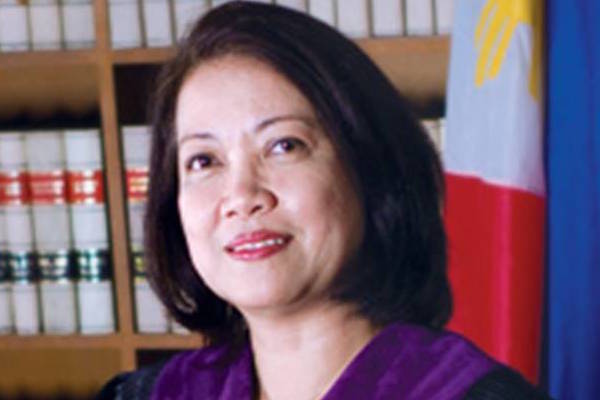
May 30, 2018 | News
As Chief Justice Maria Lourdes Sereno filed a motion today to reconsider the Supreme Court’s 11 May 2018 decision to remove her from the Court, the ICJ expressed its grave concern that the proceedings in the case had contributed to an overall deterioration in the rule of law in the country.
Sereno’s removal comes on the heels of a series of public statements by President Rodrigo Duterte attacking the Chief Justice, including direct threats to seek her removal from the Court.
The ICJ and other national and international observers have repeatedly and publicly condemned these attacks.
Her removal, through the contrivance of a judicial ruling by a sharply divided Court, adds to the perception that the government institutions are unable or unwilling to safeguard the rule of law, and will attack the institutions that protect it.
“Preserving the independence of the judiciary in the Philippines is crucial at a time when the government is credibly alleged to have been engaged in widespread and systematic human rights violations, amounting to crimes under international law,” said Frederick Rawski, Asia Pacific Director for the ICJ.
“Given the perception of political interference and the potential impact of this case on the credibility of the judiciary as a whole, it is imperative that the Court swiftly and fairly consider the Chief Justice’s motion for reconsideration,” he added.
The removal decision came in response to a quo warranto petition filed by the Solicitor General, the government’s foremost counsel.
The petition sought to nullify her appointment on the grounds that she had failed to comply with disclosure requirements, despite the fact that her qualifications had already been certified as sufficient by the Judicial and Bar Council when her name was included in the short-list submitted to the president for consideration.
The decision superseded ongoing impeachment proceedings in the Congress.
The ICJ raised concerns that the decision could open the floodgates to similar attacks, not only against members of the Court, but to members of the judiciary and other bodies, such as the Philippine Commission on Human Rights.
It called on the Supreme Court to take care to ensure that any proceedings are conducted in line with the highest standards of judicial ethics, as reflected in the international standards such as the Bangalore Principles of Judicial Conduct.
The ICJ also reminded the government of the Philippines that under international standards – including the UN Basic Principles on the Independence of the Judiciary – the judiciary, including individual judges, must be able to conduct itself without “improper influences, inducements, pressures, threats or interferences, direct or indirect… for any reason.”
It is a responsibility of both the judiciary and the political branches of government to ensure that this principle is respected.
Contact
Emerlynne Gil, Senior International Legal Adviser for Southeast Asia, t: +662 619 8477 (ext. 206) ; e: emerlynne.gil@icj.org

Mar 22, 2018 | News
The ICJ has been awarded a grant from the Royal Norwegian Embassy in Mexico to continue its work in the area of independence of the judiciary in Guatemala.
This initiative titled “Strengthening the rule of law in Guatemala, Phase II” aims to strengthen domestic compliance with, and implementation of, international standards providing for judicial independence through the training of judges, raising awareness on this topic, as well as providing support to judges at risk.
The ICJ will be working together with the Mayan Association of Lawyers and Notaires of Guatemala as a partner in this action, through a sub grant of 1,622,801 NOK.
Guatemala-Grant Agreement with Norway-2018-ENG (full grant agreement, in PDF)

Jan 22, 2018 | News
The ICJ today called on the Egyptian Parliament to adopt a Draft Law on the appointment of women to the judiciary and to eliminate longstanding discrimination against their appointment as judges.
The Draft Law was introduced by member of the Parliament (MP) Nadia Henry this month and is supported by another 60 MPs.
The Speaker of Parliament has referred it to the legislative committee for review.
“Ensuring women’s full and equal participation in Egypt’s judiciary is necessary for a fair legal system reflective of the community it serves,” said Said Benarbia, ICJ MENA Director.
“It’s also necessary to end decades of discriminatory practices that have meant only a handful of women judges have ever been appointed despite explicit guarantees of equality in the Constitution,” he added.
Article 11 of the Constitution requires the State to ensure the “achievement of equality between women and men in all civil, political, economic, social and cultural rights,” including the right of “holding public and senior management offices in the state and their appointment in judicial bodies and authorities without discrimination”.
Women were first appointed to judicial office in 2007. Between 2007 and 2017 there were less than 67 female judges across Egypt, for a population of more than 100 million.
This significant under-representation of women is entrenched in a widespread discriminatory view, including within the judiciary itself, that working as a judge in court was an inappropriate profession for women.
“The Draft Law is significant first step towards challenging these discriminatory views and harmful practices. The Authorities must not only adopt it, they must also adopt other urgent, practical and structural measures to fully guarantee the rights of women to have equal access to judicial office and ensure their equal representation in the judiciary,” Benarbia added.
Background
The first article of the draft law places an obligation on all judicial bodies to appoint women to judicial offices and ensure that the conditions of their appointment are consistent with those that are applicable to men.
In its second article, the draft law nullifies any law that infringes on the obligation set forth in Article 1. Article 3 of the draft law invalidates any procedures in relation to the appointment of judges if such procedures do not comply with the Article 1 of the draft law.
Article 10 of the UN Basic Principles on the Independence of the Judiciary provide that, “In the selection of judges, there shall be no discrimination against a person on the grounds of race, colour, sex, religion, political or other opinion, national or social origin, property, birth or status…”.
The Convention for the Elimination of Discrimination against Women and the International Covenant on Civil and Political Rights, key human rights treaties to which Egypt has been party since the early 1980s, also explicitly prohibit discrimination against women, including in relation to access to public office such as judicial appointments.
Contact
Saïd Benarbia, Director of the ICJ Middle East and North Africa Programme, t: +41.22.979.3817, e: said.benarbia(a)icj.org
Egypt-women judges-news-2018-ARA