Dec 11, 2017 | News
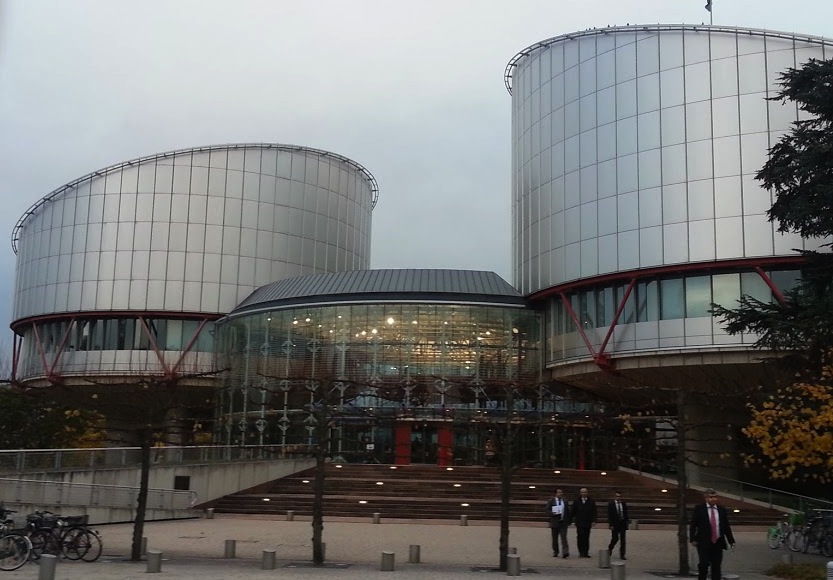
Discussions on the future of the European human rights system should focus on effective national implementation of human rights obligations and should protect the Court from undue political pressure, the ICJ and other NGOs said today.
The ICJ and other human rights NGOs that participated in the High-Level Expert Conference ‘2019 and Beyond: Taking Stock and Moving Forward from the Interlaken Process’, held in Kokkedal, Denmark from 22-24 November 2017, commended the Danish Chairmanship of the Council of Europe for its stated commitment to involving civil society throughout the process leading up to the adoption of a political Declaration on the European Convention on Human Rights’ system in April 2018.
The NGOs believe that the anticipated Copenhagen Declaration should emphasize:
- The need for enhanced measures at the national level to prevent and address violations of the Convention rights – in particular to remedy systemic and institutional problems – and to implement the Court’s judgments.
- The need for the Committee of Ministers to take more effective action to support and ensure thorough and prompt execution of judgments, through individual and general measures.
- The importance of nominating the most- qualified candidates as judges of the Court.
- That it is a fundamental principle of the rule of law that the Court should be free from political interference.
The NGOs urged the Danish Chairmanship and all Member States to refrain from any reforms that would place undue pressure on the Court in its interpretation and application of the Convention. Any undermining of established jurisprudential principles, such as the dynamic interpretation of the Convention, must be rejected.
Europe-NGO statement on ECHR reform-News-web story-2017-ENG (full story in PDF)
Oct 6, 2017 | Advocacy, Non-legal submissions
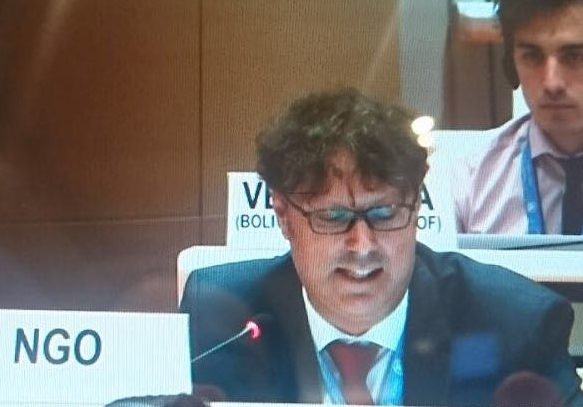
The ICJ today highlighted the role of judges, lawyers, and prosecutors at a UN seminar on prevention of torture in police custody and pre-trial detention.
The ICJ made the interventions during the “Seminar on the implementation of effective safeguards to prevent torture and other cruel, inhuman or degrading treatment or punishment during police custody and pre-trial detention” organized by the Office of the High Commissioner for Human Rights pursuant to a mandate from Human Rights Council resolution 31/31 (2016). A report of the seminar will be delivered and discussed at the March 2017 session of the Council.
The ICJ stated as follows in the first session:
The ICJ’s Commissioners are 60 senior judges and lawyers from all parts of the world. The ICJ works extensively with judges and absolutely agrees that their role is key to prevention of torture and ill-treatment in police custody and pre-trial detention.
Some of the key aspects of the role of judges include:
Judges should rigorously pursue all allegations. They should inquire when there are signs of abuse even if the detainee does not specifically allege abuse. They should demand that detainees be physically brought before them. Judges should be prepared to hold authorities in contempt of court when the authorities do not comply. The ICJ was very interested in what the Panelist Judge Dias Toffoli from Brazil said during the session about developments for custody hearings there, and how the judiciary can take practical systematic measures to fulfil their role even when legislators and other authorities may hesitate to act.
Judges should recognise and balance for evidentiary issues faced by detainees and their lawyers given the control authorities exercise over the place of detention
Judges should ensure that authorities respect rights of access to the outside world (including lawyers, family, friends, doctors, letters, and so on), both as safeguard but also to ensure detainees are not subjected to isolation that in its cumulative impact can itself amount to ill-treatment or even torture. The ICJ was pleased that Special Rapporteur Melzer highlighted the importance of such access.
Judges should ensure that confessions, other information and evidence obtained by torture and similar abuse is not allowed to be part of proceedings before them. The ICJ was interested in what justice Donoso from Chile said about relevant developments there.
In many places, judicial authorities are responsible for supervision of places of pre-trial detention. Where this is the case, judges should visit regularly, and at times without prior notice, such places of detention.
Judges should ensure accountability of perpetrators.
Judges should ensure rigorous constitutional review of relevant laws and practices, and maintain knowledge of and apply in practice international law against torture and ill-treatment. Even non-legally-binding international standards (such as the UN Standard Minimum Rules for the Treatment of Prisoners or “Mandela Rules”, and the UN Body of Principles for the protection of all persons under any form of detention or imprisonment) should be seen by judges as a useful and persuasive source of guidance in interpreting national laws.
To effectively fulfil their role, the judiciary must enjoy all necessary guarantees of independence from other authorities and other powerful interests in society. At the same time, at the ICJ we have also more recently been concerned to ensure accountability of judges when they fail to fulfil their duties to prevent and respond to torture, or are indeed intentionally complicit in mistreatment of prisoners.
Judges acting to protect human rights of criminal detainees are often subject to public criticism, and are often unable for reasons of impartiality and dignity of the court to defend themselves. It is therefore incumbent on members of the Executive, Legislature, legal profession, and others to defend such judges, and certainly not to pile on further unjustified criticism.
Finally, the ICJ would note that recent resolutions of the Human Rights Council on the independence of judges and lawyers, and on the administration of justice, stress the role of continuing professional education of judges on human rights issues (best organised by judicial institutions themselves, but involving other actors). Continuing education on prevention of torture and ill-treatment is a key area needed by all judiciaries in all countries.”
The ICJ continued as follows in the second session:
“A common thread that has already emerged from the first two panels is the role that pressure on police to obtain confessions plays in the incidence of torture and abuse in police custody. Thank you to the Panelists for their insights on this issue.
Values and signales from superiors and political leadership, including for instance in relation to practical aspects like career progression of police officials, is very important. Having clear rules is also very important in this regard. As is the perception of police that they lack alternatives to confessions as form of proof. Training on interviewing techniques, having an adequate number of officers, access to materials like fingerprinting kits and means of assuring chain-of-custody for physical evidence, are all also important.
The Seminar has addressed judges and police already, and will discuss lawyers later; the ICJ would also like to highlight the role of prosecutors in removing incentives on police to focus on obtaining confessions by any means.
The UN Guidelines on the Role of Prosecutors (Article 16) provide that prosecutors shall refuse to use evidence that they believe to have been obtained by torture.
A similar provision is incorporated in the professional standards adopted by the International Association of Prosecutors (which have also been endorsed by the UN Crime Commission). This also is an example of how international and regional professional associations can play an important role with their members in practical measures for prevention of torture and ill-treatment in police custody and pre-trial detention.”
In the third Session, the ICJ expressed its agreement with points made by Ms Miti-Drummond, the representative of the International Bar Association Human Rights Institute regarding the role of the legal profession in the prevention of torture, particularly regarding the importance of access to and presence of a competent and independent lawyer prior to and during any interview.
The ICJ also pointed out that some States have period of delay or even preclusion of access of detainee to the lawyer of his or her choosing, for instance in counter-terrorism, national security or similar cases. Often these are cases where there is a particular risk of abuse, and also may involve delay in bringing the person before a judge. In some places the independent bar association assigns a lawyer who has immediate access, if the access to the person’s lawyer of choice is denied or delayed. The ICJ invited comments or recommendations about this practice or other means to ensure lawyers can effectively prevent torture in such circumstances.

Jul 25, 2017 | News
The ICJ is concerned with the passing of Constitutional Amendment no. 1 of 2017 by the House of Assembly of Zimbabwe on 25 July 2017.
The House of Assembly voted with over two-thirds majority for the amendment of the Zimbabwean Constitution.
The amendment grants the President the right to appoint to office, the Judge President of the High Court, the Deputy Chief Justice and the Chief Justice of Zimbabwe.
Before this amendment the Judicial Services Commission (JSC) spearheaded the process of selection and appointment of judges with the President merely appointing from candidates recommended to him by the JSC.
The enactment of this Bill to law is likely to have a negative effect on the public’s perception of the judiciary. It also has the potential to affect the impartiality and the independence of the judiciary.
“The amendment to the 2013 Constitution will negatively affect public confidence in the judiciary. Not only is this a departure from a position that was in line with international standards and best practices; the amendment is likely to have a ripple effect on the judiciary,” said Arnold Tsunga, the ICJ Africa Director.
“In the short term the executive now has a carrot, which it can dangle in front of judicial officers. If a judge wants to be promoted to Judge President, Deputy Chief Justice or Chief they may have to align themselves with the thinking of the executive. Over time, given the central roles that these three office bearers play in the appointment process and thought leadership, Zimbabwe is likely to have a very executive minded bench,” he added.
To this end the ICJ calls upon the government of Zimbabwe to reconsider its decision to amend the Constitution in the manner proposed in the bill.
The procedure in section 180 of the constitution had distinguished Zimbabwe’s appointment procedures as exemplary in the region.
It is unfortunate that through this amendment the country has failed to consolidate this leadership position.
The amendment would be regressive and poses a real risk of undermining the essential role of the judiciary in securing the rule of law in Zimbabwe.
Zimbabwe-Constitutional Amendment-News-web stories-2017-ENG (full statement, in PDF)
Jul 18, 2017 | Advocacy, Analysis briefs, News
The ICJ today called on the Tunisian authorities to adopt and apply procedures for the Specialized Criminal Chambers (SCC) that are clear and comply with international human rights law and standards.
The statement came following a high-level mission to Tunisia from 12 to 15 July 2017 in which the ICJ engaged with senior judicial officials, including the President of the Cassation Court, members of the High Judicial Council, SCC judges, and other stakeholders.
An ICJ analysis, Procedures of the Specialized Criminal Chambers in light of international standards, was published at the end of the mission.
“While the Specialized Criminal Chambers have the potential to contribute to addressing impunity and deliver justice for victims in Tunisia, ambiguity about the procedures to be followed by these Chambers risks undermining their effectiveness,” warned Said Benarbia, Director of the ICJ Middle East and North Africa Programme.
As detailed in the ICJ analysis, the lack of clarity comes in part from the 2013 transitional justice Law, which is seen by many stakeholders as setting up a special regime, separate from the existing criminal justice system.
There is fear that the SCC may decide not to apply the existing ordinary criminal procedures, while at the same time no detailed procedures specific to the SCC have yet been adopted.
The creation of such a gap would risk serious breaches of international standards of fairness and justice.
For example, the 2013 Law seems to give the Truth and Dignity Commission (Instance Vérité et Dignité, IVD) exclusive power to refer cases to the SCC.
However, no procedures specific to the SCC implement the rights of an accused to examine witnesses interviewed by the IVD or to access all documents and evidence collected by the IVD in order to prepare his or her defence, as required by international standards and the ordinary code of criminal procedure.
The 2013 Law also fails to clarify the role of prosecutors and investigating judges in addressing such cases, including by making their own determination in relation to charges, standard of proof, and whether these cases should be brought before the SCC.
“Clarifying the procedures to be applied by the Specialized Criminal Chambers and ensuring their full compliance with international standards, including those relating to fair trial, are a prerequisite to fully establish the truth about human rights violations, hold those responsible to account, and ensure that the proceedings are fair to the victims and accused,” added Benarbia.
The ICJ set out a list of recommendations with a view to assisting the Tunisian authorities in their efforts in achieving these objectives, including by:
- Amending article 42 of the 2013 Law and related provisions to clearly provide victims of gross human rights violations with direct access to the SCC, including when victims did not submit a file to the IVD;
- Amending provisions of the IVD Guides to ensure that the review process and the possibility to challenge IVD’s decisions will apply to decisions not to transfer a case to the SCC and that such review be based on objective criteria for considering gross human rights violations in line with international standards;
- Establishing specialized prosecution services, investigating judges, and judicial police in line with international standards and with adequate resources to work in coordination with the SCC;
- Clarifying the relationship between the SCC and other ordinary criminal chambers and civil and other courts;
- Amending the legal framework to clearly provide that cases investigated by the IVD are to be transferred to specialized prosecutors who are to carry out their functions as defined in the CCP and in line with international standards;
- Ensuring that the IVD’s investigative function complements the role of the specialized judicial institutions in charge of the investigation and prosecution; and
- Amending the CCP and ensuring that any related provision of any other procedures adopted for the SCC fully respect fair trial guarantees.
Contact
Theo Boutruche, Legal Adviser of the ICJ Middle East and North Africa Programme, tel: +33 642837354, e-mail: theo.boutruche(a)icj.org
Tunisia-Memo on SCC Procedures-Advocacy-Analysis Brief-2017-ENG (full memo in English, PDF)
Tunisia-SCC procedures memo-News-2017-ARA (full story in Arabic, PDF)
Tunisia-Memo on SCC Procedures-Advocacy-Analysis Brief-2017-ARA (full memo in Arabic, PDF)

Jul 12, 2017 | News
The ICJ is alarmed at ongoing attacks on the rule of law in Poland.
On 12 July 2017, the Government tabled in Parliament draft bill no. 1727, that, if approved, would automatically dismiss all judges of the Supreme Court and let the Minister of Justice decide which judges are to be reinstated or newly appointed.
“This draft law is a direct blow to the principle of separation of powers, the bedrock of the rule of law,” said Massimo Frigo, Legal Adviser with the ICJ Europe Programme.
“The security of tenure and conditions of service of individual judges are essential to judicial independence,” he added.
Draft bill no. 1727 follows another piece of legislation, recently approved by Parliament, by which the Parliament empowered itself to appoint the majority of the members of the National Council of the Judiciary, the body which selects and governs the judiciary.
That law gives political powers in the Polish legislature and executive, which have increasingly demonstrated deep disregard for human rights and the rule of law, undue influence over the judiciary.
Such deficiencies were also highlighted by the Office for Democratic Institutions and Human Rights of the OSCE in May 2017.
“These series of legislative attacks to the independence of the judiciary in Poland must stop. These actions are inconsistent with the international obligations of Poland to ensure the independence of judges,” said Massimo Frigo.
“The European Union must intervene. A EU Member State that directly undermines the checks and balances of its own legal system threatens the founding values of the EU of the rule of law and respect for human rights,” he added.
Contact
Massimo Frigo, ICJ Legal Adviser, t: +41 22 979 3805 ; e: massimo.frigo(a)icj.org
International standards
Particularly in a context like present day Poland, mass removal of all judges from a court, by another branch of government, without a fair and evidence-based individual process for each judge, is incompatible with international standards such as the UN Basic Principles on the Independence of the Judiciary (See, ICJ Practitioners Guide no 13 on Judicial Accountability, pp. 99-104). The UN Basic Principles affirm, among other things, that:
1. The independence of the judiciary shall be guaranteed by the State and enshrined in the Constitution or the law of the country. It is the duty of all governmental and other institutions to respect and observe the independence of the judiciary.
2. The judiciary shall decide matters before them impartially, on the basis of facts and in accordance with the law, without any restrictions, improper influences, inducements, pressures, threats or interferences, direct or indirect, from any quarter or for any reason.
10. …Any method of judicial selection shall safeguard against judicial appointments for improper motives. …
12. Judges, whether appointed or elected, shall have guaranteed tenure until a mandatory retirement age or the expiry of their term of office, where such exists.
18. Judges shall be subject to suspension or removal only for reasons of incapacity or behaviour that renders them unfit to discharge their duties.
19. All disciplinary, suspension or removal proceedings shall be determined in accordance with established standards of judicial conduct.
20. Decisions in disciplinary, suspension or removal proceedings should be subject to an independent review. This principle may not apply to the decisions of the highest court and those of the legislature in impeachment or similar proceedings.
Similar mass removals with politicization of the procedure for reinstatement and new appointments have been condemned as violations of States’ international human rights obligations by, for instance, the UN Human Rights Committee acting under the International Covenant on Civil and Political Rights, to which Poland is also party (see Busyo, Wongodi, Matubaka et al v. Democratic Republic of the Congo, UN Doc CCPR/C/7878/D/933/2000 (2003), and the Inter-American Court of Human Rights (see e.g. Supreme Court of Justice (Quintana Coelle et al) v. Ecuador, Series C No. 266 (2013) and Constitutional Tribunal (Camba Campos et al) v. Ecuador, Series C No. 268 (2013).
Council of Europe standards, in the form of Recommendation CM/Rec(2010)12 of the Committee of Ministers to member states on judges: independence, efficiency and responsibilities, provide among other things as follows:
26. Councils for the judiciary are independent bodies, established by law or under the constitution, that seek to safeguard the independence of the judiciary and of individual judges and thereby to promote the efficient functioning of the judicial system.
27. Not less than half the members of such councils should be judges chosen by their peers from all levels of the judiciary and with respect for pluralism inside the judiciary.
44. Decisions concerning the selection and career of judges should be based on objective criteria pre-established by law or by the competent authorities. Such decisions should be based on merit, having regard to the qualifications, skills and capacity required to adjudicate cases by applying the law while respecting human dignity.
45. There should be no discrimination against judges or candidates for judicial office on any ground such as sex, race, colour, language, religion, political or other opinion, national or social origin, association with a national minority, property, disability, birth, sexual orientation or other status. A requirement that a judge or a candidate for judicial office must be a national of the state concerned should not be considered discriminatory.
46. The authority taking decisions on the selection and career of judges should be independent of the executive and legislative powers. With a view to guaranteeing its independence, at least half of the members of the authority should be judges chosen by their peers.
47. However, where the constitutional or other legal provisions prescribe that the head of state, the government or the legislative power take decisions concerning the selection and career of judges, an independent and competent authority drawn in substantial part from the judiciary (without prejudice to the rules applicable to councils for the judiciary contained in Chapter IV) should be authorised to make recommendations or express opinions which the relevant appointing authority follows in practice.
48. The membership of the independent authorities referred to in paragraphs 46 and 47 should ensure the widest possible representation. Their procedures should be transparent with reasons for decisions being made available to applicants on request. An unsuccessful candidate should have the right to challenge the decision, or at least the procedure under which the decision was made.
49. Security of tenure and irremovability are key elements of the independence of judges. Accordingly, judges should have guaranteed tenure until a mandatory retirement age, where such exists.
50. The terms of office of judges should be established by law. A permanent appointment should only be terminated in cases of serious breaches of disciplinary or criminal provisions established by law, or where the judge can no longer perform judicial functions. Early retirement should be possible only at the request of the judge concerned or on medical grounds.
69. Disciplinary proceedings may follow where judges fail to carry out their duties in an efficient and proper manner. Such proceedings should be conducted by an independent authority or a court with all the guarantees of a fair trial and provide the judge with the right to challenge the decision and sanction. Disciplinary sanctions should be proportionate.