Jun 16, 2017 | News
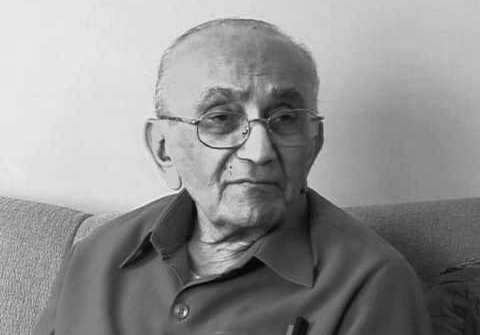
Justice Prafullachandra Natwarlal Bhagwati, former ICJ Commissioner and Honorary Member and Chief Justice of the Supreme Court of India, passed away at the age of 95, on 15 June 2017, following a brief illness.
“The International Commission of Jurists benefited greatly from Justice Bhagwati’s engagement and leadership. He was a giant of the human rights movement, dedicated to enlarging and ensuring access to justice for everyone, including those who couldn’t seek and receive justice due to their economic or social status,” said Sam Zarifi, ICJ’s Secretary-General.
“His dedication and ground-breaking approach to human rights accountability inspired many within and outside of the ICJ, and the values he represented will continue to inspire and inform our work,” he added.
Justice Bhagwati had a long history of promoting and protecting human rights, both at home and on the international stage, particularly for the most marginalized and vulnerable individuals and groups.
Former Chief Justice of India, Justice P.N. Bhagwati held a long and illustrious career within the Indian judiciary.
He introduced many innovative reforms within the Indian judicial system that increased access to justice for the poorest and most disadvantaged, including as a pioneer of public interest litigation and absolute liability.
Outside of India, Justice P.N. Bhagwati played a prominent role in the international human rights movement, for example as a member of the Committee of Experts of the International Labour Organization and Chair of the United Nations Human Rights Committee.
He was also actively involved in a number of non-governmental organizations, including the ICJ, where he committed to a high number of missions, seminars, publications and other activities on behalf of the organization.
He also served as a long-standing Chair of the Advisory Board for the ICJ’s Centre for the Independence of Judges and Lawyers.
Jun 7, 2017 | Events, News
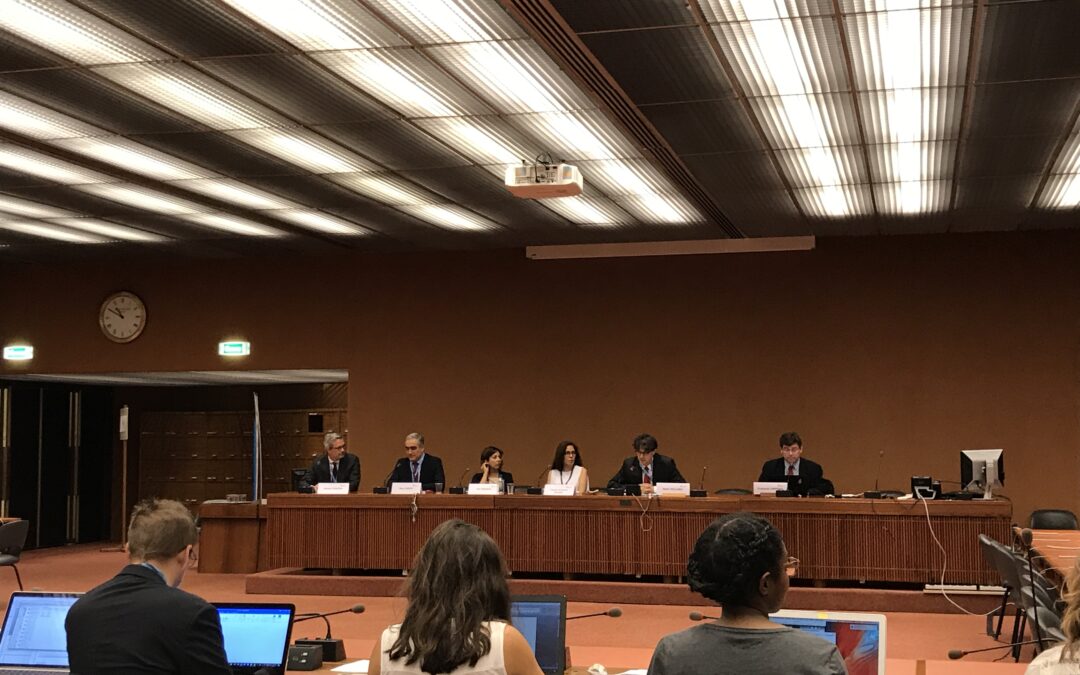
The ICJ organised a panel discussion on 8 June 2017, on the role of judges and lawyers in relation to refugees and migrants, at a side event to the 35th session of the UN Human Rights Council in Geneva.
The Panel was held on the occasion of the publication of ICJ Principles and Commentary on the topic, developed in consultation with judges, lawyers and other expert practitioners from around the world.
The event took place on Thursday, 8 June 2017, from 10:30 to 11:30, in Room XXI of the Palais des Nations, Geneva.
Welcome remarks were delivered by:
- Saman Zia-Zarifi, Secretary General of the ICJ.
- Olivier Coutau, Délégué à la Genève internationale, Republic and Canton of Geneva
Panelists included:
- François Crépeau, UN Special Rapporteur on the human rights of migrants.
- Carole Simone Dahan, Senior Legal Advisor on Judicial Engagement, UNHCR.
- Pia Oberoi, Advisor on Migration and Human Rights, OHCHR.
The discussion was moderated by Matt Pollard, ICJ Senior Legal Adviser.
At the event, each of the panelists emphasised the importance of access to independence courts and lawyers for securing the rights of refugees and migrants, and highlighted the importance and utlity of the ICJ Principles in this regard.
More background on the ICJ Principles and Commentary is available by clicking here.
For more information, email un(a)icj.org
A flyer for the event may be downloaded in PDF format here: Refugees-Migrants-ICJ-Event-HRC35-June2017
The consultations, development and publication of the ICJ Principles were made possible with the financial support of the Republic and Canton of Geneva, for which the ICJ is grateful.
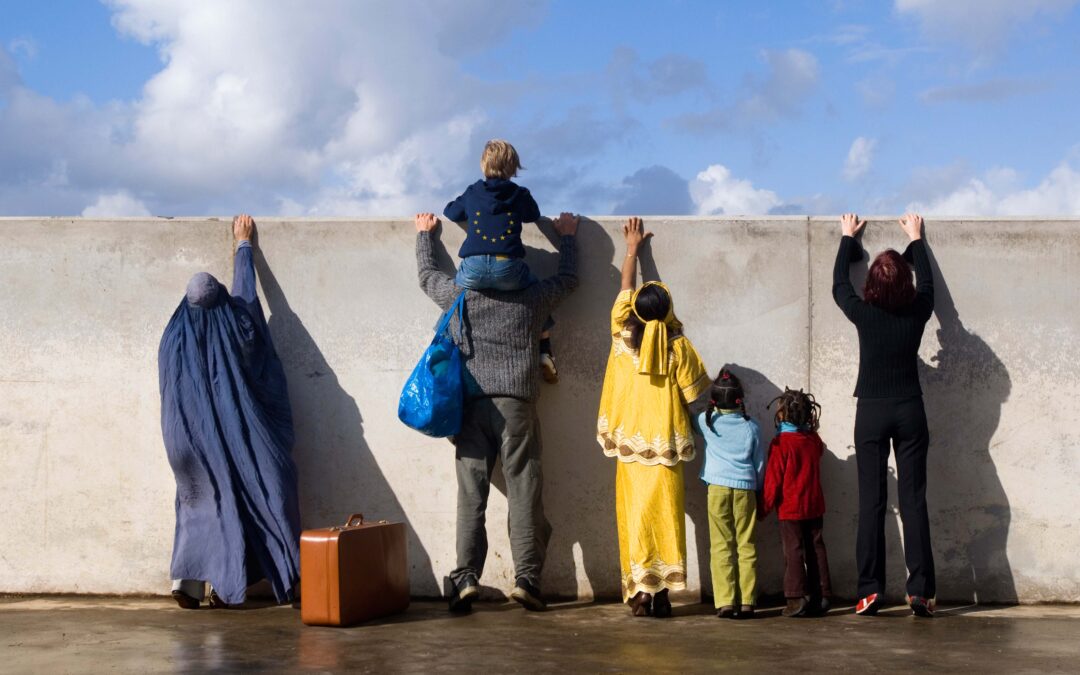
May 10, 2017 | Advocacy, News, Non-legal submissions
The ICJ emphasised the role of judges and lawyers in protecting human rights of migrants, during consultations at the UN in Geneva, as part of the preparatory process for a Global Compact on migration.
The informal consultation was convened by the UN General Assembly and held in Geneva on 8-9 May 2017. With a focus on human rights of migrants, it was the first thematic consultation to be held in connection with ongoing efforts by States to agree a UN global compact for safe, orderly and regular migration.
In addition to a written submission, the ICJ made statements during the main discussion, and as part of the concluding discussions.
The initial statement highlighted the recently published Principles on the Role of Judges and Lawyers in relation to Refugees and Migrants, developed by the ICJ in consultation with a wide range of relevant experts.
The concluding statement emphasised that effective protection of human rights, including of migrants, requires equal and effective access to impartial courts and independent lawyers, and urged States to ensure that the need for legal and practical guarantees for such access is reflected in the Global Compact eventually to be adopted. Indeed, the ICJ noted, access of individuals to a means of their enforcement is a key element distinguishing durable “rights” from, for instance, welcome but not necessarily permanent generosity.
For more information about the Principles on the Role of Judges and Lawyers in relation to Refugees and Migrants, click here.
May 5, 2017 | Advocacy, News, Publications
The ICJ has published a set of Principles on the Role of Judges and Lawyers in relation to Refugees and Migrants.
The Principles were developed by the ICJ on the basis of consultations with senior judges, lawyers, and legal scholars working in the field of international refugee and migration law (including at the 2016 Geneva Forum of Judges & Lawyers), as well consultations with States and other stakeholders on a draft version during the March 2017 Human Rights Council session, and other feedback.
The Principles seek to help judges and lawyers, as well as legislators and other government officials, better secure human rights and the rule of law in the context of large movements of refugees and migrants. They are intended to complement existing relevant legal and other international instruments, including the New York Declaration, as well as the Principles and practical guidance on the protection of the human rights of migrants in vulnerable situations within large and/or mixed movements being developed by the OHCHR.
The Principles address the role of judges and lawyers in relation to, among other aspects:
- determinations of entitlement to international protection;
- deprivation of liberty;
- removals;
- effective remedy and access to justice;
- independence, impartiality, and equality before the law;
- conflicts between national and international law.
The Principles, together with commentary, can be downloaded in PDF format by clicking here: ICJ Refugee Migrant Principles 2017.
They are also available in Spanish, French and Arabic.
The ICJ formally launched the published version of the Principles at a side event to the June 2017 session of the Human Rights Council (click here for details), where their importance and utility were recognised by the UN Special Rapporteur on the human rights of migrants, as well as representatives of UNHCR and the OHCHR.
The ICJ had earlier released the final text in connection with the Thematic Session on “Human rights of all migrants” for the UN General Assembly Preparatory Process for the Global Compact for Safe, Orderly and Regular Migration to be held in Geneva 8-9 May 2017, where in an oral statement the ICJ was able to highlight the potential utility of the Principles in the development of the Compact.
The ICJ further promoted consideration of the Principle, in an oral statement to the Human Rights Council.
More information about the process of development of the Principles, including the list of participants to the 2016 Geneva Forum, is available here.
The consultations, preparation and publication of the Principles was made possible with the financial support of the Genève Internationale office of the Republic and Canton of Geneva, for which the ICJ is grateful.
For further information, please contact ICJ Senior Legal Adviser Matt Pollard, matt.pollard(a)icj.org
May 2, 2017 | News
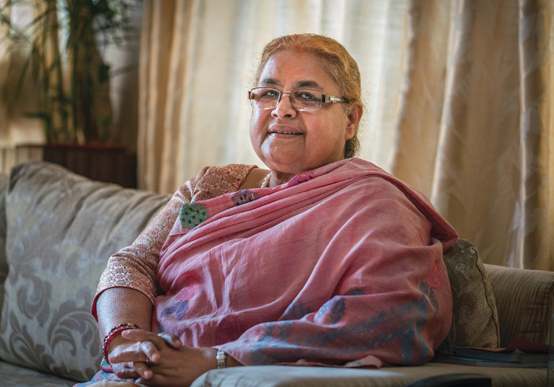
The Nepali legislature should immediately reject the unprecedented motion filed on 30 April 2017 to impeach Chief Justice Sushila Karki because it threatens the independence of the judiciary and the rule of law, said the ICJ today.
“This impeachment motion, the first against a sitting Chief Justice in Nepal’s history, raises very serious concerns about the independence of Nepal’s Supreme Court and the separation of powers in the country,” said Matt Pollard, who heads the ICJ’s Center for the Independence of Judges and Lawyers.
“The impeachment motion seems timed to suspend Chief Justice Karki just as she was scheduled to hear a politically controversial case,” he added.
The impeachment motion comes in the wake of the decision of the full bench of the Supreme Court, chaired by Justice Karki, to revoke the Cabinet’s 12 February decision to appoint a new Inspector General of Nepal Police evidently in violation of existing processes and regulations.
The motion to impeach Chief Justice was sponsored by two ruling parties, Nepali Congress and Nepal Communist Party (Maoist Center), pursuant to Article 101(2) of Nepal’s 2015 Constitution.
This provision allows for an impeachment motion against the chief justice to be moved by one-fourth of the members of the Legislature–Parliament on the grounds of “serious violation of the Constitution and law, his or her incompetence, misbehavior or failure to discharge the duties of his or her office in good faith or serious violation of code of conduct.”
Justice Karki is scheduled to retire on 7 Jun 2017, when she reaches the mandatory retirement age.
“The timing of the impeachment action, so close to the Chief Justice’s scheduled retirement, gives credence to suspicions that it is aimed at preventing her participation in judicial activity during the next few weeks,” Pollard said.
Filing the impeachment motion immediately resulted in the suspension of the Chief Justice from her duties, pursuant to Article 101(6).
“The impeachment process under Article 101 does not comply with international standards on the independence of the judiciary, as the ICJ has pointed out repeatedly in its analysis of the 2015 Constitution,” Pollard added, referring to the ICJ’s Briefing Paper on the Constitutional Draft. “This recent motion starkly demonstrates the problems with the Constitutional provision.”
Nepal’s judiciary, including the Supreme Court, had also recently been criticized by officials in the ruling parties and the military in relation to a number of high profile human rights cases.
“Nepal’s Judiciary has been instrumental protecting human rights, rule of law and enforcement of the Nepal’s obligation under international law,” Pollard said.
“The Nepali judiciary as an institution has strengthened and has gained international respect for its independence, so it should be celebrated and strengthened, instead of being subject to this kind of legislative attack,” he added.
The ICJ calls on the Government of Nepal and ruling parties to withdraw the impeachment motion against the Chief Justice in order to ensure judicial independence and the appropriate separation of powers under the rule of law in the country.