Mar 30, 2017 | News
The ICJ expressed its hope today that an arrangement reached between four judges of the High Court and Botswanan President Ian Khama along with Chief Justice Dibotelo would serve to restore the effective functioning of the High Court and its critical role in the administration of justice.
The settlement resulted in Justices Key Dingake, Modiri Letsididi, Ranier Busang and Mercy Garekwe withdrawing a petition and letter they had written complaining about what they considered to be a range of deficiencies in the justice system, as well as a failure of leadership in judicial administration.
The President and executive, for its part, discontinued pursing allegations of misconduct and bringing the name of the judiciary into disrepute against the judges and disestablished the impeachment tribunal that had been set up to try them.
The ICJ had previously expressed its concern about the process of the impeachment of the judges and the impact of the impeachment proceedings on judicial independence and impartiality in Botswana.
The ICJ was also concerned that impeachment proceedings would not accord with the principles of the right to fair trial.
“This settlement paves the way for the four judges to resume their normal duties,” said Arnold Tsunga Director of the ICJ.
“The Botswana executive and judicial officials charged with administration of the justice can now focus their attention on addressing the very real challenges facing the justice system in the country,” Tsunga added.
The ICJ reminds the Botswana authorities of their duty to guarantee the independence, impartiality and accountability of the judiciary under international law, including the International Covenant on Civil and Political Rights and the African Charter on Human and Peoples Rights, treaties to which Botswana is a party.
Contact
Arnold Tsunga, ICJ Regional Director for Africa, t: +27 716405926or +263 777 283 249; e: arnold.tsunga(a)icj.org
Background
The ICJ recalls that the four judges were suspended under section 97 of the Botswana Constitution on allegations of misconduct and bringing the name of the judiciary into disrepute.
The suspension was precipitated by a signed petition directed to the Chief Justice. In the petition the judges objected, among other things, to alleged poor conditions of service, as well as disparaging comments the Chief Justice was said have made about another judge’s ethnicity and defamatory statements related to corruption.
The petition also advocated for the Chief Justice’s impeachment and was copied to all judges of the High Court.
The Chief Justice and the President took issue with the contents and tone of the petition, alleging it to be disrespectful of the Chief Justice and causing disrepute of the judiciary in the eyes of members of the public.
Mar 8, 2017 | Events, News
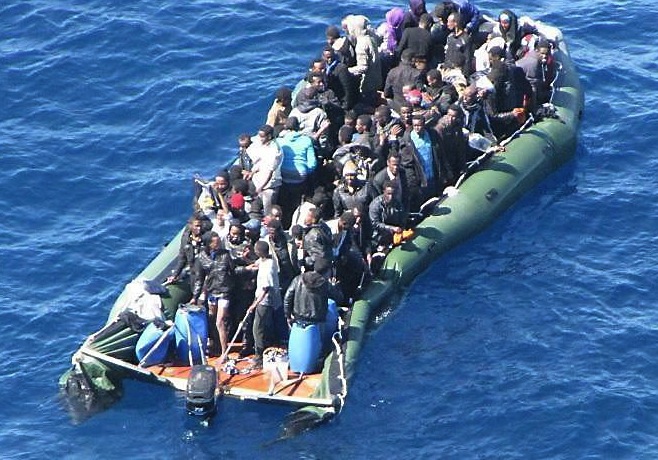
During March to April 2017 the ICJ conducted consultations on draft Principles and Guidelines on the role of judges and lawyers in relation to large movements of refugees and migrants.
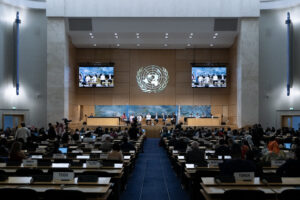
The initial consultation meeting took place in Geneva on Thursday, 9 March 2017, 15:00 – 16:30 at the Palais des Nations, Room XXI.
At this side event the ICJ presented and received feedback from States and civil society on draft ICJ Principles on the Role of Judges and Lawyers in relation to Large Movements of Refugees and Migrants.
The Principles were developed by the ICJ on the basis of consultations with senior judges, lawyers, and legal scholars working in the field of international refugee and migration law. The ICJ published the final version of the Principles, together with commentary, in May 2017.
The Principles seek to help judges and lawyers, as well as legislators and other government officials, better secure human rights and the rule of law in the context of large movements of refugees and migrants. They are intended to complement existing relevant legal and other international instruments, as well as the Principles and practical guidance on the protection of the human rights of migrants in vulnerable situations within large and/or mixed movements being developed by the OHCHR.
The final version of the Principles is available here.
More information about the earlier consultations and overall process of development of the Principles is available here.
Feb 2, 2017 | News
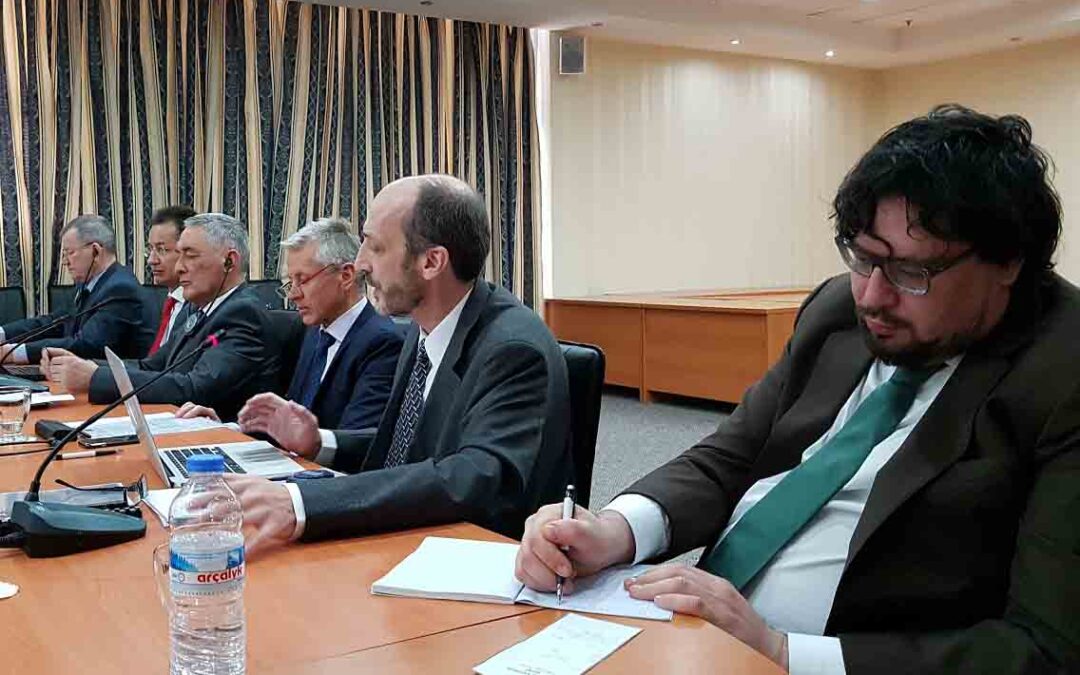
Today, the ICJ in cooperation with the the Supreme Court of Turkmenistan holds a seminar on Comparative Approaches to Judicial Ethics.
The seminar, supported by the European Union, will be attended by judges of the Supreme Court of Turkmenistan as well as other judges.
ICJ experts, including Judge Vladimir Borissov, former judge of the Supreme Court of Kazakhstan, Judge Georg Stawa, the President of the European Commission for the Efficiency of Justice (CEPEJ), and others will present comparative perspective and international standards related to the judicial ethics, accountability and guarantees for judges.
This is the second such event the ICJ holds in Turkmenistan. The first event, organized in June 2016, was dedicated to the issue of international obligations in national courts.
Turkmenistan-Judicial ethics seminar-News-web story-2017-RUS (full story in Russian, PDF)
Turkmenistan-Seminar Ethics-Agenda-2017-ENG (agenda in English, PDF)
Turkmenistan-Seminar Ethics-Agenda-2017-RUS (agenda in Russian, PDF)
Sep 26, 2016 | News
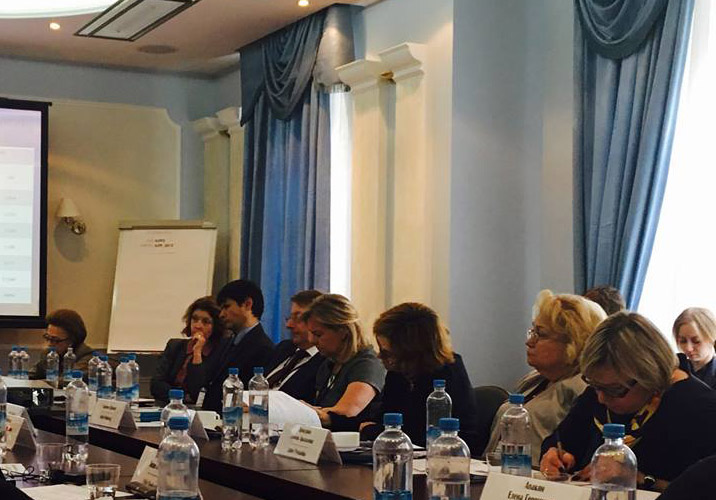
Today, the ICJ, in cooperation with the Institute of Law and Public Policy (ILPP) held a round table discussion “Independence, effectiveness and quality of justice: comparative perspectives” in Moscow.
Judges from Norway, the Netherlands, Italy and Russian and German legal scholars took part in the event.
ICJ Commissioner Justice Tamara Morschakova moderated the seminar.
Assessing the independence of judges, quality of judgements and enforcement of judgements were discussed among other topics.
The agenda of the event an be downloaded here.
Sep 20, 2016 | News
The ICJ expresses its deep concern at recent developments in Botswana in respect of impeachment proceedings initiated against four judges and their suspension from office pending a disciplinary hearing.
The four judges, constituting one-third of the 12 Member High Court of Botswana, Justices Key Dingake, Modiri Letsididi, Ranier Busang and Mercy Garekwe, were suspended under section 97 of the Botswana Constitution on allegations of misconduct and bringing the name of the judiciary into disrepute.
The ICJ calls on all involved judicial and executive authorities to scrupulously respect the principles governing the independence of the judiciary in their conduct in addressing this serious situation, including in their actions throughout the course of any impeachment and disciplinary proceedings.
On 28 August 2015, the President of Botswana, Ian Khama, suspended the four judges after they, along with the other eight members of the Court, signed a petition directed to the Chief Justice.
The petition had objected, among other things, to alleged poor conditions of service, as well as disparaging comments the Chief Justice was said have made about another judge’s ethnicity and defamatory statements related to corruption.
The petition also advocated for the Chief Justice’s impeachment and was copied to all judges of the High Court.
The Chief Justice and the President took issue with the contents and tone of the petition, alleging it to be disrespectful of the Chief Justice and causing disrepute of the judiciary in the eyes of members of the public.
On the 4th of September 2015, the Law Society of Botswana (LSB) issued a statement in which it condemned the actions taken by the Chief Justice and President against the four judges.
The LSB considered that the case ought to have been resolved administratively rather than through what it said was “selective” impeachment of only four out of the 12 judges, particularly as no prima facie evidence existed that a crime had been committed.
The LSB alleged that “the selective approach in suspending and subjecting to a Tribunal only four (4) of the twelve (12) Judges who had signed the Petition, supported the widely held view that the action was a witch-hunt intended to remove certain Judges and ensure a more Executive Minded Bench.”
On the 23rd of September 2015, the LSB issued another statement following reports that three of the 12 judges had withdrawn their signatures to the petition after the judges had been “offered an ‘amnesty’ against any possible action being taken against them if they retract their association and / or apologise”.
The LSB went on to criticize an amnesty “made only to a select few of the Judges and not all” the 12 judges who signed the petition.
On 24 September 2015, the LSB issued a further statement calling on the Chief Justice to resign or face impeachment after the JSC offered amnesty to three other judges, who had signed or associated themselves with the petition.
The amnesty extended to any possible action being taken against them if they retracted their association and / or apologized. The offer of amnesty was not made to all 12 judges that had signed the petition, and in particular, it was not made to the four suspended judges.
On 28 September 2015, the Impeachment tribunal was to have commenced hearing of the matter, but the four concerned judges instituted litigation against appointment of the Tribunal and their suspension, which litigation is still pending.
Since then, the courts have been irregularly issuing instructions, contrary to proper procedure, through the Registrar of the High Court in the pending litigation, and given that the Registrar is party to the litigation, this creates an inherent conflict of interest.
These developments surrounding this case have raised serious concerns over the independence of the judiciary generally but more specifically the prospects for an independent, impartial and fair hearing for the suspended judges.
Read mor
botswana-impeachment-judges-news-web-stories-2016-eng (full text in PDF)