Sep 19, 2016 | Advocacy, Non-legal submissions
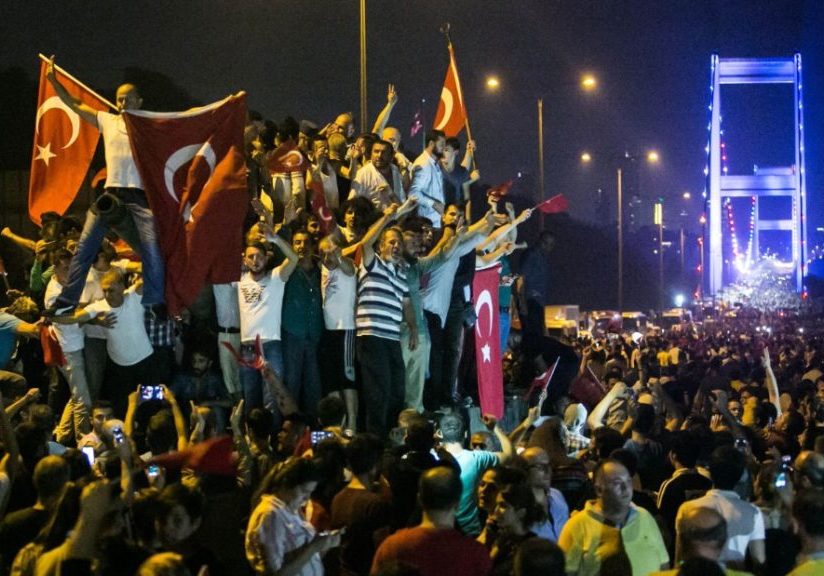
The ICJ today expressed concern at the UN for the independence of the judiciary, human rights, and the rule of law in Turkey, highlighting measures taken by the government, almost immediately after a failed coup in July, to suspend or dismiss thousands of judges and prosecutors.
The statement, which was delivered in General Debate on country situations, at the UN Human Rights Council in Geneva.
The statement read as follows:
The International Commission of Jurists (ICJ) wishes to draw the Council’s attention to the crisis of the rule of law in Turkey, and its serious consequences for the protection of human rights.
Within hours of the failed coup attempt in July, the Government initiated a purge of the judiciary on an unprecedented scale.
At least 3,300 judges and prosecutors have been dismissed or suspended, and hundreds have been arrested, including members of the High Council for Judges and Prosecutors.
Many of these measures appear to be arbitrary and fail to respect the right to a fair hearing before an independent authority.
These actions have done severe damage to the already fragile independence of the judiciary in Turkey, and threaten the right to a fair trial.
They represent a dramatic escalation of the attack on judicial independence that was already underway before the attempted coup, documented in an ICJ report published in June.
State-of-emergency decrees further undermine protection of human rights.
Periods for pre-trial detention have been extended and detainees’ confidential access to lawyers has been restricted. There are credible reports of ill-treatment of detainees, and of harassment of lawyers representing them.
The ICJ recalls that certain rights, including the prohibition on torture or other ill-treatment, and essential elements of the prohibition of arbitrary detention and right to a fair trial by an impartial tribunal, can never be derogated from, even in the most serious states of emergency.
The ICJ urges Turkey to take measures to restore the rule of law and ensure respect for human rights under the state of emergency.
The statement may be downloaded in PDF format here: hrc33-oralstatement-gditem4-turkey-2016
Sep 16, 2016 | Advocacy, Non-legal submissions
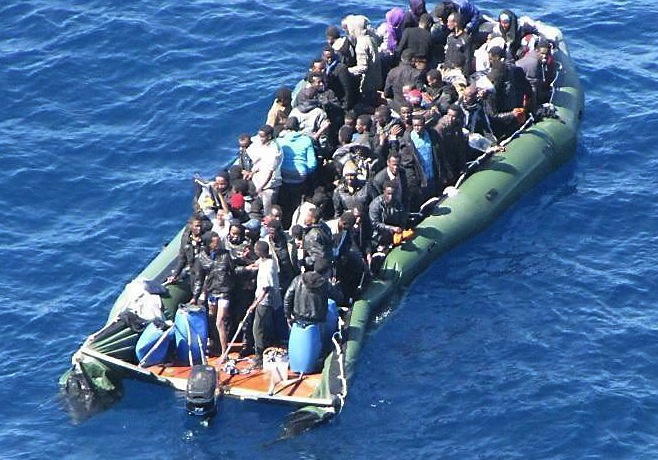
At the UN Human Rights Council, the ICJ today emphasized the role of judges and lawyers in securing human rights and the rule of law for refugees and migrants, including in situations of large-scale movements.The statement, delivered during a general debate, read as follows:
As the report of the High Commissioner for Human Rights, on Promotion and protection of the human rights of migrants in the context of large movements (UN doc A/HRC/33/67), recognizes, all such persons must have “access to justice”, including effective access to courts and lawyers.
This includes fair and effective individualized procedures in relation to key decisions such as: entitlement to refugee status or other international protection; detention or criminal proceedings based on entry or presence in the country; and expulsion or onward transfer.
The roles of the executive, legislature and judiciary in such situations has been debated in many countries. In some cases, governments have invoked the concept of “crisis” or “emergency” to justify radical departures from ordinary procedures, including reducing effective access to independent judges and lawyers.
In the experience of the International Commission of Jurists (ICJ), over many decades and in all regions of the world, the role of judges and lawyers in securing human rights and the national and international rule of law is in fact even more important in times and circumstances perceived to be “exceptional”, or of “crisis” or “emergency”. The ICJ is therefore deeply concerned about any reduction of the role of judges and lawyers in relation to large-scale movements of refugees and migrants.
The seventh annual ICJ Geneva Forum of Judges & Lawyers, 17-18 November 2016, will bring together judges, lawyers, and refugee and migration experts from around the world, as well as relevant UN, regional, and other agencies, to discuss the role of judges and lawyers in situations of large-scale movement of refugees and migrants. Based on the discussion, the ICJ will produce and disseminate guidance on the important role of judges and lawyers to protect human rights and the rule of law in all such circumstances.
The statement may be downloaded in PDF format here: hrc33-oralstatement-gditem3-migrantsrefugees-16092016
Jul 21, 2016 | News
The ICJ urges Turkish authorities to fully respect the rule of law and human rights under the recently declared state of emergency.
The ICJ is concerned that yesterday’s declaration of a state of emergency could further exacerbate the ongoing attack on institutions and professions that are guardians of the rule of law in Turkey, including the judiciary, the media and academia.
The ICJ reiterates its concern at the ongoing purge within the judiciary that led to the suspension of 2,745 judges and the arrest of hundreds.
Since then, Turkish authorities have summarily suspended, dismissed or arrested more than 50,000 academics, judges, including military judges, and public officials.
The ICJ is concerned that many of these measures are arbitrary and unlawful.
“Turkey needs to respect the tenets of the rule of law and human rights law during the state of emergency,” said Wilder Tayler, ICJ Secretary General.
“There are human rights that can never be restricted even in a state of emergency, notably the right to life, the prohibition of torture or ill-treatment, and the essential elements of arbitrary deprivation of liberty and to a fair trial,” he added.
“The current allegations of torture and ill-treatment of detainees and arbitrary arrests already point to serious violations of human rights. Widespread arrests and suspensions of judges, which began before the declaration of any state of emergency, threaten the right to a fair trial,” Tayler further said.
“The state of emergency must not be used as a means to subvert the rule of law and human rights.”
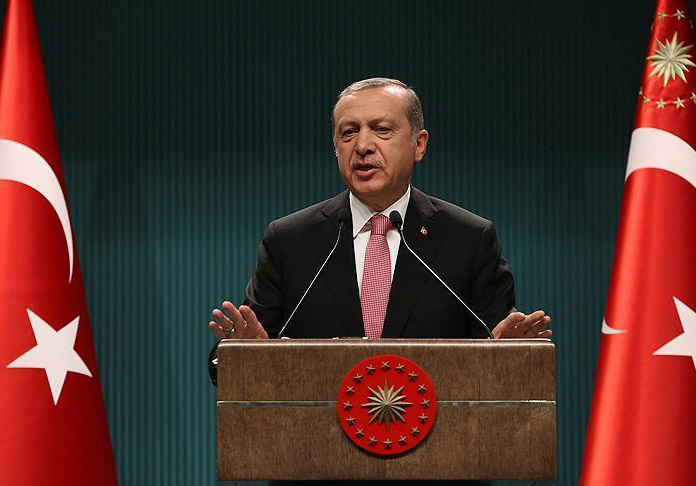
The ICJ remains concerned at President Erdoğan’s statements that he would allow for a reinstatement of the death penalty.
The ICJ firmly opposes the death penalty under any circumstances, and its reintroduction in Turkey which would also be incompatible with Turkey’s obligations under the European Convention on Human Rights and the Second Optional Protocol to the International Covenant on Civil and Political Rights.
Contact
Róisín Pillay, Director, ICJ Europe Programme, t: +32 476 974263 ; e: roisin.pillay(a)icj.org
Massimo Frigo, Legal Adviser, ICJ Europe Programme, t: +41 22 979 38 05 ; e: massimo.frigo(a)icj.org
Background information
The Council of Ministers, chaired by President Recep Tayyip Erdoğan, declared yesterday a three-month state of emergency throughout the whole territory of Turkey in accordance with article 120 of the Turkish Constitution.
The declaration must be ratified by the National Assembly. He has not yet announced what specific measures will be introduced.
Turkey is a party to many human rights treaties, including the European Convention on Human Rights and the International Covenant on Civil and Political Rights.
Under these treaties, the declaration of a state of emergency must remain within the strict boundaries of the law, in particular constitutional and international law.
Any measures derogating from them must be strictly necessary to meet a threat the life of the nation.
Certain human rights obligations cannot be derogated from even under a state of emergency. All rights must continue to be respected, although lawful derogating measures may restrict their scope of application.
Jul 18, 2016 | News
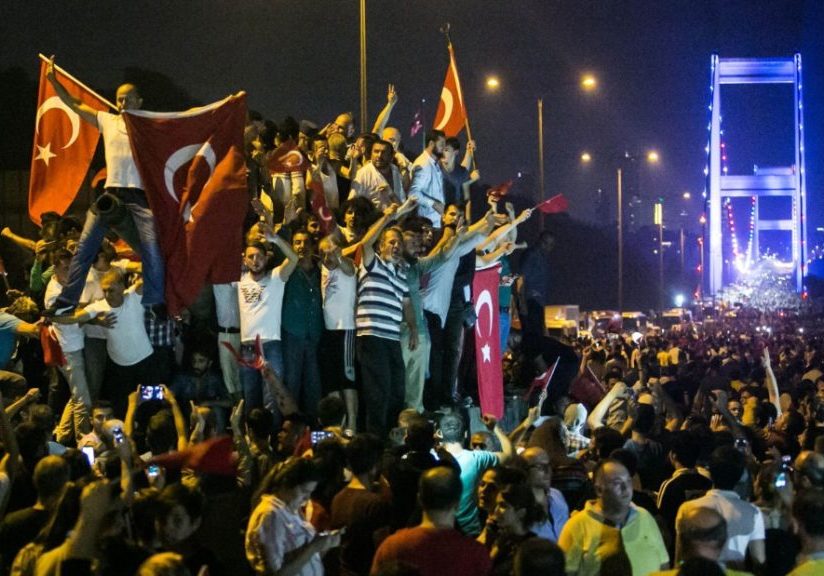
At a critical moment for Turkish democracy, the ICJ today urged the government to uphold the rule of law and respect Turkey’s obligations under international human rights law.
The ICJ condemns what appears to be a wholesale attack on the judiciary, implemented within hours of the failed coup attempt of 15 and 16 July.
“At such moments of crisis, it is crucial that the independence and security of tenure of judges is respected, so that public confidence can be maintained in the fairness of the justice system,” said Wilder Tayler, ICJ Secretary General.
“Purging the judiciary now endangers the deepest foundations of the separation of powers and the rule of law. An independent judiciary will be critical to ensure a functioning administration of justice for all people in Turkey as the country emerges from the crisis,” he added.
Reports indicate that on 16 July 2,745 judges were suspended by the High Council for Judges and Prosecutors (HSYK). Arrest warrants were issued for more than a hundred judges.
Two judges of the Constitutional Court, and ten members the HSYK itself, are reportedly among those detained. The ICJ fears that many of these detentions may be arbitrary.
Allegations that the judges concerned were linked to the attempted coup have not been supported by evidence, and it defies credulity that such a high number of judicial authorities could have been involved in the planning or execution of the military coup d’etat.
According to the ICJ, the measures are arbitrary, and contrary to fundamental rule of law principles.
In June, an ICJ report, Turkey: the judicial system in peril, analysed the increasing government control of the Turkish judiciary, including the HSYK, and arrests and dismissals judges, in violation of international standards.
“This weekend’s mass suspensions and arrests of judges represent a dramatic escalation of an attack on judicial independence that was already underway,” said Tayler.
“Disciplinary proceedings against judges should not proceed until it is clear that they will be heard by a body that is fully independent of the executive, and in accordance with the right to a fair hearing,” he added.
The ICJ is also deeply concerned at suggestions by the government that the death penalty may be introduced for those involved in the failed coup.
Re-introduction of the death penalty would violate Turkey’s obligations under Protocol 13 to the European Convention on Human Rights, and would amount to inhuman and degrading treatment in breach of Article 3 of the Convention.
The ICJ considers the death penalty to constitute in all circumstances a violation of the right to life and the prohibition on cruel, inhuman or degrading punishment.
Contact:
Róisín Pillay, Director, ICJ Europe Programme, t: +32 476 974263 ; e: roisin.pillay(a)icj.org
Additional information:
Under international standards on the independence of the judiciary, judges should be subject to suspension or removal only for reasons of incapacity or behaviour that renders them unfit to discharge their duties.
The ICJ recently published its Practitioners’ Guide N°13 on Judicial Accountability, a major study on international law and standards on the accountability of judges.
Further guidance on relevant international law and standards can be found in the ICJ Legal Commentary to the Geneva Declaration on Upholding the Rule of Law and the Role of Judges and Lawyers in Times of Crisis.
Jun 23, 2016 | News
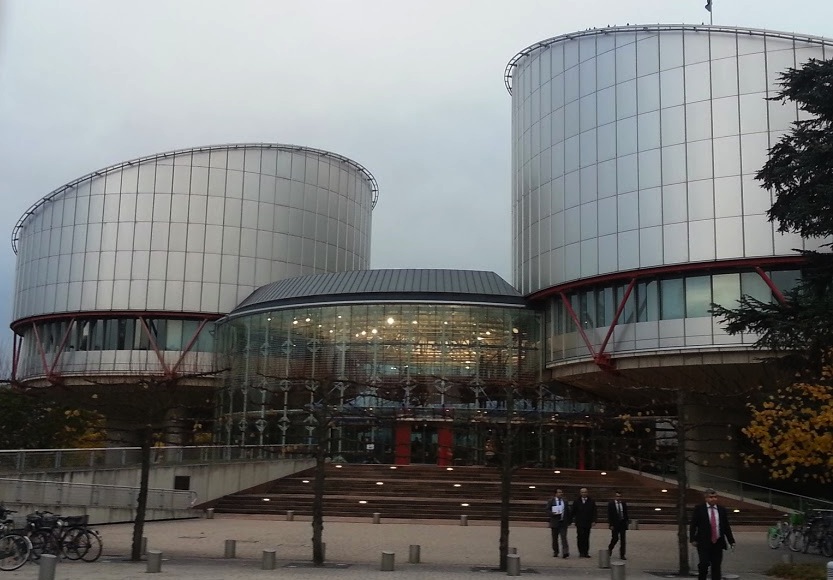
The ICJ welcomes today’s judgment of the European Court of Human Rights that the removal from office of Hungarian Supreme Court President András Baka violated the European Convention on Human Rights (ECHR).
The Court found that the pre-mature termination of his appointment deprived him of a fair process and was based on public statements he made that were critical of certain justice system reforms.
The ICJ intervened as third party in this case. The judgment is expected to be influential around the world in cases involving judicial independence and expression.
“Today’s judgment is a vindication for the security of tenure and freedom of expression of judges not only in Hungary, but around the world,” said Massimo Frigo, ICJ Europe Programme Legal Adviser.
“Judges should never be precluded from exercising their right and duty to speak out in protection of judicial independence,” he added.
In its ruling, the Grand Chamber of the European Court of Human Rights ruled that, by ending his prescribed term in office pre-maturely through a targeted legislative reform because of his public criticism, Hungary had violated his right to freedom of expression, under article 10 of the European Convention on Human Rights.
The Court held that expressing statements on the reform of the judiciary and other legislation was not only Judge Baka’s right, but also his duty.
The Court further ruled that former Supreme Court President András Baka had enjoyed a right to access courts to challenge his dismissal, and that his removal from office by a law that precluded such challenges violated article 6 of the ECHR on the right to a fair hearing.
In its judgment, the European Court cited a wide range of United Nations, European, Inter-American, and other international instruments and standards on judicial independence and freedom of expression.
The International Commission of Jurists anticipates that the Court’s ruling and reasons will have an important influence on cases concerning judicial independence and expression around the world.
Background:
Judge András Baka, former judge of the European Court of Human Rights from 1991 to 2008, had been appointed as President of the Supreme Court of Hungary on 22 June 2009.
His term in office, which was on his appointment guaranteed by law to continue until 22 June 2015, was prematurely terminated on 1 January 2012 following the entry into force of the Transitional Provisions of the new Hungarian Constitution.
This rule modified the eligibility requirements for the position of President of the Supreme Court, effectively excluding judge András Baka from the position.
Judge András Baka was also President of the National Council of Justice, and had publicly expressed criticism concerning various legal reforms brought on by the Hungarian Government that he considered to undermine the independence of the judiciary.
The judgment can be downloaded in PDF format.
Read also:
ICJ third party intervention
The ICJ also recently published a comprehensive analysis of relevant global standards in its Practitioners Guide No. 13 on judicial accountability.
An online compilation of global and regional standards on independence and accountability of judges, lawyers and prosecutors is also available here.
Contact
Massimo Frigo, Legal Adviser, ICJ Europe Programme, t: +41 22 979 38 05 ; e: massimo.frigo(a)icj.org