Jun 22, 2017 | News
Pakistani authorities need to ensure a prompt, impartial and effective investigation into a barrage of assaults and threats against lawyers in the premises of the Lahore High Court, the ICJ, Human Rights Watch and Amnesty International said today.
The Government needs to defend the rule of law and prosecute those responsible for any criminal conduct.
On 20 June, during proceedings of a case involving the alleged abduction and subsequent “disappearance” of a 26-year old woman and her two-year old son, supporters of the accused, a prominent lawyer, physically assaulted the complainant’s counsel Shabbir Hussain and Usama Malik, and made abusive remarks and threats against another member of the complainant’s legal team, Noor Ejaz Chaudhry.
The attackers were mostly lawyers and members of the local bar association.
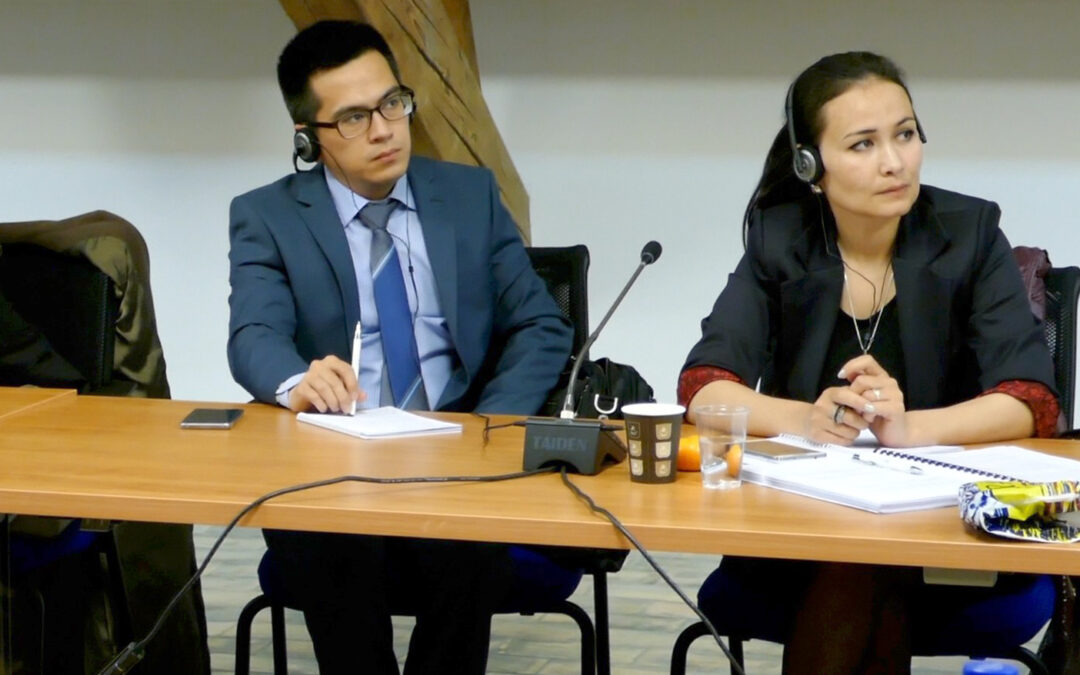
The attackers also made abusive and threatening remarks against Asma Jahangir (photo), a notable human rights lawyer, Honorary Commissioner of the ICJ, and former President of the Supreme Court Bar Association.
Asma Jahangir was not present in the court but was represented by her legal team comprising of Shabbir Hussain, Usama Malik, Mian Liaquat Ali and Noor Ejaz Chaudhry.
“The legal profession is one of the pillars of the administration of justice. It is deeply worrying that instead of discharging their responsibility to uphold the rule of law, certain lawyers would resort to threats and violence in a clear attempt to obstruct justice,” said Ian Seiderman, ICJ’s Legal and Policy Director.
Under international standards, including the UN Basic Principles on the Role of Lawyers, Pakistan has an obligation to ensure that lawyers are able to perform all of their professional functions without intimidation, hindrance, harassment or improper interference.
Where lawyers are threatened as a result of discharging their functions, authorities must ensure they are adequately safeguarded.
“Lawyers must be able to go to court without fearing violent assaults and abuse,” Brad Adams, Asia director at Human Rights Watch said. “That such assaults take place with increasing frequency in Pakistan and without accountability represents a serious failure of the Pakistani authorities to ensure rule of law.”
It is the responsibility of the bar councils and associations to ensure that allegations of professional misconduct against their members are promptly, independently and impartially investigated, and if lawyers are found in breach of their codes of conduct after a fair hearing, disciplinary action is taken against them.
Any disciplinary action must be subject to an independent judicial review.
Threatening and assaulting opposing counsel is not just against the law, but also in breach of lawyers’ professional code of ethics,” said David Griffiths, Amnesty International’s Senior Adviser on South Asia. “The respective Bar Councils must take notice of the allegations, and use this condemnable incident as an opportunity to tackle the culture of impunity which impacts even the legal profession in Pakistan.”
Background
In May 2017, Bilquis Zareena filed a habeas corpus petition in the Lahore High Court for the recovery of her daughter Ayesha and grandson Alyan Ali, who have allegedly been missing since November 2016.
According to Bilquis Zareena, her daughter had secretly been married to Maqsood Buttar, a prominent lawyer and member of the Pakistan Bar Council, the highest regulatory body for lawyers in the country.
Bilquis Zareena claims her daughter and grandson’s lives could be in danger as Maqsood Buttar had previously threatened and even attempted to kill Ayesha.
The next hearing in the case is on Friday, 23 June 2017.
Contact:
Ian Seiderman, ICJ Legal and Policy Director, e: ian.seiderman(a)icj.org
Reema Omer, ICJ International Legal Adviser (South Asia), e: reema.omer(a)icj.org
Jun 7, 2017 | Events, News
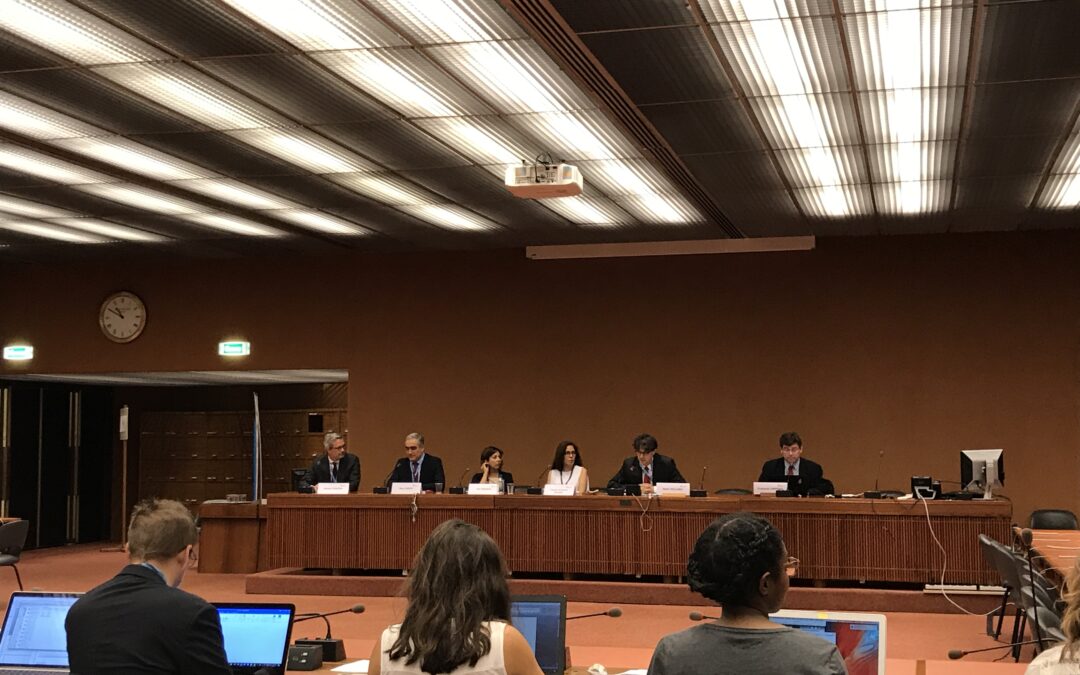
The ICJ organised a panel discussion on 8 June 2017, on the role of judges and lawyers in relation to refugees and migrants, at a side event to the 35th session of the UN Human Rights Council in Geneva.
The Panel was held on the occasion of the publication of ICJ Principles and Commentary on the topic, developed in consultation with judges, lawyers and other expert practitioners from around the world.
The event took place on Thursday, 8 June 2017, from 10:30 to 11:30, in Room XXI of the Palais des Nations, Geneva.
Welcome remarks were delivered by:
- Saman Zia-Zarifi, Secretary General of the ICJ.
- Olivier Coutau, Délégué à la Genève internationale, Republic and Canton of Geneva
Panelists included:
- François Crépeau, UN Special Rapporteur on the human rights of migrants.
- Carole Simone Dahan, Senior Legal Advisor on Judicial Engagement, UNHCR.
- Pia Oberoi, Advisor on Migration and Human Rights, OHCHR.
The discussion was moderated by Matt Pollard, ICJ Senior Legal Adviser.
At the event, each of the panelists emphasised the importance of access to independence courts and lawyers for securing the rights of refugees and migrants, and highlighted the importance and utlity of the ICJ Principles in this regard.
More background on the ICJ Principles and Commentary is available by clicking here.
For more information, email un(a)icj.org
A flyer for the event may be downloaded in PDF format here: Refugees-Migrants-ICJ-Event-HRC35-June2017
The consultations, development and publication of the ICJ Principles were made possible with the financial support of the Republic and Canton of Geneva, for which the ICJ is grateful.
May 25, 2017 | News, Op-eds
An opinion editorial by Daniel Aguirre, ICJ Legal Adviser in Myanmar.
Burma’s 2016 Investment Law and the implementing Investment Rules issued in April 2017 create space for the government and civil society to facilitate responsible investment and exclude investors that have track records of environmental destruction and human rights abuses.
This means that affected individuals and communities must now test Burma’s commitment to the rule of law.
There are new opportunities for civil society to use law to hold them accountable. In this regard, both international law and Burma’s constitution guarantee access to justice for rights abuses.
The Investment Rules instruct the Myanmar Investment Commission (MIC) to consider whether investors have demonstrated a commitment to responsible investment. In considering the good character and reputation of the investor, the MIC may study whether the investor or any associate with an interest in the investment broke the law in Burma or any other jurisdiction.
The rules explicitly mention environmental, labor, tax, anti-bribery and corruption or human rights law.
What this means is that if an investor is determined to have committed a crime, has violated environmental protection standards or was involved with human rights abuses, the MIC should not grant it a permit.
If such a company applies for an investment permit, civil society should bring its record to the attention of the MIC and advocate for the rejection of a permit.
Successive governments in Burma have focused on increased investment to develop the country and improve its people’s standard of living.
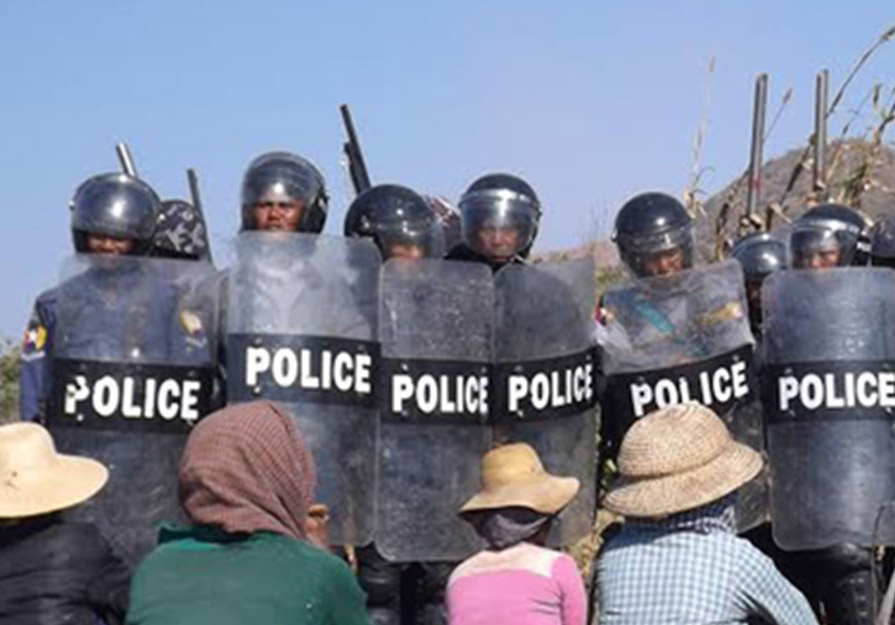
At the same time, human rights and environment proponents from civil society have opposed many investment projects, citing the impact on the environment and human rights of local communities.
They complain that land rights are not adequately protected, that environmental impact assessments are not implemented and that they lack access to justice for corporate human rights abuses.
There are challenges to using the law to protect human rights in Burma.
Disputes related to business activity are often considered sensitive political matters in which the courts are unable or unwilling to intervene.
They are reluctant to review crucial decisions of administrative bodies or to hold rights abusers accountable.
But community activists, human rights defenders and lawyers have increased opportunities to pressure the courts to apply the law and should do so.
Lawyers have an important role in protecting human rights by representing local communities.
Courts must become a venue to challenge administrative decisions that allow for irresponsible investment that does not comply with national law, and where appropriate, obtain remedies and reparations for victims of human rights violations.
The Investment Law and its rules, which govern both local and foreign investment except within special economic zones, provide legal guarantees for investors to access information and protections against expropriation including compensation and access to due process if changes in regulation affect their business.
Investors can also access long-term rights to use land.
Civil society should help to ensure that only responsible investors benefit from these protections.
According to the law, the MIC is the gatekeeper that issues permits and endorsements for many would-be national and international investments likely to cause a large impact on the environment and local community.
In order to ensure that the protective aspects of the law are effective, courts must have some power of review, at least to ensure that administrative bodies, such as the MIC, are acting reasonably and in accordance with the law, while respecting and protecting human rights.
If the MIC grants permits for companies that do not meet the requirements outlined in the Investment Rules, their decisions must be subject to review by the judiciary.
Burma’s courts have the authority to review administrative decisions, particularly through the application of constitutional writs.
Lawyers can use the writs of mandamus and certiorari to secure the performance of public duties and quash an illegal order already passed by public bodies such as the MIC.
This would help ensure the MIC uses its mandate to prevent irresponsible investment.
Likewise, investors that fail to respect human rights or unlawfully cause damage to the environment must be held accountable; but there are few options to do so in Burma.
Criminal prosecutions against companies, actions imposing administrative sanctions, and civil suits face a variety of procedural hurdles, particularly if involving joint ventures with state run enterprises.
For example, a negligence civil suit brought by villagers against the Heinda tin mine in Dawei District was unsuccessful because the 1909 Limitations Act demands complaints to be brought within one year of damage.
Section 80 of the Civil Procedure Code requires prior notice and the names of plaintiffs to be given to the government two months before filing a suit against the government and allows small procedural defects to preclude a claim.
Lawyers are sometimes unfamiliar with these procedures and communities are reluctant to put their names to such cases fearing reprisals.
Clearly there are significant challenges to ensuring that investment in Burma does not adversely affect human rights.
To overcome these, civil society and lawyers must engage the administration—the MIC—to ensure only responsible investments is permitted and start to use the judiciary to review its actions.
Likewise, cases must continue to be taken against investors that abuse human rights and harm the environment.
Powerful investors must be constrained by the confines of the law, including human rights law.
Unless civil society and lawyers can use the legal framework to address these concerns, Burma’s judicial system is unlikely to develop; lawyers will not gain valuable experience and the public will remain distrustful.
The process is long and arduous but necessary to protect human rights and the environment from irresponsible investment.

May 10, 2017 | Advocacy, News, Non-legal submissions
The ICJ emphasised the role of judges and lawyers in protecting human rights of migrants, during consultations at the UN in Geneva, as part of the preparatory process for a Global Compact on migration.
The informal consultation was convened by the UN General Assembly and held in Geneva on 8-9 May 2017. With a focus on human rights of migrants, it was the first thematic consultation to be held in connection with ongoing efforts by States to agree a UN global compact for safe, orderly and regular migration.
In addition to a written submission, the ICJ made statements during the main discussion, and as part of the concluding discussions.
The initial statement highlighted the recently published Principles on the Role of Judges and Lawyers in relation to Refugees and Migrants, developed by the ICJ in consultation with a wide range of relevant experts.
The concluding statement emphasised that effective protection of human rights, including of migrants, requires equal and effective access to impartial courts and independent lawyers, and urged States to ensure that the need for legal and practical guarantees for such access is reflected in the Global Compact eventually to be adopted. Indeed, the ICJ noted, access of individuals to a means of their enforcement is a key element distinguishing durable “rights” from, for instance, welcome but not necessarily permanent generosity.
For more information about the Principles on the Role of Judges and Lawyers in relation to Refugees and Migrants, click here.