Oct 6, 2017 | Advocacy, Non-legal submissions
The ICJ today highlighted the role of judges, lawyers, and prosecutors at a UN seminar on prevention of torture in police custody and pre-trial detention.
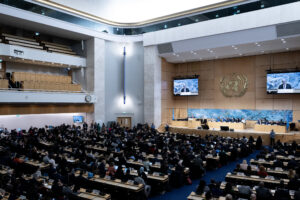
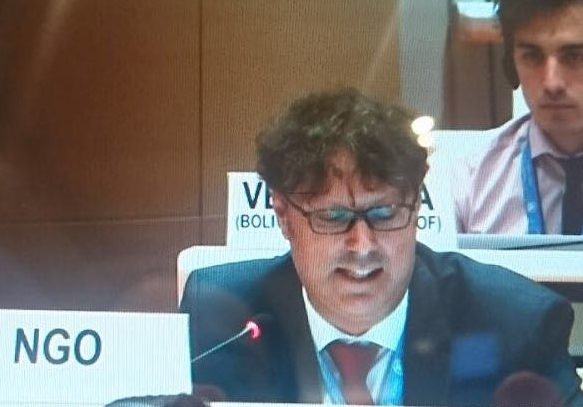
The ICJ made the interventions during the “Seminar on the implementation of effective safeguards to prevent torture and other cruel, inhuman or degrading treatment or punishment during police custody and pre-trial detention” organized by the Office of the High Commissioner for Human Rights pursuant to a mandate from Human Rights Council resolution 31/31 (2016). A report of the seminar will be delivered and discussed at the March 2017 session of the Council.
The ICJ stated as follows in the first session:
The ICJ’s Commissioners are 60 senior judges and lawyers from all parts of the world. The ICJ works extensively with judges and absolutely agrees that their role is key to prevention of torture and ill-treatment in police custody and pre-trial detention.
Some of the key aspects of the role of judges include:
Judges should rigorously pursue all allegations. They should inquire when there are signs of abuse even if the detainee does not specifically allege abuse. They should demand that detainees be physically brought before them. Judges should be prepared to hold authorities in contempt of court when the authorities do not comply. The ICJ was very interested in what the Panelist Judge Dias Toffoli from Brazil said during the session about developments for custody hearings there, and how the judiciary can take practical systematic measures to fulfil their role even when legislators and other authorities may hesitate to act.
Judges should recognise and balance for evidentiary issues faced by detainees and their lawyers given the control authorities exercise over the place of detention
Judges should ensure that authorities respect rights of access to the outside world (including lawyers, family, friends, doctors, letters, and so on), both as safeguard but also to ensure detainees are not subjected to isolation that in its cumulative impact can itself amount to ill-treatment or even torture. The ICJ was pleased that Special Rapporteur Melzer highlighted the importance of such access.
Judges should ensure that confessions, other information and evidence obtained by torture and similar abuse is not allowed to be part of proceedings before them. The ICJ was interested in what justice Donoso from Chile said about relevant developments there.
In many places, judicial authorities are responsible for supervision of places of pre-trial detention. Where this is the case, judges should visit regularly, and at times without prior notice, such places of detention.
Judges should ensure accountability of perpetrators.
Judges should ensure rigorous constitutional review of relevant laws and practices, and maintain knowledge of and apply in practice international law against torture and ill-treatment. Even non-legally-binding international standards (such as the UN Standard Minimum Rules for the Treatment of Prisoners or “Mandela Rules”, and the UN Body of Principles for the protection of all persons under any form of detention or imprisonment) should be seen by judges as a useful and persuasive source of guidance in interpreting national laws.
To effectively fulfil their role, the judiciary must enjoy all necessary guarantees of independence from other authorities and other powerful interests in society. At the same time, at the ICJ we have also more recently been concerned to ensure accountability of judges when they fail to fulfil their duties to prevent and respond to torture, or are indeed intentionally complicit in mistreatment of prisoners.
Judges acting to protect human rights of criminal detainees are often subject to public criticism, and are often unable for reasons of impartiality and dignity of the court to defend themselves. It is therefore incumbent on members of the Executive, Legislature, legal profession, and others to defend such judges, and certainly not to pile on further unjustified criticism.
Finally, the ICJ would note that recent resolutions of the Human Rights Council on the independence of judges and lawyers, and on the administration of justice, stress the role of continuing professional education of judges on human rights issues (best organised by judicial institutions themselves, but involving other actors). Continuing education on prevention of torture and ill-treatment is a key area needed by all judiciaries in all countries.”
The ICJ continued as follows in the second session:
“A common thread that has already emerged from the first two panels is the role that pressure on police to obtain confessions plays in the incidence of torture and abuse in police custody. Thank you to the Panelists for their insights on this issue.
Values and signales from superiors and political leadership, including for instance in relation to practical aspects like career progression of police officials, is very important. Having clear rules is also very important in this regard. As is the perception of police that they lack alternatives to confessions as form of proof. Training on interviewing techniques, having an adequate number of officers, access to materials like fingerprinting kits and means of assuring chain-of-custody for physical evidence, are all also important.
The Seminar has addressed judges and police already, and will discuss lawyers later; the ICJ would also like to highlight the role of prosecutors in removing incentives on police to focus on obtaining confessions by any means.
The UN Guidelines on the Role of Prosecutors (Article 16) provide that prosecutors shall refuse to use evidence that they believe to have been obtained by torture.
A similar provision is incorporated in the professional standards adopted by the International Association of Prosecutors (which have also been endorsed by the UN Crime Commission). This also is an example of how international and regional professional associations can play an important role with their members in practical measures for prevention of torture and ill-treatment in police custody and pre-trial detention.”
In the third Session, the ICJ expressed its agreement with points made by Ms Miti-Drummond, the representative of the International Bar Association Human Rights Institute regarding the role of the legal profession in the prevention of torture, particularly regarding the importance of access to and presence of a competent and independent lawyer prior to and during any interview.
The ICJ also pointed out that some States have period of delay or even preclusion of access of detainee to the lawyer of his or her choosing, for instance in counter-terrorism, national security or similar cases. Often these are cases where there is a particular risk of abuse, and also may involve delay in bringing the person before a judge. In some places the independent bar association assigns a lawyer who has immediate access, if the access to the person’s lawyer of choice is denied or delayed. The ICJ invited comments or recommendations about this practice or other means to ensure lawyers can effectively prevent torture in such circumstances.
Sep 14, 2017 | Advocacy
In a joint statement released today, the ICJ joins several other organisations in calling on the Supreme Court of the Maldives to rescind the indefinite suspension of 56 lawyers.
The lawyers had signed a petition to the Supreme Court calling for the independence and reform of the judiciary.
The statement, made jointly with Maldivian Democracy Network, Front Line Defenders, Transparency International and FORUM-ASIA, can be downloaded here: Maldives-Advocacy-Lawyers-2017
Jul 25, 2017 | News
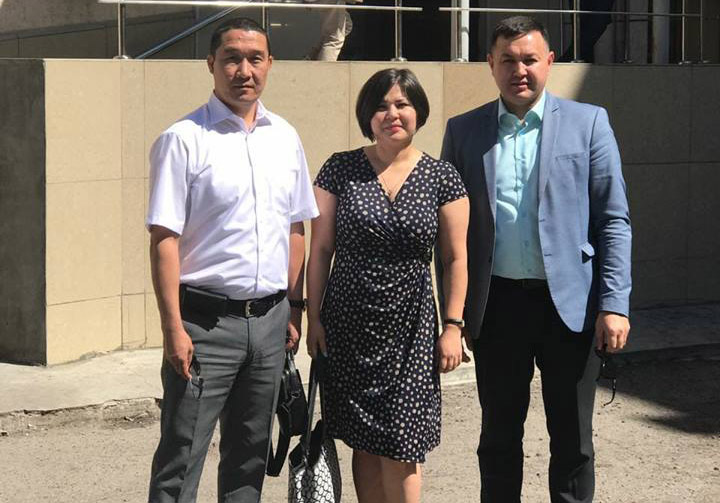
Today the ICJ expressed concern about the real threat of criminal prosecution against lawyers Yerlan Gazimzhanov, Amanzhol Mukhamedyarov and Assel Tokayeva (photo) in Kazakhstan.
The ICJ said the action against lawyers was aimed at their discharging of their professional functions on behalf of clients, and not for any genuine criminal misconduct.
The ICJ called on the responsible authorities of Kazakhstan to discontinue the proceedings against the lawyers, which are contrary to international law and standards on the role of lawyers and the rule of law in the administration of justice.
On 22 June, in a court hearing in the criminal case, judge Ubasheva issued interim rulings against the lawyers seeking their prosecution for a number of acts, which on their face do not consist of criminal misconduct. The conduct for which prosecution is sought includes lodging a complaint alleging unethical conduct by the judge with the Commission on Judicial Ethics and Judicial Jury of the Supreme Court of the Republic; filing a motion for recusal of the judge; stating that the crime for which their clients had been accused had in fact been committed by another defendant; and participating in an international conference, rather than attending a court hearing to defend clients.
The various legal procedures used by the lawyers, including their complaint against the judge and the request for the judge’s recusal, are not prohibited by law. On the contrary, acts such as filing motions for recusal, lodging ethics complaints through officially prescribed channels, and performing standard criminal defence functions they constitute regular procedures prescribed in legislation Kazakhstan. They are also fundamental pursuant to the proper administration of justice under the rule of law.
The interim rulings of the court did not provide an analysis of the legal provisions allegedly violated by the lawyers. Certain of the lawyers were said by the court to have “demonstrated superiority over other actors in criminal proceedings.” It was also alleged that the information posted on a Facebook page about the proceedings in which one of the lawyers took part was false. However, the ruling failed to cite any specific details or conduct of the lawyers which would support these conclusions.
Regarding the charge that two of the lawyers had chosen to participate in an international conference rather than appear at the court hearing, this at most would fall under disciplinary procedures governing the conduct of members of the bar, and not the criminal law. The ICJ notes these charges should normally be made to competent disciplinary body, the Collegium of Lawyers, and not the Ministry of Justice through the request of the judge.
In addition to the criminal prosecution, judge Ubasheva asked the Ministry of Justice to take measures against the lawyers for a breach of professional ethics, causing unjustified delays in criminal trial, and contempt of court, and asked the Ministry of Interior to undertake an inquiry to determine whether the conduct of the lawyers constituted an offence punishable under Article 407 of the Criminal Code of Kazakhstan (obstruction of justice).
On 20-21 July 2017, the Criminal Chamber of Appeals examined the lawyers’ appeals against the conviction and interim appeals against the interim rulings.
The appeal proceedings before the Astana City Court were attended by Gulnora Ishankhanova, ICJ Commissioner acting as an ICJ observer.
Kazhakstan-Trial observation 3 lawyers-News-web story-2017-RUS (story in Russian, PDF)
Jun 28, 2017 | News
Government moves to amend the regulatory framework of the legal profession in Kazakhstan may undermine its independence and are contrary to the principle of self-regulation of the profession, the ICJ said today.
The ICJ called on the authorities of Kazakhstan to refrain from interference in the governance of the independent legal profession and step back to allow the collegia of lawyers to continue to take responsibility for such matters.
The ICJ stressed that any proposals for reform put forward by the governing bodies of the profession should be developed in consultation with and enjoy the consent of the members of advokatura in accordance with international law and standards on the independence of lawyers.
The ICJ was responding to proposals put forward by the Justice Minister Marat Beketayev for reform of the legal profession in Kazakhstan.
In a statement to Parliament on 29 May 2017 (Report of the Minister of Justice on the issues of further development and reform of the institutes of notary and advokatura on 29 May 2017), the Minister outlined plans to:
- lower training and entrance fees to the profession “in order to simplify access to the profession”;
- broaden the powers of the Republican Collegium to regulate the disciplinary system for lawyers, in light of the Minister’s view that lawyers were avoiding disciplinary responsibility in many cases under the current system;
- require lawyers to undergo annual training followed by exams, which would be set not by the collegia themselves, but by universities or external training centres;
- require lawyers, in addition to the participation in state-funded legal aid scheme, to provide mandatory legal assistance without financial support from the Government, which the Minister described as “pro bono” service
The importance of an independent legal profession which is self-regulating is well recognized and accepted under international standards and by international authorities.
One of the means by which such independence may be guaranteed is the governance of the profession by an organization independent from the State or other national institutions.
International standards provide that it is an important function of the lawyer’s association “[t]o maintain the honour, dignity, integrity, competence, ethics, standards of conduct and discipline of the profession” (Singhvi Declaration, para.99).
In this context, comments by the Justice Minister Marat Beketayev on the need to change the disciplinary system due to lawyers avoiding disciplinary responsibility “for violations committed” is of serious concern, the ICJ said.
While it is important that lawyers who act against the interests of their clients, or otherwise violate standards of lawyers’ ethics are subject to disciplinary responsibility, it is the function of the profession itself to decide on such matters. Disciplinary proceedings should never be used to undermine lawyers’ independence.
Lowering entrance fees for qualifying lawyers may be a positive measure that can enhance access to the profession for qualifying lawyers, in circumstances where such fees are inaccessibly high.
However the initiating and design of such proposals should not be in the hands of the executive, as this may limit the independence and effectiveness of the legal profession.
Financial sustainability of an independent legal profession largely depends on its members’ fees.
The advokatura should be able to regulate and finance its regular operations, including administration and training, the ICJ added.
As noted by the former UN Special Rapporteur on the Independence of Judges and Lawyers in his report of 2009: “… the legal profession is best placed to determine admission requirements and procedures and should thus be responsible for administering examinations and granting professional certificates. This would further help in preserving its independence and self-governance, as advised in the Basic Principles.”
The ICJ is also concerned at suggestions that, as part of continuing legal education, lawyers will be subject to examinations by institutions outside the profession.
While it remains unclear what role or effect such examinations would have, the proposal raises concerns regarding the legal profession’s self-regulation and would risk undermining its independence, the ICJ said.
It should be recalled that, Kazakhstan is required take measures to remove obstacles to the independence of lawyers.
Regarding the proposals on so called ‘pro bono legal assistance’, while it is welcome when any State adopts measures to make legal aid more accessible, such measures should not place an unreasonable burden on lawyers to provide mandatory legal assistance.
The scheme proposed by the Minister for Justice whereby lawyers become responsible for providing legal services without financial compensation for their work is of concern, and appears unlikely to ensure a high quality of legal advice, the ICJ added.
It should be the role of the government to provide regular and sufficient funding for such services, ensuring that legal aid is available for indigent clients in line with international standards.
Kazakhstan-Interference legal profession-News-2017-RUS (Russian version, in PDF)
Jun 22, 2017 | News
The ICJ welcomes the adoption today, by consensus, of two UN Human Rights Council resolutions on the independence of judges & lawyers.
The Human Rights Council adopted the biannual resolution on independence of judges and lawyers, including a number of new elements on the theme of independence of lawyers and the legal profession. In particular, the resolution highlights the ongoing threats against and interference with the independence of lawyers and the ability of lawyers to fulfil their professional functions, including in relation to human rights.
The resolution reaffirms and builds on the UN Basic Principles on the Role of Lawyers.
The Human Rights Council also unanimously renewed the mandate of the Special Rapporteur on Independence of Judges and Lawyers for a further period of three years.
The unofficial text of the two resolutions are available in PDF format below:
Official versions will eventually appear on the UN website, at this location.