
Peru, Colombia and Guatemala: cases of enforced disappearance and extrajudicial killings documented – Webinar
For decades, victims of enforced disappearances and extrajudicial killings in Latin America have been demanding justice, truth, and reparations. Despite these efforts, impunity remains rampant. In some cases, victims have been waiting for justice for over four decades.
As a part of its strategy to promote accountability for serious human rights violations around the world, the ICJ, together with partners, is implementing a regional project to address justice for extrajudicial killings and enforced disappearances in Colombia, Guatemala, and Peru, supported by the European Union.
One of the results of the project has been to support the production of three case dossiers by the ICJ’s local partners.
In Colombia, to illustrate one of the patterns of extrajudicial killings, the Asociación de Red Defensores y Defensoras de Derechos Humanos (dhColombia) produced a document concerning three cases of extrajudicial killings committed during 2006 and 2008.
The report Una práctica sistemática ejecuciones extrajudiciales en el eje cafetero (2006-2008) presents the challenges the victims and their lawyers have faced when seeking responsibility for those crimes.
In Peru, the Instituto de Defensa Legal (IDL) documented the enforced disappearances of university students and professors between 1989 to 1993, at the height of the internal conflict. In the report Los desaparecidos de la Universidad Nacional del Centro IDL describes the difficult legal path victims have faced in order to bring state agents suspected of committing crimes to justice.
In Guatemala, to highlight the manner in which enforced disappearances were committed against rural communities during the internal armed conflict, the Asociación de Familiares de Detenidos-Desaparecidos de Guatemala (Famdegua) wrote about the enforced disappearance of more than 500 people in the region of the Veparaces. In the report Las desapariciones forzadas en la región de las Verapaces the story of five cases is presented.
These three reports contribute towards understanding the prevalence of these violations in Latin America, and the available options to tackle impunity.
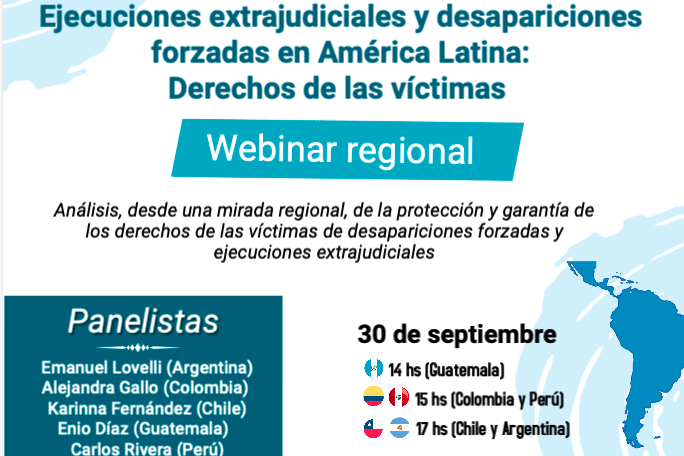
On 30 September 2020, the ICJ will host a regional webinar to discuss the protection and guarantee of the rights of victims of enforced disappearances and extrajudicial executions in Argentina, Colombia, Chile, Guatemala and Peru.
The webinar will be broadcast live on the ICJ’s Facebook page, at 14 hours (Guatemala time)/15 hours (Colombia and Peru time)/ 17 hours (Chile and Argentina time).
Contact
Kingsley Abbott, Coordinator of the Global Accountability Initiative, e: kingsley.abbott@icj.org
Carolina Villadiego Burbano, Legal and Policy Adviser, Latin America and Regional Coordinator of the Project, e: carolina.villadiego@icj.org
Rocío Quintero M, Legal Adviser, Latin America, e: rocio.quintero@icj.org
Human Rights Council: help bridge Yemen’s “acute accountability gap”
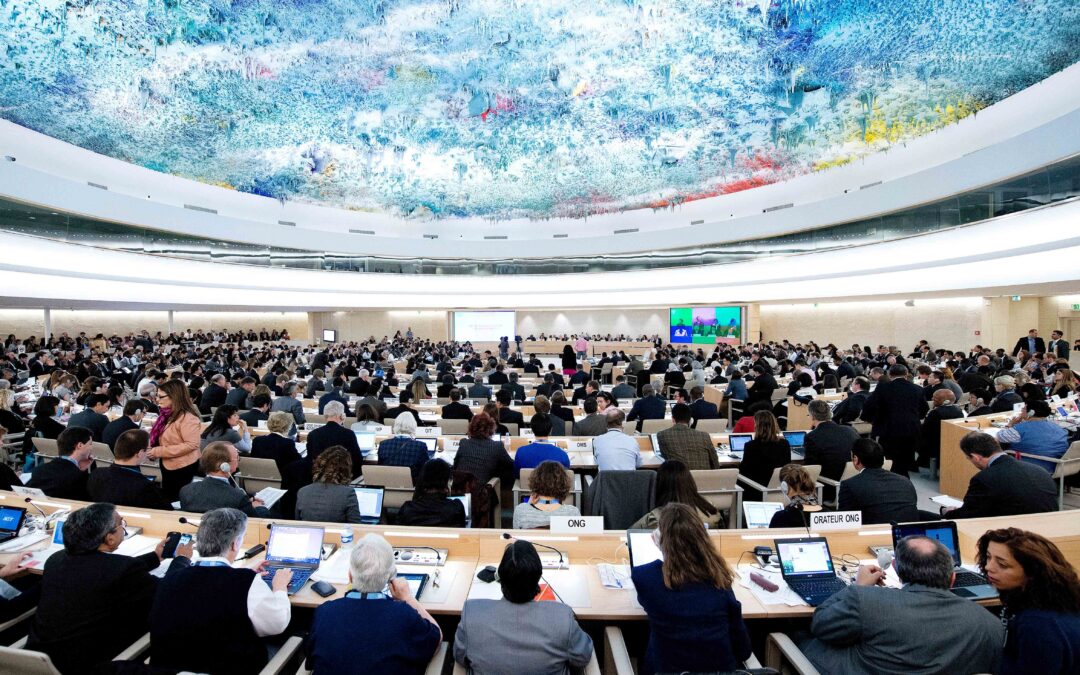
States should help pave the way towards credible accountability and redress for the people of Yemen by renewing and strengthening international investigations into war crimes, other serious violations of international humanitarian law, and grave human rights abuses during this 45th Session of the HRC, the ICJ and 23 other organizations said today.
Yemen is suffering from an “acute accountability gap,” according to the UN Group of Eminent Experts (GEE) on Yemen, which released its third report on September 9, 2020.
With COVID-19 threatening the lives and livelihoods of millions across Yemen, peace talks floundering, and airstrikes, shelling and attacks impacting civilians once again increasing, the reality for millions of Yemeni civilians is growing ever more bleak.
This session, the Human Rights Council has the opportunity to pave the way towards credible accountability and redress for victims and survivors in Yemen.
People in Yemen have experienced grave abuses since the conflict began in 2014, when Ansar Allah (the Houthi armed group) and military units loyal to former president Ali Abdullah Saleh took control of the capital, Sana’a, and escalated in 2015 when the Saudi/UAE-led coalition militarily intervened on the side of the Yemeni government.
With the conflict in its sixth year, millions of Yemenis are without adequate food, water, shelter or healthcare. The parties to the conflict impede the flow of life-saving goods into and around the country, attack critical infrastructure, and misdirect goods and their revenues to their own coffers and loyalists.
Thousands of civilians have been killed, wounded and otherwise harmed by airstrikes that violate international humanitarian law, indiscriminate shelling and the use of banned anti-personnel landmines.
The societal fabric has torn, with expression, speech, peaceful protest and movement increasingly restricted, and political and other identity-based divisions weaponized by those in power.
The human rights and humanitarian catastrophe in Yemen is man-made, and was avoidable. The parties to the conflict continue to hold the vast majority of power in and over Yemen.
For Yemen’s trajectory to change, the behavior of the parties to the conflict and their backers needs to change. As of September 2020, perpetrators have gone unpunished, states responsible for violations have faced no real consequences, parties have rarely acknowledged fault or taken measures to protect civilians, suppliers keep the arms used for international humanitarian law violations, and victims have been denied justice and redress.
In 2017, the Council established the GEE to report on violations of international law in Yemen and, where possible, to identify those responsible. The Council renewed the GEE’s mandate in 2018 and 2019, despite opposition from the Saudi/UAE-led coalition.
In its third report, the UN experts found the international community “can and should” do more to “help bridge the acute accountability gap” in Yemen.
The experts provided a list of specific recommendations, including for the Security Council to refer the situation in Yemen to the International Criminal Court and to expand the list of persons subject to Security Council sanctions.
The GEE supported the establishment of an investigative body, similar to the International, Impartial and Independent Mechanism for Syria, and specifically called on the Council to ensure the situation of human rights in Yemen remains on its agenda, including by ensuring adequate resources are provided to the GEE for the collection, preservation and analysis of information related to violations and crimes.
In the longer term, the Group encouraged “further dialogue about the creation of a special tribunal such as a ‘hybrid tribunal’ to prosecute cases of those most responsible,” reiterated the importance of victims’ right to a remedy, including reparations, and called for human rights to be “at the heart of any future peace negotiations,” including that “no steps are taken that would undermine respect for human rights and accountability, such as granting blanket amnesties.” 2
The GEE also reiterated concerns that states supplying arms to parties to the conflict, including to Saudi Arabia and the UAE, may be violating their obligations under the Arms Trade Treaty, and that this support may amount to aiding and assisting internationally wrongful acts.
Today, 24 Yemeni, regional, and international civil society organizations, including the ICJ, came together to call on the Council to endorse the GEE’s report, including its findings on accountability, and to take concrete steps this Council session to pave the way towards credible justice for Yemen.
The 24 organizations are calling on the Council to renew and strengthen the GEE’s mandate this September, including to collect, consolidate, preserve and analyze evidence related to, and clarify responsibility for, the most serious crimes under international law and violations of international law committed in Yemen since 2014.
The organizations are also calling on the Council to task the GEE with issuing a special report advising states on practical steps they can take to help ensure justice and redress for the tens of thousands of Yemeni civilians unlawfully harmed by the warring parties throughout this conflict.
Universal Periodic Review of the USA: ICJ and other groups make submission
Today, the ICJ, jointly with the World Organisation against Torture (OMCT) and REDRESS, made a submission to the UN Universal Periodic Review (UPR) of the United States of America.
The joint submission focusses on the United States’ longstanding failure to:
(1) provide effective remedy and redress, including medical care, and
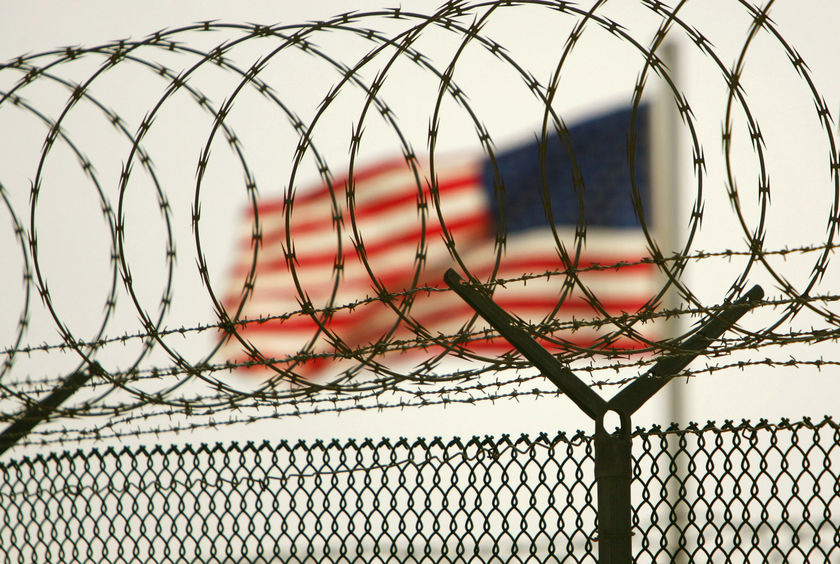
(2) guarantee fair trials to the “High Value Detainees” who are still held in Guantánamo, including Mr. Mustafa al Hawsawi.
Through a system of classifications, isolation, detention and counter-terrorism related policies the United States’ government is preventing a category of victims of torture and other ill-treatment from obtaining redress, fair trials and is securing impunity for perpetrators, contrary to recommendations in the previous UPR cycles.
For 18 years, the United States government has been violating numerous international human rights treaties it has ratified, first and foremost the Convention against Torture and Other Cruel, Inhuman or Degrading Treatment or Punishment and the International Covenant on Civil and Political Rights. Such violations deserve serious attention in the upcoming UPR review.”
USA-UPR Review-Advocacy-non-legal submissions-2019-ENG (submission in PDF)
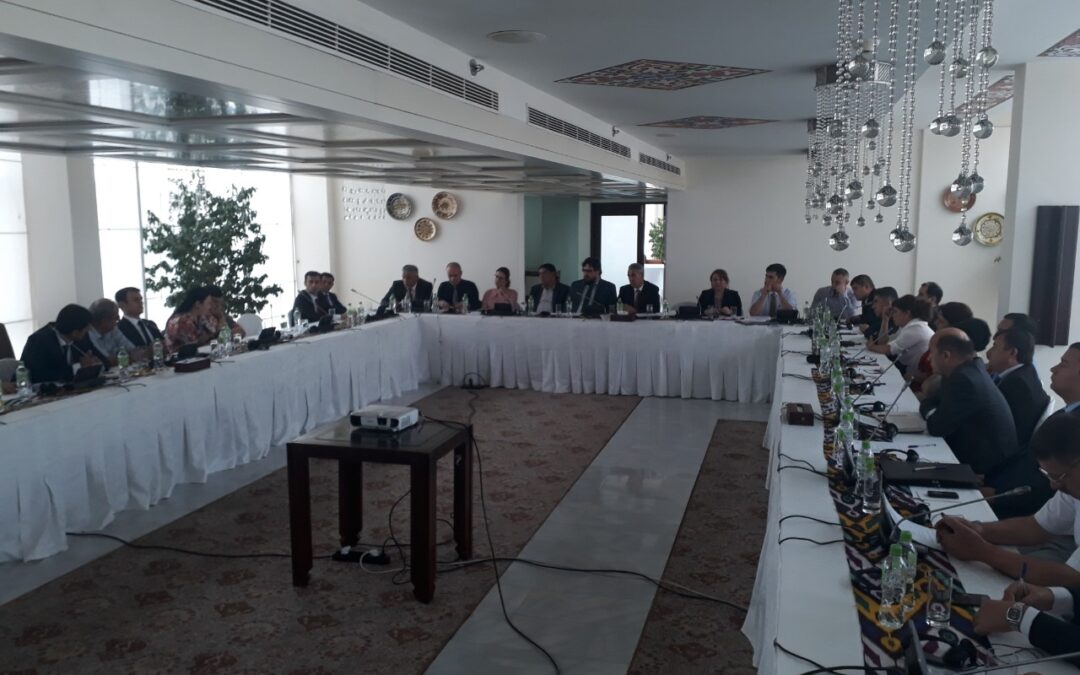
Tajikistan: event on accountability for ill-treatment in detention: law, practice, solutions
Today, the International Commission of Jurists (ICJ) in cooperation with the Civil Society Coalition Against Torture and Impunity in Tajikistan and the Union of Lawyers of the Republic of Tajikistan hold the final event within the framework of its Global redress and accountability initiative.
This event presents an opportunity to discuss measures to prevent impunity and ensure accountability for the use of torture and cruel, inhuman and degrading treatment (CIDT) in Tajikistan.
The findings of the research on the key challenges for effective investigation of torture and CIDT, carried out by the Coalition Against Torture under the initiative, will be presented at the event. The ICJ will launch its compilation of the cases decided by the UN Human Rights Committee concerning allegations of torture in Tajikistan.
Background information:
The ICJ’s Global redress and accountability initiative focused on seven countries (Cambodia, Mozambique, Myanmar, Nepal, Tajikistan, Tunisia and Venezuela) and it aimed to combat impunity and promote redress for gross human rights violations.
It concentrates on the transformative role of the law, justice mechanisms and justice actors, seeking to achieve greater adherence of national legal and institutional frameworks with international law and standards so as to allow for effective redress and accountability; more independent justice mechanisms capable of dealing with challenges of impunity and access to redress; and judges, lawyers, human rights defenders, victims and their representatives that are better equipped to demand and deliver truth, justice and reparation.
Agenda here.
Recent News
 HRC63: ICJ Calls for Renewal and Strengthening of the Venezuela Fact-Finding Mission21 Sep 2026
 Joint Statement: Attacks on the Rule of Law, Judicial Independence and Access to Justice in Zambia17 Sep 2026
 HRC63: ICJ Raises Concern over Widespread and Systematic Arbitrary Detention in Egypt16 Sep 2026
 Myanmar: As armed conflict rages and military rule continues, critical measures can be taken towards eventual justice and accountability for victims of Enforced Disappearance10 Sep 2026