Sep 11, 2017 | News
The Government of Myanmar must do everything in its power to respect and protect human rights during military operations in northern Rakhine State, said the ICJ today.
These military operations have reportedly resulted in widespread unlawful killing and the displacement of more than 200,000 people in response to attacks attributed to ARSA.
The ICJ called on Myanmar’s government to act as swiftly as possible to address the root causes of violence, discrimination and under-development in Rakhine, as well as for enhanced engagement by the international community in efforts to effectively address the situation, and to take measures to ensure that security operations are conducted in accordance with international human rights standards.
The military operations follow attacks by ARSA on August 25 on police posts and a military base in which at least 12 police, military and government officials were killed, along with a large number of attackers (according to government figures).
In the wake of the attacks on 25 August, the military launched what it has termed as a “clearance operation,” and the government announced that parts of northern Rakhine State have been designated as a “military operations area.”
“The attacks attributed to ARSA constitute serious crimes for which individual perpetrators should be brought to account through fair trials conducted in accordance with international standards,” said Sam Zarifi, ICJ’s Secretary General.
“But ‘clearance operations’ carried out by the Tatmadaw (Myanmar’s military) in an unlawful manner, and allegations of serious human rights violations, many amounting to crimes under international law, are on an entirely different scale and cannot be justified in the name of security or countering terrorism. These allegations must be promptly investigated in light of the Tatmadaw’s decades-long record of grave human rights violations and impunity throughout Myanmar,” he added.
“The Tatmadaw is responsible for the conduct of security operations in Rakhine as in other parts of the country, but the entire government remains responsible for upholding its international legal obligations to protect the rights of everyone living in Rakhine State – including the Rohingya Muslim communities that constitute the overwhelming majority of the population in the areas most affected by the violence,” Zarifi said.
“We also urge the State Counsellor Aung San Suu Kyi to use her immense electoral popularity and moral stature to push for full respect for human rights for the Rohingya as well as all others in Rakhine State.”
In the wake of the attacks on 25 August, the military launched what it has termed as a “clearance operation,” and the government announced that parts of northern Rakhine State have been designated as a “military operations area.”
These terms are not clearly prescribed in Myanmar’s laws, but in practice seem to be used to grant the military authority to ignore legal protections afforded under the country’s constitution and international standards.
“Whatever descriptive cover may be used to describe security operations, they must scrupulously respect international standards on the use of force.” Zarifi said.
“Myanmar’s government has the right, indeed the obligation, to protect all people in its jurisdiction from attacks by armed groups, but it must do so in conformity with international law. Experience from around the world has shown that greater respect for rule of law and human rights is the most effective response to terrorism,” he added.
This was unfortunately not the case following the arrests and detentions carried out during the military operations that followed attacks in October 2016.
Many of these arrests appear arbitrary and unlawful, as detainees were not given access to legal counsel, and deaths in custody have not been properly investigated.
Similar violations by the military have been documented recently in Shan and Kachin States.
Government authorities must ensure that arrest and detention in the context of the current operations in Rakhine State be conducted in accordance with national and international law, and respect the rights to liberty, freedom from arbitrary detention and a fair trial.
The most effective way for the government to respond to allegations of abuse by the security forces both in Rakhine and elsewhere in the country would be to take well-founded allegations seriously, and ensure that they are promptly, impartially and thoroughly investigated and those responsibility are brought to justice.
It is an unfortunate fact that investigations and prosecutions of human rights violations are rarely undertaken in regular courts, as national laws shield security forces from public criminal prosecutions, often by using military or special police courts.
Zarifi further said: “Ending the military’s impunity would establish much needed confidence in the government’s commitment to upholding the rule of law.”
“One immediate way to illustrate this commitment would be to cooperate with the UN Fact Finding Mission, which the ICJ and other organizations called for earlier in the year, to investigate allegations of human rights violations and abuses in Myanmar.”
“There are paths forward for the government to both respond to allegations of rights violations, and to show its commitment to finding solutions to the unacceptable state of affairs in Rakhine State.”
Myanmar-RakhineStateCrisis-PressReleases-2017-ENG (full press release)
Nov 4, 2016 | News
The Myanmar government’s recently announced plan to enlist civilians as a ‘regional police force’ in Myanmar’s troubled northern Rakhine State is likely to aggravate an already dire human rights situation, warned the ICJ today.
“In a country where the regular police and military are notorious for grave human rights violations, it’s difficult to extend the benefit of the doubt to poorly trained civilians,” said Sam Zarifi, ICJ’s Asia Director.
“Establishing an armed, untrained, unaccountable force drawn from only one community in the midst of serious ethnic tensions and violence is a recipe for disaster,” he added.
Over the last month the region has experienced increased tension and violence including attacks on border police and allegations of human rights violations by security forces, including attacks on Rohingya villages and sexual assaults.
Humanitarian assistance and independent monitors, including the media, remain severely restricted in the area.
The Rakhine State police are recruiting civilians for the force along ethnic and religious lines, officially excluding Rakhine state’s Muslims, most of whom belong to the area’s persecuted Rohingya community.
Recruits will reportedly be armed and paid by the border police after undergoing abbreviated training.
The ICJ considers that a civilian regional police force necessarily lacks the adequate training and oversight to perform policing functions in accordance with human rights and professional standards on policing.
Moreover, there does not appear to be an appropriate accountability mechanism in place to deal with instances of misconduct and human rights abuses, the ICJ says.
Such a ‘regional police force’ will be dangerously under qualified and prone to committing human rights violations, especially as they will answer to the military rather than civilian government, the Geneva-based organization adds.
According to the ICJ, if a new security authority is contemplated, it must be a professional police force, whose members are recruited and trained in accordance with principles of non-discrimination and respect for human rights.
Police must also be accountable to the law and subject to administrative and judicial oversight.
The ICJ calls on the governments to establish and enforce effective reporting and review procedures for all incidents involving the use of force.
The government and police must ensure the following accountability measures are in place:
- Police are not deployed without comprehensive training on duties including restrictions on use of force and human rights obligations;
- An effective process to review the use of force, conducted by independent administrative or prosecutorial authorities is available;
- Access to an independent judicial process for persons affected by the use of force (including dependents) or their legal representatives, which is capable of providing for effective remedy and reparation for any abuses;
- Superior officers must be held responsible if they know, or should have known, that law enforcement officials under their command are using force without taking all measures in their power to prevent, suppress or report such use.
Accountability and oversight is essential to protect human rights and prevent escalation of conflict: a new force should not be raised without these guarantees, the ICJ says.
Contact
Sam Zarifi, ICJ’s Regional Director for Asia & Pacific, t: +66807819002
Background
Under international law, any body authorized by the State to perform security functions and use force, including lethal force, must respect human rights in performing their functions.
The United Nations Basic Principles on the Use of Force and Firearms set standards on the qualifications and the training of Law Enforcement Officials.
These Principles also provide standards on the use of force consistent with protecting the right to life.
Under the Principles, all law enforcement officials must receive continuous and thorough professional training, subject to periodic review. They must be screened and selected to ensure they have appropriate moral, psychological and physical qualities for the effective exercise of their functions.
Training must include appropriate guidance on the use of force with special requirements to carry firearms.
It must focus on issues of police ethics and human rights, especially in the investigative process, to alternatives to the use of force and firearms, including the peaceful settlement of conflicts, with a view to limiting the use of force and firearms.
Jun 30, 2016 | News
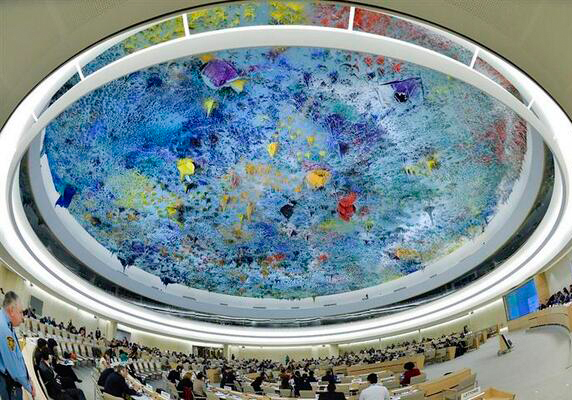
The United Nations Human Rights Council, in a defining vote, adopted a resolution on 30 June 2016, on “Protection against violence and discrimination based on sexual orientation, and gender identity,” to mandate the appointment of an independent expert on the subject.
It is a historic victory for the human rights of anyone at risk of discrimination and violence because of their sexual orientation or gender identity, a coalition of human rights groups said today. This resolution builds upon two previous resolutions, adopted by the Council in 2011 and 2014.
The Core Group of seven Latin American countries – Argentina, Brazil, Chile, Colombia, Costa Rica, Mexico, Uruguay – and 41 additional countries jointly presented the text.
The resolution was adopted by a vote of 23 in favor, 18 against and six abstentions.
“This is truly momentous,” said Micah Grzywnowicz, of the Swedish Federation for LGBTQ Rights (RFSL). “This is our opportunity to bring international attention to specific violations and challenges faced by transgender and gender non-conforming persons in all regions. It’s time for the international community to take responsibility to ensure that persons at risk of violence and discrimination because of gender identity are not left behind.”
“It’s a historic resolution,” said Josefina Valencia, of the International LGBTI Association for Latin America and the Caribbean, ILGA LAC. “Latin America has played a very important role to build a common course for the advancement of our human rights. We are proud of the international solidarity and the commitment shown by States for equality.”
The positive vote responds to a joint campaign of a record 628 nongovernmental organizations from 151 countries calling on the Human Rights Council to adopt the resolution and create the independent expert.
“It is important to note that around 70 percent of the organizations are from the global south,” said Yahia Zaidi of MantiQitna Network. “This is a powerful cross-regional message of strength to the UN to protect the rights of LGBTI persons. The independent expert will be a focal point for all violations based on SOGI and hence help grassroots organizations to better utilize the otherwise complex labyrinth of the UN system.”
The expert will be tasked with assessing implementation of existing international human rights law, identifying best practices and gaps, raising awareness of violence and discrimination based on sexual orientation and gender identity, engaging in dialogue and consultation with states and other stakeholders, and facilitating provision of advisory services, technical assistance, capacity-building, and cooperation to help address violence and discrimination on these grounds.
“To have an independent expert can be a ‘game-changer’ in counteracting violence which fuels the HIV epidemic in key populations and more specifically in LGBT communities,” said Alain Kra of Espace Confiance.
“It will ease the work of all human rights defenders and it is essential for our governments and people to have the knowledge on how to protect LGBT communities from any violence and discrimination they face,” added Joleen Mataele of the Tonga Leiti’s Association.
Although a number of hostile amendments seeking to introduce notions of cultural relativism were adopted into the text by vote, the core of the resolution affirming the universal nature of international human rights law stood firm.
The International Commission of Jurists believes that the UN Human Rights Council made history by creating a mandate empowering a UN Independent Expert specifically to address human rights violations perpetrated against people in all regions of the world because of discrimination against their real or imputed sexual orientation or gender identity.
Results of the vote
Voting in favor of the resolution
Albania, Belgium, Bolivia, Cuba, Ecuador, El Salvador, France, Georgia, Germany, Latvia, Macedonia, Mexico, Mongolia, Netherlands, Panama, Paraguay, Portugal, Republic of Korea, Slovenia, Switzerland, United Kingdom, Venezuela, Vietnam
Voting against the resolution
Algeria, Bangladesh, Burundi, China, Congo, Cote d’Ivoire, Ethiopia, Indonesia, Kenya, Kyrgyzstan, Maldives, Morocco, Nigeria, Qatar, Russia, Saudi Arabia, Togo, United Arab Emirates
Abstaining on the resolution
Botswana, Ghana, India, Namibia, Philippines, South Africa
Organizations supporting this statement:
- Access Chapter
- AIDES France
- Amnesty International
- ARC International
- Clóset de Sor Juana AC
- Egale Canada Human Rights Trust
- Espacio de Mujeres Lesbianas Salvadoreñas por la Diversidad (ESMULES)
- Federatie van Nederlandse Verenigingen tot Integratie van Homoseksualiteit – COC Nederland (Netherlands)
- Foundation for SOGI Rights and Justice (FORSOGI), Thailand
- FRI, the Norwegian Organisation for Sexual and Gender Diversity
- GALANG Philippines
- GATE – Global Action for Trans* Equality
- Human Rights Law Centre
- Human Rights Watch
- Iranti-org (South Africa)
- International Commission of Jurists
- ILGA LAC, Asociación Internacional de Lesbianas, Gays, Bisexuales, Trans e Intersexuales para América Latina y el Caribe
- International Lesbian, Gay, Bisexual, Trans and Intersex Association (ILGA)
- Lesbians, Gays and Bisexuals of Botswana (LEGABIBO)
- LGBT Denmark – the National Organization for Gay Men, Lesbians, Bisexuals and Transgendered People
- MantiQitna Network
- OutRight Action International
- Pacific Sexual Diversity Network
- Pan Africa ILGA
- Proyecto Arcoiris, colectivo anticapitalista e independiente
- Samoa Faafafine Association
- Swedish Federation for LGBTQ Rights (RFSL)
- TLF Share Collective – Philippines
- Tonga Leitis Association
Dec 16, 2015 | Advocacy, Events
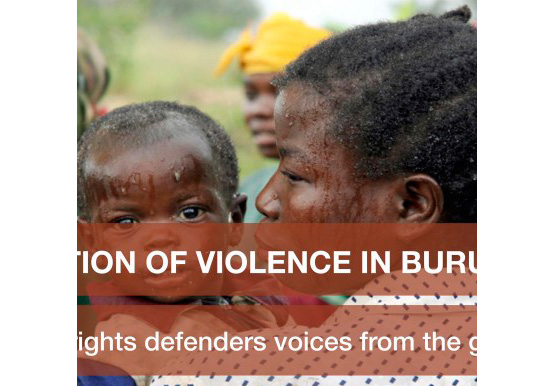
The ICJ joins other non-governmental organisations in co-sponsoring “Escalation of Violence in Burundi: Human rights defenders voices from the ground”, a side event to the Human Rights Council’s special session on Burundi, 17 December 2015.
The event will take place Thursday 17 December – 9.00-10.00 am in Room XII, Palais des Nations, Geneva
Panelists:
Mr Pierre Claver Mbonimpa, Association for the Protection of Human Rights and Incarcerated Persons (APRODH)
Ms Margaret Barankitse, Maison Shalom
Mr Anschaire Nikoyagize, Ligue ITEKA
Ms Carina Tertsakian, Human Rights Watch
The event will be moderated by Nicolas Agostini of FIDH.
The event will be webcast live by the International Service for Human Rights (ISHR).
Follow on twitter using the hash-tag #BurundiHRDs
A flyer for the event is available here: Burundi-UNHRC-Advocacy-SideEvent-2015
Nov 24, 2015 | News
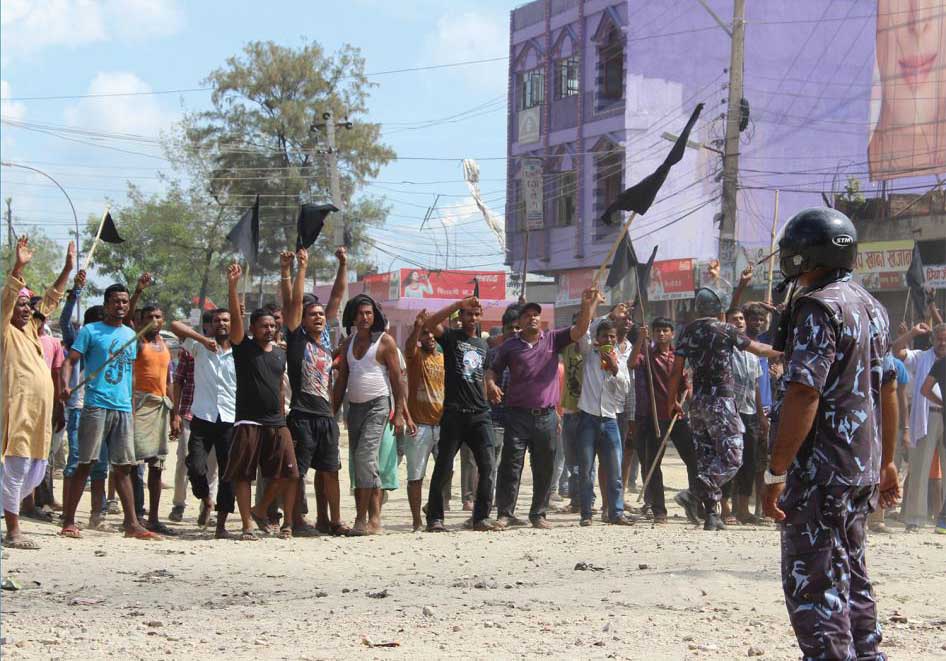
The government and all political parties, along with the country’s neighbors and international supporters, must act immediately to end the increasingly violent political crisis in the southern Terai region said the ICJ today.
The associated border blockade that has imposed severe shortages of necessary commodities throughout the country must also be ended, the ICJ added.
Over the weekend, three individuals were killed and at least another 28 individuals, including 15 police officers, were injured during clashes following an apparent impasse in talks among political parties trying to end the crisis over the newly adopted Constitution.
“Nepali authorities should promptly investigate and bring to justice the perpetrators – be they security forces or protesters – of any unlawful killings and other acts of violence committed during the ongoing protests in the Terai, and ensure that security forces refrain from the use of excessive force against civilians,” said Sam Zarifi, ICJ’s Asia-Pacific Director.
“At the same time, the Nepal government must address the severe shortage of commodities and the impact it has had on economic and social rights by prioritizing the most urgent needs while working to resolve the constitutional crisis,” he added.
The border blockade initiated nearly three months ago has had a deeply detrimental impact on the economic and social rights of the population countrywide, including the rights to food, water and sanitation, health and adequate housing, by causing severe shortages of essential commodities such as fuel, cooking gas and medical supplies throughout the country.
Madhesi groups have been demonstrating against Nepal’s new Constitution in the Terai since August 2015, protesting discriminatory aspects of the new Constitution that they argue would entrench marginalization, and have been staging a de facto blockade at the main border posts along the Nepal-India border since the Constitution was adopted on 20 September 2015.
India has been accused of imposing or collaborating in the blockade, an allegation which the Indian government has denied.
The ICJ has previously highlighted the lack of proper consultation in the drafting and adoption of the Constitution as well as the substantive human rights defects in its text, particularly the discriminatory provisions on the rights of women and some ethnic groups.
More than 45 persons, including 8 police personnel, have been killed during violent confrontations that have erupted between protesters and security forces since the demonstrations began, with allegations of excessive use of force by Nepali security forces as well as violent attacks by protesters against police personnel.
One Indian national was apparently killed by Nepali security forces at the Birgunj border last month.
“The Nepal government has a responsibility to protect the rights and security of its people and to re-establish the rule of law in the Terai,” said Zarifi. “However, Nepal must at all times respect the people’s right to peaceful protest and free assembly, and ensure that security forces exercise maximum restraint when responding to the demonstrations.”
The ICJ emphasizes that India and Nepal have an obligation to protect the human rights, including the economic and social rights, of persons impacted by their acts or the actions of those under their jurisdiction, and accordingly have an obligation to remove obstacles to the enjoyment of those rights.
“Nepal has an obligation to ensure that all available resources at their disposal have been mobilized to alleviate the human rights and humanitarian impact of the border blockade on the most vulnerable sections of the population,” Zarifi added. “The Nepal government must provide a clear plan to assess and address the impact of the blockade by prioritizing available supplies to the most urgently needed areas throughout the country, not just in Kathmandu.”
“The impact of the blockade is all the more acute because the country is still reeling from the 25th April earthquake and its ongoing aftershocks,” Zarifi said. “The international community, particularly neighboring India, should do all it can to ensure that urgent humanitarian assistance gets to the Nepali people.”
Contact
Nikhil Narayan, ICJ Senior Legal Adviser for South Asia, t: +977 9813187821 ; e: nikhil.narayan(a)icj.org
Photo credit: HRW