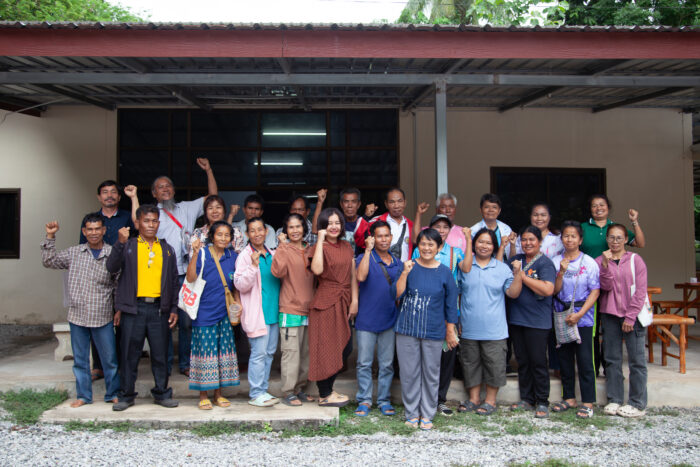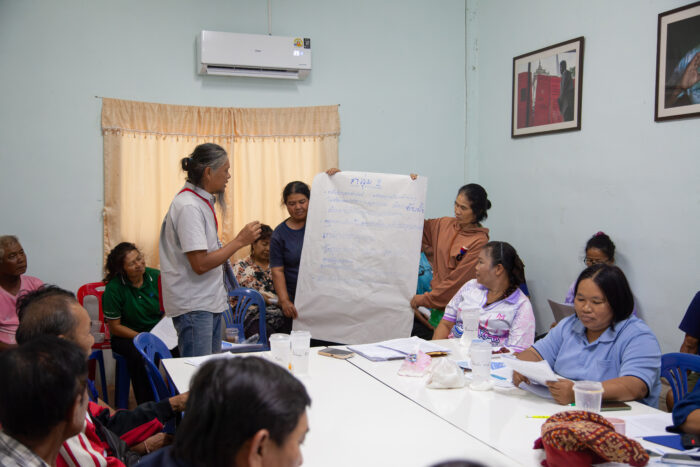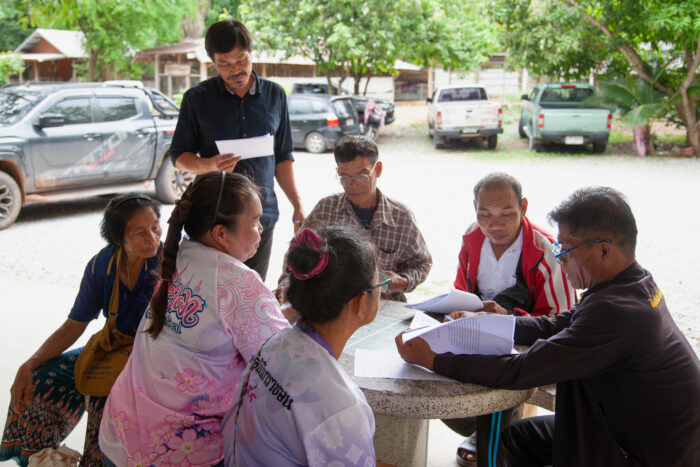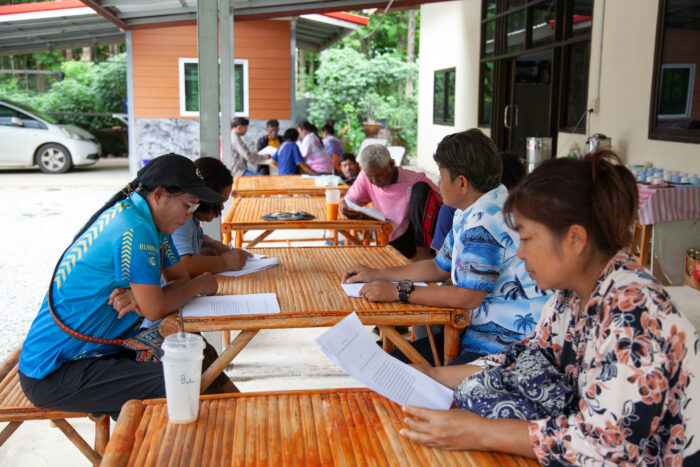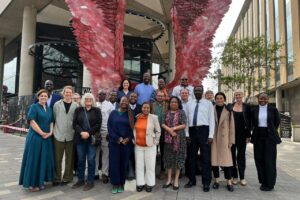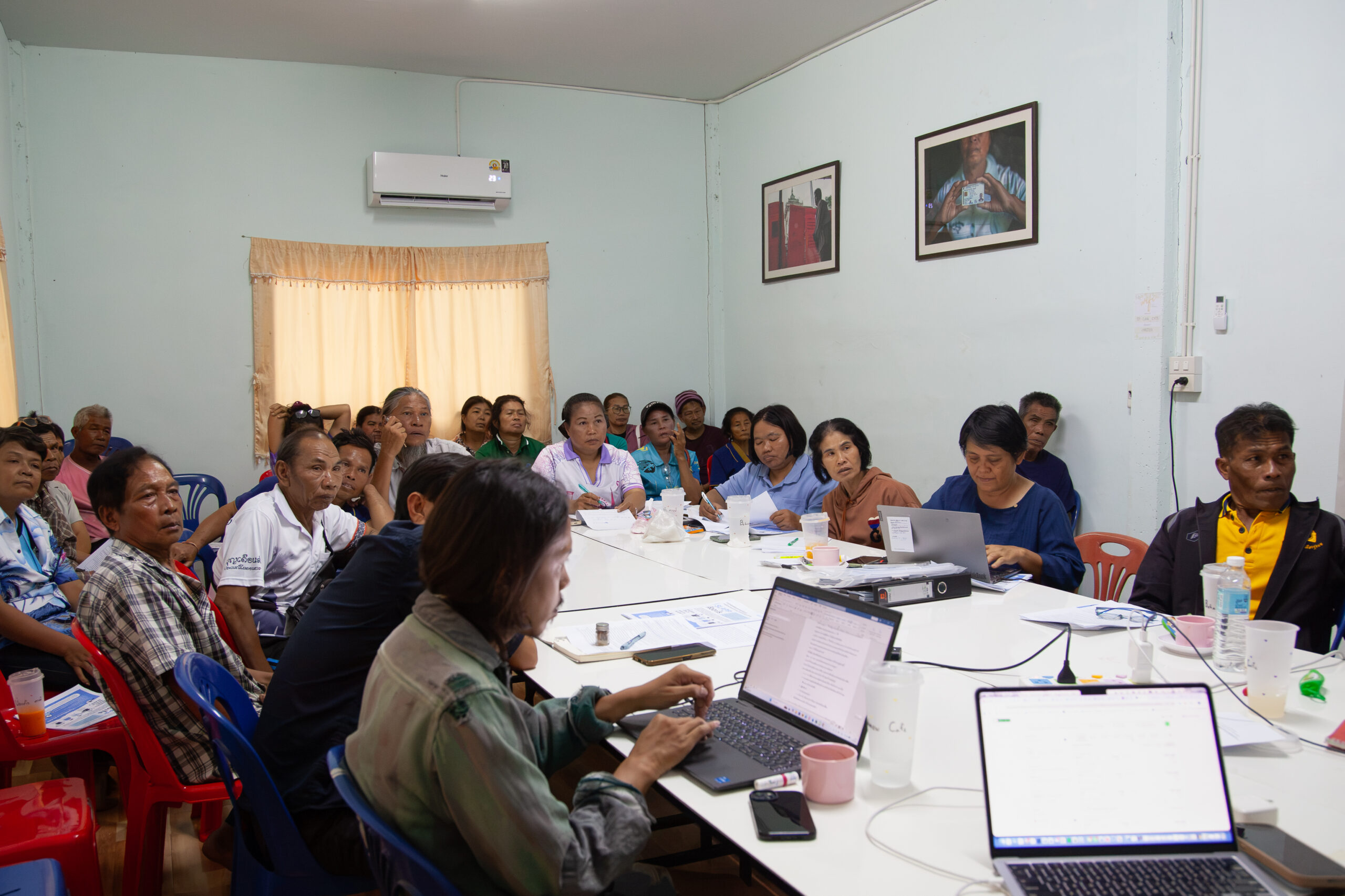
On 18 May 2026, the International Commission of Jurists (ICJ) and the Human Rights Lawyers Association (HRLA) convened a workshop in Chaiyaphum Province, Northeastern Thailand, with facilitation support provided by the Northeastern Labor Network. The event brought together 30 human rights defenders (HRDs) from northeastern Thailand.
Many of the participants work on concerns related to land and natural resources within a broad economic, social and cultural rights and environmental protection framework. Their advocacy work reflects the wider reality facing forest-dependent communities across the region, including the fact that many members of these communities have been charged with trespassing or encroachment despite having lived on the land for several years before the authorities declared it a protected forest area.
The workshop provided a space for defenders working across land, environmental, and civil-political rights to share first-hand accounts of the physical, digital, judicial, and psychological harassment they have faced in the course of their work or in legitimately exercising their rights to freedom of expression and peaceful assembly. Some described being sued by a private rubber company on criminal defamation charges after raising concern about the environmental impact of its operations; others denounced being sued by a politician after speaking out about labour rights abuses affecting local workers.
One participant recounted being warned by State authorities against discussing land disputes or advocacy, online or offline, under threat of prosecution under Section 116 of the Criminal Code (criminalizing “sedition” or incitement). Several community leaders present voiced similar concerns, describing how police had threatened them with charges under the Public Assembly Act if they organized gatherings. Others, who remain on disputed land, reported that park officials had visited their homes—at times armed—purportedly to survey their property.
The case of Den Khamlae, a land rights HRD, was raised as an illustration of the lethal risks defenders can face in this line of advocacy. Den, who had been charged with forest reserve encroachment in 2011, disappeared on 16 April 2016, while hunting, following a dispute with park authorities. A partial skull, discovered in the forest in March 2017, was later found, through DNA analysis, to have a high probability of belonging to him, but at the time of writing the cause of his death remains unresolved, and no one has been held accountable. His family has repeatedly called for an independent forensic examination of the remains — a request that has yet to be acted upon.
Discussions closed on the increasing use of so-called strategic lawsuits against public participation (SLAPPs) to silence HRDs across Thailand. SLAPPs consist of lawsuits or threats of litigation—often against environmental activists, human rights defenders, journalists, non-governmental organizations, academics and media workers—based on abusive tactics with the aim or effect of putting an end to public participation and silencing critical reports on matters of public interest. The discussions focused, among other things, on the adequacy of existing legal safeguards, and the status of the draft “Act on the Prevention of Strategic Lawsuits Against Public Participation”, with participants weighing whether the draft responds meaningfully to their concerns and supports their work on the ground.
They recommended that the draft law be strengthened to include definitions specifically addressing land disputes and called for legal recognition of the right of residents and local communities to access the land they depend on for their livelihoods and to play a role in protecting local ecosystems.
Background
The Northeastern region is home to the Lao-speaking people of Thailand, known as Isan, who have long faced discrimination and exclusion from developmental benefits that have accrued to Thailand’s central plains and Bangkok.
The region is also home to a diverse range of land rights struggles arising from the declaration of forest reserves, national parks, wildlife sanctuaries, and other protected zones that overlap with agricultural and other type of land on which people depend for their livelihood. Many affected communities have lived on and cultivated the land for generations, predating official land designations. Resettlement sites provided to affected communities often lack adequate basic infrastructure, such as access to water, falling short of the requirements for adequate housing under international law and standards.
Thailand’s existing anti-SLAPP provisions — Sections 161/1 and 165/2 of the Criminal Procedure Code (2019)—have proven inadequate, applying only to private criminal complaints. While the Recommendations of the President of the Thai Supreme Court, published on 29 May 2026, on the adjudication of cases filed in bad faith, have sought to provide clarity on cases falling under Section 161/1, they still cannot close the gaps, particularly those brought through public prosecutions and civil proceedings.
A recent amendment to the Organic Act on Anti-Corruption similarly falls short, applying solely to cases before the National Anti-Corruption Commission (NACC). The Ministry of Justice’s draft Anti-SLAPP Act remains stalled, with no public progress announced since its public hearing in April 2025.
This workshop is part of a series of regional consultations being held by the ICJ and its partners across Thailand. Through these consultations, the ICJ will document threats, intimidation, reprisals, and SLAPPs faced by HRDs—with particular focus on those from ethnic, ethno-religious, and indigenous communities—and conduct knowledge-sharing sessions to ensure that defenders’ concerns are reflected in ongoing legislative processes, including the current SLAPP law reform effort.
Further reading
Dictating the Internet: Curtailing Free Expression and Information Online in Thailand
Thailand: New law protecting SLAPPs marks progress but much more is needed
Thailand: Supreme Court’s Guidance on bad faith cases welcome, despite significant gaps
Contacts
Sanhawan Srisod, Senior Legal Adviser, Legal and Policy Office, e: sanhawan.srisod@icj.org
Saovanee Kaewjullakarn, Associate Legal Adviser, ICJ Asia and the Pacific Programme, e: saovanee.kaewjullakarn@icj.org