
UN should ensure independent oversight of UN Counter-Terrorism architecture
There is a critical need for UN Member States and Secretary-General to use a new UN Global Counter-Terrorism Strategy to develop an independent oversight mechanism to assess and mitigate harm from counterterrorism measures.
UN: human rights are essential to an effective counter-terrorism strategy (ICJ Statement)
At a UN dialogue on counter-terrorism, the ICJ warned States and UN institutions against the use of overbroad and ill-defined concepts in the 7th revision of the UN Global Counter-Terrorism Strategy, because they could breach the principle of legality and undermine protections under international human rights law.
The ICJ intervened today in the virtual two-day dialogue with human rights and civil society partners on the theme of “Building a Better Paradigm to Prevent and Counter Terrorism,” organised by the United Nations Office of Counter-Terrorism (UNOCT) and the Permanent Mission of Spain to the United Nations.
The Dialogue brings together Member States, UN entities, human rights representatives, women groups, youth and civil society actors, as well as experts and other stakeholders for a practical exchange of views on how to address terrorism and violent extremism while safeguarding and promoting human rights, in particular the rights of women, children and victims of terrorism.
The ICJ Statement reads as follows:
“Madam Special Rapporteur, Your Excellencies, Colleagues,
Thank you very much for the organizing this consultation.
The International Commission of Jurists has been working for decades to ensure that counter-terrorism measures are compliant with, and do not lead to violations and abuses of human rights and the rule of law.
The ICJ has produced authoritative guidance, such as the ICJ Berlin Declaration on Upholding Human Rights and the Rule of Law in Combating Terrorism of 2004 and a four-year study concluded in 2009 by the ICJ Eminent Jurists Panel on Terrorism, Counter-Terrorism and Human Rights, the result of 16 hearings across the globe.
That Panel concluded that the approach many States had taken in short-circuiting foundational rule of law and human rights principles caused “enduring long term harm.”
The ICJ has been insistent that countering terrorism and protecting human rights are important objectives that not only are not in conflict, but are part of a single shield of protection that States must provide for.
This finding is as valid today as it was then, as the Global Counter-Terrorism Strategy itself recognizes that “when counter-terrorism efforts neglect the rule of law … and violate international law … they not only betray the values that they seek to uphold, but they may also further fuel violent extremism that can be conducive to terrorism.”
In this regard, we are concerned at the possible use in the UN Global Counter-Terrorism Strategy of undefined concepts and terms, like “violent extremism”, “violent nationalism”, political concepts of “far right” and “far left” or “extremism”.
The abusive invocation of these terms carries risks for the protection of freedom of expression, freedom of religion and belief, freedom of association and the right to political participation, all protected under international human rights law.
Critically, from a rule of law perspective, legal certainty is a key principle of human rights law that informs the requirement that any legitimate restrictions of human rights including when countering terrorism must be prescribed by law.
Any undefined or widely defined concept of terrorism or extremism should not be promoted or applied in international instruments, standards or strategies, that, where incorporated into national laws and practice, would lead to violations of this international human rights law violations.
In this regard, we share the assessment by the Special Rapporteur on the promotion and protection of human rights while countering terrorism in her 2020 report to the UN Human Rights Council (A/HRC/43/46) and by the OHCHR in its Report on best practices on countering violent extremism (A/HRC/33/29, para. 19).
Concepts like “violent extremism”, nationalism, political opinions and other forms of religious, ethnic, or other belief or opinion, however extreme, cannot be part of the GCTS, as they are otherwise protected by international human rights law guarantees to protect the rights to freedoms of expression, religion or belief, and/or of association.
Furthermore, their insertion would water down the anti-terrorism focus of the strategy and lead the way to the application of very pervasive measures clearly restrictive of human rights for conduct that is not linked to terrorism.
The Global Strategy should focus exclusively on countering terrorism. Any more expansive approach will risk leading to measures in breach of human rights law and, therefore, of the founding values of the UN under article 2 of the Charter.
I thank you.”
(The ICJ Statement is at minute 2:48:21)
ICJStatement-OCTSpainVirtualDialogue-SessionI-final (download the statement)
Contact:
Massimo Frigo, ICJ UN Representative, e: massimo.frigo(a)icj.org, t: +41797499949
UN Counter-Terrorism review needs human rights focus
The ICJ has submitted information and recommendations for the upcoming review of the UN Global Counter-Terrorism Strategy, emphasising the need to strengthen the role of human rights in the framework and implementation of the strategy.
The submission was prepared in response to a call for civil society input, from the UN Office of Counter-Terrorism (UNOCT).
It summarizes recent ICJ activities relevant to implementation of the strategy, and urges among other things:
- removal of impediments to civil society participation in certain UN or other global policy-making processes;
- recognition that not only is violation of human rights in the context of countering terrorism, whether through arbitrary application or deliberate abuse, in itself unlawful and unacceptable, it also undermines the credibility and effectiveness of the struggle against terrorism;
- better recognition and implementation of the human rights of victims of terrorism;
- mainstreaming of human rights throughout the text and implementation measures for the Strategy as a whole;
- establishment of an independent human rights oversight entity within the UN counter-terrorism architecture;
- creation of a Civil Society Unit within UNOCT;
- increased resources for the UN Special Rapporteur on the promotion and protection of human rights and fundamental freedoms while countering terrorism;
- increased engagement of the UN counter-terrorism architecture with OHCHR and with other UN Special Procedures;
- benchmarks and indicators for assessing States’ compliance with human rights obligations in implementation of the GCTS.
The complete submission can be downloaded in PDF format here: UN-Advocacy-GCTStrategy-2019
For more information contact un(a)icj.org

South Africa: ICJ submission to the Committee on Economic, Social and Cultural Rights
Today, the ICJ made a submission to the Committee on Economic, Social and Cultural Rights in advance of Committee’s examination of South Africa’s initial periodic report under the International Covenant on Economic, Social and Cultural Rights. South Africa ratified the Covenant in 2015.
When CESCR convenes to consider South Africa’s report on 2-3 October 2018, it will therefore be the first time that the Committee has the opportunity to review a report from South Africa on the implementation of its Covenant obligations.
In its submission, supplementing submissions made by a range of South African civil society organizations, the ICJ drew the Committee’s attention to:
a) South Africa’s incomplete discharge of its obligations in terms of the Covenant;
b) The South African Government’s need for guidance from the Committee on the discharge of its obligations in terms of the right to work;
c) The South African Government’s need for guidance from the Committee on the discharge of its obligations in terms of the right to an adequate standard of living;
d) The South African Government’s failure to report effectively and accurately on its efforts to realize the ESC rights of persons with disabilities;
e) The uncertain status of the South African Government’s commitment to the enactment of legislation to ensure the implementation of the Covenant;
f) The uncertain status of the South African Government’s intention to ratify the Optional Protocol to the Covenant; and
g) The uncertain status of the South African Government’s declaration with regard to the right to education.
The ICJ’s submission invites CESCR to make various specific recommendations to the Government of South Africa in its Concluding Observations on each of these issues. Broadly, the ICJ also invites CESCR to recommend to the Government of South Africa time-bound commitments to processes leading to:
1. The full domestication of Covenant in South African law;
2. A comprehensive review of South Africa’s domestic laws and policies on ESC rights to ensure that they are implemented consistently with South Africa’s obligations in terms of the Covenant; and
2. The ratification of Optional Protocol to the International Covenant on Economic, Social and Cultural Rights.
The ICJ’s submission also supports submissions by civil society organizations and the South African Human Rights Commission inviting CESCR to recommend that South Africa withdraw its declaration relating to its “immediate” obligations in terms of the Covenant right to education.
Finally, the ICJ considers it critical that the South African Government reflect on the ways in which the Covenant to increases, alters and nuances the nature and content of its human rights commitments and obligations in terms of the realization of economic, social and cultural rights.
This the ICJ submits is particularly crucial in regard to rights which are entrenched in the Covenant but not the South African Constitution such as the right to work (Articles 6-8) and the right an adequate standard of living (Article 11).
In undertaking this process, the ICJ submits that due regard should be had the standards set out in the Covenant as interpreted by the Committee in its general comments.
SouthAfrica-ICJSubmissionCESCR-Advocacy-Non-legal submission-2018-ENG (full text, PDF)
Recent News
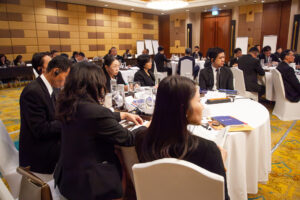 Thailand: Judges have a critical role to play in combating and ensuring accountability for torture and enforced disappearance16 Oct 2026
 Joint Letter: Urgent diplomatic action to halt further executions in eastern Libya13 Oct 2026
 Czech Republic: UN Committee on the Rights of the Child finds that immigration detention of children violated the prohibition of arbitrary detention and ill-treatment13 Oct 2026
 UN Human Rights Council once again navigates troubled waters to protect human rights in crisis situations, despite global setbacks.12 Oct 2026