Mar 17, 2016 | Advocacy, Non-legal submissions
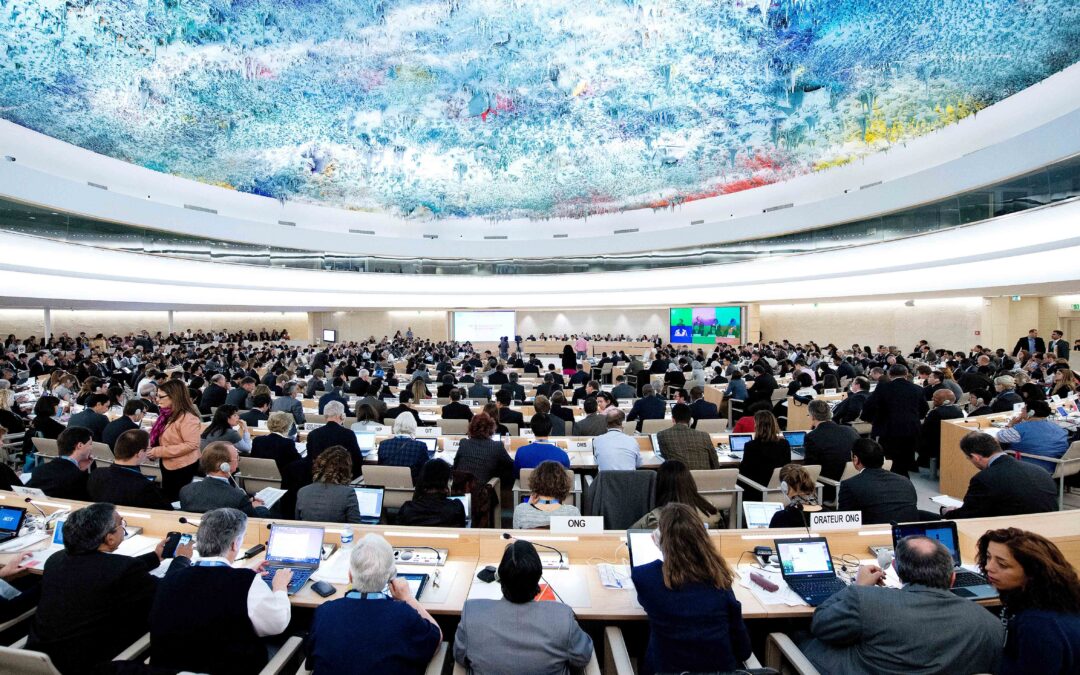
The ICJ today joined with the International Bar Association’s Human Rights Institute to make an oral statement on judges & lawyers in Myanmar, during the consideration of its Universal Periodic Review outcome by the UN Human Rights Council.
The statement:
“The International Bar Association’s Human Rights Institute (IBAHRI) and the International Commission of Jurists welcome Myanmar’s decision to accept recommendations made at the Universal Periodic Review relating to the administration of justice and the independence of the legal profession and call on the Government of Myanmar to implement the recommendations which it has accepted ‘in principle’ to reform the Bar Council Act to allow for the Bar Council to become a truly independent and self-governing association.
In order to ‘guarantee in law and practice that lawyers and judges can perform their professional functions without improper interference and legally form and join self-governing associations’, we call for the right to join such associations to be enshrined in law, and that the right of the first Independent Lawyers’ Association of Myanmar (ILAM) to register as an association be respected;
In order to ‘define professional legal standards and disciplinary procedures in conformity with the Basic Principles on the Role of Lawyers’, we call upon the government of Myanmar to engage in a consultation process with the legal profession and other stakeholders in relation to the revision of the Bar Council Act. The government should also commit sufficient funds to allow for the funding of the system created by the new Legal Aid Law.
We are encouraged by and support efforts by the Office of the Supreme Court of the Union to draft and implement a Code of Judicial Ethics.
Finally, we urge the Government to improve legal education and continue legal professional development including with regard to international human rights law and the UN human rights mechanisms.
We are glad to provide support in the realisation of these recommendations and will look for collaboration with the Government to that end.”
Mar 16, 2016 | Advocacy, Non-legal submissions
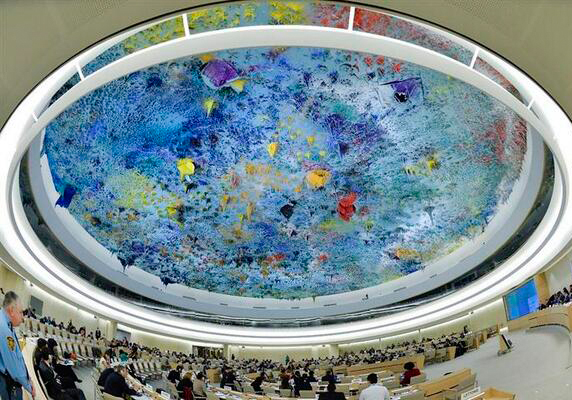
The ICJ today delivered an oral statement to the UN Human Rights Council, on the Universal Periodic Review of Nepal.
“The ICJ is concerned that the Government of Nepal has yet to implement many of the recommendations it accepted during the first UPR cycle, including several that reflect its international legal obligations regarding the new Constitution, investigation and prosecution of serious crimes, and establishment of credible transitional justice mechanisms.
The police continue to refuse to investigate conflict-era cases even when explicitly ordered by courts to do so. The transitional justice commissions do not enjoy the support of the victims and human right organizations, a year into their two-year mandate. Victims’ rights to truth, justice and reparation are not being respected, protected and fulfilled.
More than 59 persons, including 10 police personnel, were killed during recent protests, but as yet we are not aware of any impartial and effective investigation of the killings.
Many serious crimes under international law, including torture and enforced disappearance, still are not recognised as crimes under the Nepali penal code.
The ICJ therefore calls upon the Government to reconsider its position, and to accept and implement the UPR recommendations arising from this cycle, relevant to:
- Strengthening the constitutional protection of human rights;
- Amending the Truth and Reconciliation Commission Act, 2014, in line with international standards and Supreme Court orders;
- Establishing a credible transitional justice process;
- Preventing, investigating, and responding effectively to any use of excessive force by security forces;
- Ensuring prompt, independent and impartial investigations and, prosecution in cases of unlawful killings, whether the perpetrators are security forces or protesters;
- Amending the Penal Code to explicitly incorporate serious crimes under international law; and
- Ratifying relevant treaties, and accepting requests for visits of the Working Group on Enforced Disappearances, and Special Rapporteur on the right to truth.”
A more detailed written statement may be downloaded in PDF format here: HRC31-Advocacy-WrittenStatement-Nepal-2016
Sep 21, 2015 | Advocacy, Non-legal submissions
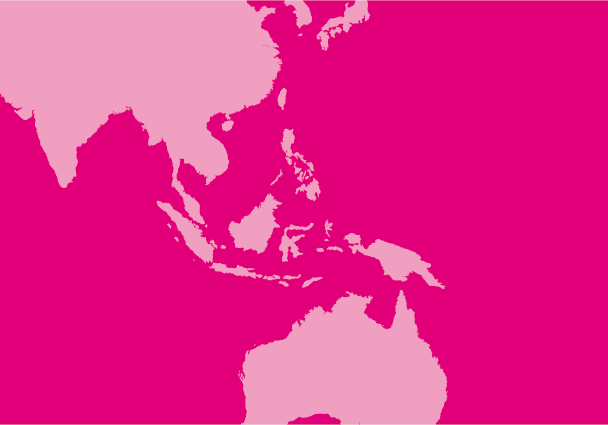
Today, the ICJ and Thai Lawyers for Human Rights (TLHR) made a joint submission to the Human Rights Council’s Working Group on the Universal Periodic Review in advance of the Human Rights Council’s review of Thailand in April/May 2016.
In their submission, the ICJ and TLHR expressed concern about the following issues:
(1) the impact of the new legal and institutional framework, imposed since the May 2014 coup d’état, on human rights in Thailand;
(2) instances of suspected enforced disappearance and torture; and
(3) issues concerning international human rights instruments and mechanisms.
A copy of the submission can be found here:
THAILAND-UPR SUBMISSION FINAL AS LODGED-Advocacy-Non legal submission-2015-ENG (full text in PDF)
Sep 21, 2015 | Advocacy, Non-legal submissions
Today, the ICJ made a submission to the Human Rights Council’s Working Group on the Universal Periodic Review in advance of the Human Rights Council’s review of Swaziland in April/May 2016.
In its submission, the ICJ expressed concern about the following issues:
1) independence and impartiality of the judiciary and fair trial rights; and
2) international human rights instruments and mechanisms.
A copy of the submission can be found here:
Swaziland-ICJ-UPR-SWAZI SUBMISSION FINAL AS LODGED-Advocacy-2015-ENG (full text in PDF)
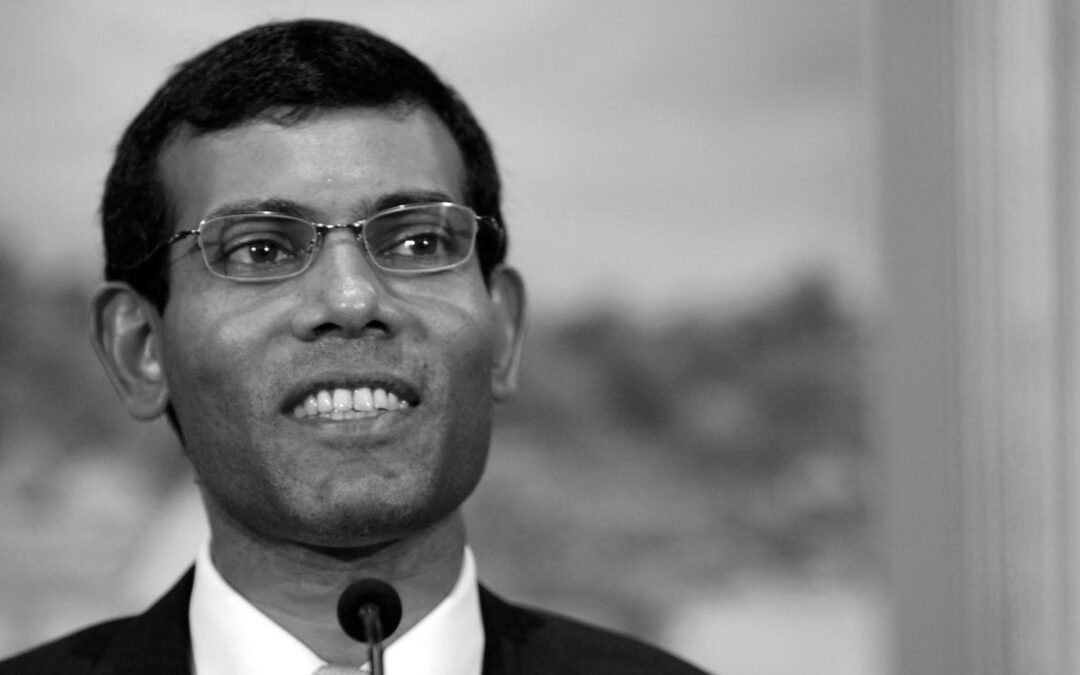
Sep 14, 2015 | Advocacy, Non-legal submissions
In advance of the UN Human Rights Council’s adoption of the outcome of its review of the Maldives’ human rights record as part of the Universal Periodic Review (UPR) process, the ICJ has submitted a written statement.
It highlights the Maldives’ failure to accept and implement a number of member states’ UPR recommendations.
In particular, the ICJ pointed out the urgent need for Maldives to accept and implement recommendations regarding the following issues, among others:
- Strengthening the independence and impartiality of the judiciary;
- Strengthening the independence and impartiality of the Judicial Service Commission;
- Strengthening the National Human Rights Commission, in accordance with the Paris Principles;
- Strengthening women’s representation in the judicial profession;
- Immediately releasing former president Mohamed Nasheed and other political prisoners, and ensuring the fairness of any further legal proceedings in such cases; and
- Safeguarding freedom of expression and media, association and peaceful assembly by investigating cases of human rights abuse and violations against journalists, civil society and human rights defenders, and taking effective measures to prevent further abuses
The Council will consider member states’ UPR recommendations for the Maldives during its 30th session on 24 September 2015, ahead of which the Maldives government will be expected to formally respond and indicate which of the recommendations it will commit to implement.