Feb 24, 2014 | Events, Training modules
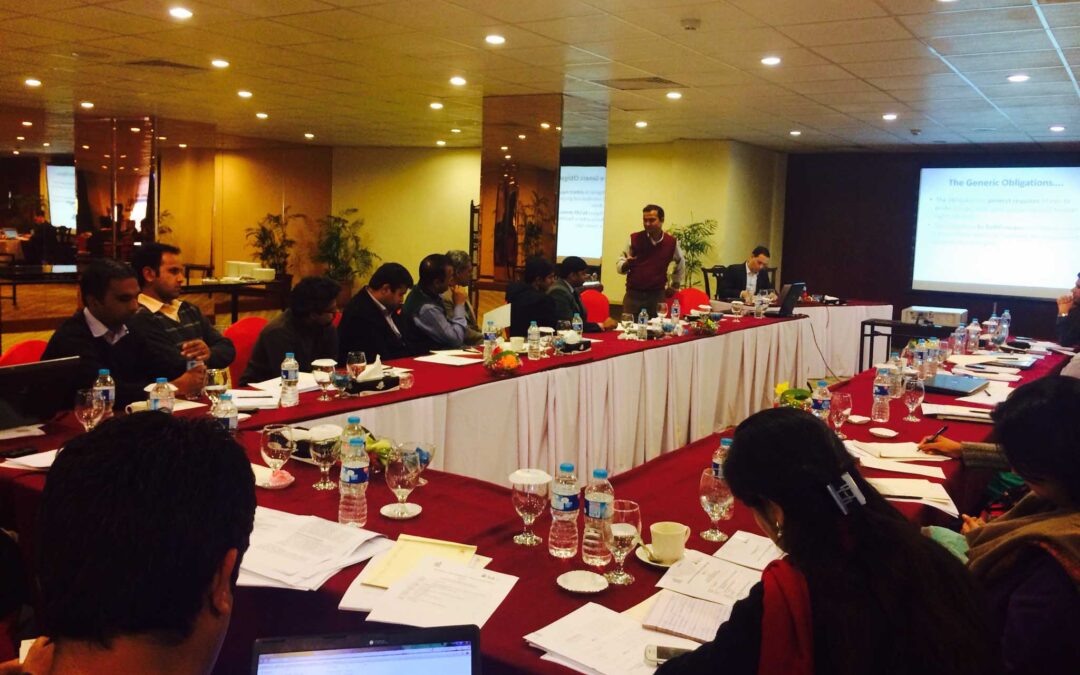
In partnership with the Human Rights Commission of Pakistan (HRCP), the ICJ conducted two-day workshops on NGO engagement with the United Nations, held in Pakistan on 18-19 and 21-22 February 2014.
The workshops, held in Lahore and Islamabad, focused on enhancing the meaningful participation of national NGOs with the UN human rights system. Participants included representatives from civil society working on a wide range of human rights issues, including enforced disappearances, education, violence against women and child rights.
Drawing from experiences of ICJ staff and participants, the workshops considered how international advocacy and engagement with the UN can benefit NGOs and addressed:
- The nature of international human rights law;
- State obligations under international human rights law;
- The UN human rights system;
- The Universal Periodic Review mechanism;
- The UN Special Procedures and the making of individual complaints to them;
- The UN Treaty Bodies, individual complaints and periodic reporting; and
- Documenting human rights violations.
Background materials on the Universal Periodic Review: (ENG) and (URDU)
Background materials on the UN Special Procedures: (ENG) and (URDU)
Background materials on the core functions of the UN Treaty Bodies: (ENG) and (URDU)
BAckground materials on periodic reporting to the UN Treaty Bodies: (ENG) and (URDU)
Sep 12, 2013 | News
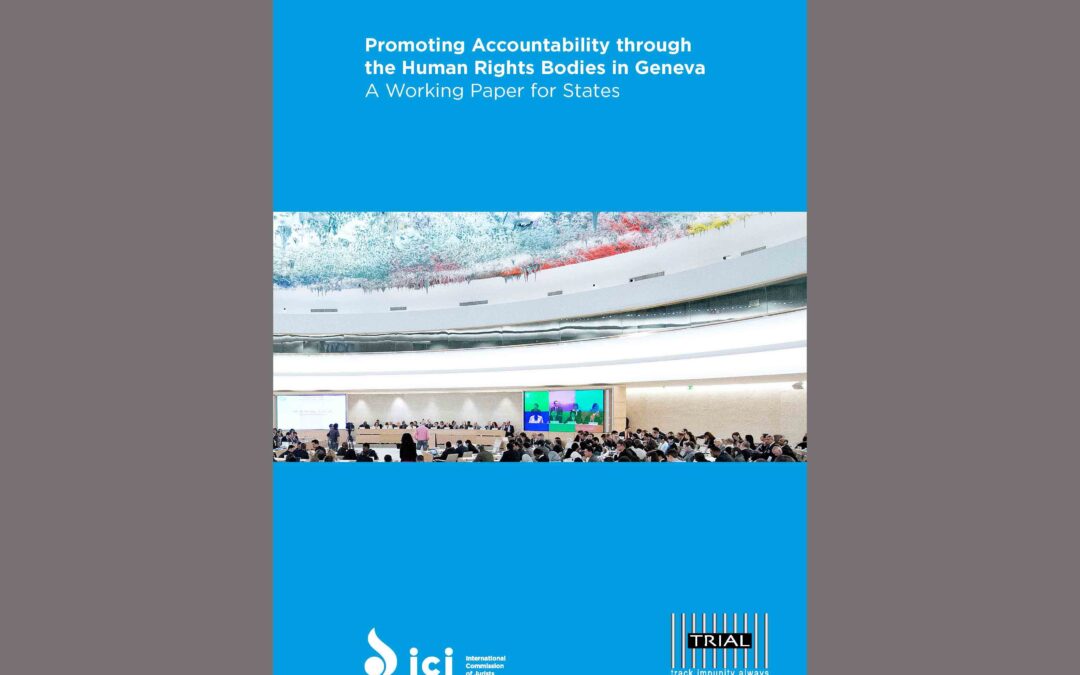
Yesterday, during the 24th session of the UN Human Rights Council, the ICJ and TRIAL (Swiss Association against Impunity) jointly held a parallel event on promoting accountability through human rights mechanisms in Geneva.
The event was co-sponsored by the Permanent Missions of Switzerland, Estonia and Costa Rica to the United Nations Office at Geneva.
A corresponding report produced by ICJ and TRIAL was also launched at this event in two versions, one aimed at civil society and another aimed at States.
Panellists at this event included Ian Seiderman of the ICJ, Gabriella Citroni of TRIAL and Theo van Boven, former Special Rapporteur on torture and other cruel, inhuman or degrading treatment or punishment and ICJ Honorary Commissioner.
Mona Rishmawi of the Office of the High Commissioner for Human Rights (OHCHR) chaired the event.
The main topic of this event was the ICJ-TRIAL report, which reviews the legal framework for promoting accountability and suggests possible action by civil society and States to engage with the human rights mechanisms in Geneva to better promote and achieve accountability for human rights violations.
The role of national mechanisms, such as national human rights institutions, working in cooperation with the UN mechanisms was also highlighted.
The report focuses specifically on the Human Rights Council and its subsidiary bodies, such as the Universal Periodic Review and the special procedures mechanisms.
OHCHR’s role was further emphasised in regards to sharing best practices as well as ensuring follow-up to issues of accountability as they come to the attention to the UN.
Apr 29, 2013 | News
The Bahrain authorities must fully cooperate with the UN mechanisms and implement the recommendations of the Bahrain Independent Commission of Inquiry (BICI) set up by the Government of Bahrain in June 2011.
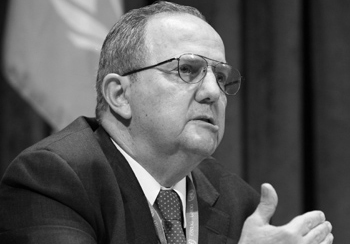
The ICJ further calls on the Bahrain authorities to ensure that the recommendations from the UN Universal Periodic Review process in September 2012 are implemented in full and in good faith and, to this end, immediately extend an invitation with specific dates to the UN Special Rapporteur on torture, Juan E. Méndez (photo).
The statement comes as the authorities in Bahrain effectively cancelled a visit of the Special Rapporteur for the second time, a previous visit in March 2012 also having been postponed at the last minute.
“As a former member of the BICI, I find it extremely disappointing that Bahrain has taken this decision for the second time. It keeps dangling the possibility of a visit when it is under pressure to do something about implementing the BICI recommendations,” said Sir Nigel Rodley, President of the ICJ. “One does not have to be a cynic to infer that once the pressure eases – for example, because the Human Rights Council has concluded its review of Bahrain’s human rights performance or the Formula One race is over – it can then withdraw its invitation. I hope the international community will take account of this pattern, when reacting to positive assurances from the authorities. Promises are no substitute for implementation.”
The report of the BICI, published in November 2011, documented numerous cases of torture and ill-treatment.
It further made crucial recommendations for reform so as to prevent these and other violations in the future, including effective investigations into all cases of torture and ill-treatment by an independent and impartial body; the establishment of a standing independent body to examine all complaints of torture or ill-treatment, excessive use of force or other abuses at the hands of the authorities; and the compensation and provision of remedies for all victims.
“The BICI’s recommendations included ones to address the serious problem of torture in Bahrain, a problem I had identified in the 1990s when I held the mandate Juan Mendez now discharges with consummate professionalism. One may perhaps be pardoned for considering that the only threat posed by the visit to the political situation is the fear of what information would be uncovered by the visit,” Sir Nigel Rodley concluded.
Contact:
Said Benarbia, ICJ Senior Legal Adviser of the Middle East and North Africa Programme, t: +41 22 979 3817, e-mail: said.benarbia(a)icj.org
UN Photo/Rick Bajornas

Mar 15, 2013 | Advocacy, Non-legal submissions
The ICJ today called on the Government of Sri Lanka to reconsider its rejection of key UPR recommendations on accountability and judicial independence and integrity.
In an Interactive Dialogue to consider the adoption of the outcome document on the Universal Periodic Review of Sri Lanka, the ICJ pointed to the urgent need for the Government to fully implement its legal obligations and commitment to initiate credible and independent actions to ensure justice, equity, accountability and reconciliation. Also pointing to the impeachment of the Chief Justice of Sri Lanka and attacks against the judiciary, the ICJ urged the Government to accept recommendations to strengthen and ensure judicial independence and the integrity of the judiciary.
The statement was made during the Human Rights Council’s 22nd regular session (25 February to 22 March 2013) under Item 6 (Universal Periodic Review), following the review of Sri Lanka in by the Council’s Working Group on the UPR.
SriLanka-HRC22-Item6-UPRSriLanka-NonLegalSubmission-2013 (download full statement in PDF)
SriLanka-UPR-StakeholderSubmission-LegalSubmission-2012 (go to webpage on the ICJ’s submission on the UPR of Sri Lanka)

Mar 14, 2013 | Advocacy, Non-legal submissions
The ICJ today called on the Government of Pakistan to reconsider its rejection of UPR recommendations on the death penalty and enforced disappearances.
Expressing deep regret over recent events in Pakistan reversing a de facto moratorium on the imposition of the death penalty in the country, the ICJ called on the Government to accept UPR recommendations to adopt an official moratorium with a view to abolishing the death penalty in law. The ICJ also called on Pakistan to accede to the Second Optional Protocol to the ICCPR and to ratify the International Convention for the Protection of All Persons from Enforced Disappearances.
The statement was made during an Interactive Dialogue on the adoption of the UPR of Pakistan (Item 6 of the Council’s agenda) during the 22nd regular session of the Human Rights Council (25 February to 22 March 2013).
Pakistan-HRC22-Item6-NonLegalSubmission-2013 (download full statement in PDF)
Pakistan-UPR-StakeholderSubmission-LegalSubmission-2012 (go to webpage on the ICJ’s submission on the UPR of Pakistan)