Feb 18, 2021 | News
The ICJ and more than 70 other non-governmental organisations, faith-based groups, and academic institutions urge the Biden Administration to engage constructively with the International Criminal Court (ICC).
The statement reads:
The undersigned organizations urge the Biden Administration to engage constructively with the International Criminal Court (ICC). The U.S. government’s support for the ICC could help secure justice for victims in situations from Myanmar to Darfur, just as it helped facilitate the February 4 historic conviction of a former leader of an armed rebel group for war crimes and crimes against humanity in northern Uganda.
There is an immediate need to act to reset U.S. policy regarding the ICC. Most urgently, we are alarmed by recent calls for the U.S. government to maintain or even expand the sanctions put into place by the Trump administration in June 2020 currently targeting the court’s work.
These actions were an unprecedented attack on the court’s mandate to deliver justice and the rule of law globally, an abuse of the U.S. government’s financial powers, and a betrayal of the U.S. legacy in establishing institutions of international justice. They were also an attack on those who engage with the court, including human rights defenders and victims. These extraordinary measures have put the U.S. at odds with many of its closest allies. They also have been challenged on constitutional grounds domestically.
Keeping in place the executive order authorizing sanctions would be inconsistent with the new administration’s laudable commitments to respecting the rule of law and pursuing multilateral cooperation in support of U.S. interests. It would also transform a shameful but temporary action into a standing license for other governments to attack multilateral institutions when they disagree with those bodies’ actions.
We call upon the U.S. government to rescind Executive Order 13928 and all sanctions measures against ICC officials at the earliest possible opportunity. We appeal for constructive engagement with the ICC and we urge the Biden administration and members of Congress to support that approach.
Download
USA-Biden-Joint-Statement-2021-ENG (Full statement with list of organizations)
Contact
Kingsley Abbott, ICJ Director, Global Redress and Accountability; e: kingsley.abbott(a)icj.org
Feb 18, 2021 | Advocacy, News, Publications
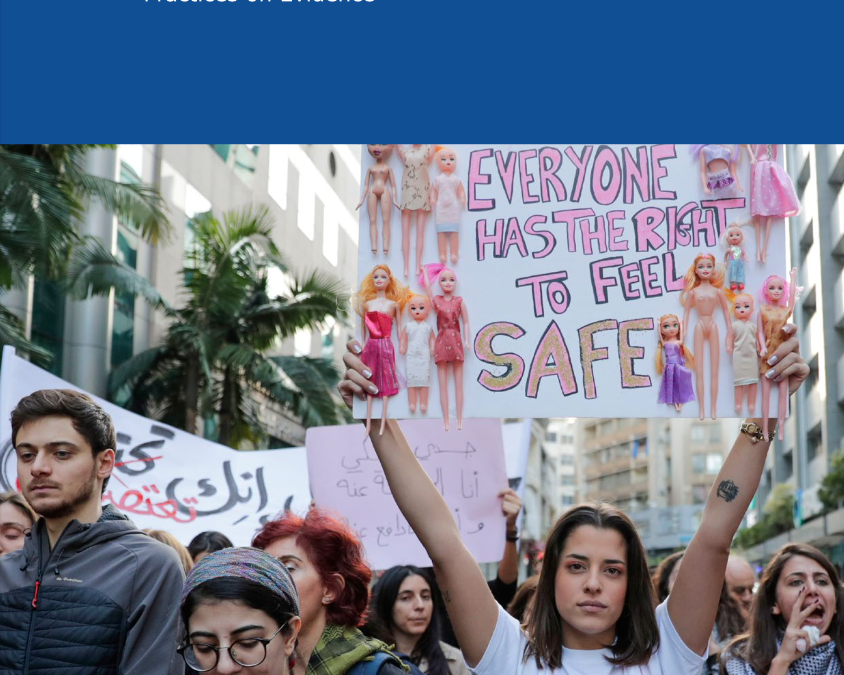
In a memorandum released today, the ICJ published guidance and recommendations aimed at assisting Lebanon’s criminal justice actors in addressing significant gaps in evidentiary rules, practice and procedures undermining the investigation, prosecution and adjudication of sexual and gender-based violence (SGBV) crimes in the country.
The 42-page memorandum, Sexual and Gender-based Violence Offences in Lebanon: Principles and Recommended Practices on Evidence (available in English and Arabic), aims to advance accountability and justice for SGBV, and is especially designed for investigators, prosecutors, judges and forensic practitioners.
“Criminal justice actors are indispensable to eradicating harmful practices and curbing entrenched impunity for SGBV in Lebanon,” said Said Benarbia, Director of the ICJ’s Middle East and North Africa Programme.
“Rather than buying into false, stereotyped narratives that impugn survivors’ credibility and call into question their sexual history, the criminal justice system must adopt and enforce gender-sensitive, victim-centric evidence-gathering procedures that put the well-being of SGBV survivors at the forefront.”
The memorandum provides criminal justice actors with guidance and recommendations on the identification, gathering, storing, admissibility, exclusion and evaluation of evidence in SGBV cases, as well as on their immediate applicability in practice, pending consolidation and reform of Lebanon’s existing legal framework and procedures for the investigation, prosecution and adjudication of SGBV offences.
“Lebanon’s legal framework fosters and perpetuates a systematic denial of effective legal protection and access to justice for women survivors of SGBV,” said Benarbia. “The justice system must counter harmful gender stereotypes and attitudes rooted in patriarchy, which continue to undermine survivors’ right to effective remedies.”
The memorandum’s release is particularly timely given the escalation of SGBV witnessed since the outbreak of the COVID-19 pandemic.
The memorandum builds on previous research undertaken by the ICJ in this area, including Gender-based violence in Lebanon: Inadequate Framework, Ineffective Remedies and Accountability for Sexual and Gender-based Violence in Lebanon: Guidance and Recommendations for Criminal Justice Actors.
Download
Lebanon-GBV-Memorandum-2021-ENG (Memorandum in English)
Lebanon-GBV-Memorandum-2021-ARA (Memorandum in Arabic)
Lebanon-GBV-Web-Story-2021-ARA (Web story in Arabic)
Lebanon-GBV-Web-Story-2021-ENG (Web story in English)
Contact:
Said Benarbia, Director, ICJ Middle East and North Africa Programme, t: +41-22-979-3817; e: said.benarbia(a)icj.org
Asser Khattab, Research and Communications’ Officer, ICJ Middle East and North Africa Programme, e: asser.khattab(a)icj.org
Feb 17, 2021 | Advocacy, Non-legal submissions
The ICJ, together with ARTICLE 19, today addressed the Advisory Committee of the UN Human Rights Council on its work on “negative effects of terrorism on the enjoyment of human rights”. They called on the Committee as it finalizes its report to resist attempts to deviate from the human rights focus at the core of its mandate.
The joint statement read as follows:
“The International Commission of Jurists (ICJ) and ARTICLE 19 welcome the opportunity to engage in this discussion of the draft report on the negative effects of terrorism on human rights.
Given that we have not been able to review the current draft report, we must reiterate our call previously stated during the 24th session to consider the broader context into which this report will be delivered.
We ask the Committee to maintain its focus on the primary objectives of preventing and addressing human rights violations resulting from counter-terrorism measures, and promoting and ensuring protection of the human rights of victims of terrorism. This has been the longstanding focus of the Human Rights Council, despite the efforts of a few states to divert its attention away from core human rights concerns.
Any report addressing the “negative effects of terrorism” should maintain this focus, consolidating the extensive work already done in this regard by successive Special Rapporteurs and other UN and regional entities, as collected in the compilation published by the ICJ in 2019.
The report must not enable the diversion of precious attention and resources to more diffuse questions of impacts of a macro-economic or similar character, in respect of which a human rights-based approach has little to add in terms of concrete recommendations or guidance to States.
The ICJ and ARTICLE 19 share and endorse the positions set out in the recent report of the Special Rapporteur to the UN Human Rights Council as they relate to the effects of terrorism on the promotion and protection of human rights (UN Doc. A/HRC/46/36).
We agree with the Special Rapporteur’s observation that “reflection on the enjoyment of economic, social and cultural rights in the terrorism and counter-terrorism arenas has been understated” (para. 32).
As the Special Rapporteur has stated, however, “there is no legal basis to view the State as primary victim of terrorism through the economic costs that may be experienced from acts of terrorism”.
Two principles, in this respect, should be reinforced: individuals and peoples are the primary rights holders under human rights law, and States have to carry out the legal obligations prescribed by international human rights law. Any confusion or suggestions otherwise may serve to undermine human rights law.
We agree with the Special Rapporteur that the lack of precise definition in terrorism and counter-terrorism and the blurring of lines between counter-terrorism and international humanitarian law will have a pernicious effect and will seriously tarnish human rights protection.
As highlighted before, we also concur that any work on effects of terrorism must be centred on the human rights of victims of terrorism, on the duty under international human rights law of all States to prevent, protect, investigate and redress any abuse to human rights.
We urge the Advisory Committee to include a clear recommendation to the Council that the exclusive focus of the Council’s work remain on violations in countering terrorism and a human-rights based approach to victims of terrorism.
We call on the Committee to recommend against the Council entering into more diffuse macroeconomic issues.
We urge you to affirm that the existing and longstanding normative and institutional framework on counter-terrorism and human rights is already sufficient to address relevant impacts of terrorism from a human rights perspective.
Thank you.”
For further information contact:
Massimo Frigo, ICJ UN Representative, massimo.frigo@icj.org – +41797499949
Anna Oosterlinck, Head of UN, ARTICLE 19, annaoosterlinck@article19.org
Feb 17, 2021 | News
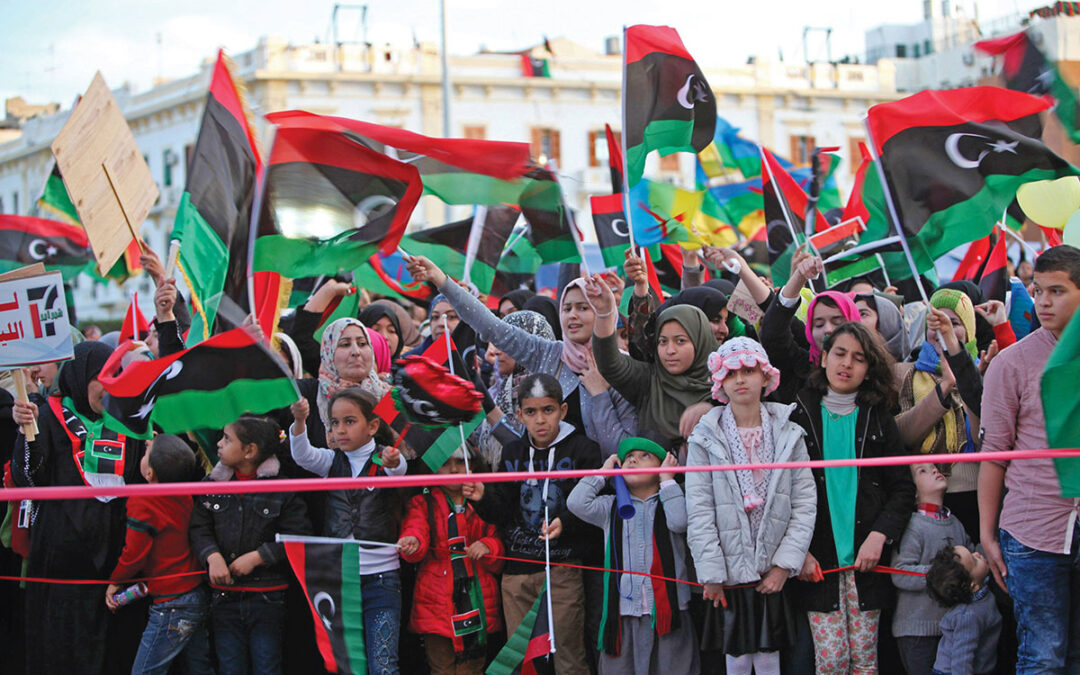
17 February 2021 marks the tenth anniversary of the Libyan revolution.
Back then, protestors had taken to the streets calling for an end to Gadhafi’s authoritarian rule: a regime beset by the commission of widespread and systematic gross human rights violations, including arbitrary arrest and detention; enforced disappearances; torture and other ill-treatment; the oppression of women, minority groups, political dissidents and government critics; and the curtailment of freedom of expression, association and assembly.
Libyans who supported the 2011 revolution hoped it would usher in a nascent democracy and present an opportunity to address the country’s bleak legacy. A decade on, however, the pursuit of justice and accountability remains unfulfilled, and the cycle of impunity unbroken, as a multitude of State actors and armed groups continue to perpetrate crimes under international law, including against thousands of migrants, refugees, asylum seekers and stateless persons.
Attacks against human rights defenders, lawyers and activists, including extrajudicial executions, enforced disappearances and torture, are pervasive, particularly so against women. The post-2011 period has also witnessed an increasingly brutal crackdown on civil society, journalists and bloggers, in addition to the violent suppression of peaceful protests through excessive use of force and arbitrary arrests.
Against a backdrop in which domestic accountability efforts are hindered by cycles of violence, weak and ineffective law enforcement agencies, and by the arbitrary exercise of policing and detention powers by armed groups, international efforts to fight impunity in the country are underway. The Office of the Prosecutor of the International Criminal Court (ICC) is currently investigating some of the crimes under international law committed after 2011, including war crimes committed in the context of armed conflicts. However, certain individuals against whom ICC arrest warrants have been issued, including Mahmoud Al-Werfalli, remain at large.
In June 2020, the UN Human Rights Council established an International Fact-Finding Mission (FFM) tasked with investigating violations and abuses of international human rights law and international humanitarian law committed by both State and non-State actors in Libya since 2016. The FFM’s work will be key in addressing impunity in the country and will complement national efforts to address the accountability vacuum.
The country’s interim executive, selected by the Libyan Political Dialogue Forum on 5 February 2020, and any future elected government must put the peoples’ demands for justice and accountability at the forefront. In particular, the Libyan authorities must commit to implementing a transitional justice process, neglected so far, that could genuinely pursue accountability, and guarantee full participation of victims and the public in the process, and thereby realize the right to truth and reparations of the victims of past and ongoing human rights violations and abuses.
To this end, the International Commission of Jurists and the Defender Center for Human Rights call on the Libyan authorities to:
- Guarantee freedom of assembly, association and expression of all persons, and protect human rights defenders, activists and journalists from reprisals and unwarranted prosecutions;
- Protect all persons from arbitrary arrest and detention, extrajudicial executions, torture and other ill-treatment, and enforced disappearances;
- Effectively investigate and prosecute crimes under international law, and ensure that no amnesty, immunity or statute of limitations apply to such crimes;
- Reform the security sector to ensure effective civilian oversight over security and armed forces;
- Set up a concrete plan to disband and disarm all militias and armed groups;
- Guarantee the independence of the judiciary, the respect of international fair trial standards, and refrain from trying civilians before military tribunals;
- Protect refugees, asylum seekers, stateless persons and migrants in line with international law;
- Ensure that the right to an effective remedy and adequate reparations are granted to victims of human rights violations;
- Cooperate fully with the ICC and support their efforts to obtain custody of any suspects;
- Provide the FFM with full support and access to victims, witnesses and any other interested persons throughout Libya’s territory.
Download
Libya-Impunity-Joint-Statement-2021-ENG (English)
Libya-Impunity-Joint-Statement-2021-ARA (Arabic)
Contact
Said Benarbia, Director, ICJ Middle East and North Africa Programme, t: +41-22-979-3817; e: said.benarbia(a)icj.org
Asser Khattab, Research and Communications’ Officer, ICJ Middle East and North Africa Programme; e: Asser.Khattab(a)icj.org
Feb 17, 2021 | News, Non-legal submissions
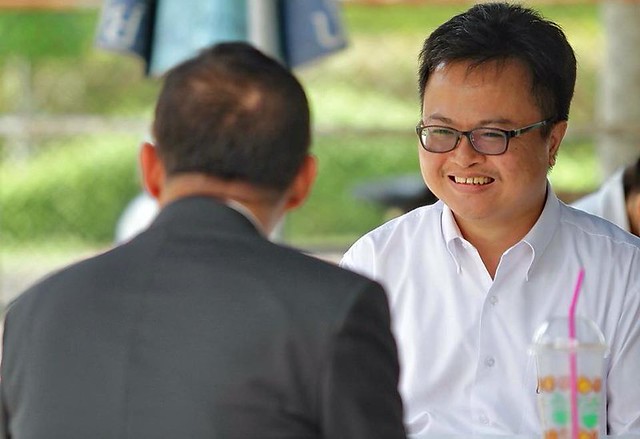
In a joint letter to the President of the Lawyers Council of Thailand, the ICJ and Lawyers for Lawyers raised concerns on the disbarment proceeding against Mr. Anon Nampha, a lawyer and human rights defender. The organisations believe that the proceedings unduly interfere in his work as a lawyer and serves to impair the exercise of his human rights, including the right to freedom of expression.
Dear President of the Lawyers Council of Thailand,
Re: Disbarment Proceedings Against Mr. Anon Nampha
Lawyers for Lawyers is an independent and non-political foundation that seeks to promote the proper functioning of the rule of law by pursuing freedom and independence of the legal profession.
International Commission of Jurists (ICJ), a global non-governmental organization composed of 60 eminent judges and lawyers, works to advance understanding and respect for rule of law as well as the legal protection of human rights throughout the world.
We write to your office concerning the disbarment proceeding against Mr. Anon Nampha, a lawyer and human rights defender, that is taking place before the Investigative Committee that was established by the Committee on Professional Ethics of the Lawyers Council of Thailand during the Meeting No. 1/2564 on 13 January 2021. We are concerned that the proceeding unduly interferes in his work as lawyer, including in representation of clients, and serves to impair the exercise of his human rights, including the right to freedom of expression.
According to our information, we understand that the proceeding against lawyer Anon Nampha is related to a complaint motion filed to the Lawyers Council of Thailand on 7 August 2020 by Mr. Aphiwat Khanthong, Assistant Minister in the Office of the Prime Minister, claiming to be acting in his capacity as a private attorney at Or Amporn Na Takua Tung and Friends Law Office. Mr. Aphiwat Khanthong alleged that lawyer Anon Nampha’s behaviour violated the Lawyers Council of Thailand’s disciplinary rules as, he claims, it would “incite, intend to cause unrest, distort information and insult on the monarchy”. The alleged speech in question apparently called for reform of the monarchy, during a Harry Potter-themed protest at the Democracy Monument on Ratchadamnoen Avenue on 3 August 2020.
Under international law and standards, lawyers, like other individuals, enjoy the right to freedom of expression, belief, association and assembly. A lawyer should be able to draw the public’s attention to issues relating to public affairs in their official capacity as well as in their private capacity. Suspensions or revocations of lawyer licenses as a result of exercise of their legitimate rights and freedoms do not only impact on the exercise of the rights of the lawyers, but also on the rights of their clients to be represented by the lawyer of their choosing.
Download the full letter in English and Thai.