Nov 13, 2019 | Advocacy, Multimedia items, Video clips
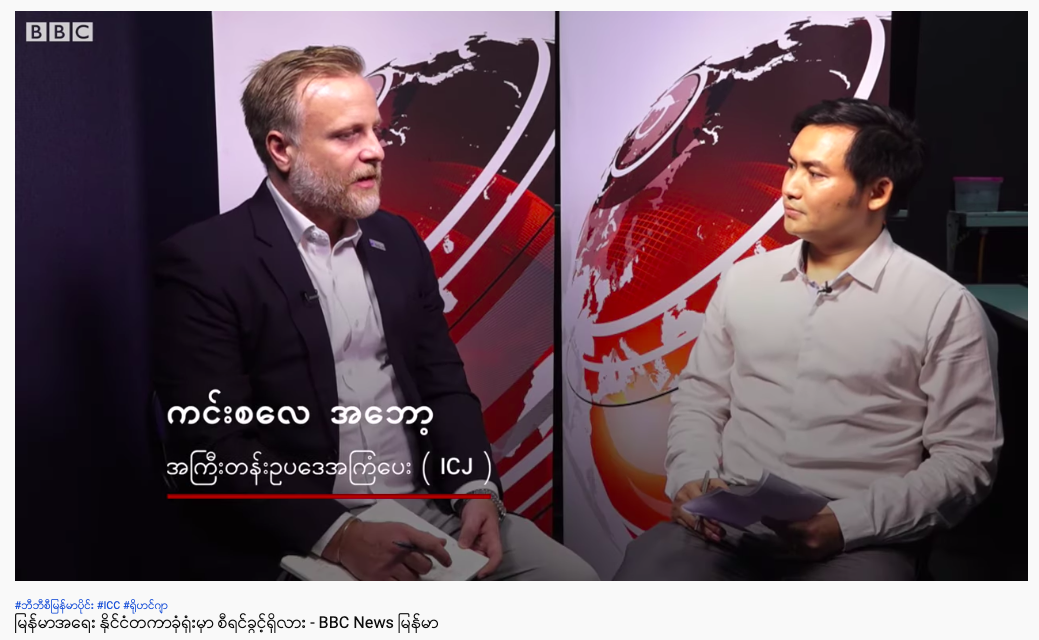
In a video interview with the BBC’s Burmese broadcasting service, ICJ senior legal adviser Kingsley Abbott explains to the Myanmar public how the International Criminal Court prosecutor plans to investigate the crime against humanity of deportation from Myanmar to Bangladesh, which has affected around one million Rohingya.
Recorded on 24 August and published on 12 November 2019. The interview transcript is available in Burmese and English.
Contact
Kingsley Abbott, ICJ Senior Legal Adviser, e: kingsley.abbott(a)icj.org
Nov 12, 2019 | Advocacy, News
The Government of Myanmar should adopt constitutional and legislative guarantees to enable the Myanmar National Human Rights Commission (MNHRC) to better protect and promote human rights for all persons in the country, according to a new ICJ briefing note.
Entitled Four Immediately Implementable Reforms to Enhance Myanmar’s National Human Rights Commission, the note analyzes the ability of the MNHRC to address various human rights violations, some of which have been found by experts to constitute the most serious crimes under international law. The briefing is available in Burmese and English.
“The NLD-led government should promptly reform the MNHRC Law, allowing for the selection of better qualified and representative Commissioners, and granting them the independence and resources necessary for their work. This reform is a low-hanging fruit for the NLD, and overdue” said Sean Bain, ICJ Legal Adviser.
“At the same time, Commissioners should robustly pursue their mandate, including by advocating for the rights of society’s most vulnerable people,” he added.
The MNHRC itself has recognized the need for law reform, in its self-assessment of 2018, and in its reform proposals to the Government. Any law reform process should be opened up to genuine public consultation, enabling inputs from experts and the general public.
“The MNHRC generally fails to act on reported human rights violations, from crimes by soldiers in border areas through to regular attacks on the press, rendering it ineffective in providing redress to victims,” said Sean Bain, ICJ Legal Adviser. “The MNHRC’s routine inaction in critical cases demonstrates its lack of the necessary independence to stand against state actors, particularly the military,” he added.
One illustrative case is the Commission’s reluctance to further pursue justice for the death in military custody of journalist Ko Par Gyi, whose killers were secretly tried and acquitted in a military court, despite the MNHRC’s finding that a public criminal prosecution was warranted. Commissioners have also been notably silent on gross human rights violations against Rohingyas, perpetrated by Tatmadaw soldiers in the context of “clearance operations”.
The note highlights that the Commission refrains from investigating alleged human rights violations by referencing Section 37 of the 2014 MNHRC Law. This provision is narrowly construed to effectively preclude the MNHRC from conducting inquiries on matters that are already the subject of a legal proceeding.
The composition of the Commission also does not reflect Myanmar’s ethnic, religious, regional and gender diversity, which further erodes its ability to address the conflict-related violations and abuses particularly prevalent in border areas such as Rakhine, Kachin and Shan states.
While amending problematic provisions in the 2014 MNHRC Law is warranted, a constitutional guarantee would also significantly improve the Commission’s institutional independence.
“A constitutional provision, in contrast to ordinary legislation, is subject to a stricter amendment process that would less likely render the MNHRC politically vulnerable,” said Jenny Domino, ICJ Associate Legal Adviser.
“Myanmar can look to the experience of the national human rights institutions of East Timor and the Philippines, which were established by constitutional provision at a time that both countries were transitioning to a democratic and rule of law based order”,” she added.
Four immediately implementable reforms for the Government of Myanmar are recommended:
- To the Union President and the Selection Board: appoint Commissioners through a transparent and fully consultative process that enables its composition to effectively protect human rights and appropriately reflect the full diversity of the population of Myanmar, including ethnic, religious, regional, gender and sexual identities;
- To the Commissioners: adopt a broad and active interpretation of their mandate, including by taking steps to address the most serious violations, including crimes under international law, and certain human rights cases that have gone before courts;
- To the Myanmar parliament: amend the 2014 MNHRC Law to include provisions that strengthen the MNHRC’s capacity and independence, and improve the appointment process for commissioners
- To the Constitutional Amendment Committee: propose provisions guaranteeing the structural and financial independence of the MNHRC in amending the 2008 Constitution.
To download the press release in Burmese, click here.
Download
Myanmar-MNHRC-Advocacy-Briefing-Note-2019-ENG (in English, PDF)
Myanmar-MNHRC-Advocacy-Briefing-Note-2019-BUR (in Burmese, PDF)
Contact
Jen Domino, ICJ Associate Legal Adviser, e: jenny.domino(a)icj.org, t: 09968134317
Daw Hnin Win Aung, ICJ Legal Adviser, e: hninwin.aung(a)icj.org, t: 09428122794
Related material:
Achieving Justice for Gross Human Rights Violations in Myanmar: Baseline Study
Myanmar: Five years without justice for journalist Ko Par Gyi
Nov 8, 2019 | Advocacy
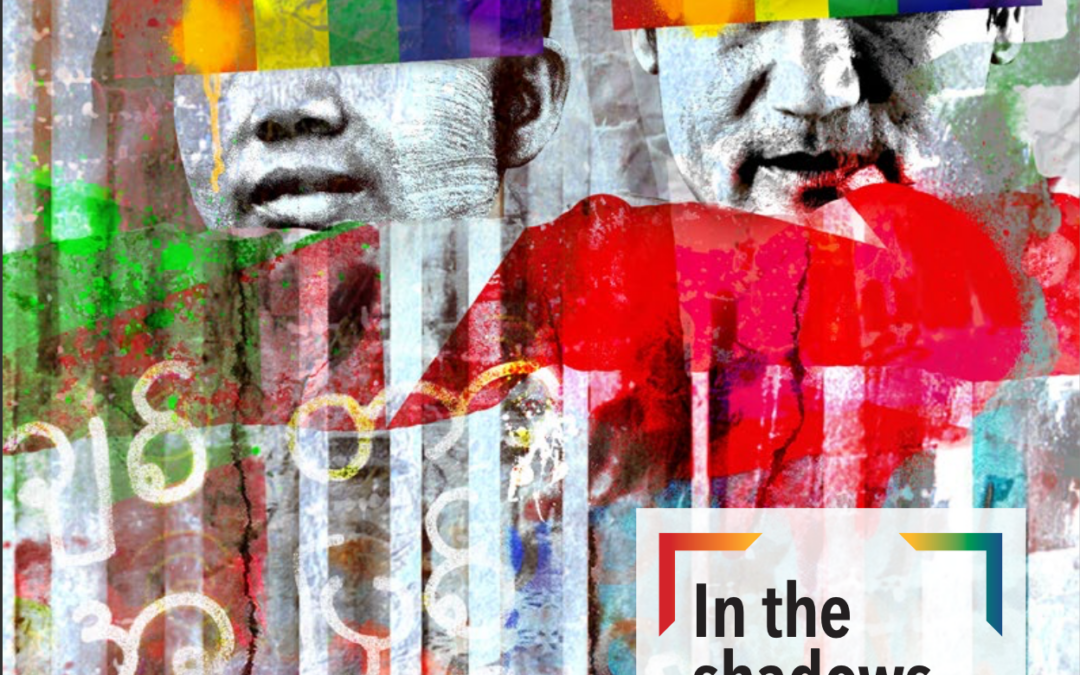
Myanmar’s criminal laws are outdated and fail to respect and protect human rights, especially the rights of LGBTQ people and rights enshrined in binding international human rights treaties. This is the key finding of the new report ‘In the Shadows: Systemic Injustice Based on Sexual Orientation and Identity/Expression in Myanmar’.
The Denmark-Myanmar Programme on Rule of Law and Human Rights, implemented by the ICJ in partnership with Danish Institute for Human Rights commissioned this report. The report team was made up of ICJ staff who are part of the Denmark Myanmar Programme. Legal review was also provided by advisers from the ICJ team. The report is endorsed by three leading local LGBTQ and human rights organizations and one network : LGBT Rights Network, Colors Rainbow, Kings N Queens, and Equality Myanmar.
The report highlights emblematic cases and recurring human rights violations against LGBTQ people in Myanmar. Research for the report included interviews with 70 respondents from across several states to ascertain their experiences and impressions of the criminal justice system. All testimonies are anonymous and all identities are pseudonyms.
The report highlights the outdated laws that continue to affect the lives of LGBTQ people, including Section 377 of the Penal Code which criminalizes consensual same-sex conduct. Even though not commonly enforced, the fact that this law remains in place since the colonial era legitimizes prejudice, discrimination and extortion against LGBTQ people. India’s Supreme Court decided only last year that criminalization of consensual same-sex relationships under Section 377 is a violation of the Indian Constitution and is in breach of India’s obligation under international law. That is the reason why Myanmar should follow this trend and repeal Section 377 as soon as possible or at least insofar it criminalizes same-sex relationships.
Other criminal provisions that play a large part in justifying abuse against LGBTQ people are the “Shadow Laws” or “Darkness Laws” – the colloquial name of colonial era legislation that can restrict citizens’ ability to be in public after dark without an accepted justification. These provisions – from which the report’s title is drawn – are primary examples of criminal laws that are misused against LGBTQ people and result in ongoing stigmatization, human rights violations and overall injustice. Some of their provisions are vague and overbroad and are therefore open to serious abuse. Law enforcement officials too easily invoke these provisions to harass, threaten, detain and even bring spurious charges against LGBTQ people. Research from the report documents how these criminal laws have been used to enter LGBTQ people’s homes, accuse them of ‘committing unnatural sex’, take them into police custody, and to subject them to abuse.
This report further details the discriminatory attitudes of law enforcement officers, which contribute to LGBTQ people being targeted and subjected to unjust and unfair treatment within the criminal justice system. The mistreatment takes many forms, from arbitrary accusations and ensuing detentions, physical, sexual and verbal assaults, and coerced concealment of sexual orientation and gender identity/expression. Given the biased, discriminatory and at times violent behavior towards them, LGBTQ people have come to mistrust law enforcement agencies and avoid the justice system wherever possible.
‘In the Shadows’ identifies the problematic attitudes of certain key players in Myanmar’s criminal justice system with respect to Sexual Orientation, Gender Identity/Expression issues. Core concerns include the discriminatory treatment and the barriers to justice LGBTQ people face, from their role in public life, or as a detainee, witness or suspect in court.
The report concludes with a set of recommendations that seek to make existing law and policy more protective of LGBTQ peoples’ rights. This includes the repeal of Section 377 of the Penal Code, at least insofar as it criminalizes consensual same-sex sexual conduct, the reform of the ‘Shadow Laws’, and cessation of all discriminatory arrests and detentions.
Human rights and LGBTQ rights activist and contributor to the report, U Aung Myo Min, sums up the importance of ‘In the Shadows’: “The stories in this report highlight the suffering, intimidation, and threats faced by LGBTIQ in Myanmar today. These injustices must be stopped, and we all have a moral imperative to be part of the solution.”
We are committed to working with main stakeholders in the country, such as the Parliament, the Police, GAD, actors of the legal system and the Myanmar National Human Rights Commission. We are willing and prepared to provide full support, expertise and advice to the Myanmar Parliament in pursuit of the repeal of Section 377 of the Penal Code, the provision for ‘unnatural at least insofar as it criminalizes consensual same-sex sexual conduct, to enact anti-discrimination legislation in Myanmar, to become a party to nine core international human rights treaties, to establish legal gender recognition for transgender persons, to reform vague and discriminatory laws.
This statement is endorsed by: LGBT Rights Network, Colors Rainbow, Kings N Queens and Equality Myanmar.
Report
Download In the Shadows: Systemic Injustice Based on Sexual Orientation and Identity/Expression in Myanmar in English.
Nov 4, 2019 | Advocacy, News
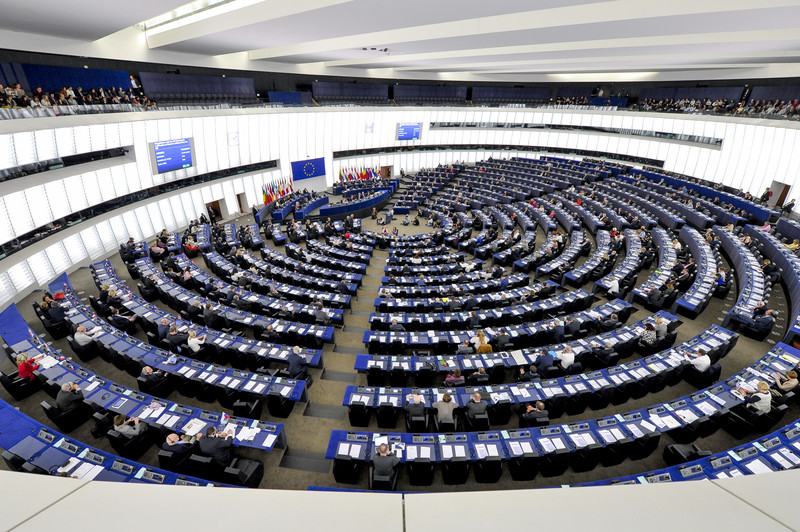
On 4 November, the ICJ and 16 other organizations called on Members of the European Parliament (MEPs) to postpone consent to the EU-Vietnam Free Trade Agreement (EVFTA) and the Investment Protection Agreement (IPA) until the Vietnamese government seriously tackles the deteriorating human rights situation in the country.
The letter was addressed to the President of the European Parliament, Chair of the International Trade Committee, Chair of the Foreign Affairs Committee, Chair of the Human Rights Subcommittee, Chair of the Development Committee and all Members of the European Parliament.
Noting that the Vietnamese government had, in recent years, intensified its crackdown on human rights defenders, members of civil society, religious groups and individuals who express opinions deemed critical of the government, continued to strictly curtail the rights to free expression, opinion, association and assembly, and tightly control the press, civil society and religious groups, the organizations expressed regret that negotiations for the EVFTA and the IPA had not led to more explicit and tangible human rights commitments from the Vietnamese government.
Vietnam currently benefits of unilateral trade preferences through the Generalised Scheme of Preferences (GSP), and the country’s failure to uphold its numerous human rights obligations under the scheme has yet to incur substantial pushback by the EU.
The organizations urged MEPs to ask the European Commission to set up an independent monitoring and complaint mechanism to address the human rights impacts that the EVFTA and IPA may have.
Joint Letter
Frederick Rawski, Director, ICJ Asia and the Pacific, email: Frederick.Rawski(a)icj.org
Oct 22, 2019 | Advocacy, News
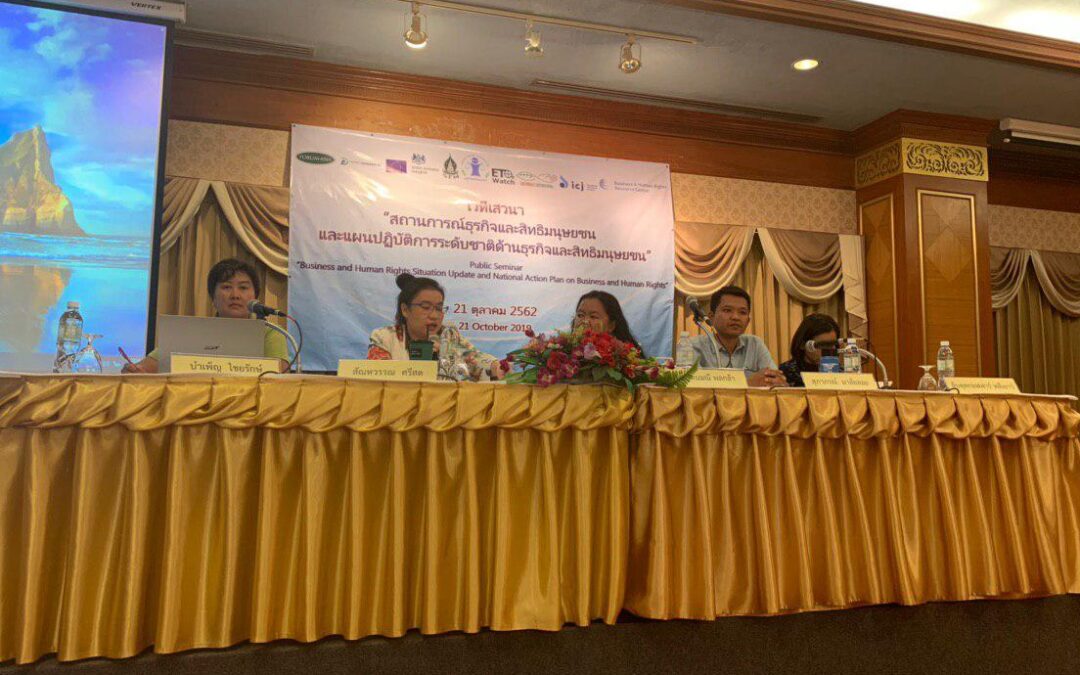
On 21 October 2019, the ICJ co-hosted an event on “Business and Human Rights and Thailand’s National Action Plan on Business and Human Rights” at Mido Hotel in Bangkok.
The discussion surrounded the evolution of business and human rights in Thailand and concerns arising with respect to the National Action Plan on Business and Human Rights (‘NAP’)’s key priority issues.
Notably, on the same day of this event, the NAP was being considered by the Cabinet for approval.
Participants included 37 individuals representing affected populations from all regions of Thailand, members of civil society organizations, and representatives from international organizations.
Sanhawan Srisod, ICJ’s Legal Adviser, spoke at a panel on ‘Land, Environment and Natural Resources’, addressing key concerns arising with respect to environmental laws in Thailand. These included the lack of adequate consultations with affected stakeholders before implementing development projects, inadequate assessment of environmental impacts prior to policy determination, inadequate protections under relevant laws on the environment, problems arising from Environmental Impact Assessment (EIA) and Environmental and Health Impact Assessment (EHIA) processes, and obstacles in accessing remedy for environment-related cases. She also facilitated another panel on judicial harassment of human rights defenders.
Saovanee Kaewjullakarn, ICJ’s Legal Consultant, facilitated a panel on Thai outbound investment and challenges with respect to access to justice for victims of human rights abuses committed by Thai corporations in the context of their business activities abroad.
The event was co-hosted with the Community Resource Centre Foundation (CRC), Spirit in Education Movement (SEM), Thai Extra-Territorial Obligations Working Group (Thai ETOs Watch), EarthRights International (ERI), Asian Forum for Human Rights and Development (FORUM-ASIA), Business and Human Rights Resource Center (BHRRC) and the British Embassy in Thailand.
Background
After the event, on 29 October 2019, the Cabinet approved and adopted the First National Action Plan on Business and Human Rights (2019-2022), making Thailand the first country in Asia to adopt the stand-alone NAP.
The NAP sets out plans to be followed by several public and private stakeholders in order to ensure the state’s and business’s duty to protect and respect human rights, and the general obligation of the State and businesses to provide for access to remedy in the case of business-related human rights violations and abuses. NAP has determined four key priority issues, including (1) Labor; (2) Land, environment and natural resources; (3) Human rights defenders; and (4) Cross border investment and multi-national enterprises.
Subject to these four key priority issues, the NAP emphasizes the duties of the relevant State agencies to, inter alia, review and amend certain laws, regulations and orders that are not in compliance with human rights laws and standards and ensure their full implementation, ensure mechanisms for redress and accountability for damage done to affected communities and individuals, overcome the barriers to meaningful participation of communities and key affected populations, and strengthen the role of businesses to “respect” human rights on a variety of key priority issues.
Its effectiveness in term of implementation is yet to be assessed because the NAP does not have the status of a law, but is merely a resolution from the executive branch. Under Thai law, a Cabinet Resolution is considered a “by-law” in accordance with section 3 of the Act on Establishment of Administrative Courts and Administrative Court Procedure, B.E. 2542 (1999).
In March 2019, the ICJ and Human Rights Lawyers’ Association (HRLA) had also submitted recommendations to the Ministry of Justice on Thailand’s draft NAP and expressed concern on the removal of a commitment that had been included in earlier versions of the NAP to “push for an Anti- Strategic Litigation against Public Participation (SLAPP) law”.
Further reading:
Thailand: ICJ hosts discussion on human rights consequences of Special Investment Zones
Thailand’s Legal Frameworks on Corporate Accountability for Outbound Investments
Thailand: ICJ and HRLA express concern about inadequate protections for human rights defenders in draft National Action Plan on Business and Human Rights
Oct 20, 2019 | Advocacy, News
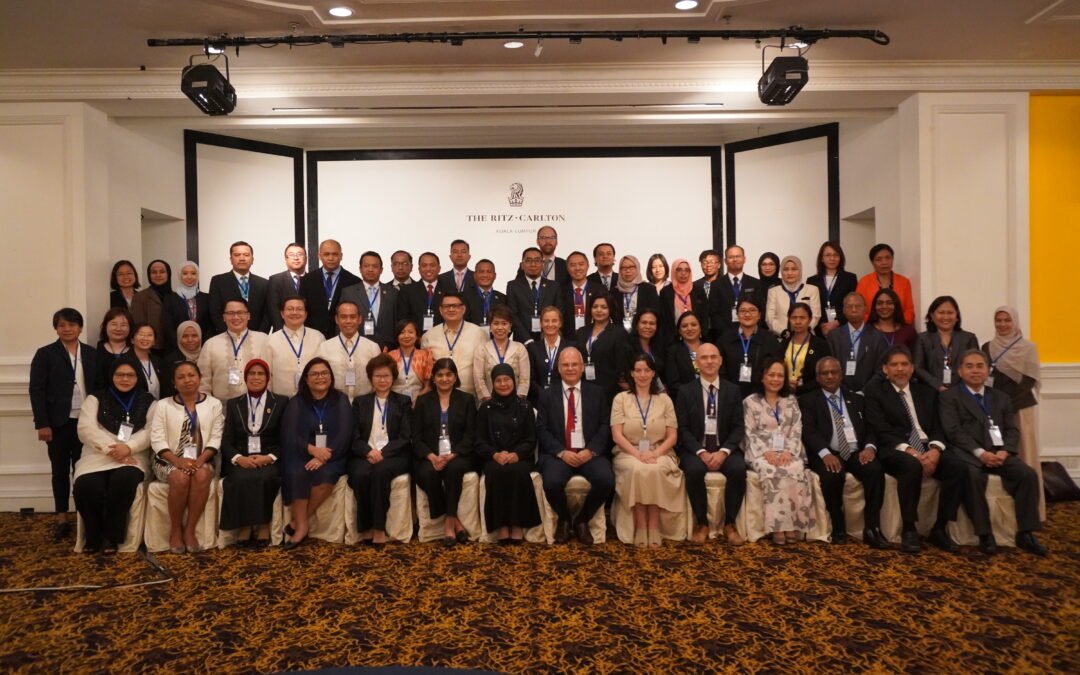
From 18 and 19 October 2019, the ICJ, in collaboration with UN Women and the Federal Court of Malaysia, convened the 2019 Southeast Asia Regional Judicial Dialogue in Kuala Lumpur, Malaysia.
The judges from Malaysia, Philippines, Indonesia, and Timor-Leste discussed how to apply the Convention on the Elimination of All Forms of Discrimination against Women (CEDAW) and other international legal instruments in their work at the domestic level to eliminate the negative impact of stereotyping and gender bias in the judiciary.
“We need to ensure that CEDAW and international human rights obligations are fully applied by national authorities, and not just taken as aspiration or long-term goal,” said Frederick Rawski, ICJ Regional Director for Asia and the Pacific.
“These standards need to have the force of law and made real, in workplace and in domestic settings, to ensure that women are free from violence and that there is access to justice when violence does occur.”
The judicial dialogue was opened by Malaysia’s first female Chief Justice, The Right Honourable Tan Sri Tengku Maimun binti Tuan Mat. The Chief Justice emphasized during her keynote speech the need for regular capacity strengthening initiatives for judges to be aware of gender-related issues. She emphasized further that “Judicial stereotyping can undermine the ability of women to exercise and enforce other rights guaranteed by law.”
This message was echoed by Carla Silbert of UN Women who said: “We see that women are often impacted disproportionately and thus judges should uphold women’s rights as human rights. It is a crucial role for the court to deliver justice with gender sensitivity.”
ICJ Commissioner Dato Ambiga Sreenavasan and the Ambassador of Sweden to Malaysia, Dag Juhlin-Dannfelt addressed the ongoing reforms in Malaysia and gender equality.
“Malaysia has its first female Chief Justice and has shown a remarkable growth of female leaders in influential positions. However, the participation of women in the labor workforce is still very low and it remains a challenge for us,” said Dato Ambiga Sreenavasan, Commissioner of the ICJ.
“The drive for democracy is to support and strengthen gender equality and the rule of law,” said Ambassador Dag Juhlin-Dannfelt. “ICJ’s Bangkok General Guidance for Judges on Applying a Gender Perspective in Southeast Asia is an important tool to address gender equality in judiciary.”
The dialogue included discussion on the topics of equality & non-discrimination, access to justice under international human rights law, gender stereotyping and gender discriminatory practices in cases involving women who are victims of trafficking.
Many participating judges said that they would be applying in their judicial work the tools introduced to them in the dialogue, including the Bangkok General Guidance. These could be used in decision-making, assessing evidence presented before them, and handling witnesses in their courts. Some also said that they plan to disseminate the information and tools to their colleagues in the judiciary.
Contact
Boram Jang, International Legal Adviser, Asia & the Pacific Programme, e: boram.jang(a)icj.org
Resources:
To access pictures from the event, click here.