Dec 5, 2014 | Multimedia items, News, Video clips
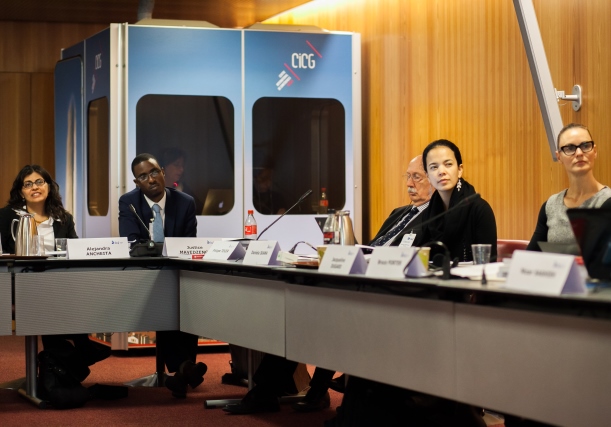
Jacqueline Dugard, Hina Jilani, Rodrigo Uprimny Yepes, Gilles Badet, Alejandra Ancheita and Harsh Mander talk about their experience and the situation of economic, social and cultural rights in their respective countries.
These prominent participants in ICJ’s Geneva Forum 2014 give their views on judicial protection of economic, social and cultural rights (ESCR) as well as on what needs to be changed to address obstacles to guarantee an effective remedy for victims of violations of their socio-economic rights.
They also tell about the main opportunities and key challenges for the realization of ESCR in their respective countries.
The 2014 Geneva Forum of Judges and Lawyers is a joint initiative of the ICJ Center for the Independence of Judges and Lawyers (CIJL) and the ICJ Programme on Economic, Social and Cultural Rights.
It has been made possible with the support of the République et Canton de Genève, the Permanent Mission of Germany to the United Nations in Geneva, and the Taipei Bar Association.

Dec 3, 2014 | News
The December 2 conviction of journalist David Bergman on contempt charges by the International Crimes Tribunal (ICT) further shrinks the narrowing space for observers to comment on the war crimes proceedings, the ICJ, Amnesty International and Human Rights Watch said.
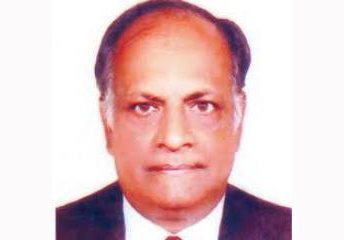
Bergman (photo) was sentenced to a symbolic “simple imprisonment till the rising of the court” and a fine of Taka 5,000 (about US$56) for comments he made in three separate blog postings regarding legal proceedings before the ICT.
The ICT is a specially constituted court set up to bring to account those responsible for grave violations of international law during the country’s 1971 war of independence.
Concerns over its statute, rules of procedure, and practices have been raised since its inception, including by international monitors and legal experts.
“The ICT is dealing with incredibly complex factual and emotional issues of tremendous interest to people in Bangladesh and across the world, and part of this process is establishing public confidence in the legal system,” said Sam Zarifi, ICJ’s Director for Asia. “Holding a credible and highly regarded journalist in contempt for raising important questions doesn’t end the debate surrounding the ICT’s performance, in fact it undermines confidence in the court’s commitment to justice.”
Download the full story in PDF here:
Bangladesh-Conviction of Journalist-News-Press release-2014-ENG
Nov 25, 2014 | Advocacy, Analysis briefs, News
Bangladesh must immediately launch a thorough investigation into alleged attacks on a prominent human rights lawyer, the ICJ said today. The government appears to have taken no real action in the year since the events.
Rabindra Ghosh (photo), advocate at the Supreme Court of Bangladesh and President of the non-governmental organization Bangladesh Minority Watch, has made credible allegations that he was subjected to acts of violence, intimidation and other interference with his functioning as a lawyer.
”The authorities in Bangladesh seem not to have taken Rabindra Ghosh’s allegations seriously, in breach of international standards,” said Matt Pollard, head of ICJ’s Centre for the Independence of Judges and Lawyers. “In addition to his complaints, our own letters to the authorities simply went unanswered.”
Rabindra Ghosh, among other incidents, alleges that he was physically attacked by six of his peers on 25 November 2013, while he was at work in the Gopalgonj District Court.
He further alleges that on 14 January 2014 he was subjected to physical violence, threats, and verbal abuse at the hands of police officers.
He reports that there has been no substantive investigation of his complaints and that he has received no response from the responsible authorities.
“Lawyers play an essential role in protecting human rights and the proper administration of justice,” Pollard added. “International standards require State authorities to prevent attacks and harassment of lawyers and to take effective measures to protect their security.”
The ICJ requested the Prime Minister, the Ministry of Law, Justice and Parliamentary Affairs, the Ministry of Home Affairs and the President of the Bar Association to provide further information and a response to these allegations, but has received no response.
In addition to its call on the authorities of Bangladesh to immediately launch a thorough and independent investigation of the allegations made by Rabindra Ghosh, the ICJ calls on the authorities to take concrete measures to ensure that he and other lawyers are able to discharge their professional duties without any interference or intimidation of any kind. If the investigation confirms the allegations, those responsible must be held accountable.
“The ICJ has observed a general erosion of the rule of law and respect for the ability of lawyers to carry out their duties in Bangladesh,” said Pollard. “Lawyers play a crucial role in ensuring that people whose rights have been violated can demand their right to a remedy. When lawyers themselves become victims simply for carrying out their work, it signals a serious problem for the legal system.”
Rabindra Ghosh’s allegations come against the backdrop of a series of recent attacks on human rights defenders in Bangladesh, including among others the harassment of human rights defenders including Adilur Rahman Khan, secretary of Odhikar; the promulgation of a constitutional amendment that empowers the Parliament to impeach Supreme Court judges; and the amendment of the Information and Communication Technology Act, which is being used to assault freedom of expression and freedom from arbitrary detention.
Contact:
Matt Pollard, ICJ Senior Legal Adviser, +41 22 979 3812, matt.pollard(a)icj.org
A brief background note on the case is available here in PDF:
Bangladesh-Ghosh backgrounder-Advocacy-2014-ENG
Nov 23, 2014 | Events
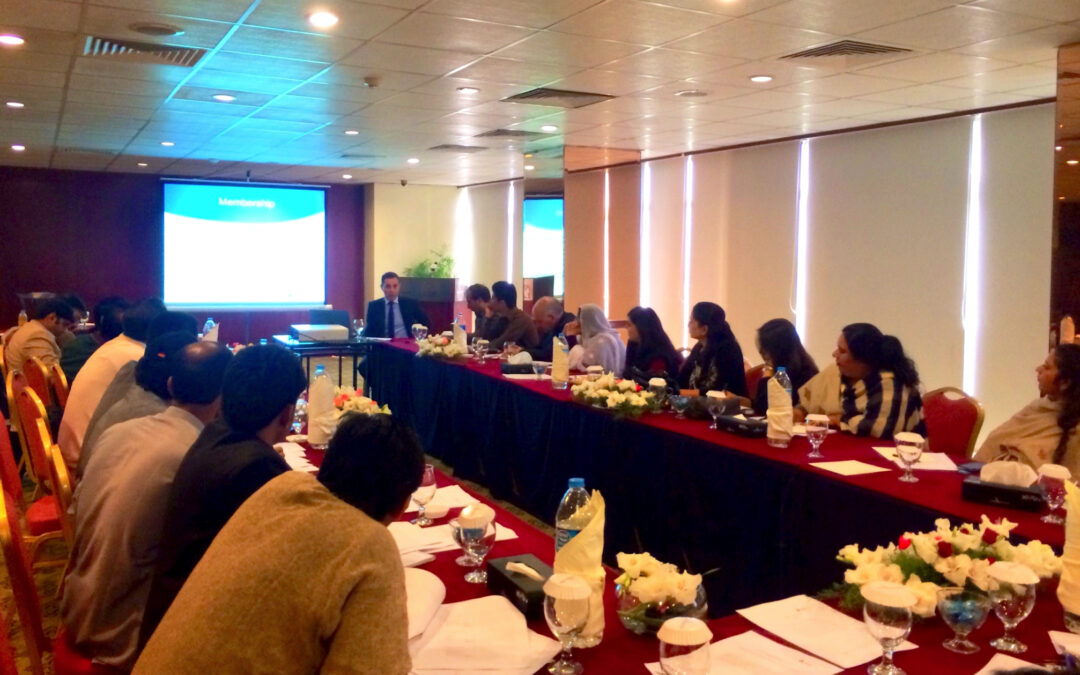
In partnership with the Human Rights Commission of Pakistan (HRCP), the ICJ convened and participated in a one-day workshop on the Universal Periodic Review (UPR) mechanism of the UN Human Rights Council, held in Lahore on 22 November 2014.
The workshop was convened by the ICJ and HRCP as a follow up to, and in response to requests by participants at, training workshops held in Pakistan in February 2014. Now half way between Pakistan’s second and third periodic reviews under the UPR mechanism, the workshop brought together representatives from civil society from throughout Pakistan working on a wide range of human rights issues. It drew from the experience of national and international advocates and human rights lawyers and defenders to discuss:
- The importance of international human rights law at the national level;
- The UPR as a mechanism for human rights protection and how it fits within the broader framework of UN human rights mechanisms;
- Opportunities for NGO engagement in the UPR, especially in the development of a mid-term civil society evaluation report and in preparation for Pakistan’s third cycle UPR in 2017; and
- Weaknesses in Pakistan’s engagement with the UPR.
Oct 7, 2014 | Multimedia items, News, Video clips
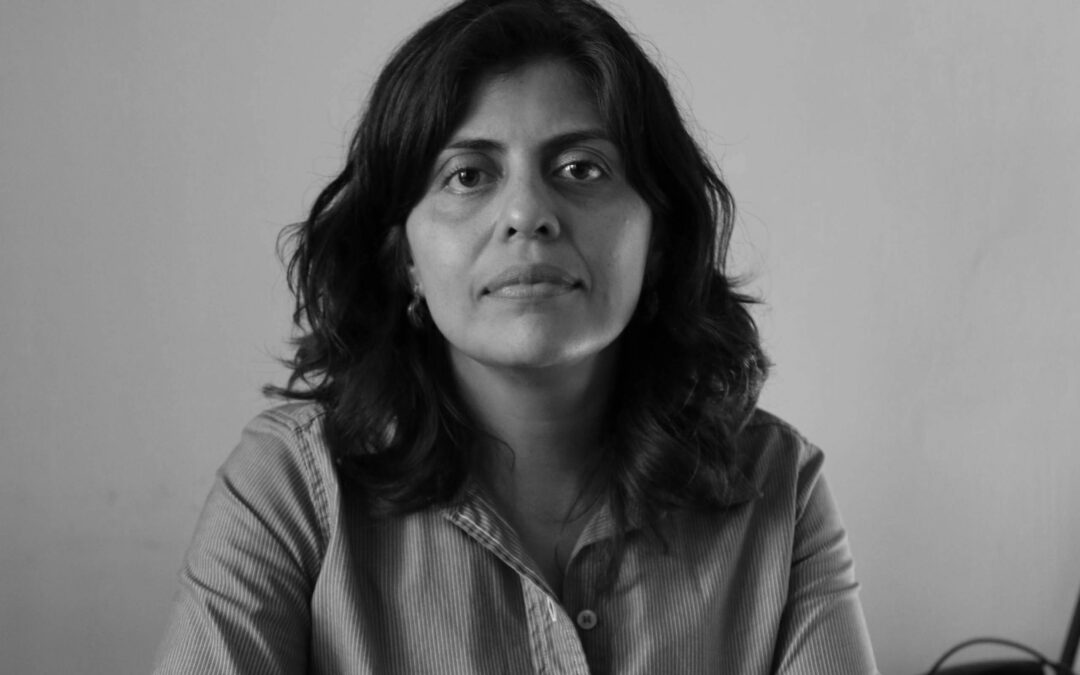
Alejandra Ancheita, founder and Executive Director of ProDESC, is one of the pioneers in seeking accountability for transnational companies in Mexican courts when local communities’ rights are not taken into account.
Alejandra Ancheita has worked with migrants, workers, and indigenous communities for over 15 years to protect their land and labour rights vis a vis transnational mining and energy companies.
These disputes have included violent attacks on those she is trying to protect.
In Mexico, there is a clear pattern of attacks, threats, criminalization, and murders of human rights defenders.
Alejandra Ancheita and ProDESC have been subjected to surveillance, a defamation campaign in the national media, and a break in at their offices.
“This recognition calls attention to the increasing violence being suffered by human rights defenders in Mexico, particularly women defenders,” she said. “I hope that it will provide better conditions and increased security not just for me, but for all human rights defenders in my country.”
“The ICJ is extremely pleased by the decision to pay tribute to the work of Alejandra Ancheita, not only because of her outstanding commitment and courage as an individual, but also because of the recognition that this award will provide to the area of human rights work that she has been dedicating herself to for many years,” said Olivier van Bogaert, ICJ Director of Media and Communications, and ICJ Representative on the MEA Jury.
The ICJ which also developed a longstanding work on economic, social and cultural rights, and on business and human rights, will devote the 2014 edition of its Geneva Forum for judges and lawyers to the role of courts in protecting economic, social and cultural rights.
The two other finalists, Cao Shunli (China) and Adilur Rahman Khan (Bangladesh), received Martin Ennals Prizes.
Cao Shunli, who died in in detention in March 14th after being denied medical attention for known health conditions had vigorously advocated for access to information, freedom of speech, and freedom of assembly.
She disappeared in September 2013 shortly before boarding a flight order to participate in the Human Rights Council.
Chinese authorities only acknowledged her detention months later.
A special foundation is planned in her honor.
Since the 1990’s, Adilur Rahman Khan worked on a wide range of human rights issues, such as illegal detention, enforced disappearances, and extra-judicial killings.
Personally he is facing criminal prosecution for documenting the extrajudicial deaths of 61 people during demonstrations against the government.
His organization, Odhikar, is one of the few independent voices left in Bangladesh.
It is facing closure as donor funds destined for Odhikar are being blocked by the Prime Minister’s Office.
The “Nobel Prize of Human Rights”, the Martin Ennals Award for Human Rights Defenders (MEA) is a unique collaboration among ten of the world’s leading human rights organizations to give protection to human rights defenders worldwide.
Strongly supported by the City of Geneva, the award is given to Human Rights Defenders who have shown deep commitment and face great personal risk. Its aim is to provide protection through international recognition.
The Jury is composed of the following NGOs: ICJ, Amnesty International, Human Rights Watch, Human Rights First, Int’l Federation for Human Rights, World Organisation Against Torture, Front Line Defenders, EWDE Germany, International Service for Human Rights, and HURIDOCS.
Contact:
Michael Khambatta, Director Martin Ennals Foundation, t: +41 79 474 8208, e: khambatta(a)martinennalsaward.org
Olivier van Bogaert, ICJ Director of Media and Communications, and ICJ Representative on the MEA Jury, t: +41 22 979 38 08, e: olivier.vanbogaert(a)icj.org
Multimedia gallery:
Livestreaming of the Martin Annals Award 2014 Ceremony
Alejandra Acheita film:
Cao Shunli film:
Adilur Rahman Kahn film: