Nov 5, 2013 | News
The ICJ condemns Bangladesh’s imposition of the death penalty in contravention of the global trend towards abolition of capital punishment.
It signifies a weakening of the rule of law and respect for human rights standards in the country.
On 5 November 2013, a special court sentenced 152 persons to death, most of them former officers of the Bangladesh Rifles (BDR), for participating in the 2009 mutiny in which 74 people were killed.
Two days earlier, the International Crimes Tribunal (ICT) had convicted Chowdhury Mueen Uddin and Ashrafuzzaman Khan in absentia for abduction and murder during Bangladesh’s liberation war in 1971 and sentenced them to death.
The ICT, set up by the Government of Bangladesh in 2010 to prosecute persons accused of committing genocide, crimes against humanity, war crimes and other serious crimes during the 1971 war, has so far convicted nine accused. Seven have been given death sentences.
“The numbers of death sentences issued by special courts in Bangladesh is alarming,” said Ben Schonveld, ICJ’s South Asia Director. “There seems little interest in seeking justice; this looks more like revenge.”
“Those responsible for committing atrocities during the Bangladeshi war of liberation and the 2009 mutiny must be prosecuted and brought to justice,” he added. “But the death penalty is a perversion of justice, even more so when imposed after trials that violate due process.”
The ICJ considers the death penalty to constitute a violation of the right to life and the right not to be subjected to cruel, inhuman or degrading punishment. The United Nations General Assembly has repeatedly called on all States to establish a moratorium on the death penalty with a view to abolition.
Under international law and standards, including the International Covenant on Civil and Political Rights, Bangladesh is required to scrupulously and strictly to observe all relevant fair trial guarantees.
This includes the right to effective legal assistance at all stages of the proceedings including the appeal.
The International Crimes Tribunal as well the Special Court set up by Bangladesh to try those accused of committing atrocities in the 2009 mutiny do not meet international standards and Bangladesh’s legal obligations concerning the right to a fair trial.
The 846 suspects tried by the special court in Dhaka for the 2009 mutiny had limited access to lawyers; did not have sufficient knowledge of the charges and evidence against them; and at least 47 suspects died while in custody, allegedly after being subjected to torture.
There are also serious procedural flaws at all stages in the ICT.
Pre-trial release has been routinely and arbitrarily denied; witnesses have been abducted and intimidated; and there have been credible allegations of collusion between the Government, prosecutors and judges.
The ICJ calls on Bangladesh to join the great majority of States around the world in rejecting the death penalty.
To that end, Bangladesh should impose a moratorium on the practice and take steps towards its abolition, as prescribed by repeated United Nations General Assembly Resolutions.
In addition, Bangladeshi authorities must order a retrial of all persons accused of participating in the 2009 mutiny and ensure that their fresh trials meet international law standards on fair trial.
Bangladesh-Death penalty statement-news-web story-2013 (full text in pdf)

Oct 10, 2013 | News
The ICJ calls on the Dhaka Central Jail authority to immediately process an order for bail issued for the release of Adilur Rahman Khan.
The six-month bail was ordered by the High Court of Bangladesh on 8 October 2013.
The Attorney General filed an application seeking a stay on the bail order, which was denied by the Appellate Division of the Supreme Court of Bangladesh on 9 October 2013.
The bail order was signed by the required Sessions Judge and delivered to the Dhaka Central Jail in the late afternoon on 9 October 2013.
Over 24 hours later, Adilur Rahman Khan still remains in custody in the Kashimpur Jail.
“The bail order must be carried out expeditiously without undue delay or other obstruction, including by the Executive. To do so would undermine the independence of the judiciary and constitute arbitrary detention,” said Ben Schonveld, ICJ South Asia Director.
It has been two months to the day that Adilur Rahman Khan was arbitrarily detained for the lawful exercise of the right to freedom of expression, the ICJ recalls.
Under international law, notably Article 9 of the International Covenant on Civil and Political Rights, to which Bangladesh is a party, everyone has a right to liberty and security of person.
Any detention or deprivation of liberty must be in accordance with procedures established by law.
The ICJ calls on the jail authorities to uphold the order of the Appellate Division of the Supreme Court of Bangladesh and immediately release Adilur Rahman Khan on bail.
CONTACT:
Sheila Varadan, ICJ Legal Advisor, South Asia Programme (Bangkok), t: +66 857200723; email: sheila.varadan(a)icj.org
Oct 3, 2013 | News
Following Pakistan’s reinstation of its moratorium on the death penalty, the ICJ calls on the Government to make the moratorium permanent and to move to abolish the death penalty in national law.
“This is a step forward for human rights in Pakistan,” said Sam Zarifi, ICJ’s Asia-Pacific Director. “It brings Pakistan closer to the regional and worldwide trend towards abolishment of the death penalty.”
Pakistan has had a moratorium on the death penalty in place since June 2008, with only the exception of Muhammad Hussain’s execution in November 2012 following a court martial.
The newly elected Pakistan Muslim League (Nawaz) Government decided not to renew the moratorium when it expired in June 2013.
The ICJ and other human rights groups denounced the move and urged Pakistan to immediately adopt a moratorium on the death penalty, prompting the Government to reconsider its decision.
According to the Interior Ministry spokesperson, today’s decision was taken to meet Pakistan’s international human rights obligations.
Pakistani Taliban also warned the Government that they would launch retaliatory attacks if any of their members were executed.
“This brave move by the government should be the first step toward reestablishing the rule of law and providing accountability in Pakistan,” Zarifi added. “The Government should now ensure that members of armed groups like the Taliban who have carried out serious human rights abuses like extrajudicial executions and attacks on civilians are held to account.”
The ICJ considers the death penalty in all cases to constitute a violation of the right to life and the right not to be subjected to cruel, inhuman or degrading punishment.
Contact:
Sam Zarifi, ICJ Asia-Pacific Regional Director, (Bangkok), t:+66 807819002; email: sam.zarifi(a)icj.org
Oct 1, 2013 | News
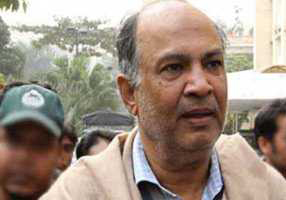
The ICJ denounces the death penalty handed down today by the International Crimes Tribunal (ICT) to Salauddin Quader Chowdhury, a member of the Bangladesh Nationalist Party, the main opposition party.
If carried out, the sentence would violate Bangladesh’s international law obligations to protect the right to life and freedom from cruel, inhuman, or degrading punishment, the ICJ states.
The International Crimes Tribunal convicted Chowdhury (photo) on nine of 23 charges, including murder and genocide, and sentenced him to death.
“The Bangladesh Tribunal is one of very few transitional justice mechanisms that have imposed the death penalty,” said Sam Zarifi, ICJ’s Asia-Pacific Director. “It is unfortunate that Bangladesh seeks to punish human rights violations by committing rights violations itself.”
The ICJ considers the death penalty in all cases to constitute a violation of the right to life and the right not to be subjected to cruel, inhuman or degrading punishment.
This is the seventh verdict delivered by the International Crimes Tribunal. Death sentences have been handed out in all but one case.
”Bangladeshi law as well as international human rights standards require that death penalty cases receive a fair and thorough review, so it is crucial that appellate review of these cases proceed properly, without undue political pressure or a timeline established by impending elections in or before January 2014,” Zarifi said.
“Those responsible for the horrific war crimes and crimes against humanity during Bangladesh’s war of liberation in 1971 should be brought to justice in processes that are fair, and seen to be fair, instead of being subjected to vengeance,” he added.
Contact
Sam Zarifi, ICJ Asia-Pacific Regional Director, (Bangkok), t:+66 807819002; email: sam.zarifi(a)icj.org

Sep 25, 2013 | News
The ICJ continues to be disappointed over the continued arbitrary detention and refusal of bail of Secretary of human rights organization, Odhikar, and Supreme Court Advocate Adilur Rahman Khan.
The ICJ urged the Bangladeshi authorities to drop their opposition to Adilur Rahman Khan’s bail application.
On 25 September 2013, a cyber crimes tribunal in Dhaka refused Adilur Rahman Khan’s bail application. He had earlier been denied bail on 11 August 2013 and 9 September 2013.
“Adilur Rahman Khan is being arbitrarily detained for his lawful exercise of the right to freedom of expression and his legitimate work as a human rights defender,” said Ben Schonveld, ICJ’s South Asia Director. “What we are seeing is a Government crackdown on voices of dissent.”
Under international law, all persons are presumed innocent until proven guilty.
Under Article 9 of the International Covenant on Civil and Political Rights (ICCPR), to which Bangladesh is a party, there is a presumption of pre-trial release.
A person can only be denied pre-trial release where it is reasonable and necessary in all of the circumstances to prevent absconding, interference with evidence or recidivism.
“The Government cannot show that Adilur Rahman Khan poses a flight risk,” Schonveld added. “In fact, he faces a serious threat of torture and ill-treatment during detention, as documented by Odhikar and other human rights organizations.”
The ICJ reiterates its call on Bangladesh to immediately and unconditionally drop all charges against Adilur Rahman Khan and Nasiruddin Elan, ensure Adilur Rahman Khan is treated in accordance with international law in custody, and cease its harassment of Odhikar.
Contact
Ben Schonveld, ICJ South Asia Director (Kathmandu), t: +977 14432651; email: ben.schonveld(a)icj.org

Sep 17, 2013 | News
The ICJ said that the death sentence handed down today by Bangladesh’s Supreme Court against Abdul Quader Mollah is incompatible with international principles of fair trial.
If carried out, the sentence would violate his right to life and freedom from cruel, inhuman, or degrading punishment.
On 17 September 2013, the Appellate Division of the Supreme Court of Bangladesh upheld the prosecution’s appeal to impose the death sentence on Abdul Quader Mollah (photo), the assistant Secretary-General of Jamaat-I-Islami.
Abdul Quader Mollah had received a life sentence on February 5, when the International Crimes Tribunal (ICT) convicted him on five counts, including murder and rape.
“The prosecution’s appeal to impose the death sentence on Abdul Quader Mollah was based on a law that was not in force when he was first convicted, and applying that law retroactively, especially for the death penalty, violates international law,” said Sam Zarifi, ICJ’s Asia-Pacific Director.
On 17 February 2013, Parliament passed an amendment to the International Criminal (Tribunals) Act 1973 to enable prosecutors to appeal a life sentence and seek the death penalty.
Before this amendment, the prosecution was only allowed to appeal if the accused was acquitted.
The ICJ says the retrospective application of the amendment in Abdul Quader Mollah’s case is incompatible with Bangladesh’s obligations under the International Covenant on Civil and Political Rights (ICCPR), including Article 15, which prohibits the imposition of a heavier penalty than provided for at the time the criminal offence was committed.
“Judgments such as these highlight the serious problems with the war crimes tribunal that undermine its legitimacy,” Zarifi further said. “The wounds of war can only be healed through a fair and transparent trial process that meets international standards of fair trial and due process of law.”
“It is essential that those responsible for committing atrocities during the Bangladeshi war of liberation are prosecuted and brought to justice,” Zarifi added. “But the death penalty perpetuates the cycle of violence and is a perversion of justice, and all the more so when it is imposed in violation of due process.”
The ICJ considers the death penalty in all cases to constitute a violation of the right to life and the right not to be subjected to cruel, inhuman or degrading punishment.
The ICJ calls on Bangladesh to join the great majority of States around the world in rejecting the use of the death penalty.
To that end, Bangladesh should impose a moratorium on the practice and take steps towards its abolition, as prescribed by repeated United Nations General Assembly Resolutions.
Contacts:
Sam Zarifi, ICJ Asia-Pacific Regional Director, (Bangkok), t:+66 807819002; email: sam.zarifi(at)icj.org
Sheila Varadan, ICJ Legal Advisor, South Asia Programme (Bangkok), t: +66 857200723; email: sheila.varadan(a)icj.org