Apr 11, 2015 | News
The ICJ today condemned the execution of Muhammad Kamaruzzaman following an unfair trial. The ICJ repeated its call for the authorities in Bangladesh to institute an immediate moratorium on executions with a view to abolishing the death penalty in the country.
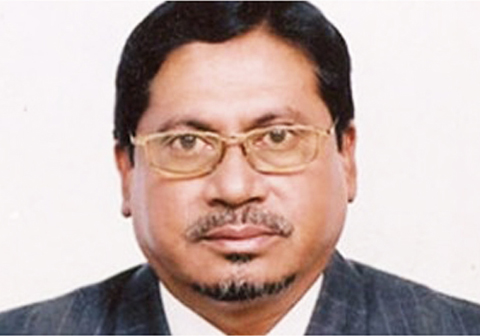
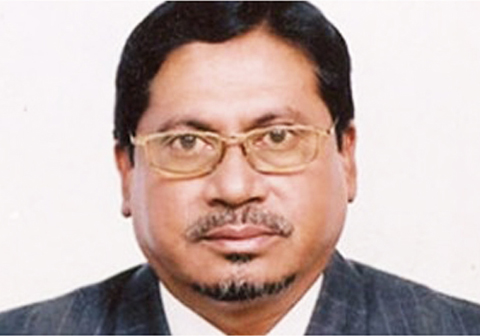
Muhammad Kamaruzzaman (photo), a senior leader of the Jamaat-e-Islami party, was hanged today in Dhaka Central jail.
He had been sentenced to death by the Bangladesh International Crimes Tribunal (ICT) in 2013 for his role in the atrocities committed during the 1971 war for independence in Bangladesh.
His conviction and sentence were confirmed on appeal in 2014.
The government established the ICT in 2010, after amending the International Crimes (Tribunals) Act 1973.
The ICT has jurisdiction to try crimes against humanity, crimes against peace, genocide, violations of the Geneva conventions and any other crimes under international law.
The ICJ has previously raised concerns that trials before the ICT do not comply with international standards for fair trials.
According to the ICJ, there are serious procedural flaws at all stages: pre-trial release has been routinely and arbitrarily denied; witnesses have been abducted and intimidated; and there have been credible allegations of collusion between the Government, prosecutors and judges.
“This execution constitutes a violation of the right to life and freedom from cruel, inhuman and degrading punishment,” said Sam Zarifi, the ICJ’s Director for Asia and the Pacific. “The fact that this execution was based on a trial that was procedurally and substantively flawed is all the more regrettable and a perversion of justice.”
On 6 April 2015, the Supreme Court rejected Muhammad Kamaruzzaman’s petition for a review of his sentence.
The UN High Commissioner for Human Rights has denounced the death sentence, noting that his review petition was summarily rejected without consideration on merits.
Government officials have reported that Muhammad Kamaruzzaman decided to not seek a presidential pardon for his sentence, following the rejection of his review petition.
After Abdul Qader Mollah in 2013, Kamaruzzaman is the second individual to be executed after being sentenced to death by the ICT.
“The ICJ supports the rights of all victims of the atrocities committed during the 1971 war for independence in Bangladesh to truth and justice. But the death penalty is not the answer,” Zarifi added. “Bangladesh should impose an official moratorium on the death penalty, with a view to abolishing it outright.”
The ICJ opposes capital punishment in all cases without exception. The death penalty constitutes a violation of the right to life and the right not to be subjected to cruel, inhuman or degrading punishment.
In December 2014, the UN General Assembly adopted a resolution, for the fifth time since 2007, emphasizing that that the use of the death penalty undermines human dignity and calling on those countries that maintain the death penalty to establish a moratorium on its use with a view to its abolition.
A majority of 117 UN Member States voted in favor of a worldwide moratorium on executions as a step towards abolition of the death penalty, with only 37 opposed.
Contact:
Sam Zarifi, ICJ Asia Pacific Regional Director (Bangkok), t: +66 807819002; email: sam.zarifi(a)icj.org

Apr 9, 2015 | News
The ICJ today condemned the passing of the amendments to the archaic 1948 Sedition Act by Parliament’s House of Representatives.
The amendments broaden and deepen even further the scope for this law to be abused by authorities in order to violate human rights.
The amendments were passed after a final vote that saw 108 MPs in favour and 79 MPs against the proposal.
“The passed amendments were part of a series of bills that were rushed through Parliament this week, including the draft Prevention of Terrorism Act”, said Emerlynne Gil, ICJ’s International Legal Adviser. “It is unfortunate that Prime Minister Najib Razak has chosen to renege on his promise to abolish the Sedition Act and instead went ahead to make the law worse than it already is.”
“It is undeniable that these amendments would send a further chilling effect on the freedom of expression in Malaysia that is already restricted,” Gil added.
The amendments will now need to be passed by the Senate and thereafter, receive assent of the Malaysian King before it becomes law.
CONTACT:
Emerlynne Gil, ICJ International Legal Adviser, email: emerlynne.gil(a)icj.org or mobile: +66 84 092 3575

Apr 7, 2015 | News
The Malaysian government must cease efforts to strengthen the country’s draconian Sedition Act 1948, which has been used with increasing frequency and severity to suppress and punish criticism of the government, said the ICJ today.
An amendment to Malaysia’s Sedition Act tabled at parliament today would make sedition a non-bailable offence, aggravating the Sedition Act’s incompatibility with international human rights standards.
“The Sedition Act has been used against the government’s political opposition much more frequently than in previous years,” said Emerlynne Gil, ICJ’s International Legal Advisor for Southeast Asia. “Since January 2015, ICJ has recorded at least 36 academicians, lawyers, politicians, students, and activists have been investigated, arrested, or charged under the Sedition Act.”
According to the ICJ, this is a significant spike when compared to the total number of reported sedition cases recorded by Malaysian civil society in previous years: 2010 (5 cases); 2011 (3 cases); 2012 (7 cases); 2013 (19 cases); 2014 (42 cases).
“Instead of repealing or restricting the Sedition Act, the new amendment actually makes it worse by limiting the ability of courts to grant bail to people accused under the Sedition Act,” Gil added.
The amendment specifically states that if the Public Prosecutor certifies in writing that it would not be “in the public interest” to grant bail to the person charged with sedition, the person shall therefore not be released on bail, a matter otherwise normally determined by the courts in each case.
Denying bail based on a mere certificate by the Public Prosecutor removes any requirement that the court be presented with evidence to remand a person in custody and it may also preclude effective inquiry by the court into the lawfulness of the arrest and detention.
“The proposed amendment removes the court’s discretion to determine whether to grant bail or not when presented with a certification from the Public Prosecutor,” Gil said. “It appears therefore that the court has no power to require evidence or even articulation of the reasons to evaluate whether it is reasonable and necessary to remand the person charged with the offence in custody.”
Under international law, the right to seek provisional release before final conviction, for instance through posting bail, is closely linked to the right not to be subjected to arbitrary detention.
Under international standards, a detention that complies with national law can nevertheless be considered arbitrary based on elements of inappropriateness, injustice, and lack of predictability.
In principle, anyone arrested on criminal allegations should have the right to seek release pending trial, including through bail proceedings before a court of law.
National laws should only allow bail to be denied where the facts of the individual case give rise to some specific reasonable ground for continued detention, such as preventing flight, or interference with evidence, or the commission of further violent offences.
Further, where the charges are incompatible with human rights – for instance when it is based entirely on protected freedom of expression – then there can be no basis whatsoever for pre-trial detention. Thus, any detention under the Sedition Act, a vague and ambiguously defined law, would be an arbitrary deprivation of liberty.
Finally, the ICJ recognizes that there have been instances when those arrested under the Sedition Act have allegedly committed acts that are recognizably criminal in character.
In these instances, other criminal laws in Malaysia could provide a proper basis for any investigation and detention.
Contact:
Emerlynne Gil, ICJ’s International Legal Advisor for Southeast Asia: emerlynne.gil@icj.org or +66840923575.
NOTE:
The figures above and the information contained in the chart and graph below are based on ICJ’s documentation in 2015 in comparison with the documentation of reported sedition cases for the past five years done by one of Malaysia’s leading organizations, Suara Rakyat Malaysia (SUARAM).
Malaysia-Graph Sedition Cases 2010to2015-Advocacy-2015-ENG (full graph in PDF)
Malasia-Sedition table 2015-Advocacy-2015-ENG (full ICJ table in PDF)
Malaysia-SUARAM document Overview – Sedition cases 2010to2014-Advocacy-2015-ENG (full SUARAM table, in PDF)
Apr 7, 2015 | News
Bangladesh President Abdul Hamid should intervene to stay the imminent execution of Muhammad Kamaruzzaman, a senior leader of the Jamaat-e-Islami party, said the ICJ today.
Kamaruzzaman was sentenced to death by the International Crimes Tribunal (ICT) in 2013 after an unfair trial, the ICJ says.
On Monday, 6 April 2015, the Bangladesh Supreme Court rejected Kamaruzzaman’s last-ditch petition for independent review of the sentence – he was claiming discrepancies in prosecution witness testimony during the trial – paving the way for his imminent execution.
“The ICJ has long supported the right of victims to seek truth and justice for the atrocities committed in the 1971 war to gain Bangladesh’s independence, but the death penalty, especially after a trial with procedural and substantive flaws, perpetuates the cycle of violence and is a perversion of justice,” said Sam Zarifi, the ICJ’s Director for Asia and the Pacific.
The ICJ has previously raised concerns that the ICT does not comply with international standards for fair trials.
Following the Supreme Court’s rejection of his review petition, Kamaruzzaman must now decide whether to seek clemency from the President, as the last resort.
The ICJ opposes capital punishment in all cases without exception.
The death penalty constitutes a violation of the right to life and the right not to be subjected to cruel, inhuman or degrading punishment.
“The death penalty is not justice and is the ultimate form of cruel and inhuman punishment,” Zarifi said. “Especially where the death penalty is concerned, the trial process has to meet the highest standards of fairness and due process, but this case falls far short of that.”
The ICJ calls on Bangladesh to impose an official moratorium on the death penalty, with a view to abolishing the death penalty outright.
Contact:
Sam Zarifi, ICJ Asia Pacific Regional Director (Bangkok), t: +66 807819002; email: sam.zarifi(a)icj.org
Background:
In May 2013, the ICT found Kamaruzzaman guilty of mass killing during the 1971 Liberation War and sentenced him to death.
In November 2014, the Supreme Court issued a judgment on appeal upholding Kamaruzzaman’s conviction and death sentence.
In December 2014, the UN General Assembly adopted a resolution, for the fifth time since 2007, emphasizing that the use of the death penalty undermines human dignity and calling on those countries that maintain the death penalty to establish a moratorium on its use with a view towards its abolition.
117 UN Member States, a clear majority, voted in favor of a worldwide moratorium on executions as a step towards abolition of the death penalty.
Mar 31, 2015 | News
Thailand must lift martial law and return the country to civilian rule, instead of invoking arbitrary powers under Article 44 of the country’s interim constitution, said the ICJ today.
Today, Prime Minister and head of the ruling National Council for Peace and Order (NCPO), General Prayut Chan-o-cha, announced that he had submitted a revocation of the Martial Law, imposed nationwide on 20 May 2014, to King Bhumibol Adulyadej.
Gen. Prayut stated that in place of Martial Law, he would invoke Article 44 of the Interim Constitution, which effectively gives him the authority to rule without any legal restrictions or accountability.
“Ending Martial Law is a necessary step, but replacing it with Article 44 does not address the serious violations of Thailand’s obligations under international human rights law. Article 44 of the Interim Constitution is drafted so broadly that it could give the head of the junta even greater powers than Martial law,” said Wilder Tayler, Secretary General of the ICJ. “Article 44 would allow the head of the NCPO to issue any orders he wishes under the pretext of strengthening public unity and national security, and also deems any such order to be legal and constitutional, removing any possibility of judicial oversight.”
Article 44 of the interim Constitution gives the NCPO power to give any order deemed necessary for “…the benefit of reform in any field and to strengthen public unity and harmony, or for the prevention, disruption or suppression of any act which undermines public peace and order or national security, the Monarchy, national economics or administration of State affairs …,” and provides that any such order “…is deemed to be legal, constitutional and conclusive…”
“Article 44 violates the fundamental pillars of the rule of law and human rights, including equality, accountability, and predictability. Article 44 could potentially allow for arbitrary rule by the head of the NCPO, so using it would not be a real improvement over the Martial Law, which at least has been in existence since 1914, and has a degree of clarity to its scope and application,” said Tayler.
“The NCPO should revoke Martial Law and also explicitly commit itself to observing Thailand’s international obligations, which means avoiding any use of Article 44,” he added.
International law strictly regulates attempts by governments to suspend or restrict protection for human rights on grounds of emergency.
Such “derogations” are permissible under Article 4 of the International Covenant on Civil and Political Rights (ICCPR), to which Thailand is a State Party, only “in time of public emergency which threatens the life of the nation”.
“The situation in Thailand does not meet the extremely high threshold required for derogating from international human rights law,” said Tayler. “Thai authorities have repeatedly promised a rapid return to the rule of law and respect for human rights in the country, but replacing Martial Law with rule by Article 44 doesn’t suggest an improvement for the rule of law or respect for human rights.”
Thailand-Martial Law-Article 44-News-Press release-2015-THA (Thai version, full text in PDF)