Dec 20, 2019 | Advocacy
Today, the ICJ published a compilation of cases (read the full document here) decided by the UN Human Rights Committee (HRC) concerning allegations of torture and other forms of ill-treatment (articles 7 and 10).
This compilation draws together the views of the HRC in all individual communications adjudicated on the merits in respect of Tajikistan, concerning Article 7 and Article 10 of the ICCPR from 1999 to 2019.
This compilation provides a resource for lawyers, judges, civil society and other stakeholders working to protect against torture and ill-treatment in Tajikistan. The cases in this volume demonstrate how the UN Human Rights Committee has applied the principles of its jurisprudence on torture and other ill-treatment to the particular legal and factual context of Tajikistan. These authoritative interpretations of the ICCPR by the Committee can help to inform consideration of these issues in the national courts, as well as in legislative reform and policy making.
In addition, by drawing together and analysing the facts of individual communications to the Committee from Tajikistan, this compilation also serves to identify underlying systemic issues which Tajik authorities and the national justice system fail to address. An introduction to the compilation highlight of the main issues which have been identified by the Committee in almost 20 years of its practice on Tajikistan. Several patterns regarding the actual functioning of the Tajik criminal justice system can be drawn from the Committee’s decisions. Together they represent an important evidentiary source to determine where the justice system fails in practice to protect human rights that are guaranteed by the ICCPR and often by Tajikistan law and procedure.
While the freedom from torture and other cruel, inhuman or degrading treatment or punishment under Article 7 is the central point of this review, it logically includes some reference to other relevant Articles of the ICCPR, including Article 2(3) (the right to an effective remedy for violations of the Covenant rights) Article 6 (right to life), Article 10 (conditions of detention), Article 9 (the right to liberty) and Article 14 (fair trial rights). These rights are analysed only where they are pleaded by applicants in cases also involving allegations of violations of rights under Article 7 or 10 ICCPR.
This compilation of cases is published as part of ICJ’s Global Redress and Accountability Initiative, with a view to rendering accessible the cases of the Human Rights Committee related to torture and other ill-treatment to a wide range of different actors within and engaging with the justice system. It should be useful both for independent practitioners such as lawyers, human rights defenders and civil society organizations, and for the judiciary, but also the Ministry of Justice, the Ministry of Health or the Ministry of Interior, under whose competence some of the issues may fall. The publication should be of equal interest to IGOs working in or with an interest in Tajikistan.
Dec 16, 2019 | Events, News
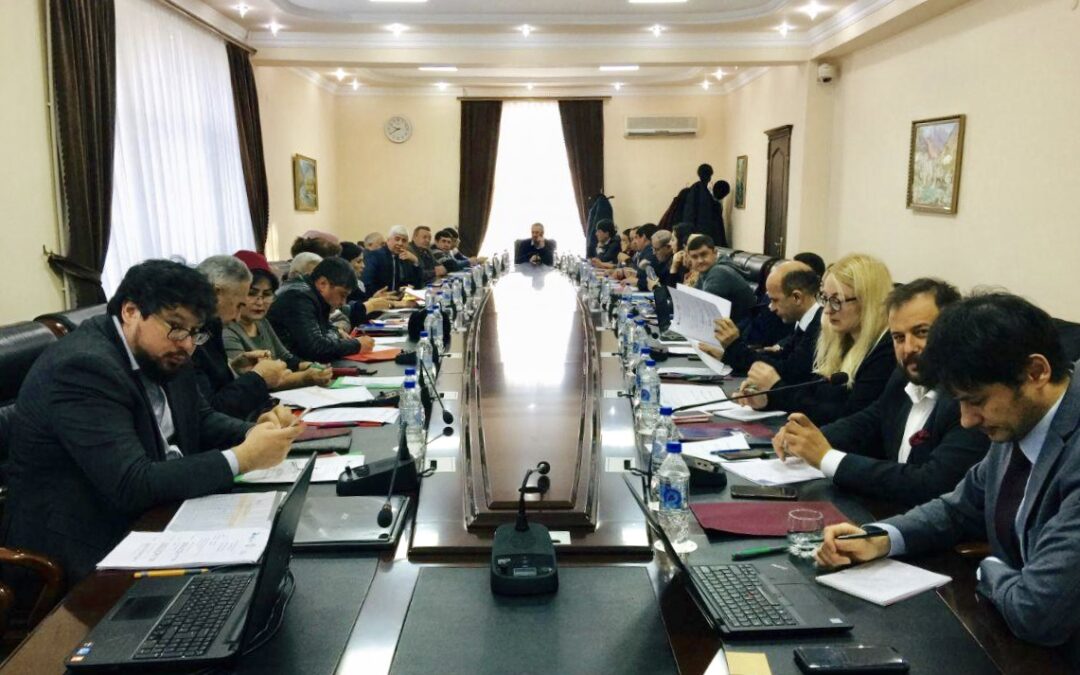
On 16 and 17 December, the International Commission of Jurists (ICJ) in cooperation with the Tajikistan Bar Association (Tajikistan Union of Lawyers) and the Legal Policy Research Centre (LPRC) is organising a seminar “The Role of the Bar Association in ensuring security of lawyers”.
During the two-day event, lawyers from across Tajikistan as well as members of the specialised bodies on the rights of lawyers of bar associations Kazakhstan and Ukraine will discuss key main challenges lawyers face in their countries when defending their clients.
Regular attacks on independent lawyers as well as effective ways of addressing cases of harassment, intimidation and other interference by the Bar Association and its specialised bodies will be discussed during the first day of the event. During the second day, the participants will elaborate a strategy of development for protection of lawyers in Tajikistan.
The president of the Bar Association of Tajikistan as well as all members of the Commission on the Professional Rights of Lawyers of the Bar Association of Tajikistan will take part in the event.
The ICJ expresses appreciation to the Ukrainian National Bar Association for the participation in the event.
The agenda of the event here.
Sep 29, 2019 | News
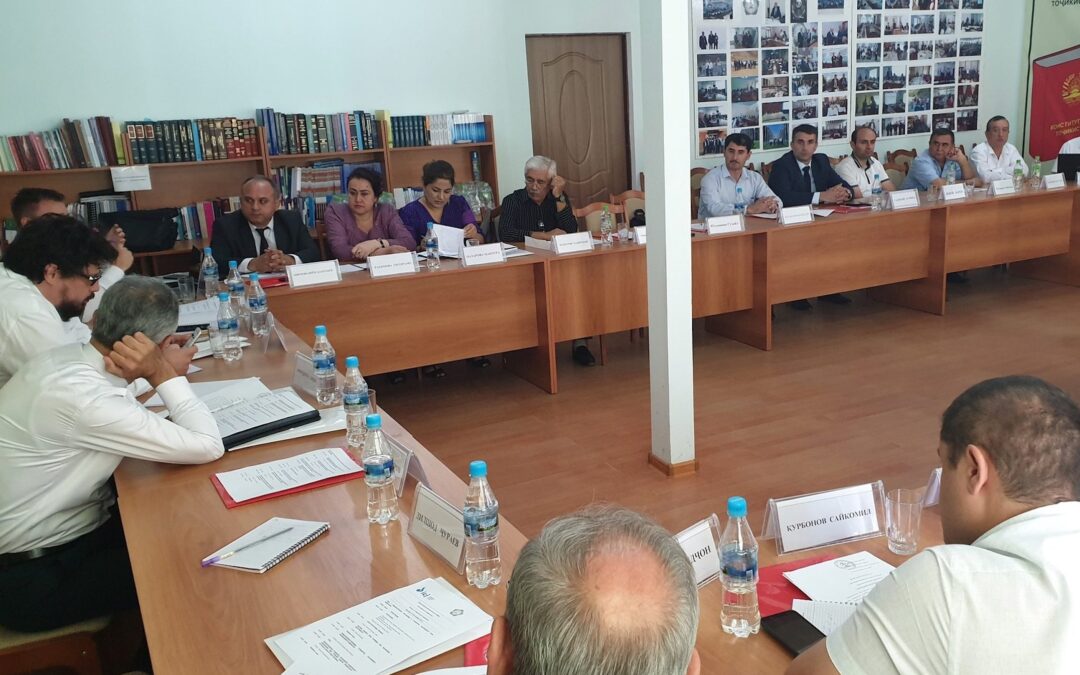
On September 27-28, the International Commission of Jurists (ICJ), in cooperation with the Union of Lawyers of the Republic of Tajikistan, held a training on protecting the rights of lawyers and guarantees of the legal profession as well as the role of the Bar Association in protecting its members.
Around thirty lawyers from all regions of the Tajikistan took part in the training. Over two days lawyers discussed effective use of international mechanisms and international law and standards related to the protection of the rights of lawyers.
Particular attention was paid to the organization, functioning and role of the Commission for the Protection of the Professional Rights of Lawyers of the Union of Lawyers of the Republic of Tajikistan.
The event was attended by members of the Commission who had an opportunity to discuss the role and the effective work of this specialized body on protection of lawyers.
The Committee on the protection of the rights of lawyers of the Ukrainian National Bar Association delegated its members to the event to share their best practices and recommendations to overcome the challenges which arise in the work of these bodies.
Sep 26, 2019 | Events, News
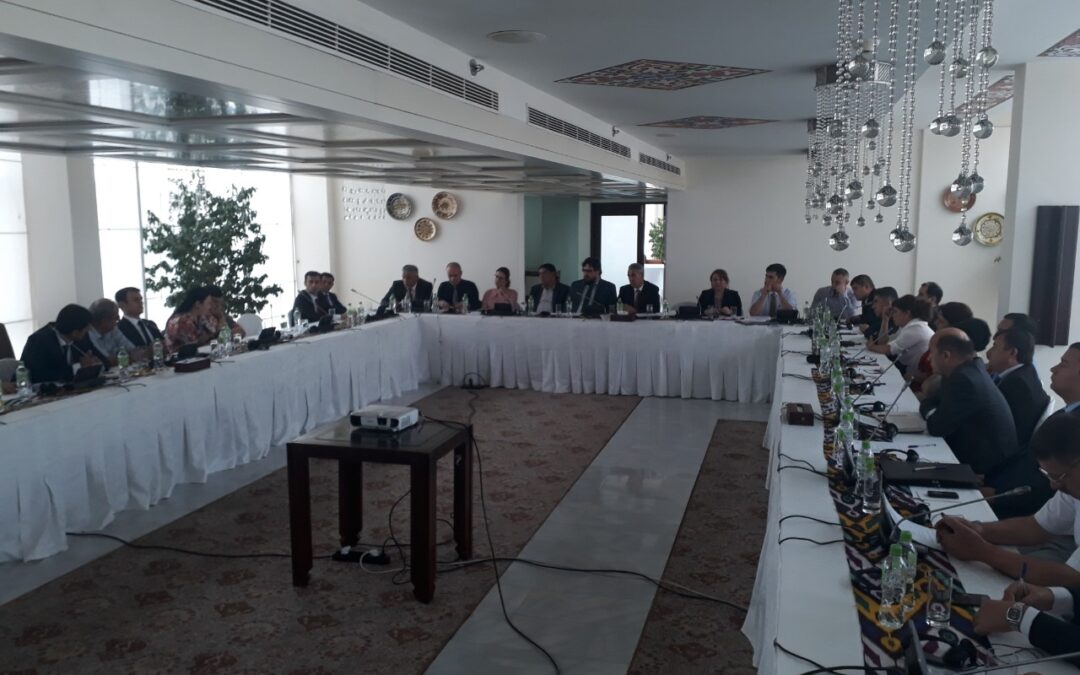
Today, the International Commission of Jurists (ICJ) in cooperation with the Civil Society Coalition Against Torture and Impunity in Tajikistan and the Union of Lawyers of the Republic of Tajikistan hold the final event within the framework of its Global redress and accountability initiative.
This event presents an opportunity to discuss measures to prevent impunity and ensure accountability for the use of torture and cruel, inhuman and degrading treatment (CIDT) in Tajikistan.
The findings of the research on the key challenges for effective investigation of torture and CIDT, carried out by the Coalition Against Torture under the initiative, will be presented at the event. The ICJ will launch its compilation of the cases decided by the UN Human Rights Committee concerning allegations of torture in Tajikistan.
Background information:
The ICJ’s Global redress and accountability initiative focused on seven countries (Cambodia, Mozambique, Myanmar, Nepal, Tajikistan, Tunisia and Venezuela) and it aimed to combat impunity and promote redress for gross human rights violations.
It concentrates on the transformative role of the law, justice mechanisms and justice actors, seeking to achieve greater adherence of national legal and institutional frameworks with international law and standards so as to allow for effective redress and accountability; more independent justice mechanisms capable of dealing with challenges of impunity and access to redress; and judges, lawyers, human rights defenders, victims and their representatives that are better equipped to demand and deliver truth, justice and reparation.
Agenda here.
Sep 24, 2019 | Events, News
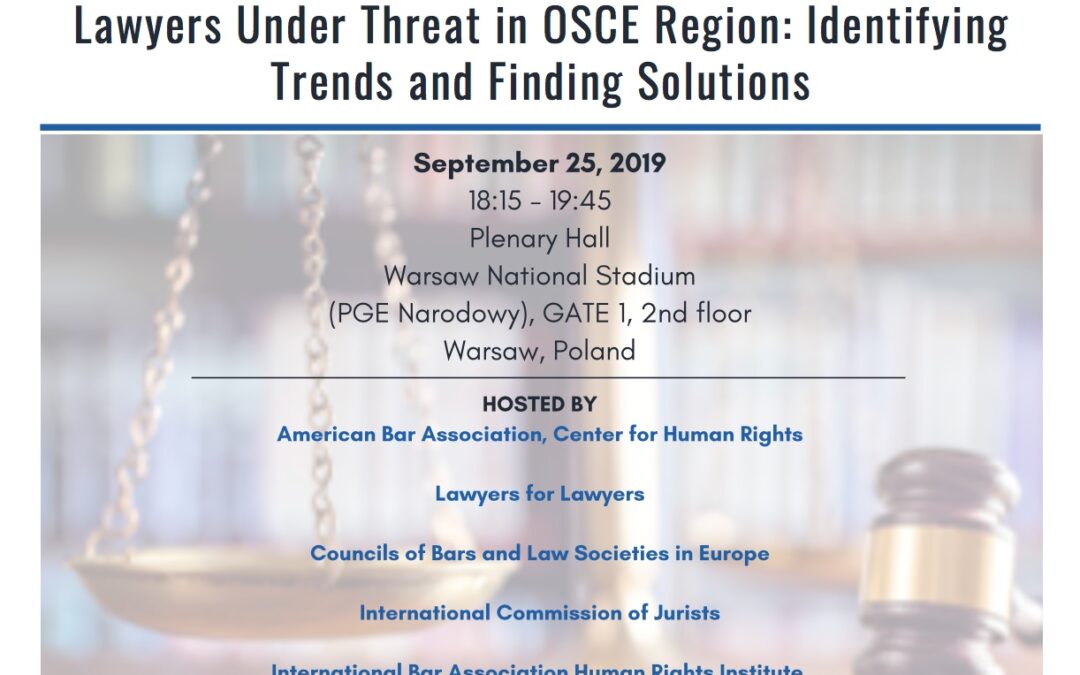
The side event aims to identify current threats against lawyers’ professional rights and guarantees in the OSCE region.
The speakers will identify and analyze the current trends through a discussion of recently gathered data and specific cases of violation of lawyers’ rights from Kyrgyzstan, Kazakhstan, Tajikistan, Moldova, Ukraine, Azerbaijan, Russia and Belarus. They will also make recommendations regarding the way forward to increase protection for lawyers and the independent legal profession in these countries and the OSCE region as a whole.
A flyer for the event is available here.
The agenda for the event available here.