Sep 10, 2019 | News
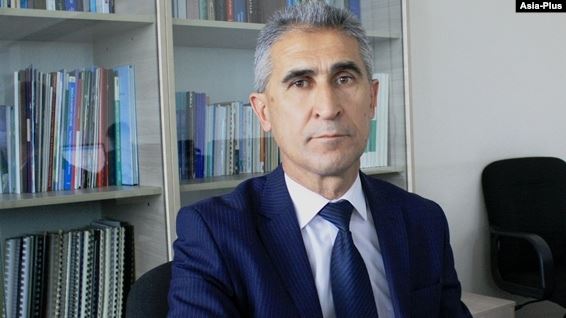
The ICJ today expressed concern that a Government anti-corruption agency has engaged in acts of intimidation against the Chairperson of the Union of the Lawyers of the Republic of Tajikistan, Saidbek Nuritdinov, and 15 other lawyers.
The intimidation apparently relates to the lawyers’ defence of Abdulaziz Abdurahmonzoda, a lawyer facing trial on charges of fraud, who was allegedly ill-treated in detention by officers of the city Department of the Agency for Financial Control and Combating Corruption of the Republic of Tajikistan (Anti-Corruption Agency).
After the lawyers representing Abdurahmonzoda alleged that he had been ill-treated, the judge of the Sino district of Dushanbe city hearing the case, Ahmadzoda Farogat, requested the Prosecutor General’s Office to investigate the allegations.
Following the initiation of the inquiry of the allegations of ill-treatment, the Head of the Anti-Corruption Agency of Dushanbe, allegedly sent requests to a number of district courts of Dushanbe to obtain information about civil and criminal cases in which Saidbek Nuritdinov had participated as a lawyer.
The requests are said to seek information such as the names and, place of residence of clients: subject matter of civil cases, and details of the charges against his previous clients. In addition, it was reported to the ICJ that Judge Akhmadzoda Farogat, transmitted a list of the fifteen lawyers and copies of their official orders, the documents authorizing the representation of the lawyer, to the Anti-Corruption Agency at its request.
The ICJ notes, that while this information is not confidential per se, previous such investigations of the Anti-corruption Agency have led to criminal prosecution and conviction of lawyers.
“In this case, representation of a lawyer subject to criminal proceedings was undertaken by a group of his colleagues, including the head of the association of lawyers, in line with professional ethics, said Temur Shakirov, Senior Legal Adviser of the ICJ. “Such representation is consistent with international standards on the role of lawyers as well as national law of Tajikistan”.
“If the investigation is related to the lawyers’ representation in the case of Abdurahmonzoda, it would constitute a means of intimidation of the lawyers. And as such it should be ceased, and the lawyers should be able to continue to act freely and diligently in accordance with the national law and international law and standards on the role of lawyers”, Shakirov added.
Background
The criminal case against lawyer Abdulaziz Abdurahmonzoda was initiated under article 247.2, of the Criminal Code (fraud) on 17 April 2019. At the court hearings observed by the ICJ, Abdurahmonzoda insisted on his innocence and alleged breaches of the criminal procedure in course of the preliminary investigation: initiation of a criminal case without legal grounds (the case was said to lack the victim’s statement about the fraudulent actions committed on the part of Abdurahmonzoda); violation of the procedure of the preliminary investigation and submission to the court of evidence knowingly obtained by illegal means. The ICJ is observing the trial.
According to the UN Basic Principles on the Role of Lawyers, governments “shall ensure that lawyers are able to perform all of their professional functions without intimidation, hindrance, harassment or improper interference” and they should not “suffer, or be threatened with, prosecution or administrative, economic or other sanctions for any action taken in accordance with recognized professional duties, standards and ethics.”(Principle 16).
Furthermore, interference or obstruction of lawyer’s activity is prohibited by the Law of the Tajikistan on Lawyers and Lawyers’ Activities. According to the law, a lawyer cannot be held liable for any opinion expressed by him/her as part of his/her lawyers’ activity, with the exception of actions that may constitute a crime. The request from lawyers or lawyer’s unions of information related to the provision of legal assistance in specific cases is not allowed.
According to the Draft Universal Declaration on the Independence of Justice (“Singhvi Declaration”), enable the Bar Association to fulfil its function of preserving the independence of lawyers, they should “be informed immediately of the reason and legal basis for the arrest or detention of any of its members or any lawyer practising within its jurisdiction”. In these cases, bar associations are “ entitled to be represented by its president or nominee to follow the proceedings and in particular to ensure that professional secrecy and independence are safeguarded”.
Jun 13, 2019 | News
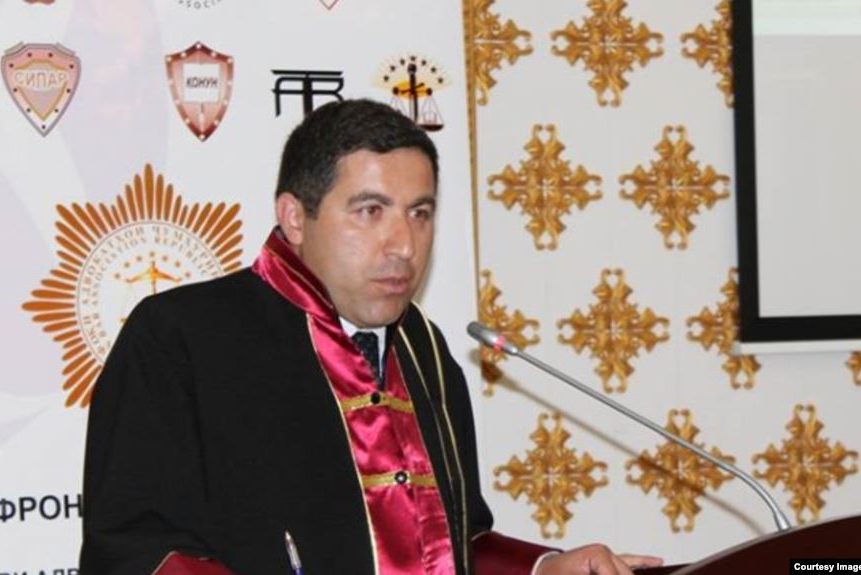
Today, the ICJ called on the authorities in Tajikistan to immediately release a prominent lawyer who is currently serving a sentence of imprisonment of 28 years on dubious charges.
The UN Working Group on Arbitrary Detention (WGAD) published a decision in Mr Yorov’s case on (date), finding that “the trials of Mr. Yorov were carried out in total disregard for the guarantees encapsulated in article 14 of the Covenant, being of such gravity as to give the deprivation of liberty of Mr Yorov an arbitrary character […].”
The Working Group recommended that the government remedy the situation of Yorov without delay and to this end “release Mr. Yorov immediately and accord him an enforceable right to compensation and other reparations, in accordance with international law”.
The ICJ has previously expressed concern that Buzurgmehr Yorov’s conviction may constitute a reprisal for his defense work in high-profile political trials in connection with his representation of thirteen leaders of the Islamic Renaissance Party of Tajikistan (IRPT).
The ICJ earlier expressed concerns at the conviction of the lawyer to a 28 year sentence in prison, which is based on clearly improper charges related to the defense of his clients.
The ICJ welcomes the decision of the WGAD and calls on the Tajikistan authorities to fully implement the decision and to take all necessary measures to protect lawyer Yorov, his family and his lawyers against any threats to their security, or any intimidation, hindrance, harassment or improper interference with their performance of their professional functions as lawyers.
In this regard, the ICJ notes recent protests by dozens of individuals who took part in a rally against Yorov in front of the representative offices of the United Nations and the European Union in Tajikistan, soon after the decision of the WGAD.
Posters of the demonstrators called on the UN High Commissioner of Human Rights to “take her hands off Tajikistan” and named organisations that had defended Mr Yorov or brought the petition on behalf of Yorov to the UN WGAD.
In this context, it is imperative that the Tajikistan government immediately publicly affirm the legitimacy of the decision of the WGAD and make clear its commitment to complying with it, the ICJ underlined.
Background
Buzurgmekhr Yorov was arrested two years ago on 28 September 2015, on charges of “fraud” and “forgery of documents.” Later, he was accused of violating three more articles of the Criminal Code, including in relation to alleged “public calls for extremist activity.”
On 6 October 2016, The Dushanbe City Court sentenced Yorov to 23 years imprisonment in a strict regime prison.
In March 2017, Yorov was sentenced to an additional two years’ deprivation of liberty for “contempt of court and insulting the representative of power.” In August 2017, he received a further three years sentence on charges of “insulting the president.”
The ICJ has, on a number of occasions, expressed its serious concerns over the arrest and conviction of Buzurgmehr Yorov and other lawyers in Tajikistan.
On 24 May 2019, the UN Working Group on Arbitrary Detention, a group of independent experts established in 1991 whose members are appointed by the UN Human Rights Council, published an Opinion finding a number of violations of human rights of Yorov protected under the International Covenant on Civil and Political Rights and recommended as a remedy his immediate release, payment of compensation or other reparation and conducting an investigation into the violation of Yorov’s rights.
The UN Basic Principles on the Role of Lawyers require that the Governments ensure that lawyers “are able to perform all of their professional functions without intimidation, hindrance, harassment or improper interference ”. Under these Principles “where the security of lawyers is threatened as a result of discharging their functions, they shall be adequately safeguarded by the authorities.” The right to “offer and provide professionally qualified legal assistance or other relevant advice and assistance in defending human rights and fundamental freedoms” is guaranteed by the Declaration on the Right and Responsibility of Individuals, Groups and Organs of Society to Promote and Protect Universally Recognized Human Rights and Fundamental Freedoms (Article 9.3(c)).
May 4, 2019 | News
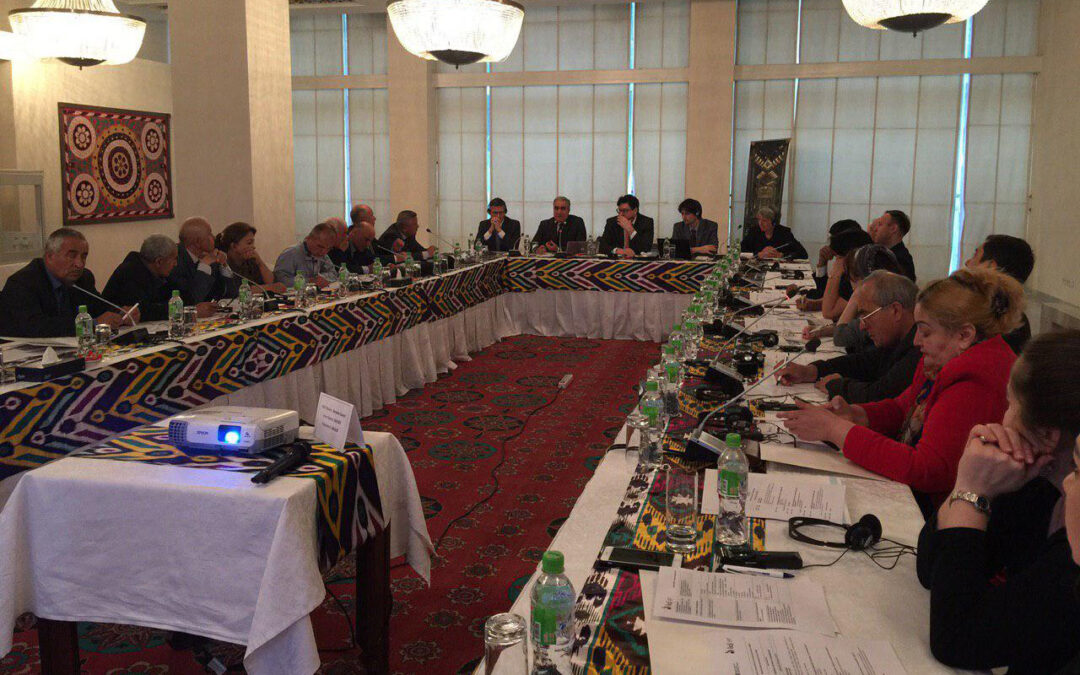
The ICJ concluded a research mission on the independence of the judiciary in Tajikistan on 3 May. Following the mission, the ICJ expressed concerns about the independence of individual judges as well as the functioning of judicial institutions and procedures in law and in practice.
The mission included ICJ Commissioner Justice (ret.) Martine Comte of the Orleans Court of Appeal (France) and ICJ Secretary General Saman Zia-Zarifi.
The ICJ spoke with a wide cross-section of stakeholders, including senior government officials, numerous former judges, senior advocates and working lawyers, as well as journalists and members of civil society. The ICJ will provide its findings in a final mission report that will set out include key recommendations to help Tajikistan meet its international obligations.
Among other things, the ICJ mission discussed recent initiatives to reform the judiciary, including the Judicial Reform Programme of 2019-2021 which has been recently been adopted by the President of Tajikistan, and which provides an opportunity to strengthen judicial independence.
The ICJ mission gathered information about the newly formed Qualification Commission for qualification and disciplinary procedures for judges. This replaced the Council of Justice, which had been criticized by international observers for its lack of independence.
Although formally established under the Supreme Court, the Qualification Commission consists predominantly of members of the executive with only two out of seven members being representatives of the judiciary.
Multiple lawyers and former judges expressed serious concerns about the right to a fair trial in criminal proceedings, pointing in particular to the extremely low acquittal rate for suspects. It appears that numbers of acquittals have declined over several decades and that acquittals are now extremely rare.
The ICJ also received complaints that pubic access to court hearings is impeded in practice despite clear legal provision for the public nature of court proceedings, with limited exceptions. Members of the public were said to be generally unable to attend court hearings freely where they are not parties to the proceedings.
Furthermore, the ICJ heard that judicial decisions are generally not available to members of the public unless they are participants in the proceedings.
The ICJ wishes to express its gratitude to everyone who contributed to the successful conduct of the mission, including State, inter-State and non-State organisations and bodies which the ICJ met and communicated with.
The ICJ wishes to stress its appreciation of the support provided by the OSCE Office in Dushanbe and the United Nationals Human Rights Office.
Nov 9, 2018 | News
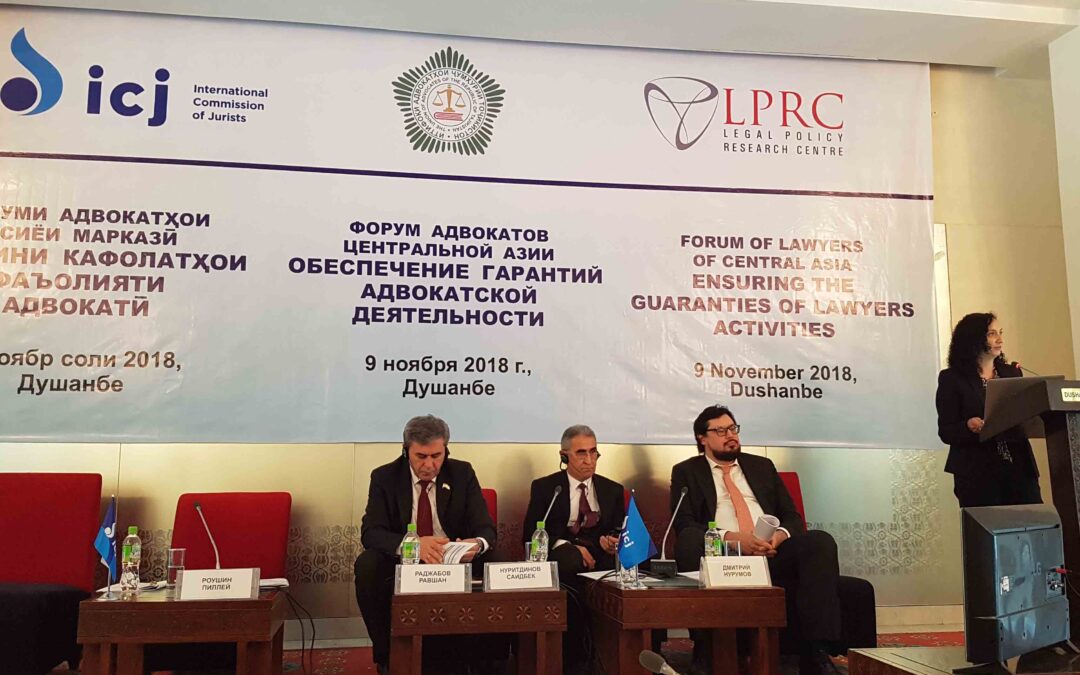
Today the ICJ, in co-operation with the Legal Policy Research Centre and the Union of Lawyers of Tajikistan, is holding a regional conference on the independence and role of lawyers, in Dushanbe.
Lawyers from Tajikistan as well as other countries of Central Asia, the Commonwealth of Independent States and Europe will discuss the legal safeguards that should apply to lawyers to ensure that they can defend the human rights of their clients and the role of bar associations in protecting the security and independence of lawyers.
They will consider the role of committees to protect the rights of lawyers, which have been established within the bar associations of several countries in the region, and how these specialized bodies can work most effectively.
A set of recommendations on the protection of lawyers in the region will be produced following the conference.
Contact:
Temur Shakirov, Senior Legal Advisor, Europe and Central Asia Programme, temur.shakirov(a)icj.org
Tajikistan-Lawyers Conference-News-Agenda-2018-ENG (Agenda, in PDF)
Sep 10, 2018 | Events, News
The legal profession plays a crucial role in ensuring access to justice for all, transparency and accountability of the state, Rule of law and the respect for human rights.
Yet, instead of being perceived as a vital player to the justice sector, today lawyers are often targeted by the governments in many OSCE countries for seeking truth and justice. As a result, lawyers often face high risks of persecution, harassment as well as severe sanctions for doing their job.
This side-event aims to specifically discuss the situation of lawyers in Belarus, Russia, Azerbaijan, Tajikistan and Kazakhstan. The discussion will extend to consider the latest developments related to the rights of lawyers and their independence in the respective countries, and what impact this has on the overall rule of law and human rights situation.
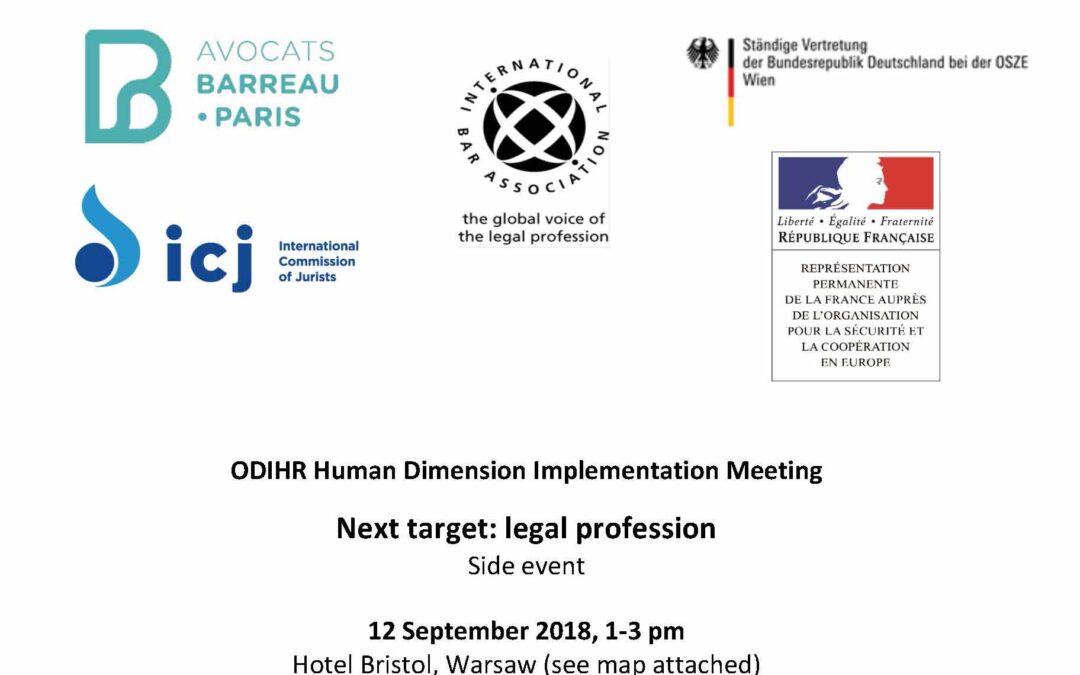
This side event will take place on 12 September 2018, from 13.00 -15.00 at Hotel Bristol, Warsaw
Moderator: Jurate Guzeviciute, Programme Lawyer, International Bar Association’s Human Rights Institute
Presentations and Discussions:
Independence of the legal profession and harassment of lawyers in Eastern Europe and Central Asia:
- Tajikistan: Dilrabo Samadova, lawyer, Tajikistan
- Azerbaijan: Nijat Mammadbayli, lawyer, Azerbaijan
- Kazakhstan: Snezhanna Kim, lawyer, Kazakhstan
- Russia: Róisín Pillay, Director of the Europe Regional Programme, International Commission of Jurists
- Belarus: Anne Souléliac, Head of the Human Rights section, Paris Bar Association
Organizers: Permanent Mission of the Federal Republic of Germany to the OSCE, Permanent Representation of France to the OSCE, International Bar Association’s Human Rights Institute, Paris Bar Association, International Commission of Jurists.
Poland-HDIM_Side event-News-event-2018-ENG (flyer of the event in PDF)