Dec 20, 2019 | News
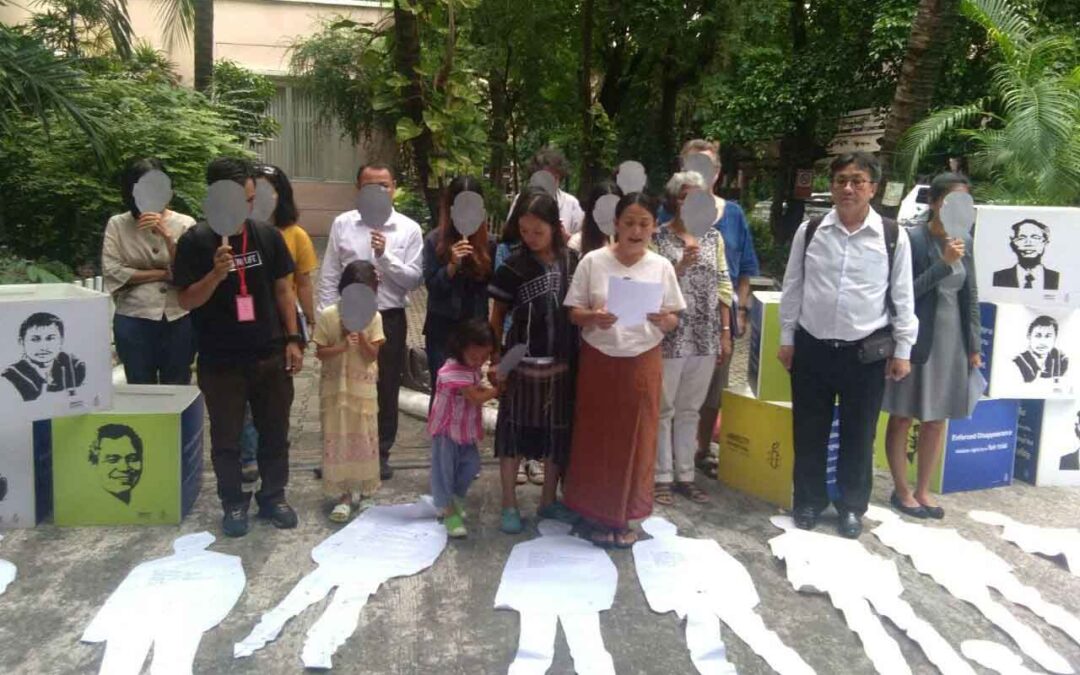
On 20 December 2019, the ICJ submitted recommendations to the Ministry of Justice on the Draft Prevention and Suppression of Torture and Enforced Disappearances Act (“Draft Act”), scheduled for public consultation between 4 and 31 December 2019.
The ICJ also expressed concern at the recurrent delays in the amendment and enactment of this important legislation which will be critical for ensuring accountability and justice for future victims of torture and enforced disappearance.
In October, the Ministry of Justice withdrew the draft Act from the Cabinet “for further revision”, an act which has served to further delaye the passage of essential legislation criminalizing torture and enforced disappearances.
The ICJ also regretted that the latest Draft Act, after several rounds of revisions and public hearings, still has not addressed many of the principal shortcomings which the ICJ and other stakeholders and experts have indicated need necessarily be amended in order to bring the law into line with Thailand’s international human rights obligations, particularly under the Convention against Torture and Other Cruel, Inhuman or Degrading Treatment or Punishment (“UNCAT”) and the International Covenant on Civil and Political Rights (“ICCPR”).
As it stands, it is also inconsistent with the International Convention for the Protection of All Persons from Enforced Disappearance (“ICPPED”), which Thailand has signed and committed itself to ratify.
The key concerns include:
- Incomplete definitions of the crimes of torture and enforced disappearance, as well as other key terms discordant with international law;
- The absence of provisions concerning cruel, inhuman and degrading treatment (CIDT/P);
- The inadequacy of provisions on the inadmissibility of statements and other information obtained by torture, CIDT/P and enforced disappearances as evidence in legal proceedings;
- The inadequacy of provisions relating to modes of liability for crimes described in the Draft Act;
- The inadequacy of provisions concerning safeguards against torture, CIDT/P and enforced disappearances; and
- The absence of provisions concerning the continuous nature of the crime of enforced disappearance and statute of limitations for torture and enforced disappearance crimes.
Download the recommendations in English and Thai. (PDF)
Further reading
Thailand: ICJ, Amnesty advise changes to proposed legislation on torture and enforced disappearances
Thailand: ICJ submits recommendations on draft law on torture and enforced disappearance amendments
Dec 18, 2019 | Advocacy, News
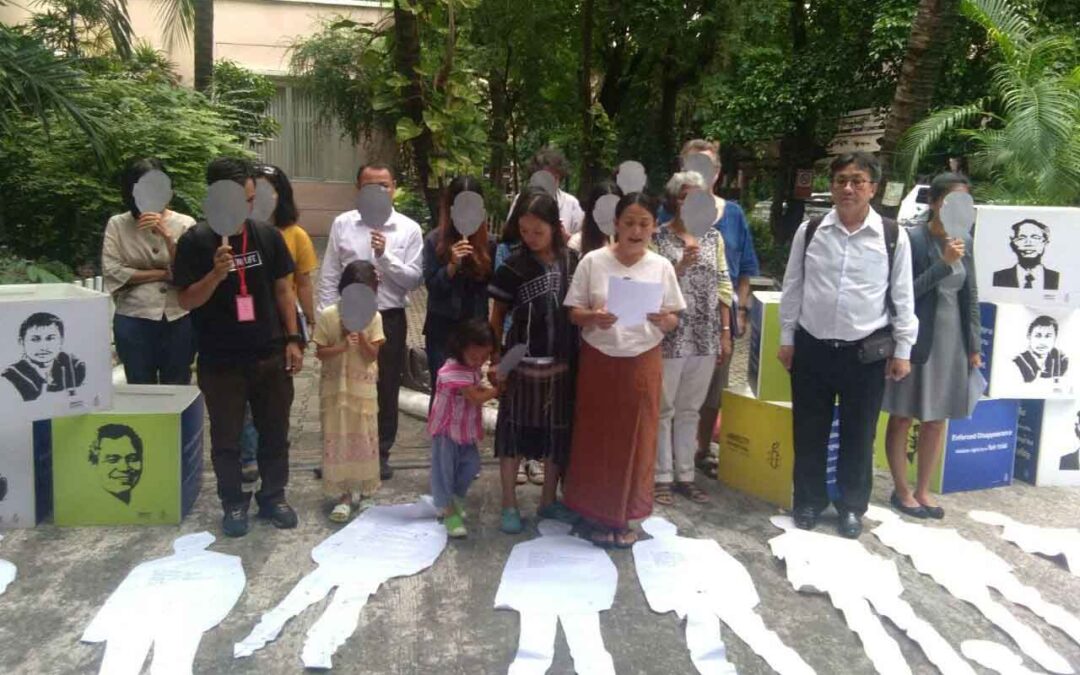
On 17 December 2019, the ICJ co-hosted a discussion on extrajudicial killings in Thailand and the lack of progress in investigations of these killings, with an emphasis on the killings of ethnic, racial, or linguistic minorities or indigenous persons, including indigenous persons in Northern Thailand and ethnic Malays in Southern Thailand.
The discussion was held at the Faculty of Law of Chiang Mai University. The event bought together participants from the North and Deep South of Thailand who considered developing joint advocacy strategy to address the troubling practices.
The event commenced with panel discussions on extrajudicial killings in Thailand and obstacles in access to justice faced by minority communities. Panelists included family members of victims, civil society organizations, lawyers and academics. Affected persons shared their experience as victims of attempted extrajudicial killings or relatives of victims of extrajudicial killings. Other panelists shared information on the dire trend of killings in their regions; concerns regarding extra-judicial killings of unarmed suspects; barriers to access to justice, including financial barriers due to poverty, lack of legal information, lack of trust in the authorities, and language barriers for indigenous speakers. Several panelists expressed concerns that family members of the victims could not participate in the investigation process. Others spoke on the objection of authorities to carry out autopsies of suspected extrajudicial killings in the Deep South.
ICJ’s Legal Adviser Sanhawan Srisod highlighted that investigators and law enforcement officials need to take into account international law and standards. These include the revised Minnesota Protocol on the Investigation of Potentially Unlawful Death (2016), which was launched in Thailand on 25 May 2017; and the 1990 UN Basic Principles on the Use of Force and Firearms by Law Enforcement Officials. Different standards of operation between the police and the military to make arrests, which make military officers prone to violate the UN Basic Principles on the Use of Force and Firearms by Law Enforcement Officials. She also spoke on the different types of firearms that security personnel use and how they affect the proportionality of force; and the lack of guidelines on the use of firearms in arrest operations that is in compliance with international laws and standards.
A theater performance by Lanyim Theatre took place after the discussion.
The first panel was moderated by Pranom Somwong, Thailand’s Representative for Protection International. The panel included affected persons of an alleged extra-judicial killing from Thailand’s Deep South; Maitree Chamroensuksakul, from Rak Lahu Group and relative of a victim of an alleged extra-judicial killing in Northern Thailand; Prof. Somchai Preechasinlapakun, Head of Law Research and Development Center, Chiang Mai University; and Yureesa Samah, Officer of Duay Jai Foundation.
The second panel was moderated by Nadthasiri Bergman, Director of Human Rights Lawyers’ Association. The panel included Preeda Nakpiew, Lawyer of Cross-Cultural Foundation; Anukul Awaeputeh, Lawyer and Head of the Pattani branch, Muslim Attorney Center Foundation; Sumitchai Hattasarn, Lawyer and Director of Centre for the Protection and Revival of Local Community Rights; and Sanhawan Srisod, Legal Adviser of the ICJ.
The event was conducted in collaboration with Amnesty International Thailand; Cross Cultural Foundation; Human Rights Lawyers’ Association; Inter Mountain Peoples’ Education and Culture in Thailand Association (IMPECT); Legal Research and Development Center, Chiang Mai University; Office of the High Commissioner for Human Rights (OHCHR) Regional Office for South-East Asia; and Protection International.
Further reading
Thailand: ICJ co-hosts discussion on addressing extrajudicial killings
ICJ holds seminar at Chiang Mai University Thailand on the right to life and the duty to investigate
Nov 27, 2019 | News
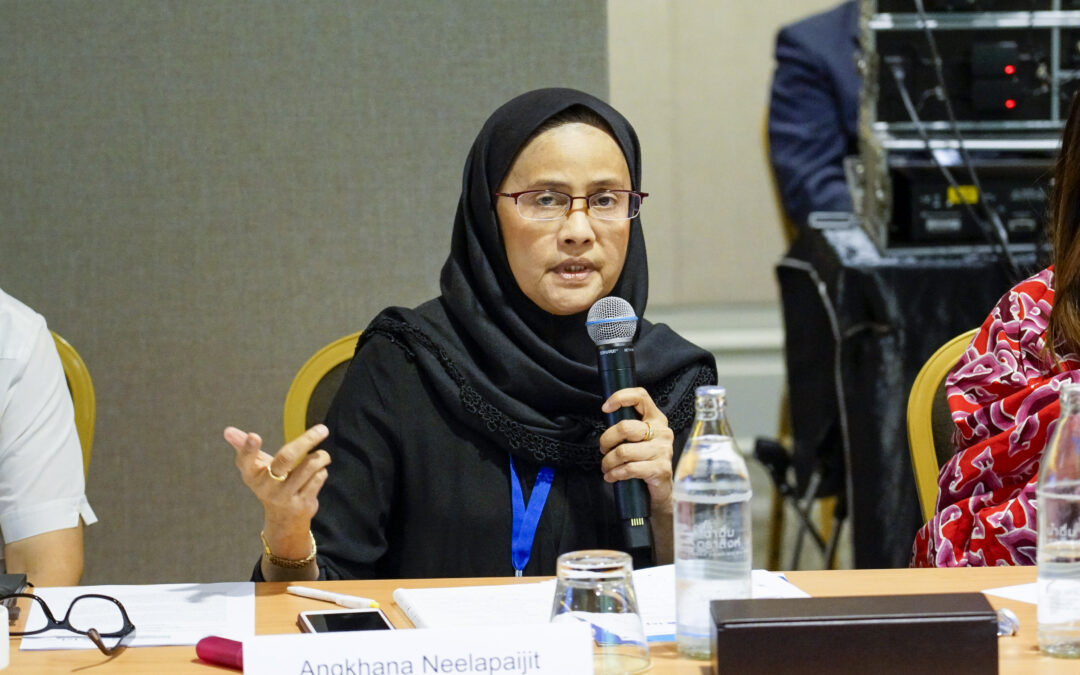
Today, the ICJ condemned Thammakaset Co., Ltd’s use of the criminal defamation provisions of the Thai Criminal Code to harass former National Human Rights Commissioner Angkhana Neelapaijit.
“This action by Thammakaset is a textbook case of how defamation laws are used in Thailand to silence human rights defenders. It is clearly without any legitimate basis, and intended to harass and intimidate Khun Angkhana, who is a leading champion of human rights in Thailand and the region,” said Frederick Rawski, ICJ Asia Pacific Regional Director. “We hope that the Courts will dismiss this frivolous case at first opportunity.”
On 25 October 2019, Thammakaset Co. Ltd., a poultry farm in Lopburi Province, filed a criminal defamation suit under sections 326 and 328 of the Criminal Code against Angkhana Neelapaijit for two posts she shared that contained links to press statements of 16 organizations, including the ICJ, and Fortify Rights.
The statements cited in the warrant as the basis for the action were a post on 3 December 2018 in which Angkhana Neelapaijit re-tweeted an ICJ link to a joint statement co-signed by 16 organizations, including the ICJ. The statement contained a link to a short film in which former employees spoke out about alleged labor abuses; and a post on 28 June 2019 which included a link to a Fortify Rights’ news release containing the same link. The film refers to a previous defamation complaint brought by Thammakaset against 14 of its former workers, and called upon the authorities to drop criminal defamation charges against them and decriminalize defamation in Thailand. Thammakaset claimed that the film was defamatory.
Criminal defamation, under sections 326 of the Criminal Code, carries a maximum sentence of one year of imprisonment, a fine of up to 20,000 Baht (approx. USD 640) or both. Section 328 criminalizes defamation “by means of publication” with up to two years’ imprisonment and a fine of up to 200,000 Baht (approx. USD 6,400).
Thailand is party to the International Covenant on Civil and Political Rights (ICCPR), which guarantees the right to freedom of expression. The UN Human Rights Committee, the supervisory body that provides the authoritative interpretation of the ICCPR, has called on States that criminalize defamation to abolish criminal defamation laws and reserve defamation for civil liability.
“The criminal defamation provisions in the Criminal Code have been repeatedly invoked for nefarious ends, such to target persons seeking to bring public attention to human rights violations, including by business enterprises. They need to be removed from the Criminal Code as a matter of urgency,” said Rawski. “The imposition of criminal penalties for speech, even allegedly defamatory speech, is disproportionate and risks having a ‘chilling effect’ on the exercise of freedom of expression.”
Further reading
Thailand: Drop defamation complaints against human rights defenders Nan Win and Sutharee Wannasiri
Thailand: ICJ and LRWC submit amicus in criminal defamation proceedings against human rights defenders Nan Win and Sutharee Wannasiri
Contact
Frederick Rawski, ICJ Asia-Pacific Director, t: +66 64 478 1121; e: frederick.rawski(a)icj.org
***
Download the press-release with additional information in English and Thai. (PDF)
Nov 27, 2019 | Advocacy, News
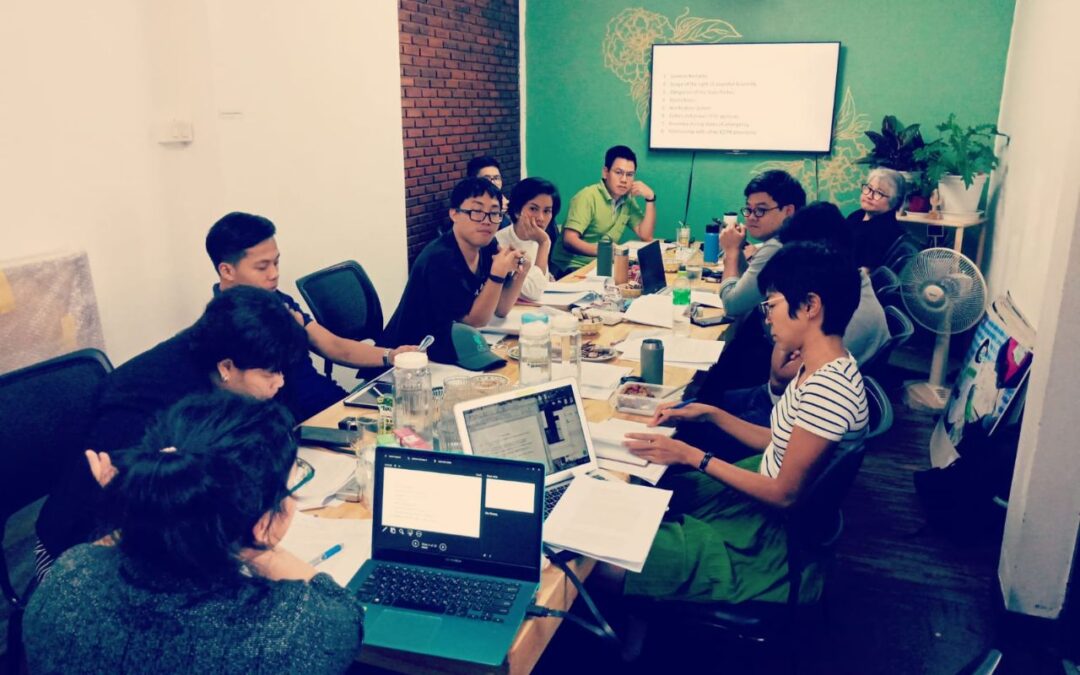
On 26 November 2019, the ICJ, jointly with the Centre for Civil and Political Rights (CCPR Centre), hosted a round-table discussion on the right to peaceful assembly in Thailand. The discussion was held at the office of Thai Lawyers for Human Rights (TLHR).
Fifteen lawyers, members of civil society organizations and academics attended the discussion.
The discussion began with an introduction to the UN Human Rights Committee’s draft General Comment No. 37, which when revised and adopted will constitute an authoritative interpretation of the right to freedom of peaceful assembly, as guaranteed under article 21 of the International Covenant on Civil and Political Rights (ICCPR). Thailand is a State party to the ICCPR.
The UN Human Rights Committee – the body mandated to interpret and supervise the implementation of the ICCPR – made the draft General Comment available for all stakeholders to review between November 2019 and 14 February 2020. The Committee in its draft considers the obligations of States parties in respect of such right to peaceful assembly, including permissible limitations and duties and powers of law enforcement agencies.
During the meeting, participants discussed about Thailand’s existing law governing the exercise of the right to peaceful assembly – including the 2017 Constitution of the Kingdom of Thailand and the 2015 Public Assembly Act. The discussion also focused on comments on the draft General Comment that the participants may submit to the UN Human Rights Committee, and advocacy strategies to strengthen Thailand’s legal frameworks once the draft General Comment is adopted by the UN Human Rights Committee.
Participants identified challenges posed by in the implementation of certain domestic laws, particularly the Public Assembly Act, which may result in unnecessary and disproportionate restrictions on the right to freedom of peaceful assembly in Thailand. These included the lack of a clear definition of “an assembly”; identification of “no-go” zones for protestors; problems arising from the use of notification systems where a failure to notify the authorities of an assembly was used as basis to render participation in the assembly unlawful and for dispersing the assembly; and overbroad powers delegated to authorities to impose conditions for assemblies regulating the time, place and manner of assemblies.
At the meeting’s conclusion, participants considered ways of provided input on the draft General Comment to the UN Human Rights Committee. They also strategies to work to bring existing Thai laws in compliance with international laws and standards that regulating the right to freedom of peaceful assembly.
Nov 12, 2019 | News
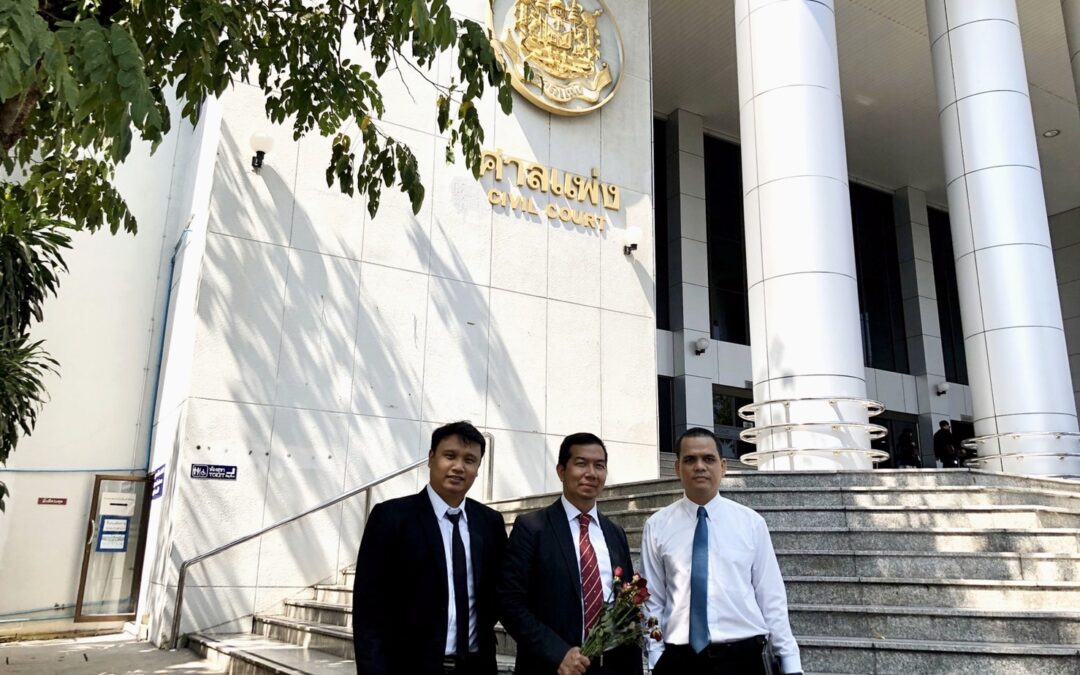
Today, the ICJ condemned the use of civil proceedings to harass Nakorn Chompuchart and Sira Osottham, lawyers representing labour rights researcher Andy Hall.
The ICJ called on Thailand to take measures to protect lawyers so that they can perform their duties without intimidation, harassment or improper interference.
On 12 November 2019, the Bangkok Civil Court conducted its first hearing in a tort case under the Civil and Commercial Code by a Thai fruit processing company, Natural Fruit Company Ltd. (‘the Company’), against the lawyers. The two lawyers represent Andy Hall in several criminal and civil proceedings brought against him seeking damages claimed to have resulted from his research into labour rights abuses allegedly committed by the Company. In the lawsuit against the lawyers, the Company is seeking 50 million Thai baht (approximately 1.65 million USD) as compensation for lost business.
“This legal action is part of a pattern of harassment by Natural Fruit against Andy Hall,” said Frederick Rawski, ICJ Asia Pacific Regional Director. “It is a bedrock principle of the rule of law that lawyers should not be identified with their clients or their clients causes as a result of discharging their function.”
In the complaint, Natural Fruit claims that Andy Hall and his lawyers “excessively exercise their rights”, “intentionally damage the Company’s reputation”, and “caused financial loss in their business” when they brought a case in 2017 against the Company, the Company’s lawyers, and public prosecutor for allegedly “giving false testimony” and “filing false complaint” in other criminal proceedings. The case was dismissed by the Supreme Court who was of the view that the Company exercised its right in good faith.
“This is not the first time in Thailand that lawyers have faced the unwarranted threat of criminal or civil prosecution when representing their clients,” said Rawski. “As with the criminal proceedings brought against Sirikan “June” Charoensiri for her professional activities as a lawyer, such vexatious actions set a precedent that endangers the ability of lawyers to effectively represent their clients. The government must take prompt and effective measures to ensure that the safety and independence of lawyers is guaranteed in law and in practice.”
Background
This case was also initially brought against Andy Hall, but was later withdrawn because the Court could not send court writs to Andy as he does not reside in Thailand.
Criminal and civil proceedings have brought against Andy Hall were in relation to the report of a Finnish NGO, Finnwatch, published in January 2013, called Cheap Has a High Price, which alleged that labour rights violations were taking place at Natural Fruit Company.
Thailand is a party to the International Covenant on Civil and Political Rights (ICCPR). Article 14 of the ICCPR guarantees the right of the clients of the concerned lawyers to an effective defense.
UN Basic Principles on the Role of Lawyers also provides that “governments shall ensure that lawyers are able to perform all of their professional functions without intimidation, hindrance, harassment or improper interference” and “shall not suffer, or be threatened with, prosecution or administrative, economic or other sanctions for any action taken in accordance with recognized professional duties, standards and ethics.” Moreover, lawyers should not be identified with their clients or their clients causes as a result of discharging their function.
To download the statement in Thai, click here. (PDF)
Contact
Frederick Rawski, ICJ Asia-Pacific Director, t: +66 64 478 1121; e: frederick.rawski(a)icj.org
Further reading
Thailand: verdict in Andy Hall case underscores need for defamation to be decriminalized
Thailand: amicus in criminal defamation proceedings against human rights defender Andy Hall