
Interim report of the Special Rapporteur on torture, A/68/295, 9 August 2013
III. Review of the Standard Minimum Rules for the Treatment of Prisoners B. Targeted review of preliminary areas: minimum set of procedural principles and safeguards Scope and application of the Rules 28. Although Rule 95 clarifies that the scope of Rule 4 (1) extends...Report of the Special Rapporteur on the right to health, A/68/297, 9 August 2013
IV. Vulnerable groups D. Children Conflict strategies 49. As noted by the Security Council (resolution 1820 (2008)) and others,{{69}} certain civilians may be targeted on the basis of their perceived or actual association with ethnic, religious or political groups....Report of the Special Rapporteur on freedom of religion or belief, A/68/290, 7 August 2013
III. Freedom of religion or belief and equality between men and women B. General observations on the role of freedom of religion or belief in the field of equality between men and women 3. Practical relevance of a holistic approach 35. Being frequently caught between...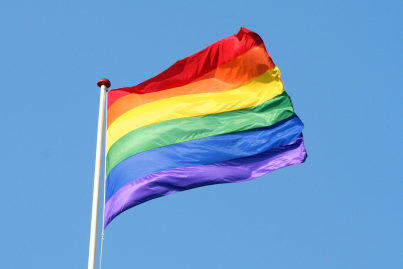
ICJ launches two innovative legal databases
Today the ICJ launches two new innovative legal tools: the Sexual Orientation & Gender Identity UN Database and the Sexual Orientation & Gender Identity Legislative Database.
The UN Database gathers all the SOGI-related doctrine and jurisprudence of the UN human rights system in one searchable database.
It is the electronic version of the UN Compilations, which the ICJ has issued regularly since 2005.
The documents are organized by source (such as treaty body, special rapporteur or working group) and it is possible to search the database by source or by country, region or key word.
The Legislative Database is the result of a year-long pilot project in collaboration with the International Human Rights Program at the University of Toronto Faculty of Law.
Student researchers gathered and analyzed laws from twenty-four countries in all regions of the world. Each country is introduced with a legislative overview.
The laws themselves are LGBT-friendly or neutral with regard to sexual orientation and gender identity. It is searchable by country and topic.
The purpose was to provide the actual texts of laws as comparative examples for use in legislative reform efforts.
The ICJ is very pleased to announce the launch of these new resources to help activists and lawyers around the world advocate for LGBT human rights.
Both databases were created by HURIDOCS.
The hard copy version of the 2013 edition of the UN Compilation can be downloaded below:
SOGI UN Compilation electronic version – publications-2013 (full text in pdf)
Recent News
 International Covenant on Civil and Political Rights (ICCPR)28 Sep 2026
 HRC63: ICJ Raises Concern over Torture, Executions and Impunity in Libya23 Sep 2026
 HRC63: ICJ Calls for Renewal and Strengthening of the Venezuela Fact-Finding Mission21 Sep 2026
 Joint Statement: Attacks on the Rule of Law, Judicial Independence and Access to Justice in Zambia17 Sep 2026