
High-level parallel event to the Human Rights Council: celebrating the entry into force of the Optional Protocol to the ICESCR
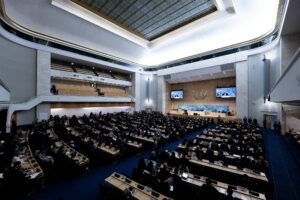
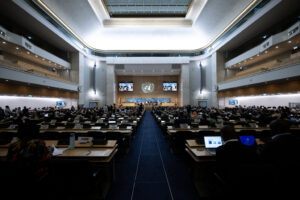
 As a member of the International NGO Coalition for the OP to the ICESCR, the ICJ is co-convening a high-level event on the protection of economic, social and cultural rights March 13 at the Palais des Nations in Geneva.
This event is organized together with the Group of Friends of the Optional Protocol to the ICESCR, including Argentina, Belgium, Bolivia, Bosnia & Herzegovina, Ecuador, El Salvador, Finland, France, Senegal, Spain, Slovakia, Portugal and Uruguay; and the Office of the United Nations High Commissioner for Human Rights.
It will highlight the importance of OP-ICESCR to the full realization of human rights and the need to achieve widespread ratification of the OP-ICESCR to ensure access to justice for all.
Speakers will include the Deputy High Commissioner for Human Rights, the UN Special Rapporteur on the Right to Water and Sanitation, as well as the Permanent Representatives of Argentina, France, Portugal, Slovakia and Uruguay.
Parallel Event – OP-ICESCR-event-2013 (download the flyer, pdf)
Report of the Special Rapporteur on trafficking in persons, especially women and children, A/HRC/23/48/Add.4, 4 March 2013: Croatia
Appendix I Benchmarks and indicators for ensuring trafficking-free supply chains For discussion during the expert meeting convened by the Special Rapporteur on trafficking in persons, especially women and children Equality at work 15. Are all workers treated fairly...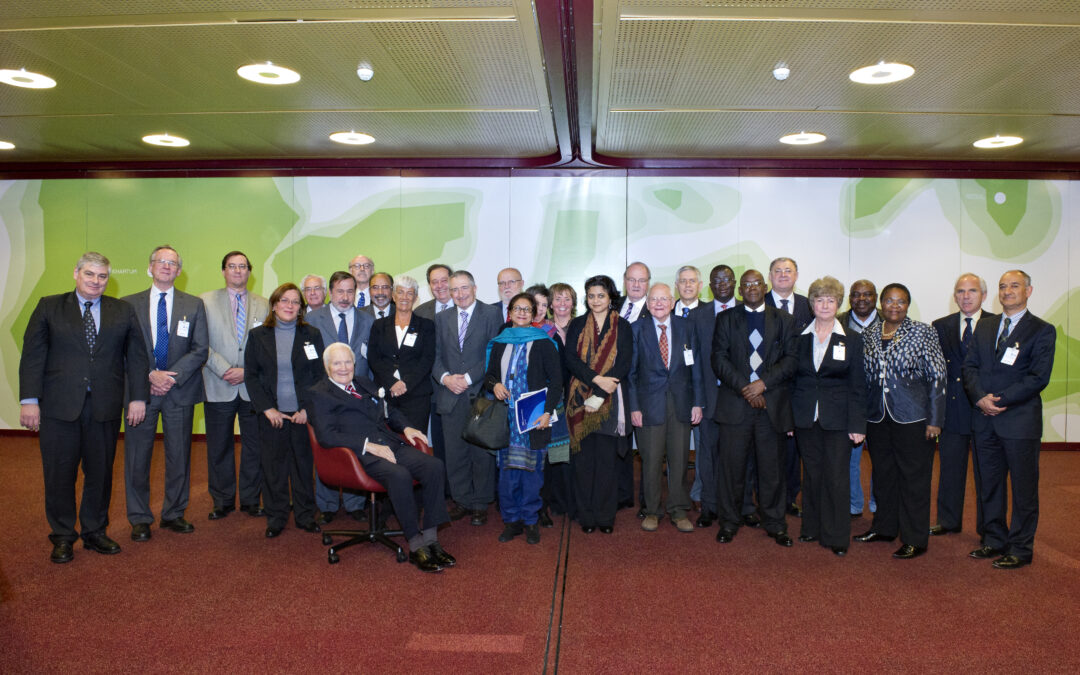
Ten eminent jurists join the ICJ Commission
The ICJ is pleased to announce the election of ten eminent jurists to the ICJ Commission.
Throughout its sixty-year history, the ICJ’s credibility has stemmed from its unique group of eminent jurists and legal experts: the ICJ Commission. ICJ Commissioners provide expert support and strategic direction to the ICJ Secretariat’s regional and thematic programmes.
The following Commissioners have been elected for five-year terms:
Commissioners Elected for First Terms
Prof. Andrew Clapham (UK)
Justice Radmila Dicic (Serbia)
Mr. Shawan Jabarin (Palestine)
Justice Qinisile Mabuza (Swaziland)
Justice Tamara Morschakova (Russian Federation) – from 1st May 2013
Justice Egbert Myjer (Netherlands)
Prof. Victor Rodriguez Rescia (Costa Rica)
Prof. Marco Sassoli (Italy/Switzerland)
Justice Stefan Trechsel (Switzerland)
Prof. Rodrigo Uprimny Yepes (Colombia)
Commissioners Elected for Second Terms
Mr. Roberto Garreton (Chile)
Prof. Robert Goldman (USA)
Commissioners Elected for Third Terms
Justice Ian Binnie (Canada)
Justice Elizabeth Evatt (Australia)
Ms. Karinna Moskalenko (Russian Federation)
Prof. Sir Nigel Rodley (UK)
Mr. Raji Sourani (Palestine)
For further details, including biographies for each of the ICJ’s Commissioners and Honorary Members, please click here .
General Recommendation No. 29 on article 16 of the Convention on the Elimination of All Forms of Discrimination against Women, Economic consequences of marriage, family relations and their dissolution, CEDAW/C/GC/29, 26 February 2013
IV. VARIOUS FORMS OF FAMILY 16. General recommendation No. 21, in its paragraph 13, acknowledges that families take many forms and underscores the obligation of equality within the family under all systems, “both at law and in private”. 17. Subsequent statements by...Recent News
 International Covenant on Civil and Political Rights (ICCPR)28 Sep 2026
 HRC63: ICJ Raises Concern over Torture, Executions and Impunity in Libya23 Sep 2026
 HRC63: ICJ Calls for Renewal and Strengthening of the Venezuela Fact-Finding Mission21 Sep 2026
 Joint Statement: Attacks on the Rule of Law, Judicial Independence and Access to Justice in Zambia17 Sep 2026