Sep 2, 2020 | Advocacy, Non-legal submissions
The ICJ has made submissions to the Human Rights Committee, today, on Ukraine’s implementation of, and compliance with, the provisions of the International Covenant on Civil and Political Rights.
The ICJ broughtto the Committee’s attention some issues of concern pertaining to Ukraine’s compliance with and implementation of the ICCPR.
This submission highlights a number of concerns relating to the security and independence of lawyers in Ukraine, and their consequences for the protection of certain Covenant rights. In particular, this submission addresses:
- the institutional independence of the legal profession;
- security of lawyers and their right to life;
- restrictions on access to clients and the rights of the defence; and
- security of lawyers and access to justice in uncontrolled territories in Ukraine.
These concerns highlight Ukraine’s lack of compliance with its obligations under the Covenant, including in respect of the right to life under article 6 and the right to a fair trial under article 14, in particular, as well as under other Covenant rights, such as Ukraine’s obligations under articles 2, 7, 9, 10, and 17 of the ICCPR.
Ukraine-ICJ-Submission-CCPR-Advocacy-Non-Legal-Submissions-2020-ENG

Aug 7, 2020 | Advocacy, Agendas, News
On 6-7 August the ICJ co-hosted a symposium on threats to judicial independence in East and Southern Africa.
The event was held with the collaboration of the Africa Judges and Jurists Forum, the Kenyan Section of the International Commission of Jurists Kenya Section, Open Society Initiative for Southern Africa, Southern Africa Development Community Lawyers Association, Malawi Law Society, Pan African Lawyers Association, East Africa Lawyers Association and the American Bar Association.
Recent actions taken to undermine judicial independence in East and Southern Africa include proposed constitutional amendments, executive interference with the functioning of the Judicial Service Commissions and verbal as well as physical threats against judges.
Participants in the symposium included judges, lawyers, academics and civil society representative. ICJ Commissioner and former Chief Justice of Kenya Dr Willy Mutunga, and Professor Jill Ghai of Katiba Institute delivered the key note addresses.
Dr Willy Mutunga speaking to challenges of judicial independence in the political context of Kenya in his keynote address, said “I believe that the independence of the judiciary… is about the integrity of the judicial officers… Building peoples’ confidence in the judiciary and the judicial officers depends on the integrity of the institution and its judicial officers and staff.”
In her address, Professor Jill Ghai evaluated various ways in which independence of the judiciary is undermined, taking into account examples from various countries.
“We must not relent in letting the Executive know that we are watching whenever there are attempts to undermine the judiciary,” Ghai said in closing.
ICJ Secretary General Sam Zarifi that judicial independence was facing genuine threats, not just in Africa but throughout the world.
“The issue of judicial independence has been at the heart of the ICJ’s work for the last 70 years almost… We have been defending the rule of law and human rights. For both of those the independence of the judiciary is absolutely essential,” Zarifi said.
On the second day of the symposium, participants into four groups discussed the nature of challenges and weaknesses in the Executive-Judiciary relations, litigation as a strategy for protecting judicial independence, strategies for increasing social and political activism in defence of judicial independence, and the prospects and strategies for regional and international advocacy in the age of COVID-19 respectively.
In his closing remarks, outgoing ICJ Regional Director Arnold Tsunga flagged Malawi as a recent case study where the judiciary had demonstrated its independence when the Constitutional Court nullified the 2019 presidential election results, citing widespread irregularities.
Watch the proceedings of the symposium here:
Welcome and keynote address
Closing remarks
Contact:
Justice Mavedzenge (ICJ Legal Advisor) t: +27793889990 e: justice.mavedzenge(a)icj.org
Shaazia Ebrahim (ICJ Media Officer) t: +27716706719 e: shaazia.ebrahim(a)icj.org
Jul 30, 2020 | Advocacy
The ICJ is concerned that in Kazakhstan, Kyrgyz Republic, Tajikistan and Uzbekistan the COVID-19 pandemic, and measures taken purportedly to contain it, have significantly curtailed access to justice. Restrictions have affected the operation of the courts and impeded lawyers’ ability to provide effective legal assistance to their clients.
In the context of the COVID-19 pandemic — whether under a state of emergency or not — States’ obligations under international human rights law to uphold the fundamental guarantees of a fair trial, and to ensure access to effective remedies for violations of human rights endure.
The right to a fair trial entails the right to adequate time and facilities to prepare a defense, which, in turn, requires the opportunity to communicate with one’s lawyer effectively and in confidence.
In light of this, the ICJ calls on Central Asian States to ensure that, while COVID-19 restrictions are in place, access to a lawyer continues to be ensured, and that measures be put in place so that lawyers are able to communicate with their clients safely, effectively and confidentially, including in places of detention or during online hearings.
In addition, wherever and whenever the authorities put in place restrictions on physical meetings or travel with the stated purpose of containing the COVID-19 pandemic, the ICJ calls on Central Asian States to ensure that access to court is guaranteed through specific legal, administrative and practical measures.
ICJ research and discussions with lawyers have shown that across Central Asia, regulations adopted during COVID-19 relating to the administration of justice have suffered from vague language, inconsistencies and unclear guidance.
In practice, this had serious implications for the right to fair trial of defendants: in some cases defence lawyers were not allowed to meet their clients who were charged with serious crimes; in other instances lawyer-client meetings were very short, undermining the ability of lawyers to take proper instructions from their clients and to advise them accordingly; in other cases defence lawyers met their clients in circumstances where the confidentiality of their communication was compromised as a result of the virtual communication platforms they were forced to use.
The restriction measures relating to the administration of justice that the authorities have imposed have also had negative consequences for access to justice and effective remedies for victims of human rights violations; notably, access to legal assistance in domestic violence cases was impeded across the region.
In many court buildings social distancing requirements were not adjusted in such a way as to uphold the right to a public hearing. There has been a lack of sufficient guidance on how the right to a public hearing may be ensured online, including as to how the right to equality of arms and the right to legal representation would be protected.
Download
Central Asia-Statement COVID-19-Advocacy 2020-ENG (full article with additional information, in PDF)
Jul 8, 2020 | News
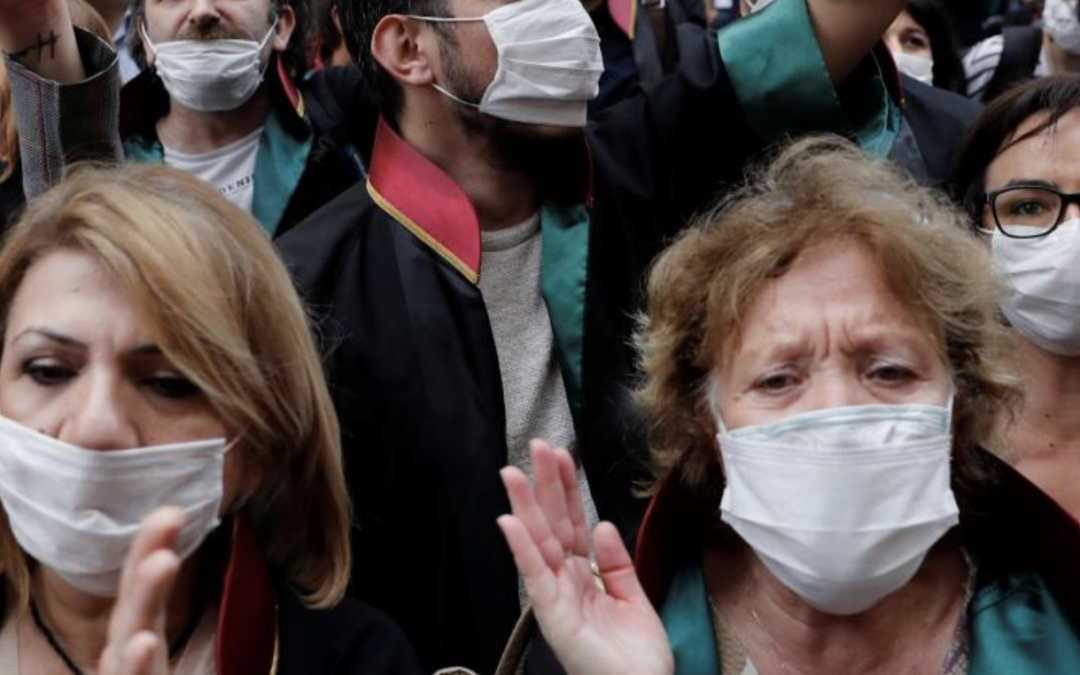
Draft law reduces leading bar associations’ authority, leads to creation of rival groups, the ICJ and Human Rights Watch said today. The Turkish government’s plan to allow for multiple bar associations appears calculated to divide the legal profession along political lines and diminish the biggest bar associations’ role as human rights watchdogs, they added.
The current bar associations have not been consulted, and 78 bars out of 80 signed a statement opposing the plan.
The ICJ and Human Rights Watch have published a question and answer document explaining the draft law, scheduled for a vote in parliament in the coming days. The document outlines the government-led effort to reduce the influence of leading bar associations, reflecting the executive’s growing dissatisfaction with the bar associations’ public reporting on Turkey’s crisis for human rights and the rule of law.
“Turkey’s prominent bar associations play a key role in defending fair trial rights and scrutinizing human rights at a time when flagrant violation of rights is the norm in Turkey,” said Hugh Williamson, Europe and Central Asia director at Human Rights Watch.
“The government move to create multiple bars and dramatically cut leading bars’ representation at the national level is a clear divide-and-rule tactic to diminish the bar associations’ authority and watchdog role,” he added.
The proposed amendments provide that in provinces with over 5,000 lawyers, a group of at least 2,000 lawyers can establish alternative bar associations.
In big cities such as Istanbul, Ankara, and Izmir, several bar associations could be established. The amendments would also greatly reduce the representation of the largest bar associations at the national level within the Union of Turkish Bars, the Ankara-based umbrella body with significant financial resources it controls and distributes to provincial bars.
The fact that the vast majority of elected legal profession representatives oppose the move and that the likely impact will be to greatly diminish the authority of leading provincial bars that have been critical of certain government initiatives demonstrates that the aim of the proposed change is to shield the government from justified criticism, the ICJ and Human Rights Watch said.
Drastically cutting the number of delegates from large bar associations representing thousands of lawyers to the national Union of Turkish Bar Associations would reduce the influence of the large bar associations in electing the national group’s president and participating meaningfully in other decision-making functions.
A provincial bar association with fewer than 100 lawyers, such as Ardahan in northeastern Turkey, for example, would be represented by 4 delegates, compared with 3 at present.
But a bar association such as Izmir in western Turkey, with over 9,500 lawyers, which sends 35 delegates, would be entitled to only 5. Istanbul, Ankara, and Izmir Bar, which represent 55 percent of the lawyers in Turkey, would be entitled to only 7 percent of all delegates within the national union.
The atmosphere of conflict in which the draft law has been introduced, its timing, and the lack of consultation with the bar associations themselves provides credible grounds for great concern and skepticism over the government’s motives, the groups said.
Over the past year, Turkey’s presidency and government have made public statements strongly criticizing leading bar associations in response to the bars’ legitimate expression of concerns about Turkey’s rule of law crisis and executive interference in the justice system.
The government has reacted strongly against the bars’ scrutiny of its failure to uphold human rights obligations through bar association publication of reports on torture, enforced disappearances, and other rights abuses ignored by the authorities.
For these reasons, the government’s proposed amendments are clearly designed to achieve a political purpose unrelated to an effort to advance or strengthen standards in the legal profession, the ICJ and Human Rights Watch said.
The government’s move is politically divisive and will contribute to undermining the appearance of independence and impartiality in the justice system.
“The government should immediately withdraw the current proposed amendment and embark on a process of full consultation with bar associations,” said Róisín Pillay, Director of ICJ’s Europe and Central Asia Programme.
“The government’s plan as it stands will only deepen mistrust in Turkey’s justice system as lacking independence by dividing the legal profession along political lines. This could have disastrous long-term consequences for upholding the role and function of lawyers and for fair trial rights.”
Contact:
Róisín Pillay, Director of ICJ’s Europe and Central Asia Programme, t: +32-2-734-84-46 ; e: roisin.pillay(a)icj.org
Massimo Frigo, Senior Legal Adviser, ICJ’s Europe and Central Asia Programme, t: +41-79-749-99-49 ; e: massimo.frigo(a)icj.org ; Twitter: @maxfrigo
Download
Turkey-Q and A on the bar associations-Advocacy-2020-ENG (Q & A, in PDF)
Turkey-Q and A on the bar associations-News-Press releases-2020-TUR (Story in Turkish, PDF)
Turkey-Q and A on the bar associations-Advocacy-2020-TUR (Q & A in Turkish, PDF)
Jun 4, 2020 | News
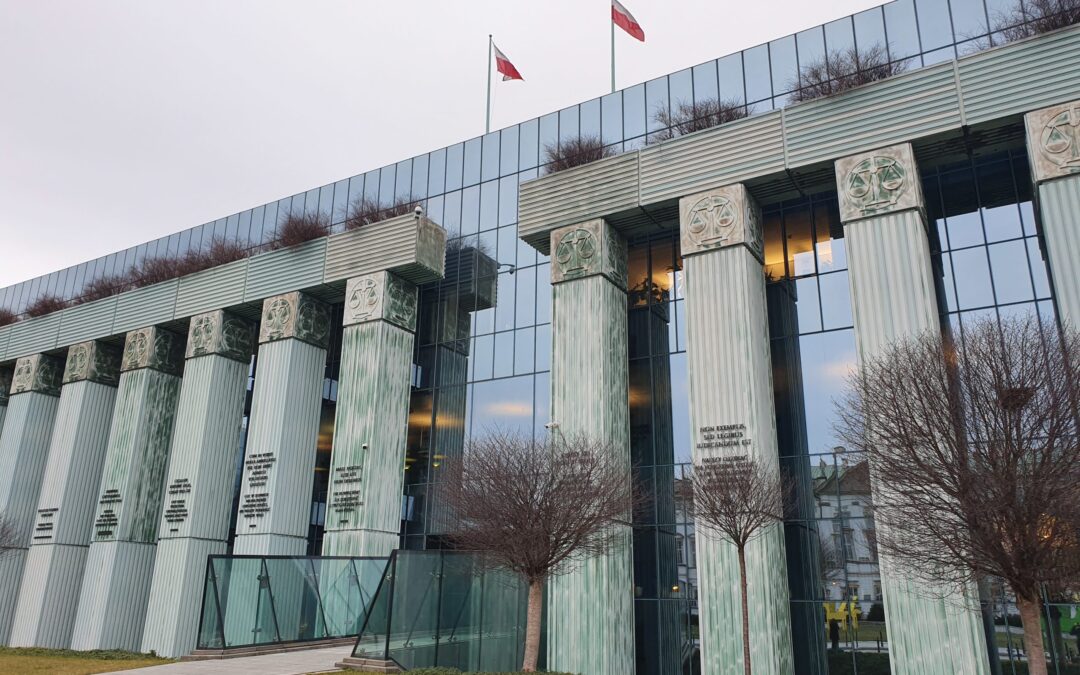
The ICJ today raised concern at the threat of criminal proceedings against Judge Igor Tuleya on charges arising from the judge’s independent exercise of his judicial functions. The ICJ called on the Disciplinary Chamber of the Supreme Court not to lift his immunity at its 9th June hearing.
Judge Tuleya faces prosecution for having allowed the presence of media in a sensitive case concerning the investigations on the 2017 budget vote in the Polish House of Representatives (Sejm) that took place without the presence of the opposition.
He has been charged with ‘failing to comply with his official duties and overstepping his powers’ for having allegedly disclosed a secret of the investigation to ‘unauthorized parties’.
The accusations stem from the initiative of the judge to allow media and the public in the courtroom while issuing his ruling. Usually rulings on investigations are issued behind closed doors in Poland but the criminal procedure code allows judges to make the hearing public “in the interest of justice”.
“Judge Tuleya should not face any criminal proceedings to begin with for his actions in delivering his ruling in public, which is in accordance with national law”, said Massimo Frigo, Senior Legal Adviser for the ICJ Europe and Central Asia Programme. “His immunity must be maintained and the ‘Muzzle Act’ that allowed for these abusive prosecutions should be immediately scrapped.”
These proceedings are the first case of implementation the draconian Act amending the Law on the Common Courts, the Law on the Supreme Court and Some Other Laws, signed into law on 4 February and widely known as the ‘Muzzle Act’, which gave competence to waive judicial immunity to the Disciplinary Chamber of the Supreme Court.
“As highlighted by the recent ruling of the EU Court of Justice, the Disciplinary Chamber of the Supreme Court is not independent and is open to undue influence or interference by political authorities. It should therefore not rule on issues pertaining to the disciplinary or criminal responsibility of judges, including a waiver of their immunity,” Massimo Frigo added.
Background
On 19 November, the Court of Justice of the European Union (CJEU) delivered a ruling in the case A.K. and others (C-585/18, C-624/18, C-625/18), on a preliminary question by the Supreme Court of Poland. The preliminary question asked whether the recently established Disciplinary and Extraordinary Chambers of the Supreme Court could be considered to be independent.
The CJEU ruled that a court cannot be considered independent “where the objective circumstances in which that court was formed, its characteristics and the means by which its members have been appointed are capable of giving rise to legitimate doubts, in the minds of subjects of the law, as to the imperviousness of that court to external factors, in particular, as to the direct or indirect influence of the legislature and the executive and its neutrality with respect to the interests before it and, thus, may lead to that court not being seen to be independent or impartial with the consequence of prejudicing the trust which justice in a democratic society must inspire in subjects of the law.”
Based on this ruling, the Labour, Criminal and Civil Chambers of the Supreme Court declared that the Disciplinary and Extraordinary Chambers of the Supreme Court were not properly constituted and independent.
According to the UN Basic Principles on the Independence of the Judiciary, judges are entitled to a fair hearing in all disciplinary proceedings (principle 17). In order for such a hearing to be fair, the decision-maker must be independent and impartial.
International and European standards on the independence of the judiciary provide that judges should have immunity from criminal prosecution for decisions taken in connection with their judicial functions in the absence of proof of malice, and any procedure for removing immunity must itself be independent (see for instance, UN Special Rapporteur on the Independence of Judges and Lawyers, paras 65-67 and 98; Council of Europe Committee of Ministers, para 68; Consultative Council of European Judges, para 20; ICJ Practitioners Guide no 13, pp. 27-30).
On 26 February 2020, the Polish Prosecutor’s Office requested a waiver of Judge Tuleya’s immunity in order to press criminal charges which might lead to imprisonment. The waiver will be examined on the 9 June 2020 by the Disciplinary Chamber of the Supreme Court appointed by the government.
In an open letter of 5 February 2020, 44 ICJ Commissioners and Honorary Members denounced the recent legislative changes adopted by the Polish government threatening the role and the rights of judges and denouncing the risks faced by legal practitioners when fighting for the rule of law. Two weeks later, the risks highlighted by the letter have become reality for an increasing number of Polish judges, including Judge Tuleya.
Contact:
Massimo Frigo, Senior Legal Adviser, Europe and Central Asia Programme, e: massimo.frigo(a)icj.org, t: +41 22 979 38 00