Sep 1, 2017 | News
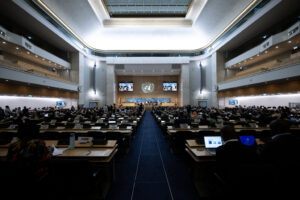
Today the Supreme Court of Kenya took the unprecedented step of voiding the presidential elections held on 8 August 2017 citing the failure by the Independent Electoral and Boundaries Commission (IEBC) to adhere to constitutionally mandated processes.
The ICJ commends the Supreme Court of Kenya for adjudication of a sensitive case at a high professional standards amidst a charged political atmosphere.
The ICJ in partnership with the Africa Judges and Jurists Forum (AJJF) sent a mission of three distinguished judges to observe the proceedings during the presidential petition in Kenya.
The delegation consisted of Retired Chief Justice Earnest Sakala (Zambia), Justice Dingake (Botswana) and Justice Chinhengo (Zimbabwe).
The mission’s observations will be publicized in due course.
Kenya held national elections on 8 August 2017 administered by the IEBC.
The IEBC subsequently announced that Uhuru Kenyatta had won the elections with a 54% majority.
The opposition National Super Alliance Coalition led by Raila Odinga filed an election petition alleging serious irregularities in the tabulation and transmission of the results of the elections and asking the court to nullify the results and order fresh elections.
The Supreme Court heard the election petitition culminating in the decision that was handed down today.
According to the observers, the court conducted the hearing in a manner consistent with the rule of law and that adhered to the Kenyan Constitution and international principles of a fair trial.
The Court gave acted fully as a competent, independent and impartial judicial body.
“The decision taken by the Supreme Court today is precedent setting. It places a cost on the election management body for apparently failing to adhere to constitutional imperatives and the normative framework governing the conduct of elections,” said Arnold Tsunga, Africa Director of the ICJ.
“Elections are a high stakes subject in Kenya, as elsewhere in the world. Previous elections have shown that violence and multiple human rights violations increase during the election period. We therefore encourage the political leaders in Kenya to accept the court’s verdict and to encourage their supporters to exercise maximum restraint and tolerance as the country braces itself for fresh elections,” he added.
Finally the ICJ urges the authorities in Kenya and the IEBC to quickly comply with and implement the court’s judgement.
Contact
Arnold Tsunga, ICJ Director for Africa, t: +27716405926 ; e: arnold.tsunga@icj.org
Sep 1, 2017 | News
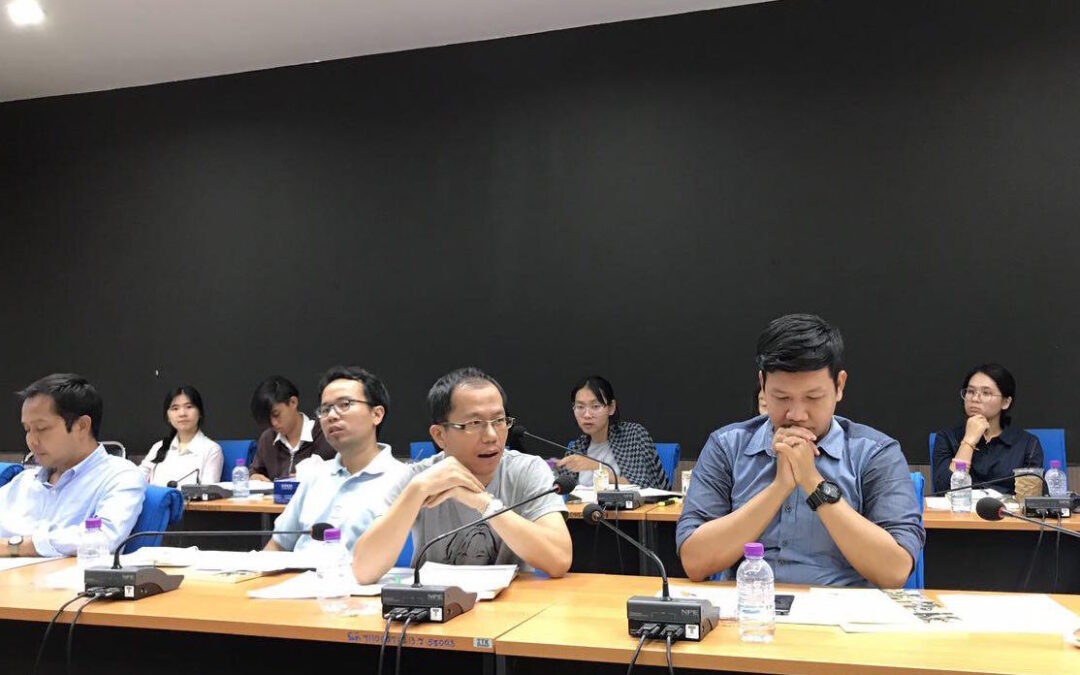
On 1 September, the ICJ, in collaboration with Chiang Mai University’s Faculty of Law and Chiang Mai University’s Center for Ethnic Studies and Development under its Faculty of Social Science, conducted a workshop on how effectively to conduct trial observation.
Participants in the Workshop included undergraduate and postgraduate students and lecturers from Chiang Mai University, lawyers and representatives from Thai civil society organizations.
The workshop was held at Chiang Mai University’s Faculty of Law campus.
The objective of the workshop was to provide participants with an overview of international law and standards governing right to a fair trial and due process in the administration of criminal justice.
The workshop used the ICJ’s Practitioners Guide No. 5, the Trial Observation Manual for Criminal Proceedings, as the basis of training.
The workshop trained participants on practical preparation techniques before undertaking trial observations, critical elements of trial observations, drafting of trial observation reports, general international legal standards governing fair trials, international legal standards applicable to arrest and pre-trial detention in criminal proceedings and international legal standards applicable to trial proceedings.
The speakers at the workshop were Kingsley Abbott, ICJ Senior International Legal Adviser, Southeast Asia and Sanhawan Srisod, ICJ Associate National Legal Adviser, Thailand.
Aug 15, 2017 | Advocacy
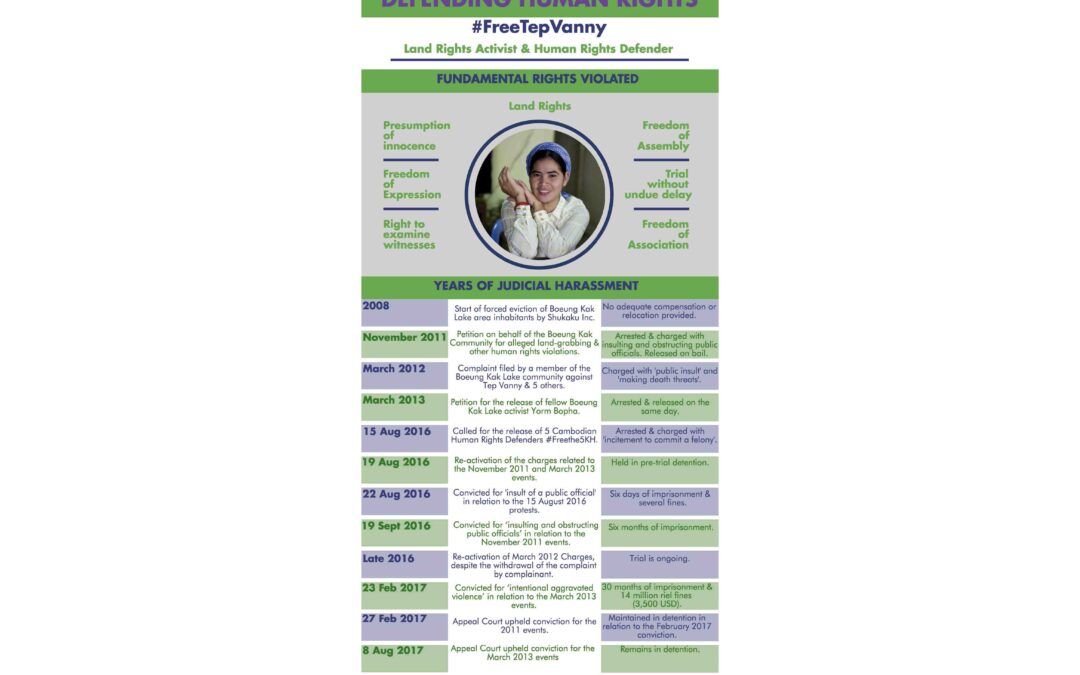
Tep Vanny, one of Cambodia’s most prominent land activists and human rights defenders, will have spent one year in prison on 15 August for defending her community and exercising her human rights.
The ICJ and other human rights organizations condemn her arbitrary imprisonment and call for her convictions to be overturned, for all ongoing politically motivated and unsubstantiated charges against her to be dropped, and for her immediate release from prison.
Tep Vanny has fought tirelessly to protect the rights of members of the Boeung Kak Lake community, following their forced eviction from their homes in Phnom Penh.
More recently, she played a leading role in the so-called ‘Black Monday” campaign, challenging the arbitrary pre-trial detention of five human rights defenders, Lim Mony, Ny Sokha, Yi Soksan, Nay Vanda, and Ny Chakrya (the “Freethe5KH” detainees).
On 22 August 2016, following her arrest at a protest calling for the release of the five, she was convicted of ‘insulting of a public official’, and sentenced to six days in prison.
However, instead of releasing her based on time served, the authorities reactivated dormant charges dating back to a 2013 protest and kept her in detention.
“It is clear that the authorities are using the courts to lock me up, silence my freedom of expression and break my spirit,” said Tep Vanny. “They want to stop me from advocating and seeking a solution for the remaining people from Boeung Kak Lake as well as other campaigns to demand justice in our society.”
On 19 September 2016, Tep Vanny was sentenced, along with three other Boeung Kak Lake community activists, to six months imprisonment for “insulting and obstructing public officials” in a reactivated case related to a 2011 peaceful protest calling for a resolution to the Boeung Kak Lake land dispute, despite the absence of credible inculpatory evidence.
This conviction has since been upheld by the Court of Appeal on 27 February 2017.
On 23 February 2017, following proceedings which fell short of fair trial standards, Tep Vanny was convicted of “intentional violence with aggravating circumstances”, sentenced to a further 30 months in prison and fined more than 14 million riel (about US $3,500 – or twice the annual minimum wage in Cambodia) for having peacefully participated in protests calling for the release of her fellow activist Yorm Bopha, back in 2013.
While the #FreeThe5KH human rights defenders were released on bail on 29 June 2017, after having spent 427 days in arbitrary detention, Tep Vanny remains in prison.
She is currently on trial in a third reactivated case, facing charges of “public insult” and “death threats” brought by another member of the Boeung Kak Lake community, despite the complaint having been dropped by the community member.
On 8 August 2017, the Court of Appeal upheld her February 2017 conviction.
Cambodia-Joint Statement Tep Vanny-Advocacy-2017-ENG (full statement in English, PDF)
Cambodia-Joint Statement Tep Vanny-Advocacy-2017-KHM (full statement in Khmer, PDF)
Cambodia-Infographic TV Case Overview-Advocacy-2017-KHM (Infographic in Khmer, PDF)
Jul 18, 2017 | Advocacy, Analysis briefs, News
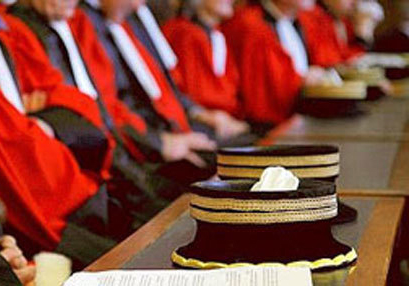
The ICJ today called on the Tunisian authorities to adopt and apply procedures for the Specialized Criminal Chambers (SCC) that are clear and comply with international human rights law and standards.
The statement came following a high-level mission to Tunisia from 12 to 15 July 2017 in which the ICJ engaged with senior judicial officials, including the President of the Cassation Court, members of the High Judicial Council, SCC judges, and other stakeholders.
An ICJ analysis, Procedures of the Specialized Criminal Chambers in light of international standards, was published at the end of the mission.
“While the Specialized Criminal Chambers have the potential to contribute to addressing impunity and deliver justice for victims in Tunisia, ambiguity about the procedures to be followed by these Chambers risks undermining their effectiveness,” warned Said Benarbia, Director of the ICJ Middle East and North Africa Programme.
As detailed in the ICJ analysis, the lack of clarity comes in part from the 2013 transitional justice Law, which is seen by many stakeholders as setting up a special regime, separate from the existing criminal justice system.
There is fear that the SCC may decide not to apply the existing ordinary criminal procedures, while at the same time no detailed procedures specific to the SCC have yet been adopted.
The creation of such a gap would risk serious breaches of international standards of fairness and justice.
For example, the 2013 Law seems to give the Truth and Dignity Commission (Instance Vérité et Dignité, IVD) exclusive power to refer cases to the SCC.
However, no procedures specific to the SCC implement the rights of an accused to examine witnesses interviewed by the IVD or to access all documents and evidence collected by the IVD in order to prepare his or her defence, as required by international standards and the ordinary code of criminal procedure.
The 2013 Law also fails to clarify the role of prosecutors and investigating judges in addressing such cases, including by making their own determination in relation to charges, standard of proof, and whether these cases should be brought before the SCC.
“Clarifying the procedures to be applied by the Specialized Criminal Chambers and ensuring their full compliance with international standards, including those relating to fair trial, are a prerequisite to fully establish the truth about human rights violations, hold those responsible to account, and ensure that the proceedings are fair to the victims and accused,” added Benarbia.
The ICJ set out a list of recommendations with a view to assisting the Tunisian authorities in their efforts in achieving these objectives, including by:
- Amending article 42 of the 2013 Law and related provisions to clearly provide victims of gross human rights violations with direct access to the SCC, including when victims did not submit a file to the IVD;
- Amending provisions of the IVD Guides to ensure that the review process and the possibility to challenge IVD’s decisions will apply to decisions not to transfer a case to the SCC and that such review be based on objective criteria for considering gross human rights violations in line with international standards;
- Establishing specialized prosecution services, investigating judges, and judicial police in line with international standards and with adequate resources to work in coordination with the SCC;
- Clarifying the relationship between the SCC and other ordinary criminal chambers and civil and other courts;
- Amending the legal framework to clearly provide that cases investigated by the IVD are to be transferred to specialized prosecutors who are to carry out their functions as defined in the CCP and in line with international standards;
- Ensuring that the IVD’s investigative function complements the role of the specialized judicial institutions in charge of the investigation and prosecution; and
- Amending the CCP and ensuring that any related provision of any other procedures adopted for the SCC fully respect fair trial guarantees.
Contact
Theo Boutruche, Legal Adviser of the ICJ Middle East and North Africa Programme, tel: +33 642837354, e-mail: theo.boutruche(a)icj.org
Tunisia-Memo on SCC Procedures-Advocacy-Analysis Brief-2017-ENG (full memo in English, PDF)
Tunisia-SCC procedures memo-News-2017-ARA (full story in Arabic, PDF)
Tunisia-Memo on SCC Procedures-Advocacy-Analysis Brief-2017-ARA (full memo in Arabic, PDF)

Jul 12, 2017 | News
The ICJ is alarmed at ongoing attacks on the rule of law in Poland.
On 12 July 2017, the Government tabled in Parliament draft bill no. 1727, that, if approved, would automatically dismiss all judges of the Supreme Court and let the Minister of Justice decide which judges are to be reinstated or newly appointed.
“This draft law is a direct blow to the principle of separation of powers, the bedrock of the rule of law,” said Massimo Frigo, Legal Adviser with the ICJ Europe Programme.
“The security of tenure and conditions of service of individual judges are essential to judicial independence,” he added.
Draft bill no. 1727 follows another piece of legislation, recently approved by Parliament, by which the Parliament empowered itself to appoint the majority of the members of the National Council of the Judiciary, the body which selects and governs the judiciary.
That law gives political powers in the Polish legislature and executive, which have increasingly demonstrated deep disregard for human rights and the rule of law, undue influence over the judiciary.
Such deficiencies were also highlighted by the Office for Democratic Institutions and Human Rights of the OSCE in May 2017.
“These series of legislative attacks to the independence of the judiciary in Poland must stop. These actions are inconsistent with the international obligations of Poland to ensure the independence of judges,” said Massimo Frigo.
“The European Union must intervene. A EU Member State that directly undermines the checks and balances of its own legal system threatens the founding values of the EU of the rule of law and respect for human rights,” he added.
Contact
Massimo Frigo, ICJ Legal Adviser, t: +41 22 979 3805 ; e: massimo.frigo(a)icj.org
International standards
Particularly in a context like present day Poland, mass removal of all judges from a court, by another branch of government, without a fair and evidence-based individual process for each judge, is incompatible with international standards such as the UN Basic Principles on the Independence of the Judiciary (See, ICJ Practitioners Guide no 13 on Judicial Accountability, pp. 99-104). The UN Basic Principles affirm, among other things, that:
1. The independence of the judiciary shall be guaranteed by the State and enshrined in the Constitution or the law of the country. It is the duty of all governmental and other institutions to respect and observe the independence of the judiciary.
2. The judiciary shall decide matters before them impartially, on the basis of facts and in accordance with the law, without any restrictions, improper influences, inducements, pressures, threats or interferences, direct or indirect, from any quarter or for any reason.
10. …Any method of judicial selection shall safeguard against judicial appointments for improper motives. …
12. Judges, whether appointed or elected, shall have guaranteed tenure until a mandatory retirement age or the expiry of their term of office, where such exists.
18. Judges shall be subject to suspension or removal only for reasons of incapacity or behaviour that renders them unfit to discharge their duties.
19. All disciplinary, suspension or removal proceedings shall be determined in accordance with established standards of judicial conduct.
20. Decisions in disciplinary, suspension or removal proceedings should be subject to an independent review. This principle may not apply to the decisions of the highest court and those of the legislature in impeachment or similar proceedings.
Similar mass removals with politicization of the procedure for reinstatement and new appointments have been condemned as violations of States’ international human rights obligations by, for instance, the UN Human Rights Committee acting under the International Covenant on Civil and Political Rights, to which Poland is also party (see Busyo, Wongodi, Matubaka et al v. Democratic Republic of the Congo, UN Doc CCPR/C/7878/D/933/2000 (2003), and the Inter-American Court of Human Rights (see e.g. Supreme Court of Justice (Quintana Coelle et al) v. Ecuador, Series C No. 266 (2013) and Constitutional Tribunal (Camba Campos et al) v. Ecuador, Series C No. 268 (2013).
Council of Europe standards, in the form of Recommendation CM/Rec(2010)12 of the Committee of Ministers to member states on judges: independence, efficiency and responsibilities, provide among other things as follows:
26. Councils for the judiciary are independent bodies, established by law or under the constitution, that seek to safeguard the independence of the judiciary and of individual judges and thereby to promote the efficient functioning of the judicial system.
27. Not less than half the members of such councils should be judges chosen by their peers from all levels of the judiciary and with respect for pluralism inside the judiciary.
44. Decisions concerning the selection and career of judges should be based on objective criteria pre-established by law or by the competent authorities. Such decisions should be based on merit, having regard to the qualifications, skills and capacity required to adjudicate cases by applying the law while respecting human dignity.
45. There should be no discrimination against judges or candidates for judicial office on any ground such as sex, race, colour, language, religion, political or other opinion, national or social origin, association with a national minority, property, disability, birth, sexual orientation or other status. A requirement that a judge or a candidate for judicial office must be a national of the state concerned should not be considered discriminatory.
46. The authority taking decisions on the selection and career of judges should be independent of the executive and legislative powers. With a view to guaranteeing its independence, at least half of the members of the authority should be judges chosen by their peers.
47. However, where the constitutional or other legal provisions prescribe that the head of state, the government or the legislative power take decisions concerning the selection and career of judges, an independent and competent authority drawn in substantial part from the judiciary (without prejudice to the rules applicable to councils for the judiciary contained in Chapter IV) should be authorised to make recommendations or express opinions which the relevant appointing authority follows in practice.
48. The membership of the independent authorities referred to in paragraphs 46 and 47 should ensure the widest possible representation. Their procedures should be transparent with reasons for decisions being made available to applicants on request. An unsuccessful candidate should have the right to challenge the decision, or at least the procedure under which the decision was made.
49. Security of tenure and irremovability are key elements of the independence of judges. Accordingly, judges should have guaranteed tenure until a mandatory retirement age, where such exists.
50. The terms of office of judges should be established by law. A permanent appointment should only be terminated in cases of serious breaches of disciplinary or criminal provisions established by law, or where the judge can no longer perform judicial functions. Early retirement should be possible only at the request of the judge concerned or on medical grounds.
69. Disciplinary proceedings may follow where judges fail to carry out their duties in an efficient and proper manner. Such proceedings should be conducted by an independent authority or a court with all the guarantees of a fair trial and provide the judge with the right to challenge the decision and sanction. Disciplinary sanctions should be proportionate.