
Alla Konstantinova Pitcherskaia v. Immigration and Naturalization Service, United States Court of Appeals for the Ninth Circuit (24 June 1997)
Procedural Posture Alla K. Pitcherskaia petitioned the United States Court of Appeals for the Ninth Circuit for review of the Board of Immigration Appeals’ decision denying her application for asylum and withholding of deportation. Facts Among other things, the...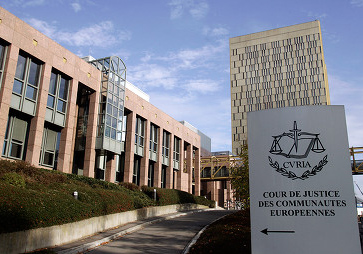
EU Court’s ruling on asylum claims based on sexual orientation
Today, the Court of Justice of the European Union (CJEU) delivered its judgment in the joint cases of A, B and C v. Staatssecretaris van Veiligheid en Justitie.
It affirms the need for national authorities to undertake individualized credibility assessments in asylum cases involving claims of persecution based on sexual orientation.
The ruling concerned a request for a preliminary ruling from the Netherlands, through its Council of State, to the CJEU.
The cases arose from three applications for asylum in the Netherlands by three men claiming a well-founded fear of persecution in their countries of origin based on their alleged same-sex sexual orientation.
The Dutch authorities rejected each asylum claim on the basis that each applicant had failed to prove his same-sex sexual orientation.
The Council of State asked the CJEU what limits the EU Qualification Directive and the Charter of Fundamental Rights, and in particular article 3 (right to the integrity of the person) and article 7 (respect for private and family life), impose on the method of assessing the credibility of a declared sexual orientation, and whether these limits are different from those applying to the assessment of credibility in asylum claims based on other grounds.
Interpreting the Qualification Directive in light of articles 3 and 7 of the Charter, as well as article 1, i.e. human dignity, the Court held that EU law does impose certain requirements on refugee status determination authorities.
The ICJ welcomes the Court’s determination that the competent domestic authorities must ensure that any credibility assessment method must allow for an individualized consideration of each applicant’s claim, having regard to its specific features, and that it is the duty of the State to cooperate with the applicant in the context of the assessment of all the relevant elements of her or his claim.
The ICJ welcomes a number of other aspects of the ruling, including:
- The emphasis on the Netherland’s need to comply with the Charter of Fundamental Rights;
- The fact that the Court firmly came down against seemingly intrusive and lewd questioning of an applicant’s sexual practices and proclivities, which it held to be contrary to respect for private and family life; and,
- The Court’s awareness of the particular challenges relating to the disclosure of one’s sexuality. The court noted that an applicant may be understandably reticent in revealing intimate aspects of his or her life and that therefore late disclosure of same-sex sexual orientation should not necessarily undermine the applicant’s credibility.
See also the ICJ’s commentary on the CJEU judgment in X, Y and Z v. Minister voor Immigratie en Asiel.
ICJ and ILGA-Europe joint submissions in Milica Đorđević and others v. Serbia
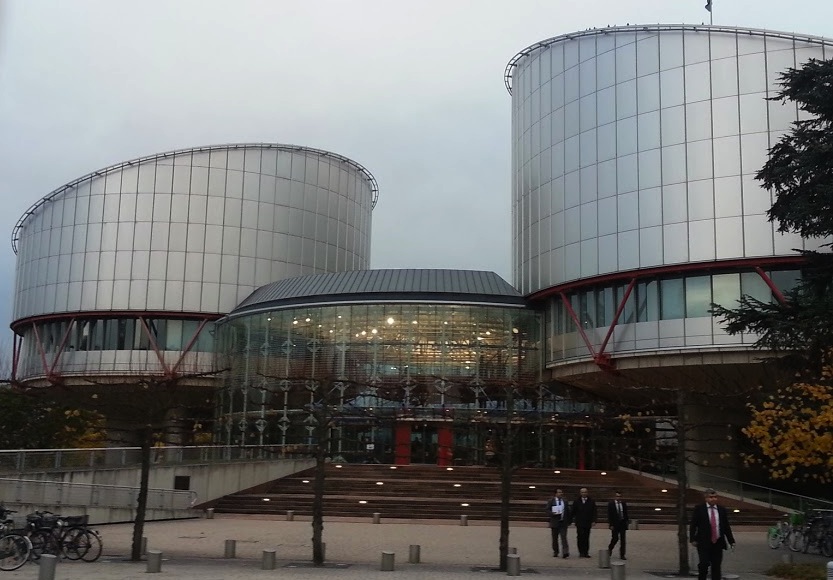
On 17 November 2014, the ICJ and ILGA-Europe filed their joint written submissions with the European Court of Human Rights in the case of Milica Đorđević and others v. Serbia (Application Nos. 5591/10, 17802/12, 23138/13 and 25474/14).
The case concerns the authorities’ decision in 2009 to relocate the applicants’ “Pride Parade” to promote the equality and visibility of lesbian, gay, bisexual and transgender people away from central Belgrade, Serbia, and the authorities’ repeated banning of Pride Parades in central Belgrade in 2011, 2012 and 2013.
The ICJ and the European Region of the International Lesbian, Gay, Bisexual, Trans and Intersex Association (ILGA-Europe)’s submissions to the Court focus on:
- the essential role of the right to freedom of peaceful assembly in a democratic society, and the scope of discretion afforded to States in determining measures required to prevent disorder at an assembly where counter-demonstrators threaten violence against groups most at risk; and
- the nature and scope of the State’s obligation in relation to the right to freedom of peaceful assembly under the European Convention on Human Rights and the International Covenant on Civil and Political Rights, focusing in particular on States’ duty to adopt legislative and administrative measures in order to fulfil their legal obligations.
SERBIA-ECHR amicus Dordevic-Advocacy-Legal Submission-2014-ENG (full text in PDF)

ICJ convenes second expert roundtable on asylum claims based on sexual orientation and/or gender identity
Today, the International Commission of Jurists (ICJ) held its second expert roundtable on asylum claims based on sexual orientation and/or gender identity.
Participants included asylum judges, lawyers, and academics, as well as officials from the Office of the UN High Commissioner for Refugees and staff members from a number of civil society organizations.
Prof. Hathaway, Director of the Program in refugee and asylum law at the University of Michigan Law School, Prof. Anker, Director of the Harvard Law School’s Immigration and Refugee Clinical Program, and Judge Lars Bay Larsen, judge of the Court of Justice of the European Union, were the main speakers at the roundtable. Each delivered a presentation focussing on different normative aspects of asylum claims based on sexual orientation and/or gender identity.
The programme of the second expert roundtable, including a list of all participants, can be downloaded here.
This roundtable forms part of a broader ICJ’S project on international protection claims based on sexual orientation AND/OR gender identity. The programme of the first roundtable organised in Brussels last June can be downloaded here. The ICJ’s commentary on the related CJEU judgment in X, Y and Z v. the Netherlands can be downloaded here.
Recent News
 Myanmar: As armed conflict rages and military rule continues, critical measures can be taken towards eventual justice and accountability for victims of Enforced Disappearance10 Sep 2026
 HRC63: ICJ Raises Alarm over Repression in Tunisia and Arbitrary Detention in El Salvador09 Sep 2026
 HRC63: ICJ Calls for Protection of Lawyers and Accountability in Myanmar07 Sep 2026
 More than fifty years on: enforced disappearance, the families who named it, and the reframing of international protection26 Aug 2026